
Prohodna Cave: Where God's Eyes Gaze from Bulgarian Stone
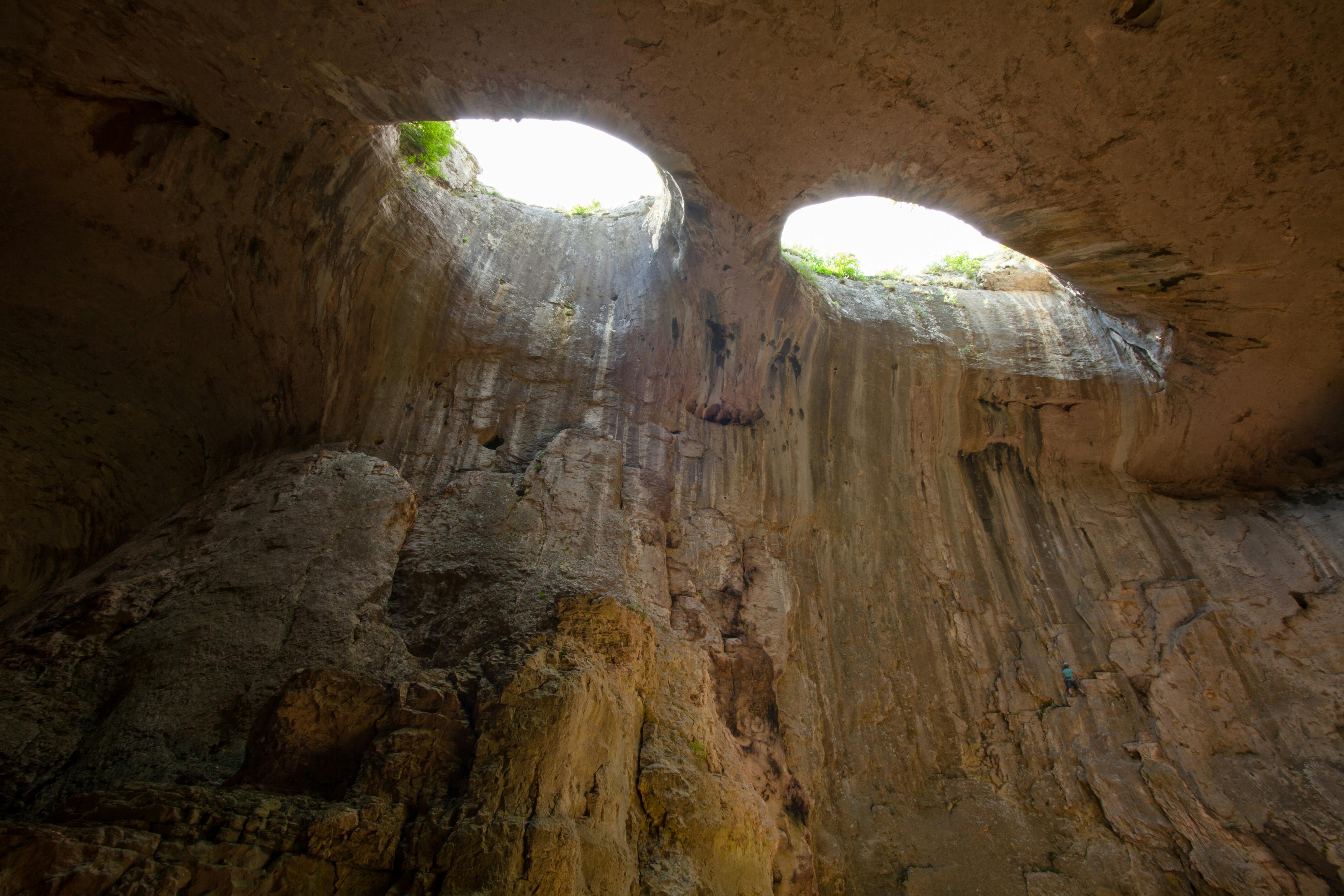
You stand in the middle chamber, 35 meters beneath the surface, and you feel it—the weight of an unblinking stare from above. Two perfectly symmetrical openings in the cave ceiling, each shaped like a human eye, allow shafts of Bulgarian sunlight to pierce the darkness. This is Prohodna Cave, a 262-meter-long karst passage in the Iskar Gorge, known around the world as the home of "The Eyes of God" . The cave stretches like a natural rock bridge, its two entrances facing one another—the Small Entrance rising 35 meters high, the Big Entrance soaring to an astonishing 45 meters, the largest cave arch in all of Bulgaria . When rain falls, water trickles through these almond-shaped holes, and the Eyes appear to weep . When the full moon rises, perfectly positioned within one of the openings, it seems as though a celestial pupil stares back at you . This is not merely a cave; it is a natural cathedral, a film set for Bulgarian cinema, and a place where geology and mythology meet in stone.
Why Prohodna Embodies Bulgaria's Karst Majesty
Formed during the Quaternary period, Prohodna is the longest cave passage in Bulgaria, stretching an impressive 262 meters from entrance to entrance . The cave's name comes from the Bulgarian word "prohod," meaning "passage" or "thoroughfare"—a fitting description for a cave you can walk entirely through . The two entrances face one another, creating a natural wind tunnel that has carved the limestone over thousands of years. The Big Entrance, at 42.5 to 45 meters in height, is the largest cave arch in the country and has become a popular spot for bungee jumping . The cave was declared a natural landmark in 1962 , and it is included in the list of the 100 Tourist Sites of Bulgaria . Archaeological evidence shows that humans lived here during the Neolithic and Chalcolithic periods, making Prohodna not just a geological wonder but a site of ancient habitation . Today, it is also a premier destination for rock climbing, with routes of varying difficulty that include climbs passing directly through the Eyes themselves .
The Best Time to Experience Prohodna Cave
Prohodna Cave is open to visitors year-round and entrance is free, but timing your visit can dramatically enhance the experience . For the most dramatic light shining through the Eyes, visit in the morning between 8:00 AM and 11:00 AM, when the sun is positioned to pour directly through the ceiling openings . For photographers, the golden hours of early morning and late afternoon offer the softest, most atmospheric light. The most magical moments occur during the full moon, when the moon aligns perfectly with one of the Eyes, creating the illusion of a glowing celestial eye . Spring and autumn offer the most comfortable temperatures for exploring—from April through June, daytime temperatures average 18°C to 24°C (64°F to 75°F); September through October brings similar conditions. Summer months (July–August) can be hot, with temperatures reaching 28°C to 32°C (82°F to 90°F), but the cave itself remains cool. Winter visits are possible but bring challenges: the cave can become muddy, and huge icicles form on the ceiling around the eye holes, creating a stunning but slippery environment . Avoid climbing in the cave between 6 PM and 7 AM to protect local wildlife . For updates on conditions
Approximate Budget for a 7-Day Trip
This budget assumes a mid-range stay in Lovech (approximately 30 km from Prohodna) or in the nearby village of Karlukovo, with day trips to the cave and surrounding natural attractions. Bulgaria remains one of Europe's most affordable destinations. Prices are in Bulgarian Lev (BGN), with approximate US Dollars (1 BGN ≈ $0.55 USD).
- Accommodation: 50 BGN–150 BGN ($28–$83) per night. Family hotels in Lovech average 70 BGN ($38) per night. The mountain hostel operated by the Peter Tranteev National Speleological Society (located right near the cave) offers budget accommodation, but reservations are essential . Guesthouses in Karlukovo village start at 45 BGN ($25).
- Food: 25–50 BGN ($14–$28) per day. Breakfast: 5–10 BGN for banitsa and Bulgarian yogurt. Lunch: 10–15 BGN for Shopska salad and grilled kyufte. Dinner: 15–25 BGN for traditional Bulgarian dishes at a Lovech mehana. Local vendors near the cave parking area sell snacks including kebabche (Bulgarian kebabs) .
- Transportation: Bus from Sofia to Lovech: 15–20 BGN ($8–$11) one way, journey time 2.5 hours. Car rental from Sofia Airport: 40–60 BGN ($22–$33) per day—recommended for accessing the cave, which is 112 km from Sofia . Train service is also available but less convenient for reaching the remote cave location. Taxi from Lovech to Prohodna Cave: 20–30 BGN ($11–$17) each way.
- Attractions: Prohodna Cave entrance: FREE . Temnata Dupka Cave (nearby, much longer): small entrance fee approximately 5 BGN ($2.75). Saeva Dupka Cave: 4 BGN ($2.20) entrance fee . Glozhene Monastery (13th century): free, donations appreciated .
- Miscellaneous: Bungee jump from the Big Entrance (organized events only): approximately 60 BGN ($33). Guided climbing session with gear rental: 50–80 BGN ($28–$44). Local honey from roadside vendors near the cave: 6–10 BGN ($3.30–$5.50). Day tour from Sofia including Prohodna and Saeva Dupka caves: from $140 USD per person .
- Total for 7 days (mid-range, excluding flights): 550–1,000 BGN ($300–$550) per person.
7 Essential Prohodna Cave Experiences
- Stand Beneath the Eyes of God at Mid-Morning: The cave's defining moment comes when sunlight streams through the two symmetrical ceiling openings. The holes, formed through erosion over millennia, create an effect that local people call "The Eyes of God" . From a specific angle, the two openings even resemble a face looking down; when wet, the Eyes appear to be crying . Visit between 8:00 AM and 11:00 AM for the most dramatic lighting effect . For photographers, this is the shot you came for—a pair of almond-shaped windows to the sky, staring back at you from the stone.
- Walk the Full 262-Meter Passage from Entrance to Entrance: Unlike many caves that require backtracking, Prohodna is a true passage cave—you enter through the Small Entrance (35 meters high) and exit through the Big Entrance (45 meters high, the largest cave arch in Bulgaria) . The walk takes approximately 15–20 minutes at a leisurely pace, allowing you to experience how the light changes as you move through the space. The floor is mostly level, making this one of the most accessible caves in Bulgaria.
- Watch the Full Moon Align with the Eye: On nights of the full moon, something extraordinary happens. When the moon rises to just the right position, it appears perfectly centered within one of the ceiling openings, looking for all the world like a gleaming celestial eye staring into the darkness . This phenomenon occurs only on specific nights; check the lunar calendar and visit during the hours around moonrise for the best view. Bring a headlamp for the walk in—the cave has no artificial lighting.
- Watch the Eyes "Weep" in the Rain: When rain falls on the Iskar Gorge, water trickles through the ceiling openings, cascading down through the Eyes. From below, the effect is uncanny—the two openings appear to be crying, tears streaming down the stone face of God . Visit during or just after a light rain for this atmospheric phenomenon. The cave floor can become slippery, so wear appropriate footwear.
- Watch Climbers Scale the 45-Meter Arch: Prohodna is a world-class rock climbing destination, with routes that range from difficulty 4 to 9 . Bolted routes are safe but sparse, and the cave goes up to 40 meters. The most daring climbs pass directly through the Eyes themselves. Even if you are not a climber, sitting in the cave and watching experienced climbers ascend the limestone is an entertaining spectacle. The climbing season peaks from May through October, with October seeing the most ascents recorded . However, note that the climbing community asks visitors to avoid climbing on weekends to prevent overcrowding .
- Visit the Peter Tranteev National Caving House: The office building of the Peter Tranteev National Speleological Society is a destination in itself—it is built into a crevice in the rock and, seen from above, looks like a bat . The building is one of the 100 Tourist Sites of Bulgaria, and from it you can enjoy stunning views of the Iskar River valley and Prohodna Cave below. The speleological society offers accommodation at its mountain hostel and can arrange guided caving expeditions to nearby Temnata Dupka Cave . Contact them in advance at +359 882 809 092 .
- Combine with Temnata Dupka Cave (The Dark Hole): Just a short distance from Prohodna lies Temnata Dupka—a much longer and more challenging cave system that requires a guide and proper equipment . While Prohodna is a walk-through, Temnata Dupka is a proper spelunking adventure requiring helmet and headlamp. The contrast between the two—one open and airy, lit by sunlight from above; the other dark, narrow, and mysterious—makes for a perfect day of caving. Arrange a guided tour through the Speleological Society.
3 Hidden Gems Most Travelers Miss
- The Rock-Hewn Office of the Speleological Society: Most visitors park at the main entrance, snap photos of the Eyes, and leave. But walk 10 minutes along the path from the Big Entrance, and you will find the office building of the Peter Tranteev National Speleological Society—carved directly into a rock crevice. From above, the building is shaped like a bat . The society's members are passionate about the region's caves and can offer insights you will not find in any guidebook. Stop by during opening hours (best to call ahead) and ask about guided tours to the region's other caves.
- The "Crying Face" Angle: Everyone photographs the Eyes from directly beneath. But climb the hillside path that leads up to the top of the cave (accessed from the path behind the Speleological Society building), and from this vantage point, the two openings appear as part of a larger formation—a complete face looking down from the rock . The effect is subtle but unmistakable once you see it; local legends say the face belongs to a god watching over the Iskar Gorge. Visit after rain for the full "weeping" effect.
- Karlukovo Village Honey Market: On weekends during the tourist season (May–September), local vendors set up stalls in the parking area near Prohodna Cave's entrance, selling homemade honey, nuts, traditional snacks, and souvenirs . The honey from the Iskar Gorge region is particularly prized—the wildflowers of the limestone plateau produce a distinct, aromatic honey you will not find in Sofia's shops. A jar costs 6–10 BGN ($3.30–$5.50) and makes a perfect edible souvenir. The vendors are friendly and patient with non-Bulgarian speakers.
Cultural & Practical Tips
- Entrance is free and the cave is open 24/7: There is no ticket booth, no gate, and no closing time . You can visit at 2:00 PM or 2:00 AM. However, the cave has no artificial lighting—bring a headlamp or flashlight for exploring beyond the range of the natural light from the Eyes.
- Nodding means NO: Bulgaria shares the famous head gesture quirk with Greece. A nod up and down means "no." A side-to-side shake means "yes." If uncertain, use "da" (yes) and "ne" (no) verbally.
- Phrases to learn: "Zdravete" (ZDRA-ve-te) — hello. "Blagodarya" (bla-go-DA-rya) — thank you. "Okoto na Bog" (O-ko-to na Bog) — Eye of God, the local name for this phenomenon. "Peshterata" (PESH-te-ra-ta) — the cave.
- Wear appropriate footwear and prepare for slippery conditions: The cave floor is natural limestone, which can become slippery, especially after rain. Sturdy walking shoes or hiking boots are recommended. In winter, huge icicles can form on the ceiling and around the cave holes, making the floor treacherous . Check weather conditions before visiting during cold months.
- Facilities are minimal: There are no toilets at the cave itself . The nearest facilities are at the Speleological Society building (during opening hours) or in Karlukovo village (2 km away). There is a parking area near the Small Entrance, but it is unpaved and improvised . Bring your own water and snacks, though local vendors may be present on summer weekends.
- Photography guidelines: The best light for photographing the Eyes is between 8:00 AM and 11:00 AM . A wide-angle lens (16–24mm) is essential to capture both openings in the ceiling. Tripods are permitted, but the floor is uneven. Drones are allowed in the open area around the cave, but be mindful of climbers and local wildlife . No climbing between 6 PM and 7 AM to avoid disturbing birds and other wildlife .
- Watch for climbers: Prohodna is a popular rock climbing destination, particularly from spring through autumn . The climbing routes are bolted, and some pass directly through the Eyes. If you hear climbers above you, be aware that they may occasionally dislodge small rocks. Do not climb on the formations yourself unless you are an experienced climber with proper equipment.
- Register with the Speleological Society for guided tours: If you wish to explore Temnata Dupka Cave or arrange a professional caving guide, contact the Peter Tranteev National Speleological Society in advance (phone: +359 882 809 092 / +359 882 809 121) . They are the official managers of the cave complex and can arrange safe, knowledgeable tours of the region's underground wonders.
Conclusion: Travel with Awe, Not Just Ambition
You could walk into Prohodna Cave, look up at the Eyes, take a photograph, and walk out in fifteen minutes. Many do. Or you could do what the Bulgarian filmmakers did in 1987 when they shot "Time of Violence" here—stay until the light changes . Sit on the limestone floor and watch as the morning sun shifts through the Eye openings, moving across the cave wall like the hand of a clock. Return at night during the full moon and witness the celestial alignment that has inspired local legends for generations. Stand in the rain and watch the Eye weep. Prohodna is not a museum; it is a stage where light, stone, and water perform a daily drama that has been running for thousands of years. The ancient people who sheltered here knew this—they saw the face in the rock and called it divine. The climbers who ascend the 45-meter arch know this—they experience the cave as a partner, not an obstacle. The photographer waiting for the perfect shaft of light knows this—that some places cannot be conquered, only witnessed. So stay longer than you planned. Look up longer than is comfortable. Let the Eyes stare back. Then walk out through the Big Entrance—the largest cave arch in Bulgaria—and feel smaller than you did when you arrived. That is not a photo. That is a perspective shift.