
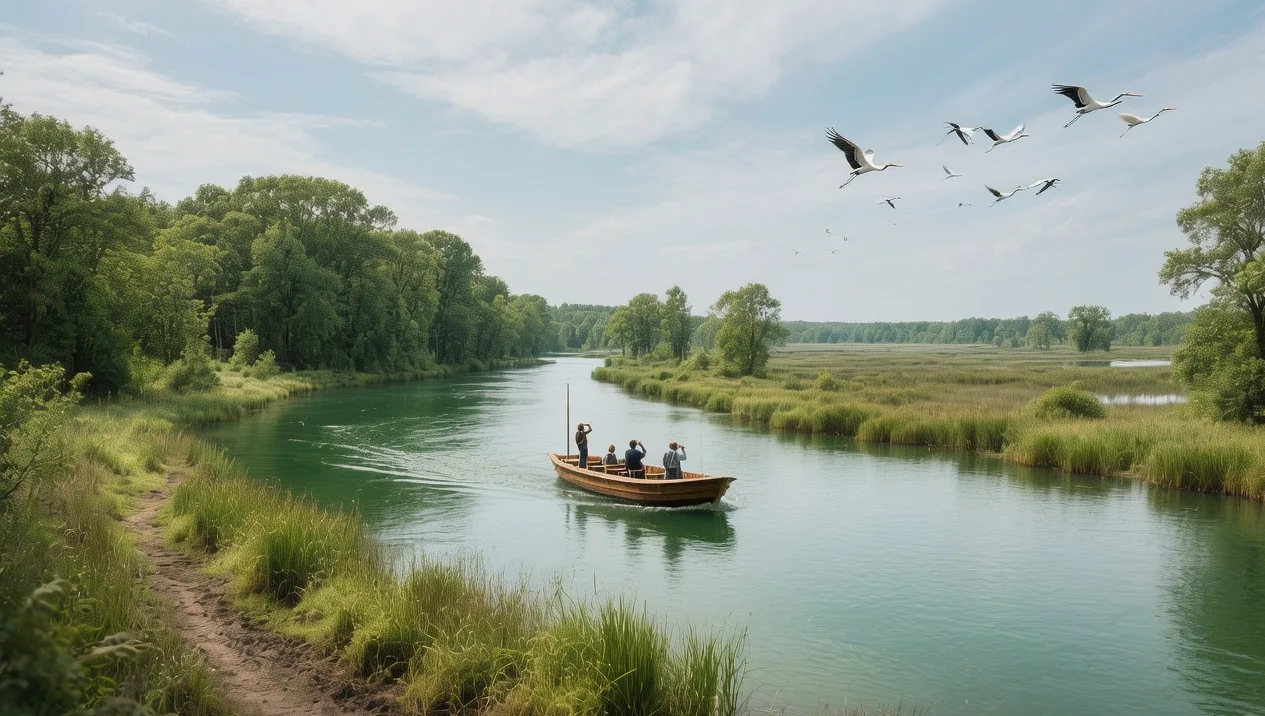
Lonjsko Polje: Where White Storks Meet Pannonian Wetlands
The first light of dawn breaks across Lonjsko Polje's vast floodplain, transforming 506 square kilometers of marshes, meadows, and oak forests into a shimmering mosaic where white storks stand sentinel on traditional wooden chimneys. You hear it before you see the birds—the soft clatter of beaks from nests perched atop thatched roofs, the gentle gurgle of the Sava River winding through reed beds, the distant lowing of Posavina horses grazing in misty pastures. This is Croatia's largest preserved wetland ecosystem, a UNESCO-recognized landscape where over 250 breeding pairs of white storks (Ciconia ciconia) return each spring to raise their young alongside villages that have maintained traditional wooden architecture for centuries. Within this delicate balance of nature and culture, where flooded meadows nurture fish that feed stork chicks and ancient oak galleries provide nesting materials, Lonjsko Polje matters not merely as a birdwatcher's paradise but as a living testament to coexistence—a place where you can stand on a wooden observation platform at sunrise and feel, with visceral clarity, the profound connection between human settlement, wetland ecology, and the enduring rhythm of migration that has shaped this Pannonian landscape for millennia.
Why Lonjsko Polje Embodies Harmonious Coexistence
Lonjsko Polje Nature Park represents far more than a scenic wetland—it embodies one of Europe's most successful examples of traditional land-use practices supporting biodiversity, where centuries-old farming methods create ideal conditions for white storks and countless other species. Established as a protected area in 1999 and designated a Ramsar site of international importance, this 506-square-kilometer floodplain solves a critical conservation challenge: maintaining a naturally functioning river ecosystem while preserving the cultural heritage of Posavina villages. The park's hydrology depends on the seasonal flooding of the Sava River, which inundates up to 70% of the area during spring high waters, creating nutrient-rich wet meadows that support fish populations essential for stork chick survival [[4]]. Traditional wooden houses in villages like Čigoč and Krapje—recognized by UNESCO for their architectural heritage—feature high-pitched roofs and prominent chimneys that provide perfect nesting platforms for storks, while surrounding pastures managed through extensive grazing maintain open habitats preferred by foraging birds.
Beyond its ecological significance, Lonjsko Polje fulfills a profound cultural need: demonstrating that human communities and wildlife can thrive together when traditional knowledge guides land management. The park's conservation model integrates scientific monitoring with local stewardship: rangers track stork nesting success using GPS-tagged individuals, while village elders share generational knowledge about flood patterns and bird behavior [[7]]. Engineering solutions respect natural processes: elevated wooden boardwalks minimize soil compaction in sensitive wetlands, observation hides are positioned to avoid disturbing nesting sites, and visitor centers use renewable energy to reduce environmental impact. This philosophy extends to community engagement: local families participate in sustainable tourism initiatives, traditional crafts like wooden shingle-making are preserved through workshops, and educational programs connect schoolchildren with wetland ecology [[12]].
The Best Time to Experience Lonjsko Polje
Timing your Lonjsko Polje visit dramatically shapes your encounter with this wetland sanctuary. For optimal stork viewing—active nesting, chick-rearing, and comfortable conditions—plan your arrival between April 15 and June 10 or July 15 and August 25. During these windows, daytime temperatures range from 18–27°C (64–81°F), with refreshing river breezes keeping humidity pleasant. Morning wildlife watching between 6:30–9:00 AM offers the best opportunities for photography and bird spotting, when storks are most active and mist creates atmospheric conditions [[15]].
Summer brings lush vegetation but also increased insects: from June 11 through July 14, temperatures climb to 28–32°C (82–90°F), and mosquito activity peaks. However, this period features extended daylight hours and warm evenings of 20–24°C (68–75°F), perfect for sunset walks along floodplain trails. If visiting during peak season, book early morning guided tours (before 7:30 AM) to avoid midday heat and maximize wildlife encounters [[18]].
Avoid September through March unless you specifically seek solitude and don't mind temperatures of -2–12°C (28–54°F) with frequent fog, rain, or occasional ice. While autumn offers dramatic stork migration gatherings (late August–early September) and winter provides atmospheric mist-shrouded landscapes, most storks depart for Africa by mid-September, and visitor facilities reduce hours during colder months.
For current bird activity updates, guided tour schedules, and booking information, visit the https://pp-lonjsko-polje.hr/ official tourism website, which provides comprehensive visitor information for Lonjsko Polje Nature Park in Croatian, English, and German [[2]].
Approximate Budget for a 7-Day Trip
Lonjsko Polje offers exceptional value for nature-focused travelers, with park access and many activities modestly priced. The following budget assumes a mid-range travel style with comfortable accommodations in nearby villages or Sisak, quality dining featuring local specialties, and active wildlife exploration.
- Accommodation: €50–€110 per night for a double room in a family-run agritourism estate or guesthouse within the park boundary or nearby villages like Čigoč. Budget options in rural Posavina start at €38/night; upscale eco-lodges with wetland views run €85–€140/night during peak stork season. Booking directly with properties often yields 10–15% discounts.
- Food: €27–€49 per day per person
- Breakfast: €5–€9 (coffee €2, pastry €2.50, or full breakfast €7 at local konoba)
- Lunch: €10–€16 (fish stew €13, grilled river carp €15, local kulen and cheese board €11)
- Dinner: €15–€25 (three-course Posavina meal with wine at family restaurant; mid-range dinner for two averages €48)
- Transportation:
- Car rental: €30–€48/day (essential for exploring park villages; parking at visitor centers is free)
- Fuel: €30 total for week (Lonjsko Polje is 60 km from Zagreb, 40 km from Sisak)
- Zagreb Airport transfers: €65 one-way taxi or €12 bus to Sisak + €8 local transport
- Attractions:
- Lonjsko Polje guided birdwatching tour (3 hours): €22 per person (includes binoculars, expert guide)
- Boardwalk self-guided access: €5 per person
- Traditional village walking tour: €8 per person
- Photography workshop with naturalist: €40 per person (3 hours)
- Posavina horse farm visit: €12
- Miscellaneous:
- Souvenirs: €7–€28 (bird field guides, local honey, traditional crafts)
- Tourist tax: €1.00 per person per night (April–September); €0.60 off-season
- Travel insurance: €20–€35 for week-long coverage
Total estimated cost for 7 days: €620–€1,120 per person (based on double occupancy; solo travelers should add 25–35% for single-room supplements)
7 Essential Lonjsko Polje Experiences
- Watch storks at dawn in Čigoč village: Arrive in the UNESCO-recognized village of Čigoč by 6:00–7:00 AM, when morning mist often hovers above the floodplain and storks begin their daily foraging flights. Position yourself near the village center where traditional wooden houses feature prominent chimneys topped with active nests. Bring binoculars and a telephoto lens; you'll observe adults delivering fish to chicks, hear the distinctive clattering of beaks, and witness the gentle coordination of breeding pairs. Dress in layers—mornings can be cool even in summer—and wear waterproof shoes for muddy village paths [[15]].
- Walk the Krapje boardwalk at golden hour: Access the elevated wooden pathway near Krapje village (open daily 8:00 AM–6:00 PM, entry €5) that winds through floodplain forest and wet meadows. The 2.1-kilometer loop takes 50–65 minutes at a leisurely pace, with observation platforms positioned for optimal bird photography. Visit between 5:00–7:00 PM in summer, when the setting sun casts golden light across reeds and waterfowl become active. Look for red deer tracks in muddy areas and listen for the distinctive call of the European bee-eater nesting in riverbanks.
- Join a ranger-led birdwatching tour: Book the expert-guided morning excursion (departs 6:30 AM from Čigoč visitor center, €22 per person) to access prime stork-viewing locations with a naturalist who shares insights into migration patterns, nesting behavior, and conservation efforts. The 3-hour experience includes wetland ecology education, wildlife spotting techniques, and visits to multiple observation hides. Bring a field guide and notebook; groups limited to 10 participants to minimize disturbance. Advance booking recommended via the official website [[18]].
- Explore the Čigoč Ethno Village: Enter the open-air museum in Čigoč (open daily 9:00 AM–5:00 PM, free entry) to discover traditional Posavina architecture, crafts, and rural life. Allow 45–60 minutes to explore restored wooden houses, watch demonstrations of shingle-making and basket-weaving, and learn about the symbiotic relationship between villagers and storks. The center's courtyard hosts seasonal events; check the schedule for folk music performances or traditional cooking demonstrations.
- Photograph stork nests at close range: Several villages feature designated photography platforms positioned near active stork nests (ask rangers for current locations). Visit mid-morning (9:00–11:00 AM) when light illuminates nests and chick activity peaks. Bring a telephoto lens (200mm+) and tripod; maintain respectful distance to avoid disturbing birds. Rangers can advise on ethical photography practices and current nesting status. This experience offers exceptional opportunities for wildlife photography without specialized equipment or permits.
- Experience a traditional Posavina meal: Reserve a table at a family-run konoba in Čigoč or Krapje for authentic Slavonian cuisine featuring local ingredients. Order the fiš paprikaš (spicy river fish stew, €14) or grilled carp with homemade noodles, followed by orehnjača (walnut roll) for dessert. The wine list features local Graševina and Frankovka varieties at €10–€20 per bottle—ask the owner for pairing recommendations. Evening reservations between 6:00–8:00 PM provide the most atmospheric experience with views of storks returning to nests at dusk.
- Attend a stork conservation talk: During peak season, park rangers offer informal presentations on stork ecology and conservation efforts (typically Saturdays at 4:00 PM at Čigoč visitor center, free admission). These 30-minute sessions cover migration routes, threats to wetland habitats, and how traditional land-use practices support biodiversity. Bring questions; rangers share fascinating research findings and personal observations from decades of monitoring. The talk concludes with a short walk to nearby observation points for practical birdwatching tips.
3 Hidden Gems Most Travelers Miss
- The abandoned fishing hut near Jasenovac: Hidden along a little-used trail 1.8 kilometers southeast of Jasenovac, this weathered wooden structure was once used by traditional fishermen who worked the Sava floodplain before the park's establishment. Most visitors never venture this far from main boardwalks. Access via the unmarked footpath from the Jasenovac parking area (GPS coordinates 45.2821°N, 16.9456°E); the 20-minute walk follows an overgrown cart track through oak forest. The hut offers a quiet spot for contemplation and photography, especially atmospheric in morning mist. No facilities; bring water and insect repellent.
- The Posavina horse pasture at dawn: Near the park's western boundary, a traditional grazing area maintains the heritage breed of Posavina horses, which have worked these floodplains for centuries. Most tourists focus on storks and miss this cultural treasure. Access via the marked trail from the western visitor point; the pasture lies 1.2 kilometers along the path. Visit early morning (6:30–8:00 AM) when horses are most active and light creates ethereal photo opportunities through mist. Rangers occasionally offer guided horse farm visits—check the official website for announcements.
- The seasonal wildflower meadow near Repušnica: In late spring (May–June), a floodplain meadow near Repušnica village bursts with rare wetland flowers: yellow iris, marsh marigold, and the protected Slavonian gentian. Most tourists focus on bird hides and miss this botanical treasure. Access via the marked trail from Repušnica visitor point; the meadow lies 700 meters along the path. Visit mid-morning (9:30–11:00 AM) when light illuminates petals and pollinators are active. No picking allowed; photograph and enjoy. Rangers occasionally offer wildflower walks—check the official website for announcements.
Cultural & Practical Tips
- Language essentials: Croatian is the official language, though local dialects reflect the region's multicultural heritage. Essential phrases: Dobar dan (DOH-bar dahn) for "Good day," Hvala (HVAH-lah) for "Thank you," Oprostite (oh-PROH-stee-teh) for "Excuse me," and Živjeli (ZHEE-vyeh-lee) for "Cheers." Park signage is multilingual (Croatian/English/German).
- Photography etiquette: Lonjsko Polje is a protected wildlife area—maintain respectful distances from nesting storks (minimum 30 meters), avoid using flash near active nests, and never playback bird calls to attract subjects. Drone photography requires prior permission from park management (+385 44 616 111) due to wildlife sensitivity.
- Footwear and gear: Wetland trails can be muddy or slippery, especially after rain. Wear waterproof hiking boots with good grip and quick-dry clothing. Pack insect repellent (DEET-based recommended for summer), sun protection, and a lightweight rain jacket. Binoculars (8x42 or 10x42) are essential for birdwatching; telephoto lenses (200mm+) enhance photography opportunities.
- Currency and payments: Croatia adopted the Euro (€) in January 2023. While visitor center cafés accept credit cards, smaller vendors and parking donations may require cash. ATMs are available in Sisak and nearby towns; bring €20–€50 in small denominations for incidental purchases.
- Weather preparedness: Continental climate means distinct seasons. Even in summer, bring layers—mornings can be 8–10°C cooler than afternoons. Check forecasts for afternoon thunderstorms in summer and fog in autumn. The park's microclimate can differ from nearby towns; dress for variable conditions.
- Respect protected zones: Lonjsko Polje has strictly protected core areas where access is limited. Stay on marked trails and boardwalks to avoid disturbing sensitive habitats. Do not feed wildlife, pick plants, or remove natural objects. Report unusual wildlife sightings or conservation concerns to park rangers.
- Accessibility information: Main boardwalks are wheelchair-accessible with gentle gradients and resting benches. Some village paths feature uneven surfaces; consult the official website for detailed accessibility notes. Accessible restrooms are available at visitor centers. Guided tours can be adapted for visitors with mobility considerations with advance notice.
Conclusion: Travel with Wonder, Not Just Checklists
Lonjsko Polje invites a different rhythm of travel—one measured not in species photographed but in connections felt: the sudden appearance of a stork silhouetted against dawn sky, the delicate balance of traditional architecture supporting wild nests, the profound silence that settles over floodplain meadows at twilight. To rush through this wetland sanctuary, ticking bird species off a list without pausing to listen to the chorus of frogs or feel the mist on your face, is to miss its essential gift: the opportunity to slow down, to reconnect with the wild, to let the ancient rhythm of flood and flow recalibrate your sense of time and wonder.
Your journey through Lonjsko Polje carries gentle responsibility: support conservation by staying on marked trails and respecting wildlife distances; honor the cultural heritage of Posavina villages by learning from local guides and purchasing traditional crafts; and recognize that the wetland's power lies not in spectacle but in authenticity. Leave space in your itinerary for unplanned moments—the unexpected encounter with a Posavina horse at dawn, the impromptu conversation with a ranger about climate adaptation, the realization that sometimes the most profound travel experiences arrive not from grand achievements but from simply being present.
Walk these marshes not as a tourist collecting sightings, but as a guest honored to share in a landscape where water, land, and life converge. Let the river air clear your mind, let the storks' graceful flight inspire your spirit, and let Lonjsko Polje's wild beauty remind you that the greatest luxury is not speed but stillness—the courage to linger, to notice, to truly arrive.