Myrtos Beach: Where White Whispers Meet Azure Dreams
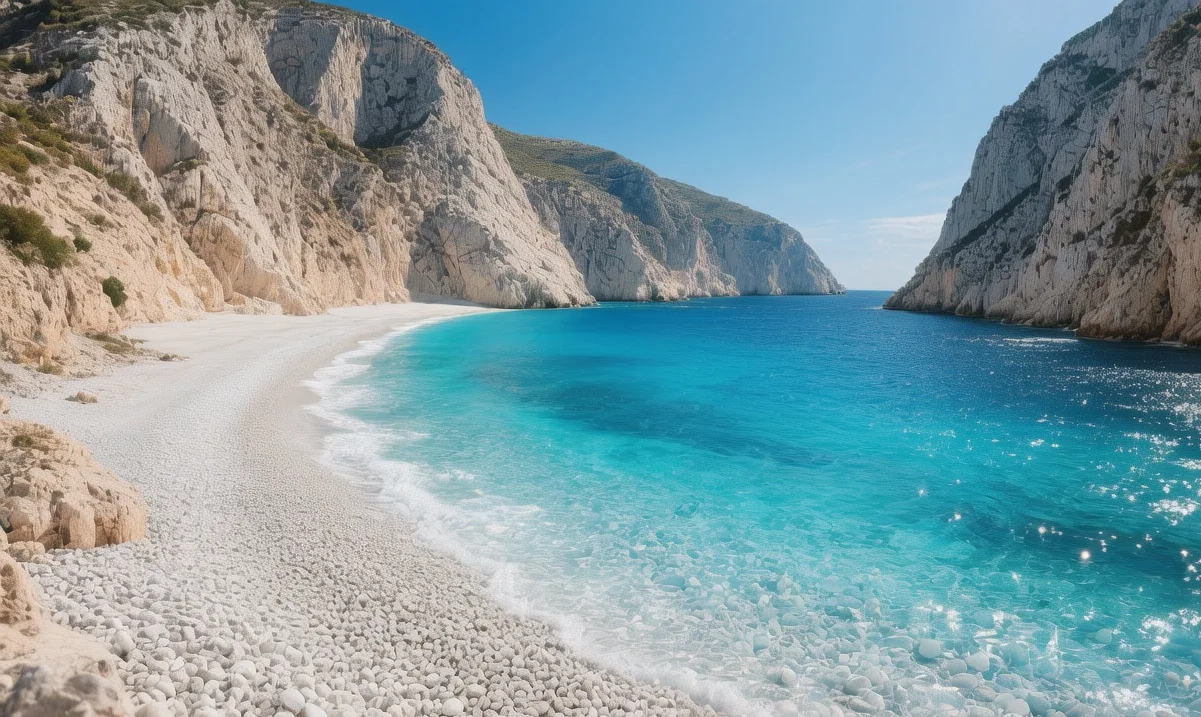
Myrtos Beach: Where White Pebble Bay Meets Limestone Cliffs
I stand at the viewpoint above Myrtos Beach at ten to nine on a June morning. Sunlight hits the curve of the bay and turns the water turquoise and deep blue, shifting shades where the seabed drops away. White pebbles stretch along the shore in a long clean line. Cliffs rise three hundred meters behind, steep and green where grass holds, bare and grey where stone shows. The air feels cool up here. Wind carries salt scent and the faint sound of waves breaking far below. I walk to the edge and look down. The road winds sharply through hairpin turns toward the shore. It looks narrow. It looks steep. And I understand why this beach draws visitors from across the world.
Why Myrtos Beach Matters
Myrtos stands as one of the most photographed stretches of coast in Greece. White rounded stones cover the shore, and the water holds clarity that reveals every rock and ripple beneath. The bay curves between near-vertical limestone cliffs that drop straight into the sea. This formation creates a view that appears almost unreal. People come expecting calm shallows and gentle waves. They find instead an open bay facing west. Water deepens quickly. Swells roll in unobstructed. On windy days the sea turns rough and swimming becomes unsafe. Some visitors feel disappointed. They came for perfect postcard conditions and found strong currents and choppy water. That honesty matters. Myrtos was not built for comfort. It remains wild and exposed. Its beauty comes from scale and contrast, not from safe, calm waters.
The Best Time to Experience Myrtos Beach
Late May through June offers ideal conditions. Air temperatures sit between 20°C and 26°C (68°F and 79°F). Sea warms to 19°C to 22°C (66°F to 72°F). Light hits the bay well and crowds stay manageable. July and August bring heat from 27°C to 33°C (81°F to 91°F). The sun beats directly down and the beach offers almost no shade. Arrive before nine in the morning or after five in the afternoon. Midday becomes uncomfortably hot. September through early October brings 22°C to 28°C (72°F to 82°F). Sea stays warm and visitors thin. This may be the best balance overall. Mid-October onward brings rain and cooler days 16°C to 22°C (61°F to 72°F). Winds pick up and swimming grows unpredictable. Winter sees the access road closed at times due to weather. The viewpoint stays reachable but the beach itself becomes difficult and unsafe to descend.
Approximate Budget for a 7-Day Trip
Prices reflect Kefalonia island stay with Myrtos Beach as a key destination. Costs peak July and August.
- Accommodation: €45–€80 per night in Argostoli or nearby villages. Weekly: €315–€560
- Food & Drink: €14–€24 daily at local tavernas. Weekly: €98–€168
- Transport: Ferry from Kyllini: €12–€18 per person one-way; car €40–€60. Rental car: €35–€55 daily. Weekly: €295–€445
- Beach & Site Fees: Myrtos: free entry. Sunbeds: €12–€16 per set. Other beaches: mostly free. Weekly: €25–€35
- Miscellaneous: Water, snacks, sunscreen. Weekly: €30–€50
Total estimated cost: €763–€1,258 per person. Skip the beachfront sunbed rentals at Myrtos. They charge premium prices and offer little shade anyway. Bring your own towel and umbrella from town. You save money and choose exactly where to sit.
Essential Myrtos Beach Experiences
- View Myrtos from the roadside viewpoint. Stop at the signed pull-off on the main road above Divarata. The full curve of the bay opens below. Early morning light shows the water at its clearest and most vivid. This is the view everyone photographs.
- Walk the shoreline at low tide. White pebbles stretch far along the curve. Water clarity changes with each step. Look back upward at the cliffs. Scale becomes clear only from down below. Skip walking far if waves run high; the tide covers the stones quickly.
- Swim where the bay stays calm. Water stays clearer and quieter near the northern end. The seabed drops fast so watch children closely. Wear water shoes; stones stay sharp and slippery underfoot.
- Stay through sunset. The bay faces west. Sun drops directly into the water. Cliffs turn gold and blue deepens to violet. Most visitors leave by late afternoon. You may have the shore nearly to yourself.
- Drive the access road slowly. Two and a half kilometers of steep hairpins descend from Divarata. Views unfold at every turn. Go carefully. Vehicles coming uphill have right of way.
- Explore the small sea cave. At the northern edge of the beach, a cave opens at water level. You can swim inside when the sea stays calm. Stay clear if waves run high; currents can pull you against rocks.
Hidden Gems Most Travelers Miss
- Quiet viewpoint just past the main pull-off. Drive five hundred meters farther toward Assos. A small unmarked clearing sits on the right. The angle shows the bay without crowds or guardrails.
- Path along the northern ridge above the beach. Leaves from Divarata village. Walk forty minutes through olive and pine. Views stretch across Myrtos and far out to sea. No one else walks this way.
- Small cove twenty minutes' walk north along the shore. Sand and pebbles mix in a sheltered pocket. Clear water and total quiet. You can only reach it when the sea stays calm.
- The “famous photo spot” shown everywhere gets crowded by ten in summer. People line up to take the same picture. Arrive before eight or accept that you will wait in line. The view stays the same, but the experience changes.
Cultural & Practical Tips
- Arrive early. The gravel parking lot at the beach fills by 9:30 AM in summer. Latecomers park along the steep access road. Walking back up in heat proves exhausting.
- Carry water and supplies. The single beach bar charges high prices and runs low on stock. Bring everything you need from Divarata or Argostoli.
- Respect sea conditions. The bay faces open water. Currents run strong and waves build fast. Red flags mean no swimming. Many visitors ignore warnings. Do not be one of them.
- Do not attempt the access road without confidence. Steep gradient, tight turns, and loose gravel demand careful driving. Rent a vehicle with manual transmission so you can engine-brake downhill.
- Wear sturdy shoes. The beach consists entirely of smooth white stones. They heat up fast and hurt bare feet. Water shoes or thick-soled sandals make all the difference.
Essential Visitor Information
Location & Access: Northwest Kefalonia, Pylaros region, between Divarata and Assos villages. Approximately 30 km north of Argostoli, 45-minute drive. Options: rental car recommended; taxi from Argostoli €45–€60 one-way; limited public bus to Divarata then 2.5 km steep walk down.
Tickets & Booking: Beach entry: free. Sunbeds: €12–€16 per pair. No booking required; pay attendant on the beach.
Operating Hours: Accessible daylight hours year-round. Access road may close in winter due to weather. Facilities operate May–October roughly 9:00 AM–7:00 PM.
Visit Duration: Minimum 1 hour for viewpoint and quick stop. Recommended 3–4 hours to descend, swim, walk the shore, and return uphill comfortably.
Family Suitability: Children welcome but water deepens dangerously fast. No lifeguards except summer months. No stroller access. Toilets and changing rooms basic at best.
Timing: Best season: late May–June, September–early October. Best time of day: before 9:00 AM or after 5:00 PM. Avoid midday July–August.
Highlights: Main roadside viewpoint, white pebble shoreline, northern sea cave, sunset over western sea, cliffside drive.
Nearby & Day Trip: Divarata village 4 km uphill. Assos village 9 km north, 20-minute drive. Petani Beach 15 km southwest. Fiskardo village 35 km north. Day trip across northern Kefalonia works comfortably in one day.
Conclusion: Travel with Respect, Not Just Camera
Myrtos Beach does not exist to fit photographs. It stands wild and exposed, shaped by wind and sea long before visitors arrived. You come for the view. You stay for the scale. But remember this place remains an open bay, not a protected pool. Currents run strong. Waves change fast. When you leave, take only pictures. Leave nothing behind. And remember: the most beautiful sights often come with the strongest warnings. Respect them.
Post a Comment