
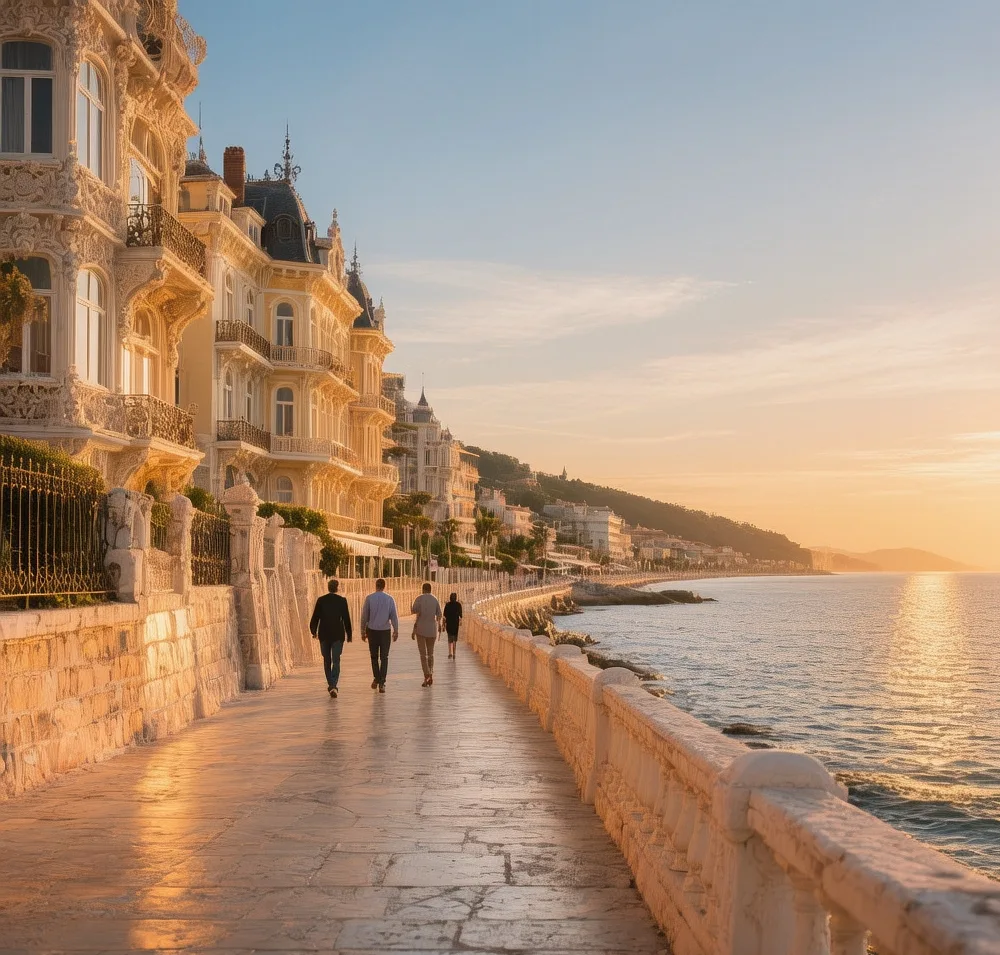
Opatija Lungomare: Where Adriatic Elegance Meets Coastal Serenity
The first light of morning gilds the limestone balustrades of the Lungomare, casting long shadows across the 12-kilometer promenade that clings to the Istrian coastline like a ribbon of stone and memory. You hear it before you see the sea—the gentle lap of waves against weathered rock, the distant chime of church bells from Volosko, the soft murmur of early walkers greeting the day in half a dozen languages. This is the Franz Joseph I Promenade, though locals simply call it the Lungomare: a masterpiece of late 19th-century engineering that connects fishing villages, grand hotels, and hidden coves along the Kvarner Bay. Built in stages between 1885 and 1911, its path follows the natural contours of the coast, rising and falling with the terrain, offering uninterrupted views of the Adriatic's shifting blues. Here, Belle Époque architecture stands sentinel beside Mediterranean pines, while the scent of salt air mingles with jasmine blooming in villa gardens. The Lungomare matters not merely as a scenic walkway but as a living testament to a bygone era when wellness, beauty, and leisure were woven into the very fabric of coastal life—a philosophy that still invites you to slow down, breathe deeply, and rediscover the art of simply being present by the sea.
Why Opatija Lungomare Embodies Austro-Hungarian Elegance
The Lungomare represents far more than a seaside stroll—it embodies the ambitious vision of an era that transformed Opatija into one of Europe's most sophisticated health resorts. When construction began in 1885, engineers faced a formidable challenge: crafting a stable, accessible promenade along a rugged coastline where limestone cliffs plunge directly into the Adriatic. Their solution combined meticulous surveying with innovative construction techniques: reinforced concrete foundations anchored into bedrock, hand-laid limestone pavers set at precise angles for drainage, and ornate cast-iron railings designed to withstand salt corrosion while maintaining aesthetic grace. The northern section, from Volosko to Opatija, opened in 1889—the same year Opatija received official designation as a climatic health resort—while the southern extension to Lovran was completed in 1911, creating the continuous 12-kilometer pathway enjoyed today [[4]].
Beyond its engineering achievements, the Lungomare fulfilled a profound cultural need: providing aristocratic visitors with a therapeutic environment where sea air, gentle exercise, and visual beauty converged to promote physical and mental well-being. Medical authorities of the era prescribed daily walks along the promenade for conditions ranging from respiratory ailments to nervous exhaustion, believing that the iodine-rich atmosphere combined with moderate physical activity accelerated healing. This philosophy attracted royalty, artists, and intellectuals—from Emperor Franz Joseph himself to Gustav Mahler and James Joyce—who sought refuge in Opatija's restorative embrace. The promenade's design intentionally showcases architectural treasures: Villa Angiolina (built 1844), the first grand hotel in Opatija; the iconic statue of the Girl with the Seagull (sculpted 1956); and dozens of Belle Époque villas featuring ornate stonework, wrought-iron balconies, and terraced gardens that cascade toward the sea.
Today, the Lungomare continues to serve its original purpose while adapting to contemporary needs. Its gentle gradient (averaging less than 3% incline) makes it accessible to walkers of all abilities, while strategically placed benches every 150 meters offer resting points with panoramic views. The pathway's width—approximately 2.5 meters—allows comfortable two-way traffic even during peak season, while periodic widening at viewpoints accommodates small groups without disrupting the flow. This thoughtful integration of function and beauty ensures that the Lungomare remains not a museum piece but a living space where history and modern life intersect seamlessly.
The Best Time to Experience Opatija Lungomare
Timing your Lungomare walk transforms the experience from pleasant to extraordinary. For ideal conditions—mild temperatures, fewer crowds, and optimal lighting—plan your visit between May 10 and June 18 or September 8 and October 12. During these shoulder seasons, daytime temperatures range from 18–24°C (64–75°F), with refreshing sea breezes keeping humidity comfortable. Morning walks between 7:30–9:30 AM offer the softest light for photography and the quietest atmosphere, while late afternoon strolls from 5:00–7:00 PM capture the golden hour when the setting sun turns the Adriatic into liquid amber.
Summer brings vibrant energy but also peak crowds: from June 19 through September 7, temperatures climb to 25–29°C (77–84°F), and the promenade sees its highest foot traffic between 10:00 AM and 6:00 PM. However, this period features extended daylight hours and warm evening temperatures of 20–23°C (68–73°F), perfect for sunset walks followed by dinner at seaside konobas. If visiting during peak season, arrive before 9:00 AM or after 7:00 PM to experience the Lungomare's tranquility.
Avoid November through February unless you specifically seek solitude and don't mind temperatures of 6–11°C (43–52°F) with increased rainfall and occasional bura winds—strong northeasterly gusts that can make coastal walks brisk and challenging [[46]]. While winter offers dramatic seascapes and empty pathways, many cafes reduce hours, and some villa gardens close for the season.
For current event calendars, guided tour bookings, and interactive maps of the Lungomare route, visit the www.visitopatija.com official tourism website, which updates regularly with seasonal programming and practical visitor information [[2]].
Approximate Budget for a 7-Day Trip
Opatija offers excellent value compared to other Mediterranean destinations, with the Lungomare itself free to access. The following budget assumes a mid-range travel style with comfortable accommodations, quality dining, and active exploration of the Kvarner region.
- Accommodation: €75–€160 per night for a double room in a sea-view apartment or three-star hotel within walking distance of the Lungomare. Budget options in nearby Matulji start at €55/night; upscale Belle Époque hotels like the Grand Hotel Adriatic run €130–€220/night during peak season [[61]]. Booking directly with properties often yields 10–15% discounts.
- Food: €35–€60 per day per person
- Breakfast: €6–€10 (coffee €2.50, pastry €3, or full breakfast €8 at café)
- Lunch: €12–€20 (pasta with seafood €15, grilled fish plate €18, local cheese and pršut board €14)
- Dinner: €18–€30 (three-course meal with wine at konoba-style restaurant; mid-range dinner for two averages €60) [[66]]
- Transportation:
- Local bus (one zone within Opatija): €2.10 per ride if purchased from driver [[88]]
- Regional bus to Rijeka or Pula: €5–€12 depending on distance
- Car rental: €35–€55/day (useful for exploring Istria; parking in Opatija averages €1.50/hour)
- Pula Airport transfers: €65 one-way taxi or €15 bus to Opatija + €5 local transport
- Attractions:
- Lungomare access: Free
- Villa Angiolina guided tour: €8 per person
- Croatian Walk of Fame photo stops: Free
- Beach chair rental (Slatina Beach): €12/day
- Boat excursion to nearby islands: €25–€45
- Miscellaneous:
- Souvenirs: €10–€35 (local olive oil, lavender products, Lungomare postcards)
- Tourist tax: €2.20 per person per night (April–September); €1.50 off-season [[65]]
- Travel insurance: €25–€40 for week-long coverage
Total estimated cost for 7 days: €820–€1,450 per person (based on double occupancy; solo travelers should add 30–40% for single-room supplements)
7 Essential Opatija Lungomare Experiences
- Walk the entire Lungomare at sunrise: Begin in Volosko at 6:30–7:30 AM, when the fishing harbor awakens and the first light illuminates the birthplace of scientist Andrija Mohorovičić. Walk southward toward Lovran, covering the full 12 kilometers at a leisurely pace (allow 3–4 hours with photo stops). You'll experience the promenade's changing character—from intimate coves near Volosko to grand villa gardens in Opatija to wilder coastal stretches near Lovran—without the daytime crowds. Bring water and wear grippy shoes; morning dew can make limestone pavers slippery.
- Photograph the Girl with the Seagull at golden hour: This iconic bronze statue, perched on a rocky outcrop near Slatina Beach, becomes magical during the hour before sunset (approximately 6:30–7:30 PM in summer). Position yourself on the seaward side to capture the statue silhouetted against the Adriatic, with the setting sun creating a shimmering path of light across the water. Arrive 15 minutes early to secure the best vantage point, as this is Opatija's most photographed landmark.
- Explore Villa Angiolina and Angiolina Park: Enter the park gates near the Lungomare's midpoint (open daily 8:00 AM–8:00 PM, free entry) to discover subtropical gardens featuring camellias, magnolias, and century-old pines. The villa itself, built in 1844 as the first grand hotel in Opatija, now hosts cultural exhibitions. Allow 45–60 minutes to wander the pathways, noting the microclimates created by strategic plantings that allow Mediterranean and exotic species to thrive side by side.
- Stop for coffee at a Lungomare café: Pause at one of the promenade's historic cafés—Café Riva or Café Molo Longo offer terraces directly overlooking the sea. Order a kava (Croatian coffee, similar to espresso) for €2.50 and a kremšnita (cream slice) for €4, then linger while watching sailboats glide across the bay. Morning visits (8:00–10:00 AM) provide the most authentic local atmosphere, when residents gather to read newspapers and discuss the day ahead.
- Discover hidden coves along the route: Between the main viewpoints, small stone staircases descend to secluded pebble beaches accessible only via the Lungomare. Look for unmarked paths near kilometer markers 3.2, 5.7, and 8.9; these lead to intimate swimming spots with crystal-clear water. Bring water shoes for rocky entries, and visit between 10:00 AM–12:00 PM when the sun illuminates the underwater landscape for exceptional snorkeling.
- Attend an evening concert in Villa Park: During summer months, Angiolina Park hosts open-air classical music performances (typically Thursdays at 8:00 PM, free admission). Bring a light blanket to sit on the grass, and arrive by 7:30 PM to claim a spot with good acoustics. The combination of live music, fragrant gardens, and sea breezes creates an unforgettable sensory experience that embodies Opatija's cultural heritage.
- Watch the sunset from the Lovran endpoint: Conclude your Lungomare journey at the Lovran terminus, where a small plaza offers panoramic views westward along the coast. Time your arrival for 7:00–8:00 PM in summer, when the setting sun paints the sky in shades of rose and gold. Stay for dinner at a nearby konoba—many offer terrace seating with uninterrupted sea views, serving fresh Adriatic seafood at reasonable prices (€18–€25 for main courses).
3 Hidden Gems Most Travelers Miss
- The Mohorovičić Memorial in Volosko: At the Lungomare's northern starting point, a modest plaque marks the birthplace of Andrija Mohorovičić, the Croatian scientist who discovered the boundary between Earth's crust and mantle. Most visitors rush past this site, but the small adjacent garden offers a quiet bench with views of Volosko's fishing harbor. Visit between 4:00–5:30 PM, when the afternoon light illuminates the harbor's colorful boats and the scent of grilling fish drifts from nearby konobas. No admission fee; accessible 24/7.
- The freshwater spring at Dražica: Hidden behind an unmarked stone archway at kilometer marker 4.3, a natural freshwater spring has provided drinking water to locals for centuries. The small port of Dražica features a restored stone fountain where you can fill your water bottle with cool, clean water—a welcome refreshment during summer walks. Look for the subtle plaque in Croatian; the entrance is easy to miss, so watch for the distinctive stone arch on the landward side of the promenade. Best visited mid-morning (9:00–11:00 AM) when the light filters through overhanging fig trees.
- The abandoned railway tunnel viewpoint: Near kilometer marker 9.1, a short detour inland leads to a former railway tunnel (part of the historic Istrian rail network) that now serves as an impromptu art gallery. Local painters occasionally display works on the tunnel walls, and the elevated position offers unique perspectives of the Lungomare winding below. Access via the stone staircase marked "Stari Tunel"; the path is steep but short (5 minutes). Visit on weekday afternoons (2:00–4:00 PM) when artists are most likely to be present; bring a flashlight if exploring the tunnel interior.
Cultural & Practical Tips
- Language essentials: Croatian is the official language, though Italian and German are widely understood in tourist areas. Essential phrases: Dobar dan (DOH-bar dahn) for "Good day," Hvala (HVAH-lah) for "Thank you," Oprostite (oh-PROH-stee-teh) for "Excuse me," and Živjeli (ZHEE-vyeh-lee) for "Cheers." Many signs are bilingual (Croatian/English).
- Photography etiquette: The Lungomare is a public space, but respect residents' privacy when photographing villa gardens or private terraces. Avoid using tripods during peak hours (10:00 AM–6:00 PM) to prevent obstructing pedestrian flow. Drone photography requires prior permission from the Opatija Tourist Board (+385 51 272 600) due to proximity to residential areas and occasional low-flying aircraft.
- Footwear recommendations: The Lungomare's limestone pavers are generally even but can become slippery when wet or covered in morning dew. Wear closed-toe shoes with good grip—sandals are acceptable in dry summer conditions but offer less stability. The pathway has minimal elevation changes, making it suitable for most mobility levels.
- Currency and payments: Croatia adopted the Euro (€) in January 2023. While most cafés and shops accept credit cards, smaller vendors and parking meters may require cash. ATMs are plentiful in Opatija center; bring €20–€50 in small denominations for incidental purchases and tips.
- Weather preparedness: Coastal weather can shift rapidly. Even in summer, bring a light windbreaker for evening walks—the sea breeze can feel cool after sunset. In spring and fall, pack layers; temperatures can vary by 8–10°C (14–18°F) between morning and afternoon. Check the forecast for bura wind warnings, which can make coastal walks brisk and occasionally hazardous.
- Respect local rhythms: Many Opatija residents use the Lungomare for their daily exercise, particularly early morning and late evening. Keep conversations at a moderate volume, yield to faster walkers or runners, and avoid blocking the pathway for extended photo sessions. Between 1:00–4:00 PM, some cafés observe a quiet period aligned with traditional rest time.
- Accessibility information: The Lungomare is largely wheelchair-accessible, with gentle gradients and smooth surfaces throughout most sections. However, a few short segments feature steps or uneven terrain; consult the interactive map on the official tourism website for detailed accessibility notes. Accessible restrooms are available at Slatina Beach and near Villa Angiolina.
Conclusion: Travel with Presence, Not Just Pace
The Lungomare invites a different rhythm of travel—one measured not in miles covered but in moments noticed: the way morning light catches the curve of a villa's balcony, the sound of waves echoing through a stone archway, the shared smile with a local walker who nods as you pass. To rush along this historic promenade, checking off landmarks like items on a list, is to miss its essential gift: the opportunity to slow down, to breathe the iodine-rich air, to let the Adriatic's timeless beauty recalibrate your sense of time itself.
Your journey along the Lungomare carries gentle responsibility: support local businesses by purchasing from family-run konobas and artisan shops; respect the residential character of this living community by observing quiet hours and treading lightly on historic surfaces; and recognize that the promenade's preservation depends on visitors who value authenticity over spectacle. Leave space in your itinerary for unplanned pauses—the impromptu conversation with a painter capturing the light, the sudden urge to dip your toes in a hidden cove, the realization that sometimes the most profound travel experiences arrive not from grand gestures but from simply being present.
Walk the Lungomare not as a tourist collecting destinations, but as a guest honored to share in a century-old tradition of coastal contemplation. Let the sea air clear your mind, let the stone pathway ground your steps, and let Opatija's elegant serenity remind you that the greatest luxury is not speed but stillness—the courage to linger, to notice, to truly arrive.