
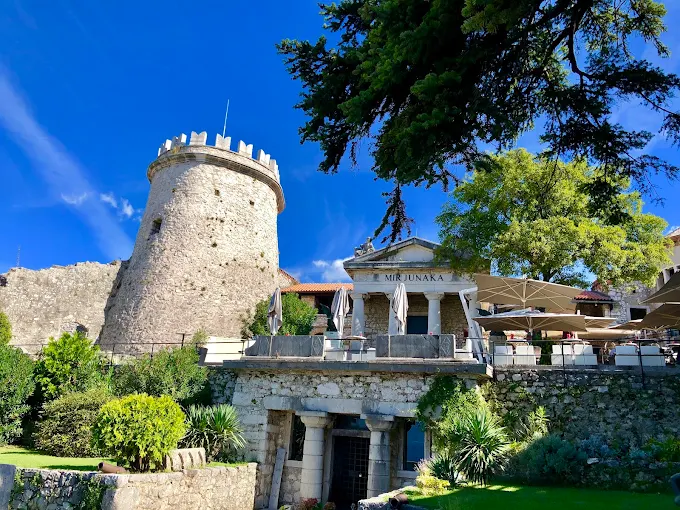
Trsat Castle: Where Medieval Stone Meets Adriatic Majesty
The morning sun climbs over the Kvarner Bay, gilding the limestone walls of Trsat Castle perched 138 meters above Rijeka's harbor—a sentinel that has watched over this strategic crossroads for more than seven centuries. You hear it before you see the full panorama: the distant hum of ferry engines, the chime of church bells from the Franciscan monastery, the soft rustle of Mediterranean pines swaying in the bora breeze. This fortress, first documented in 1288 and expanded by the mighty Frankopan dynasty, commands a view that stretches from the industrial port of Croatia's third-largest city to the emerald islands dotting the Adriatic horizon [[6]]. The famous Petar Kružić staircase—561 weathered stone steps carved into the hillside—invites pilgrims and wanderers alike to ascend through layers of history, each tread echoing with footsteps of medieval merchants, Habsburg soldiers, and modern travelers seeking perspective. Within these restored walls, where arrow slits now frame Instagram-worthy vistas and ancient cisterns sit beside contemporary exhibition panels, Trsat Castle matters not as a relic behind glass but as a living dialogue between past and present—a place where you can touch history while breathing air scented with salt, pine, and possibility.
Why Trsat Castle Embodies Strategic Preservation
Trsat Castle represents far more than a scenic viewpoint—it embodies the ingenious adaptation of military architecture to serve evolving cultural and spiritual needs across centuries. Built atop a naturally defensible limestone promontory, the fortress solved a critical problem for medieval powers: controlling the vital land-and-sea corridor between Central Europe and the Mediterranean. The Frankopan family, who held Trsat from the 13th through the 17th century, engineered formidable defenses: curtain walls averaging 1.8 meters thick, a rectangular keep with 2.4-meter-thick walls, and strategically positioned battlements offering overlapping fields of fire across the Rječina River valley and Adriatic approaches [[3]]. These structures were not merely defensive; they projected authority, protected trade routes, and provided refuge for local populations during Ottoman incursions.
Beyond its military function, Trsat fulfilled a profound spiritual need. In the 15th century, the Franciscan Order established a monastery within the castle complex, transforming the fortress into a pilgrimage destination centered on the venerated icon of Our Lady of Trsat. This dual identity—martial stronghold and sacred sanctuary—created a unique cultural ecosystem where soldiers prayed beside monks, and where defensive architecture accommodated chapels, cloisters, and hospices for travelers. The castle's preservation philosophy, initiated in the 1960s with Croatia's first major medieval conservation intervention, prioritized structural integrity while revealing historical layers: original 13th-century masonry stands alongside 19th-century restoration work, all stabilized using traditional lime mortar techniques that allow the stone to "breathe" in the coastal climate [[5]].
Today, the castle's engineering continues to impress: its rainwater collection system, carved into bedrock beneath the courtyard, still functions after 700 years; the orientation of windows and terraces maximizes natural ventilation while minimizing summer heat gain; and the gentle slope of access pathways (averaging 8% grade) ensures accessibility without compromising the site's historic character. This thoughtful integration of function, faith, and fortification makes Trsat Castle not a frozen monument but a dynamic space where history remains tangible, relevant, and deeply human.
The Best Time to Experience Trsat Castle
Timing your Trsat Castle visit dramatically shapes your experience of this hilltop sanctuary. For optimal conditions—clear views, comfortable temperatures, and manageable crowds—plan your ascent between May 12 and June 22 or September 6 and October 18. During these shoulder seasons, daytime temperatures range from 17–24°C (63–75°F), with refreshing sea breezes keeping humidity pleasant. Morning visits between 8:00–10:00 AM offer the softest light for photography and the quietest atmosphere, while late afternoon walks from 5:00–7:00 PM capture golden-hour panoramas as the setting sun ignites the Adriatic in shades of amber and rose.
Summer brings vibrant energy but also peak visitation: from June 23 through September 5, temperatures climb to 25–30°C (77–86°F), and cruise ship arrivals can create crowds between 10:00 AM and 4:00 PM. However, this period features extended daylight hours and warm evenings of 20–24°C (68–75°F), perfect for sunset viewing followed by dinner in Rijeka's old town. If visiting during peak season, arrive before 9:00 AM or after 6:00 PM to experience Trsat's tranquility and secure unobstructed viewpoints.
Avoid November through February unless you specifically seek solitude and don't mind temperatures of 5–11°C (41–52°F) with increased rainfall and occasional bura winds—strong northeasterly gusts that can make the hilltop exposure brisk and occasionally challenging [[4]]. While winter offers dramatic storm-watching opportunities and empty pathways, some exhibition spaces reduce hours, and the Petar Kružić staircase can become slippery when wet.
For current opening hours, exhibition schedules, and guided tour bookings, visit the www.visitrijeka.hr official tourism website, which provides comprehensive visitor information for Trsat Castle and Rijeka's cultural offerings [[12]].
Approximate Budget for a 7-Day Trip
Rijeka offers excellent value among Adriatic destinations, with Trsat Castle itself free to enter. The following budget assumes a mid-range travel style with comfortable accommodations, quality dining, and active exploration of the Kvarner region.
- Accommodation: €65–€140 per night for a double room in a city-center apartment or three-star hotel within walking distance of the Petar Kružić staircase. Budget options in suburban Rijeka start at €45/night; upscale sea-view hotels run €110–€190/night during peak season. Booking directly with properties often yields 10–15% discounts.
- Food: €30–€55 per day per person
- Breakfast: €5–€9 (coffee €2, pastry €2.50, or full breakfast €7 at café)
- Lunch: €10–€18 (pasta with seafood €14, grilled fish plate €16, local cheese and pršut board €12)
- Dinner: €15–€28 (three-course meal with wine at konoba-style restaurant; mid-range dinner for two averages €55)
- Transportation:
- Local bus (one zone within Rijeka): €1.70 per ride if purchased from driver
- Regional bus to Opatija or Pula: €4–€10 depending on distance
- Car rental: €30–€50/day (useful for exploring Istria; parking near Trsat averages €1.20/hour)
- Rijeka Airport transfers: €55 one-way taxi or €12 bus to city center + €2 local transport
- Attractions:
- Trsat Castle entry: Free (museum collection €4 optional)
- Franciscan monastery guided tour: €6 per person
- Boat excursion to Krk or Cres islands: €22–€40
- Rijeka City Museum entry: €5
- Wine tasting at local vineyards: €8–€15
- Miscellaneous:
- Souvenirs: €8–€30 (local olive oil, lavender products, Trsat postcards)
- Tourist tax: €1.80 per person per night (April–September); €1.20 off-season
- Travel insurance: €20–€35 for week-long coverage
Total estimated cost for 7 days: €720–€1,280 per person (based on double occupancy; solo travelers should add 25–35% for single-room supplements)
7 Essential Trsat Castle Experiences
- Climb the Petar Kružić staircase at sunrise: Begin your ascent from the base in Rijeka's old town by 6:30–7:30 AM, when the 561 stone steps are quiet and the morning light illuminates the chapels dedicated to St. George along the route. Allow 30–45 minutes for the climb at a leisurely pace, pausing at the seven resting points where pilgrims traditionally pray. You'll reach the castle as the sun clears the eastern hills, casting golden light across the fortress walls and revealing panoramic views of Rijeka waking below. Bring water and wear grippy shoes; the limestone steps can be slippery when damp.
- Photograph the panoramic viewpoint at golden hour: Position yourself on the castle's southeastern terrace approximately one hour before sunset (6:00–7:30 PM in summer) to capture the iconic vista: Rijeka's harbor bustling with ferries, the emerald islands of Krk and Cres on the horizon, and the sun setting over the Adriatic in a blaze of color. This vantage point, framed by medieval crenellations, offers the perfect composition for both wide-angle landscapes and intimate details like weathered stone textures. Arrive 15 minutes early to secure the best spot, as this is Trsat's most photographed location.
- Explore the Franciscan monastery and Church of Our Lady: Enter the monastery complex (open daily 7:00 AM–7:00 PM, free entry) to discover the venerated icon of Our Lady of Trsat, housed in a baroque altar adorned with silver votive offerings. Allow 30–40 minutes to wander the cloister garden, noting the subtle scent of lavender and rosemary, and examine the exhibition panels detailing the site's spiritual significance. The church's acoustic properties create a serene atmosphere perfect for quiet reflection, even amid daytime visitors.
- Visit the castle museum collection: The permanent exhibition within the castle's restored keep (entry €4, open 9:00 AM–5:00 PM) showcases archaeological finds, historical documents, and interactive displays about Trsat's evolution from Roman outpost to medieval fortress to modern cultural landmark [[11]]. Allow 45 minutes to engage with the multimedia stations, which include augmented-reality reconstructions of the castle's appearance in different historical periods. The digital info kiosk enables virtual exploration of areas not accessible to the public [[9]].
- Enjoy coffee at the castle café terrace: Pause at the castle's hospitality venue (open until midnight) to savor a kava (Croatian coffee, similar to espresso) for €2.50 while overlooking the Kvarner Bay. Order a slice of local štrudla (fruit strudel) for €4, then linger as the afternoon light shifts across the water. Evening visits offer a magical atmosphere: the castle illuminated against the darkening sky, with Rijeka's city lights twinkling below—a perfect moment for contemplation or conversation.
- Attend an evening cultural event: During summer months, Trsat Castle hosts open-air concerts, theater performances, and art exhibitions in the courtyard (typically Fridays and Saturdays at 8:00 PM, free or €5–€12 admission). Check the official tourism website for the current program, arrive by 7:30 PM to claim seating, and bring a light shawl—the hilltop breeze can feel cool after sunset. The combination of live performance, historic architecture, and panoramic backdrop creates an unforgettable sensory experience.
- Walk the castle perimeter at dusk: Conclude your visit with a slow circuit of the fortress walls as twilight descends (7:30–8:30 PM in summer). The soft light accentuates the texture of ancient stonework, while the fading crowds allow for unhurried photography and quiet observation. Look for the subtle glow of Rijeka's harbor lights reflecting on the water, and listen for the distant sound of ferry horns—a reminder that this medieval sentinel still watches over a living, breathing port city.
3 Hidden Gems Most Travelers Miss
- The Roman-era cistern beneath the courtyard: Hidden beneath the castle's main plaza lies a remarkably preserved Roman water cistern, carved directly into the limestone bedrock and capable of storing approximately 30,000 liters of rainwater. Most visitors overlook the unmarked access hatch near the café terrace; ask the staff for permission to view this engineering marvel (available during daylight hours, no additional fee). The cool, dim interior maintains a constant 14°C (57°F) year-round, and the acoustic properties create an almost meditative atmosphere. Best visited mid-morning (10:00–11:30 AM) when natural light filters through the opening.
- The hidden chapel of St. George on the staircase: Along the Petar Kružić staircase, the fourth chapel dedicated to St. George features a rarely noticed fresco fragment dating to the 16th century, depicting the saint slaying the dragon in vibrant ochre and blue pigments. Most climbers rush past this small sanctuary, but pausing here offers both historical insight and a moment of quiet reflection. The chapel is unlocked daily from dawn to dusk; look for the subtle plaque in Croatian and Latin. Visit between 4:00–5:30 PM, when the afternoon light illuminates the fresco through the narrow window.
- The Franciscan herb garden terrace: Behind the monastery's eastern wing, a small terraced garden cultivates medicinal herbs traditionally used by the friars: lavender, sage, rosemary, and chamomile. This peaceful spot, accessible via an unmarked door near the cloister (ask a monk for permission; typically open 3:00–5:00 PM), offers a secluded bench with views over Rijeka's rooftops. The scent of sun-warmed herbs creates a sensory experience that connects visitors to centuries of monastic healing traditions. Bring a notebook; this is an ideal place for journaling or sketching away from the main tourist flow.
Cultural & Practical Tips
- Language essentials: Croatian is the official language, though Italian and German are widely understood in Rijeka's tourist areas. Essential phrases: Dobar dan (DOH-bar dahn) for "Good day," Hvala (HVAH-lah) for "Thank you," Oprostite (oh-PROH-stee-teh) for "Excuse me," and Živjeli (ZHEE-vyeh-lee) for "Cheers." Many signs are bilingual (Croatian/English).
- Photography etiquette: Trsat Castle is a public space, but respect religious areas: avoid flash photography inside the Church of Our Lady, and refrain from photographing worshippers during services (typically 7:00–8:00 AM and 6:00–7:00 PM). Drone photography requires prior permission from the Rijeka Tourist Board (+385 51 335 882) due to proximity to residential areas and occasional low-flying aircraft.
- Footwear recommendations: The Petar Kružić staircase and castle pathways feature uneven limestone surfaces that can become slippery when wet. Wear closed-toe shoes with good grip—sandals are acceptable in dry summer conditions but offer less stability on the 561 steps. The climb gains approximately 138 meters in elevation; allow extra time if mobility is a concern.
- Currency and payments: Croatia adopted the Euro (€) in January 2023. While most cafés and shops accept credit cards, smaller vendors and parking meters may require cash. ATMs are plentiful in Rijeka center; bring €20–€50 in small denominations for incidental purchases and tips.
- Weather preparedness: Coastal weather can shift rapidly. Even in summer, bring a light windbreaker for evening visits—the hilltop exposure means sea breezes can feel cool after sunset. In spring and fall, pack layers; temperatures can vary by 7–10°C (13–18°F) between morning and afternoon. Check the forecast for bura wind warnings, which can make the ascent brisk and occasionally hazardous.
- Respect local rhythms: Many Rijeka residents use the Petar Kružić staircase for daily exercise, particularly early morning and late evening. Keep conversations at a moderate volume, yield to faster walkers, and avoid blocking the narrow staircase for extended photo sessions. Between 1:00–4:00 PM, some monastery areas observe a quiet period aligned with traditional rest time.
- Accessibility information: While the Petar Kružić staircase is not wheelchair-accessible, a paved road winds up Trsat Hill from the opposite side, allowing vehicle access to the castle entrance. The courtyard and main terrace are largely level, though some exhibition areas feature steps; consult the official tourism website for detailed accessibility notes. Accessible restrooms are available near the castle café.
Conclusion: Travel with Reverence, Not Just Checklists
Trsat Castle invites a different rhythm of travel—one measured not in landmarks collected but in connections made: the weight of history beneath your fingertips on ancient stone, the shared silence with a pilgrim lighting a candle, the sudden clarity that comes from viewing your own life against the vastness of sea and sky. To rush through this hilltop sanctuary, snapping photos without pausing to feel the breeze or listen to the bells, is to miss its essential gift: the opportunity to slow down, to reflect, to let centuries of human aspiration recalibrate your sense of what endures.
Your visit carries gentle responsibility: support preservation by purchasing from local artisans and respecting the site's fragility; honor the spiritual significance of the monastery by observing quiet in sacred spaces; and recognize that Trsat's power lies not in spectacle but in authenticity. Leave space in your itinerary for unplanned moments—the conversation with a monk about the icon's history, the unexpected view of a dolphin leaping in the bay below, the realization that sometimes the most profound travel experiences arrive not from grand gestures but from simply being present.
Ascend Trsat not as a tourist checking boxes, but as a guest honored to share in a centuries-old tradition of pilgrimage and perspective. Let the stone ground your steps, let the sea air clear your mind, and let this medieval sentinel remind you that the greatest luxury is not speed but stillness—the courage to linger, to notice, to truly arrive.