
Trakošćan Castle: Where Romantic Legends Meet Zagorje Wilderness
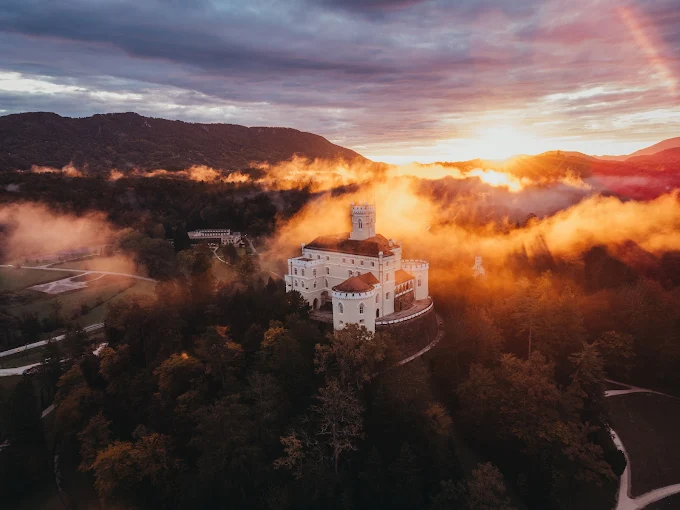
Morning mist curls around the turrets of Trakošćan Castle, perched 375 meters above the emerald forests of Croatia's Zagorje region—a fairy-tale silhouette reflected in the still waters of the castle lake below. You hear it before you see the full panorama: the gentle lap of water against stone embankments, the distant call of a black woodpecker echoing through beech and oak canopies, the soft crunch of gravel beneath your boots as you ascend the winding forest path. This romantic Gothic Revival masterpiece, first documented in 1334 and transformed into its current dreamlike form during the 19th century by the noble Drašković family, commands a view that stretches across rolling vineyards, medieval church spires, and the distant Medvednica Mountain guarding Zagreb. Within these carefully restored walls, where original Gothic vaults meet Romantic-era frescoes and period furnishings tell stories of aristocratic life, Trakošćan Castle matters not merely as a picturesque destination but as a living testament to the power of preservation—a place where you can walk through centuries of Croatian history while breathing air scented with pine, damp earth, and the quiet magic of a landscape that has inspired poets, painters, and dreamers for seven hundred years.
Why Trakošćan Castle Embodies Romantic Preservation
Trakošćan Castle represents far more than a scenic fortress—it embodies one of Central Europe's most thoughtful examples of Romantic-era restoration, where historical authenticity and aesthetic vision converged to create a living monument. When Count Juraj Drašković commissioned the castle's transformation between 1850 and 1860, he faced a delicate challenge: how to honor the medieval structure's defensive origins while adapting it for 19th-century aristocratic life. The solution combined meticulous historical research with Romantic sensibility: original 14th-century stone walls were preserved and reinforced with traditional lime mortar, Gothic window arches were restored using period quarry sources, and new wings were designed to harmonize with the existing silhouette rather than dominate it [[4]]. The result is a architectural palimpsest where every era remains legible: Romanesque foundations, Gothic defensive towers, Renaissance residential additions, and Romantic decorative elements coexist in deliberate, respectful dialogue.
Beyond its architectural significance, Trakošćan fulfills a profound cultural need: preserving the tangible heritage of Croatia's noble families while making it accessible to the public. The castle's museum collection, established in 1944 and continuously expanded, houses over 3,000 artifacts including period furniture, portraits of the Drašković dynasty, historical weapons, and decorative arts that illustrate daily life across five centuries [[7]]. Conservation techniques prioritize reversibility and minimal intervention: climate-controlled display cases maintain 18–20°C (64–68°F) with 45–55% relative humidity to protect delicate textiles and paper; LED lighting with UV filters prevents fading of historic pigments; and digital documentation ensures that every restoration decision is recorded for future scholars. This philosophy extends to the surrounding landscape: the 17-hectare English-style park, designed in the 1860s with winding paths, specimen trees, and the artificial lake, is managed using traditional horticultural methods that preserve its Romantic character while supporting local biodiversity [[12]].
Today, Trakošćan's engineering continues to impress: the castle's original rainwater collection system, carved into bedrock beneath the courtyard, still functions after 700 years; the orientation of windows maximizes natural light while minimizing heat gain; and the gentle slope of access pathways ensures accessibility without compromising the site's historic character. This thoughtful integration of conservation, education, and beauty ensures that Trakošćan remains not a frozen exhibit but a dynamic space where history remains tangible, relevant, and deeply human.
The Best Time to Experience Trakošćan Castle
Timing your Trakošćan visit dramatically shapes your encounter with this Romantic sanctuary. For optimal conditions—pleasant weather, vibrant foliage, and manageable crowds—plan your arrival between May 10 and June 20 or September 5 and October 18. During these shoulder seasons, daytime temperatures range from 16–24°C (61–75°F), with refreshing forest breezes keeping humidity comfortable. Morning visits between 8:00–10:00 AM offer the softest light for photographing the castle's reflection in the lake, while late afternoon walks from 4:30–6:30 PM capture golden-hour warmth that makes stone facades glow amber.
Summer brings reliable sunshine but also increased visitation: from June 21 through September 4, temperatures climb to 25–30°C (77–86°F), and the castle sees peak foot traffic between 10:00 AM and 4:00 PM, especially on weekends. However, this period features extended daylight hours and warm evenings of 18–22°C (64–72°F), perfect for sunset photography from the lakeside viewpoint. If visiting during peak season, arrive before 9:00 AM or after 5:00 PM to experience Trakošćan's tranquility and secure unobstructed viewpoints [[15]].
Avoid November through February unless you specifically seek solitude and don't mind temperatures of 0–7°C (32–45°F) with frequent fog, rain, or occasional snow. While winter offers atmospheric mist-shrouded towers and empty forest trails, the castle reduces hours (open weekends only), and the lake may freeze, limiting photography opportunities.
For current opening hours, exhibition schedules, and guided tour bookings, visit the www.trakoscan.hr official tourism website, which provides comprehensive visitor information for Trakošćan Castle and Nature Park in Croatian, English, and German [[2]].
Approximate Budget for a 7-Day Trip
Trakošćan Castle offers exceptional value among European heritage destinations, with the castle and park accessible at modest prices. The following budget assumes a mid-range travel style with comfortable accommodations in nearby towns like Varaždin or Krapina, quality dining, and active exploration of the Zagorje region.
- Accommodation: €60–€120 per night for a double room in a family-run guesthouse or boutique hotel within 20 minutes' drive of the castle. Budget options in rural Zagorje start at €45/night; upscale agritourism estates with vineyard views run €95–€150/night during peak season. Booking directly with properties often yields 10–15% discounts.
- Food: €30–€52 per day per person
- Breakfast: €5–€9 (coffee €2, pastry €2.50, or full breakfast €7 at local konoba)
- Lunch: €11–€17 (štrukli pastry €13, grilled trout €15, local cheese and pršut board €12)
- Dinner: €16–€26 (three-course Zagorje meal with wine at family restaurant; mid-range dinner for two averages €50)
- Transportation:
- Car rental: €32–€50/day (essential for exploring Zagorje; parking at Trakošćan is free)
- Fuel: €28 total for week (Trakošćan is 40 km from Zagreb, 25 km from Varaždin)
- Zagreb Airport transfers: €65 one-way taxi or €12 bus to Varaždin + €10 local transport
- Attractions:
- Trakošćan Castle entry: €6 adults, €4 students/seniors, free under 7
- Guided castle tour (45 minutes): €3 supplement (English/German)
- Nature Park hiking trails: Free
- Boat rental on castle lake: €8/hour
- Wine tasting at local vineyards: €10–€18
- Miscellaneous:
- Souvenirs: €8–€32 (castle postcards, local honey, lavender products)
- Tourist tax: €1.33 per person per night (April–September); €0.80 off-season
- Travel insurance: €22–€38 for week-long coverage
Total estimated cost for 7 days: €710–€1,240 per person (based on double occupancy; solo travelers should add 25–35% for single-room supplements)
7 Essential Trakošćan Castle Experiences
- Photograph the castle reflection at sunrise: Arrive at the lakeside viewpoint by 6:30–7:30 AM, when morning mist often hovers above the water and the first light illuminates the castle's Gothic turrets. Position yourself on the wooden pier extending into the lake for the iconic composition: castle, forested hill, and perfect reflection. The stillness of early morning minimizes ripples, creating mirror-like conditions. Bring a tripod and polarizing filter to enhance the reflection; allow 30–45 minutes for changing light conditions [[12]].
- Explore the castle museum collection: Enter through the main gate (open daily 9:00 AM–5:00 PM April–October; 10:00 AM–4:00 PM November–March) to discover exhibitions spanning five centuries of Croatian history. Allow 75–90 minutes to engage with period rooms: the Gothic Hall with original vaulted ceilings, the Romantic-era library with leather-bound volumes, and the Drašković family portrait gallery. Audio guides in English, German, and Italian (€2 supplement) provide rich context. Don't miss the armory collection featuring 16th-century weapons and the ceremonial hall with frescoed ceilings depicting historical battles [[7]].
- Walk the Nature Park trails: The castle sits within a 17-hectare English-style landscape park featuring winding paths, specimen trees, and panoramic viewpoints. Follow the marked circular trail (2.8 kilometers, 60–75 minutes at leisurely pace) that loops around the lake, through beech-oak forest, and up to the castle's outer walls. Look for informational panels identifying native flora: European beech, sessile oak, hornbeam, and rare orchids that bloom in late spring. Best visited mid-morning (9:30–11:00 AM) when bird activity peaks and light filters through the canopy.
- Enjoy coffee at the castle café: Pause at the terrace café overlooking the lake (open daily 9:00 AM–6:00 PM) to savor a kava (Croatian coffee, similar to espresso) for €2.50 while taking in the panoramic view. Order a slice of local štrudla (fruit strudel) for €4, then linger as the afternoon light shifts across the water. Evening visits offer a magical atmosphere: the castle illuminated against the darkening sky, with forest sounds providing a natural soundtrack—a perfect moment for contemplation or conversation.
- Attend a Romantic Evening concert: During summer months, the castle's ceremonial hall hosts chamber music performances featuring works by Croatian and Central European composers (typically Fridays at 7:00 PM, €10–€15 admission). The acoustics of the vaulted space amplify every note, creating an intimate experience where you can hear the resonance of period instruments. Arrive by 6:30 PM to claim seating; dress smart-casual. The combination of live music, historic architecture, and candlelight creates an unforgettable sensory experience [[15]].
- Row a boat on the castle lake: Rent a traditional wooden rowboat from the lakeside dock (€8/hour, cash preferred) for a unique perspective of the castle from the water. Paddle gently to the center of the lake for unobstructed photography opportunities and the chance to observe waterfowl: mallards, coots, and occasionally herons fishing along the reed beds. Allow 45–60 minutes; life jackets provided. Best visited mid-afternoon (2:00–4:00 PM) when winds are typically calm and light creates beautiful reflections.
- Watch sunset from the hilltop viewpoint: Conclude your visit by hiking the short trail (15 minutes, moderate incline) to the viewpoint east of the castle, offering panoramic vistas across the Zagorje countryside. Arrive by 6:00–7:30 PM in summer, when the setting sun casts golden light across vineyards, church spires, and distant hills. This is the perfect moment for wide-angle landscape photography and quiet reflection on the landscape that has inspired artists for centuries.
3 Hidden Gems Most Travelers Miss
- The castle's hidden chapel: Tucked behind the main residential wing, the private chapel of St. George features original 19th-century frescoes depicting biblical scenes in soft pastels and gold leaf. Most visitors overlook the unmarked door near the library; ask a staff member for access (available during castle hours, no additional fee). The chapel's acoustics create a serene atmosphere perfect for quiet reflection. Visit mid-morning (10:00–11:30 AM) when natural light streams through the stained-glass window, illuminating the frescoes' delicate details.
- The Drašković family archive reading room: Located in the castle's east wing, this small research space houses digitized copies of historical documents, letters, and estate records from the Drašković dynasty. While primarily for scholars, the room welcomes interested visitors by appointment (email archive@trakoscan.hr at least 48 hours ahead). The 30-minute introduction (free) reveals fascinating stories: love letters between 18th-century nobles, inventories of castle furnishings, and sketches of proposed renovations. Open Tuesday–Thursday 1:00–3:00 PM; bring a notebook for sketching or journaling.
- The forest spring near the northern trail: Hidden along the Nature Park's northern loop, a natural limestone spring has provided fresh water to castle residents for centuries. Most hikers rush past the unmarked stone basin, but pausing here offers a moment of quiet connection with the landscape. The spring maintains a constant 10°C (50°F) year-round; the water is potable and deliciously crisp. Access via the marked trail from the castle's northeast corner; the spring lies 400 meters along the path. Best visited early morning (7:30–9:00 AM) when forest light creates ethereal photo opportunities.
Cultural & Practical Tips
- Language essentials: Croatian is the official language, though English and German are widely understood at the castle. Essential phrases: Dobar dan (DOH-bar dahn) for "Good day," Hvala (HVAH-lah) for "Thank you," Oprostite (oh-PROH-stee-teh) for "Excuse me," and Živjeli (ZHEE-vyeh-lee) for "Cheers." Informational panels are multilingual (Croatian/English/German).
- Photography etiquette: Trakošćan Castle is a public museum, but respect conservation guidelines: avoid flash photography inside exhibition rooms to protect delicate artifacts, and refrain from using tripods in crowded areas. Drone photography requires prior permission from castle management (+385 42 465 226) due to proximity to residential areas and wildlife.
- Footwear recommendations: The castle's stone floors and park trails can be uneven or slippery when wet. Wear sturdy walking shoes with good grip—sandals are acceptable in dry summer conditions but offer less stability on forest paths. The castle interior is fully accessible via ramps; the park trails include gentle inclines suitable for most mobility levels.
- Currency and payments: Croatia adopted the Euro (€) in January 2023. While the castle café and gift shop accept credit cards, entry fees and boat rentals may require cash. ATMs are available in nearby Krapina and Varaždin; bring €20–€50 in small denominations for incidental purchases.
- Weather preparedness: Zagorje weather can shift rapidly. Even in summer, bring a light jacket for evening visits—the forested valley can cool quickly after sunset. In spring and fall, pack layers; temperatures can vary by 8–10°C (14–18°F) between morning and afternoon. Check forecasts for afternoon thunderstorms in summer.
- Respect quiet zones: The castle park is a protected natural area. Keep voices low, especially near the lake where waterfowl nest. Between 1:00–3:00 PM, some areas observe a quiet period aligned with traditional rest time. Dogs are welcome on trails but must be leashed at all times.
- Accessibility information: The castle's ground floor and park pathways are wheelchair-accessible; upper floors require navigating historic stairs. Accessible restrooms are available near the entrance. Consult the official website for detailed accessibility notes and staff assistance options.
Conclusion: Travel with Wonder, Not Just Checklists
Trakošćan Castle invites a different rhythm of travel—one measured not in rooms photographed but in moments felt: the way morning light catches the curve of a Gothic arch, the sound of oars dipping into still water, the shared silence with a fellow traveler watching mist rise from the lake. To rush through this Romantic sanctuary, ticking exhibits off a list without pausing to feel the texture of centuries-old stone or listen to the stories embedded in every fresco, is to miss its essential gift: the opportunity to slow down, to appreciate craftsmanship that valued beauty over speed, to let imperial elegance recalibrate your sense of what endures.
Your visit carries gentle responsibility: support preservation by respecting conservation guidelines and purchasing from local artisans; honor the residential nature of this living heritage site by observing quiet hours and treading lightly on ancient paths; and recognize that Trakošćan's magic lies not in spectacle but in authenticity. Leave space in your itinerary for unplanned discoveries—the impromptu conversation with a conservator restoring a portrait, the unexpected view of a deer stepping through morning mist, the realization that sometimes the most profound travel experiences arrive not from grand gestures but from simply being present.
Walk Trakošćan not as a tourist collecting destinations, but as a guest honored to share in a centuries-old tradition of aesthetic devotion. Let the castle's silhouette inspire your imagination, let the forest air clear your mind, and let this Zagorje jewel remind you that the greatest luxury is not speed but stillness—the courage to linger, to notice, to truly arrive.