
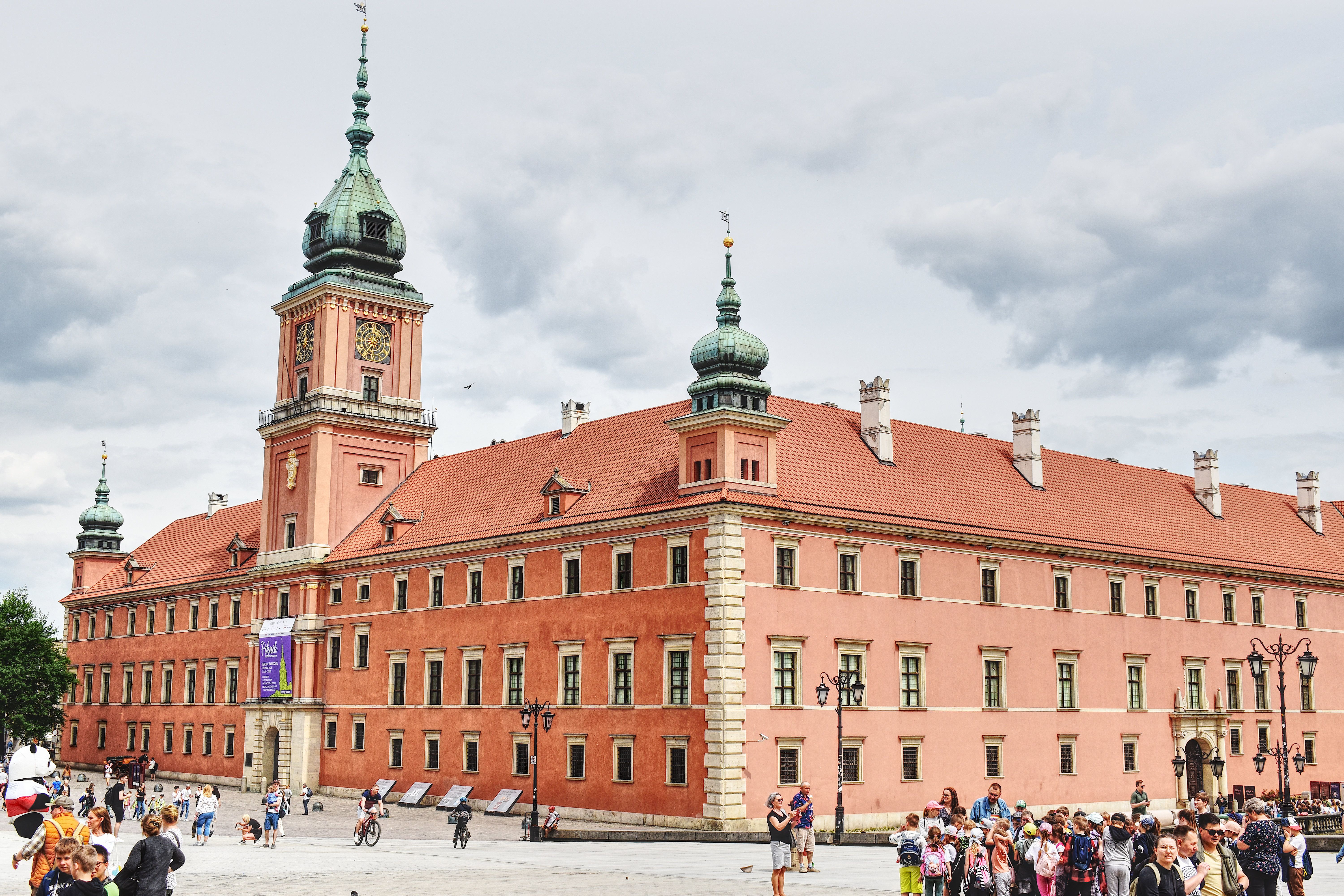
Royal Castle Warsaw: Where Regal Splendor Meets Resilient History
Golden hour light spills across the Vistula River as you approach the Royal Castle—Warsaw's reconstructed 14th-century palace that rises like a phoenix from the ashes of World War II destruction. The air carries the scent of blooming linden trees, freshly baked pączki doughnuts from nearby vendors, and the faint floral aroma from window boxes overflowing with geraniums. You hear the soft chime of the castle clock tower, the distant strains of Chopin's music drifting from a café, and the gentle murmur of Polish conversations that have echoed through these halls for centuries. This isn't merely a palace—it's a living testament to Polish resilience, where meticulously reconstructed Baroque interiors house priceless art collections, and where every stone tells a story of meticulous restoration after 90% of the building was deliberately destroyed. Standing in the Castle Square, you connect with the same urban fabric that witnessed royal coronations, partitions, uprisings, and ultimately, rebirth—a place where history isn't preserved behind glass but lives in the daily rhythm of guided tours, classical concerts, and evening promenades along the riverfront. This place matters because it represents one of history's most extraordinary acts of cultural restoration—a physical embodiment of a nation's determination to preserve its identity against all odds.
Why Royal Castle Embodies Cultural Resilience
Royal Castle represents far more than architectural grandeur—it embodies one of history's most extraordinary acts of cultural restoration after near-total destruction. Originally established as a 14th-century Gothic castle, it evolved into a magnificent Baroque palace under King Augustus III in the 18th century, serving as the official residence of Polish monarchs until the Third Partition of Poland in 1795. The castle solved a fundamental challenge of national identity: how to preserve historical continuity after systematic obliteration. Following the 1944 Warsaw Uprising, German forces deliberately destroyed 90% of the Royal Castle—a calculated attempt to erase Polish cultural identity. What makes the Royal Castle's reconstruction unique is its historical fidelity: using 18th-century vedute paintings by Bernardo Bellotto, pre-war photographs, and meticulous measurements, architects and craftsmen painstakingly rebuilt the entire structure between 1971–1984, stone by stone, according to original designs. The State Rooms, measuring 107 meters in length along the Vistula River, feature restored stucco work, period furnishings, and original paintings that once adorned royal chambers. The Ballroom, with its 16-meter-high ceiling and intricate frescoes, required 12 years of restoration work to recreate its original splendor. Unlike many European palaces that modernized after war damage, Warsaw chose historical reconstruction over modernization, creating a living museum where UNESCO World Heritage status recognizes both the original Renaissance-Baroque architecture and the extraordinary 20th-century restoration effort that preserved Poland's cultural memory against all odds.
The Best Time to Experience Royal Castle Warsaw
To experience Royal Castle at its most atmospheric, plan your visit between May 15–June 10 or September 15–October 10, when daytime temperatures range from 15–24°C (59–75°F) and the surrounding Old Town blooms with spring blossoms or glows with autumn colors. During these windows, you'll enjoy comfortable conditions for exploring the castle's interior, photography, and walking the uneven cobblestones without summer's crowds or winter's chill. For optimal photography of the castle facade and Vistula River views, arrive at 7:30–9:00 AM when morning light strikes the western facade, illuminating architectural details with soft, directional illumination. Alternatively, visit at 5:30–7:00 PM during golden hour when warm light transforms limestone into amber tones and creates dramatic reflections on the river. You should firmly avoid July 20–August 25 when temperatures can exceed 32°C (90°F), the castle becomes congested with tour groups, and harsh overhead light flattens the texture of historic stonework. For event schedules, opening hours, and guided tour information, visit zamek-krolewski.pl.
Approximate Budget for a 7-Day Trip
Visiting Royal Castle requires basing yourself in Warsaw's Old Town or nearby neighborhoods with easy walking access to museums, restaurants, and cultural venues. The following budget assumes moderate travel style—comfortable boutique hotels, authentic Polish cuisine, and a mix of public transportation and occasional taxi rides. Prices are listed in Polish Złoty (PLN) with euro equivalents for international travelers (1 EUR ≈ 4.3 PLN in 2026).
- Accommodation: 120–280 PLN (28–65€) per night in Old Town or Śródmieście. Budget pensions start at 60 PLN; boutique hotels with historic charm run 280–550 PLN (65–128€).
- Food: 55–85 PLN (13–20€) per day total. Breakfast: 18–28 PLN for traditional śniadanie with jajecznica, local cheese, and fresh bread. Lunch: 25–40 PLN for pierogi or bigos at a milk bar like Podwale. Dinner: 45–75 PLN for sit-down meals featuring duck with apples, oscypek cheese, and craft beer.
- Transportation: Local tram/bus: 3.40 PLN (0.80€) for 20 minutes; one-day pass: 16 PLN (3.70€); Uber/Bolt: ~15 PLN (3.50€) for short trips within city center.
- Attractions: Royal Castle entry: 35 PLN (8.10€); Warsaw Uprising Museum: 25 PLN (5.80€); Łazienki Park: 15 PLN (3.50€); Chopin Museum: 20 PLN (4.70€).
- Miscellaneous: Amber jewelry: 85–180 PLN (20–42€); traditional pottery: 40–90 PLN (9–21€); Chopin concert ticket: 50–120 PLN (12–28€).
Total 7-Day Budget: 2,700–4,100 PLN (630–955€) per person (excluding international flights)
7 Essential Royal Castle Experiences
- Explore the State Apartments at Opening Time: Arrive at 10:00 AM to experience the State Rooms with minimal crowds as morning light illuminates the intricate stucco work and period furnishings. The sequence of rooms—Throne Room, Ballroom, Senators' Room—tells the story of Polish monarchy through architecture and art. Visit mid-week (Tuesday–Thursday) for the quietest experience; entry 35 PLN; allow 90 minutes for the full experience.
- Marvel at the Ballroom's Ceiling Frescoes: Stand beneath the 16-meter-high ceiling of the Ballroom to admire the restored frescoes depicting the Triumph of Apollo. The room's acoustics enhance any musical performance, making it a favorite venue for classical concerts. Visit mid-morning (10:30 AM–12:00 PM) when natural light best illuminates the ceiling details; included with castle entry; allow 25 minutes.
- Photograph the Castle from Castle Square: Position yourself in Castle Square to capture the iconic view of the Royal Castle with the Vistula River in the foreground and the colorful Old Town buildings framing the composition. The elevated vantage point offers perfect perspective for both wide-angle landscapes and detailed architectural close-ups. Visit during golden hour (5:30–7:00 PM) for optimal lighting; free; allow 30 minutes; tripod recommended.
- Visit the Royal Castle Museum Exhibits: Explore the educational exhibits throughout the castle that explain its history, reconstruction, and cultural significance. The interactive displays and restored artifacts create a deeper understanding of the palace before you venture into the main rooms. Visit mid-week (Tuesday–Thursday) when guides provide detailed explanations; included with castle entry; allow 60 minutes.
- Attend an Evening Concert in the Ballroom: Experience classical music in the historic setting of the Ballroom, where Polish monarchs once hosted royal celebrations. The summer concert series features chamber music performed by talented Polish musicians in an authentic historical setting. Concerts typically begin at 7:00 PM; tickets 60–120 PLN; book online to secure seats.
- Walk the Royal Castle Gardens: Stroll through the beautifully landscaped gardens along the Vistula River, where manicured lawns and historic lime trees offer peaceful retreats with panoramic views of the river and modern city skyline. Visit late afternoon (4:00–6:00 PM) for golden-hour photography; free; allow 45 minutes.
- Discover the Royal Castle's Hidden Details: Examine the subtle sculptural details often overlooked by casual visitors—the allegorical figures representing the Virtues on the Sigismund Column replica, the intricate carvings above doorways, and the restored period furniture with hidden compartments. Visit mid-morning (10:00 AM–12:00 PM) when guide explanations enhance appreciation; included with castle entry; allow 45 minutes.
3 Hidden Gems Most Travelers Miss
- The Royal Castle's Underground Crypt: Tucked beneath the castle's floor lies a crypt housing archaeological remains of the original 14th-century Gothic castle foundations. Most visitors miss it because access requires a special guided tour. Access: Book in advance via the castle website; tours depart at 11:00 AM and 2:00 PM weekdays. Best examined midday when natural light filters through narrow windows. Entry included with special tour; allow 30 minutes.
- The Queen's Private Apartments: Hidden on the upper floor, these intimate rooms were once the private residence of Queen Marie Casimire. Overlooked because they're not part of the standard tour route. Access: Included with premium castle tour; visit mid-morning (10:00 AM–12:00 PM) when lighting enhances appreciation of delicate fabrics and furnishings. Premium tour: 55 PLN; allow 40 minutes.
- The Castle Courtyard's Architectural Details: In the castle's inner courtyard, exposed sections of the original stonework reveal construction techniques from different historical periods. Most tourists miss it because they focus on the main facade. Access: Included with castle entry; visit mid-morning (10:00 AM–12:00 PM) when natural light illuminates stone textures. No additional fee; allow 15 minutes.
Cultural & Practical Tips
- Respect Historical Significance: The Royal Castle represents Poland's cultural identity—speak respectfully about World War II and the reconstruction efforts. Avoid making casual comparisons to other European palaces' wartime experiences.
- Essential Polish Phrases: "Dzień dobry" (jen doh-brih) = Good day; "Dziękuję" (jen-koo-yeh) = Thank you; "Proszę" (proh-sheh) = Please/You're welcome; "Przepraszam" (psheh-prah-sham) = Excuse me. Locals appreciate the effort, even if pronunciation isn't perfect.
- Booking Strategy: Purchase Royal Castle tickets online to skip queues, especially during peak season. Morning slots (10:00–12:00 AM) offer the clearest views and fewest crowds. Consider the premium tour for access to restricted areas.
- Photography Guidelines: Photography is permitted in most areas, but flash is prohibited to protect historic artwork. Tripods require advance permission (contact: informacja@zamek-krolewski.pl).
- Weather Preparedness: Warsaw experiences continental climate: summer highs reach 25–32°C (77–90°F); winter lows drop to -5°C (23°F). The castle interior remains cool year-round; carry a light layer even in summer.
- Accessibility Notes: The Royal Castle has limited accessibility due to historic stone pathways and stairs. Request assistance at the ticket office for alternative viewing options; some areas may not be accessible.
- Combine with Nearby Sites: Enhance your Royal Castle visit with walking-distance attractions: Warsaw Old Town Market Square (5 minutes), Sigismund Column (adjacent), and the Vistula River boulevards (2 minutes). A regional perspective enriches understanding of Warsaw's historical layers.
Conclusion: Travel with Reverence, Not Just Observation
Royal Castle invites you to do more than photograph ornate interiors against historic facades. This is a place to stand where Polish monarchs once ruled, where history was deliberately erased and meticulously restored, where the quiet persistence of cultural memory triumphs over destruction. When you walk the same corridors trodden by kings and queens, when you hear classical melodies echo through rooms once silenced by conflict, when you gaze upon art that survived deliberate attempts to erase it, you participate in a legacy that transcends tourism. Travel to Royal Castle with reverence for the craftsmanship that rebuilt this palace stone by stone, for the resilience that maintained Polish culture through occupation, for the community that keeps this historic heart vibrantly alive. Respect the fragility of historical restoration—centuries of human presence have created delicate balances easily disrupted by careless actions. Understand that the vibrant atmosphere you cherish depends on the mindfulness of every visitor who comes after you. Let the castle's layered history humble your understanding, let its stories deepen your compassion, and let the convergence of destruction and rebirth remind you that the most profound journeys are those that transform understanding into respect for humanity's capacity to rebuild what matters most.