
São Bento Station Azulejos: Where Painted Ceramic Meets Transient Motion
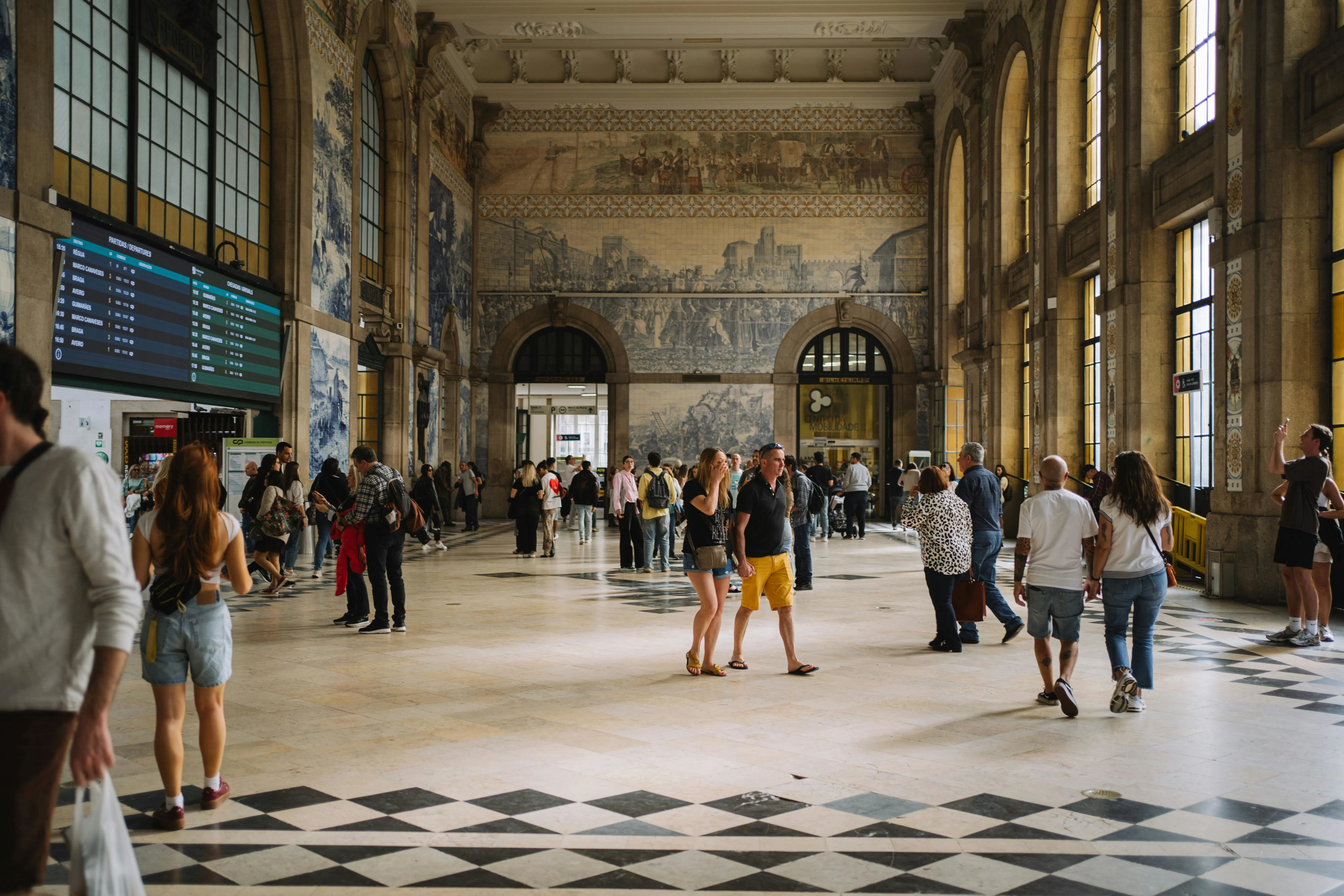
Late morning light spills through the vast, iron-framed skylights of the main hall, fracturing into sharp beams that illuminate the sprawling nave. The air vibrates with the rhythmic, metallic clatter of arriving trains, punctuated by the hollow echo of footsteps on polished stone. You stand at the head of the concourse, overwhelmed by a 340-meter (1,115-foot) visual narrative rendered entirely in tin-glazed ceramic. Over 11,000 hand-painted tiles depict the sweeping history of Portuguese transport—from armored medieval knights to the smoke-wreathed triumph of steam locomotives. Conceived by architect José Marques da Silva and painted by artist Jorge Colaço, this is not merely a transit hub; it is a monumental ceramic canvas. It matters because it transforms the mundane act of commuting into a daily confrontation with national identity, anchoring the chaotic motion of modern life to the enduring beauty of Portuguese artisanal tradition.
Why the São Bento Station Azulejos Embodies Ceramic Grandeur
To understand the São Bento Station azulejos is to recognize the profound aesthetic problem it solved for a rapidly industrializing city. In the late nineteenth century, Porto needed a grand central station to rival those of London and Paris, replacing an outdated convent on the site. The engineers and artists faced a dual challenge: they had to design a highly functional transit depot while instilling a sense of civic pride. The solution was an unprecedented integration of fine art into brutal infrastructure. The technical execution required staggering precision. The 11,000+ tiles were crafted by the Viúva Lamego factory using a complex, multi-fire vitrification process. Each tile was fired at over 1,000 degrees Celsius (over 1,800 degrees Fahrenheit) and coated in a signature tin-glaze. This glaze creates a brilliant, reflective surface that refracts the natural light flooding through the skylights, simultaneously protecting the pigments from the soot and grime of the railway environment. By spanning 340 meters of continuous narrative across the concourse walls, the azulejos fulfilled the deep psychological need of the era: providing a visual anchor that soothed the anxieties of modern travel, turning a cavernous waiting room into a cultural sanctuary.
The Best Time to Experience the São Bento Station Azulejos
To fully absorb the intricate details of the ceramic panels without the harsh interference of crowds, precise timing is essential. Plan your visit between April 22 and May 15, or from October 5 to October 25. During these windows, the ambient temperature inside the station sits at a comfortable 18°C to 22°C (64°F–72°F), preventing the concourse from becoming a sweltering greenhouse. Arrive precisely at 8:00–9:30 AM. At this early hour, the sun angle is low, casting long shadows across the tiled walls and creating a high-contrast, three-dimensional depth in the painted scenes. Furthermore, you will witness the fascinating juxtaposition of early morning commuters blurring past the static medieval knights. Avoid July 15 through August 25. During this peak summer stretch, temperatures routinely exceed 30°C (86°F), the iron-framed roof traps the heat, and the intense overhead lighting flattens the subtle nuances of the tile glazing.
Approximate Budget for a 7-Day Trip
Calculating the cost of a luxury cultural immersion in Porto requires prioritizing the historic center. This methodology factors in premium lodgings, world-class dining, and exclusive private tours, reflecting the refined atmosphere of the station's Belle Époque design.
- • Accommodation: €140–€210 per night (heritage five-star hotel in the Infante Santo neighborhood, featuring antique furnishings and a rooftop pool)
- • Food: €65 per day (breakfast €10 for a torrada mista with regional cheeses, lunch €20 for an elevated seafood rice dish at a Ribeira terrace, dinner €35 for a tasting menu at a Michelin-starred establishment paired with Douro wines)
- • Transportation: €35 total (€15 for a premium Uber transfer from the airport; €20 for a 7-day Porto public transport card covering all metro and bus lines)
- • Attractions: €35 individual prices listed (Private guided architectural tour of the station: €15, Port wine cellar tasting in Vila Nova de Gaia: €12, Livraria Lello entry voucher: €5, Majestic Café: €3)
- • Miscellaneous: €55 (hand-painted artisanal tile from a local ceramics studio: €30, bottle of aged Vintage Port: €18, premium silk scarf: €7)
Total: €1,195–$1,820
6 Essential São Bento Station Azulejos Experiences
- Standing in the Grand Nave: Enter through the main entrance and walk to the center of the concourse. Stop and look straight ahead. The sheer scale of the 340-meter (1,115-foot) tiled facade is overwhelming. Breathe in the distinct scent of ozone generated by the electric trains and let the vastness of the ceramic narrative wash over you before consulting your departure board.
- Deciphering the Battle Panels: Walk to the right side of the main hall and locate the panels depicting the Battle of Valdevez. Lean in close to examine the microscopic detail; you can actually see the individual, strained facial expressions of the knights and the glinting reflections on their armor, rendered in tiny, hand-applied brushstrokes of silica-based glaze.
- Witnessing the Morning Commute: Sit on one of the polished stone benches at 8:45 AM. Watch the city’s workforce blur past the static ceramic chronicles. The visual friction between the transient, hurried motion of modern commuters and the frozen, centuries-old painted figures creates a deeply cinematic, slightly surreal atmosphere.
- Viewing the Monastery Depictions: Locate the smaller panels near the southern ticket barriers. These tiles chronicle the daily life of the Benedictine monks who originally inhabited the site. Look for the intricate geometric borders framing the pastoral scenes; the blue and white pigments remain remarkably vivid against the soot-stained stone.
- Exploring the VIP Waiting Room: Step into the enclosed, wood-paneled room reserved for first-class passengers. Look up. The ceiling is covered in a stunning, starburst geometric pattern of smaller azulejos, providing a quiet, acoustic contrast to the bombastic historical narratives of the main hall.
- Boarding a Historic Train: Purchase a ticket to the Douro Valley. Stand on the platform as a vintage, six-carriage train rolls into the station. Look up to see the passing carriages framed perfectly against the backdrop of the tiled walls, offering a moving, multi-layered composition of motion, steel, and ceramic art.
3 Hidden Gems Most Travelers Miss
- The Viúva Lamego Manufacturer's Signature: Access: Scan the lower-left section of the pastoral panels near the main ticket barriers. It is overlooked because tourists focus on the dramatic battle scenes. This specific tile panel depicts a woman carrying a large clay jug—the official trademark of the Viúva Lamego factory that crafted the tiles. Insider tip: ask one of the station attendants to point it out; they usually know its exact location.
- The Vestibule Ceiling Mosaics: Access: Enter through the historic side entrance located to the left of the main hall. It is missed because hurried commuters bypass it entirely. This small foyer features a stunning, curved ceiling inlaid with smaller, geometric azulejo mosaics. Insider tip: use a wide-angle lens to capture the architectural curve of the arches interplaying with the intricate tile patterns.
- The Ghost Station Café: Access: Descend the stairs near Platform 1. It is ignored because it resembles a generic transit kiosk. The walls of this narrow corridor are lined with original, early-century azulejos that have been almost entirely untouched by restoration, offering a raw, authentic look at the aging process of the tin-glaze. Insider tip: buy an espresso here to legitimately sit among the antique tiles away from the main hall crowds.
Cultural & Practical Tips
- • Learn a polite Portuguese phrase: say "Com licença" (kohm lee-SEN-sah), meaning "excuse me," when squeezing past commuters; this simple effort diffuses the frustration of navigating a busy transit hub.
- • Photography requires specific settings; turn off your flash entirely. The reflective tin-glaze on the tiles bounces camera flashes directly back into the lens, creating harsh white hotspots that wash out the blue pigments. • • Keep a firm grip on your luggage; the station is a fully active transit node. Express trains enter the concourse with only inches of clearance, creating powerful suction that can pull unsecured bags from your grasp.
Conclusion: Travel with Reverence, Not Just Superficiality
The São Bento Station azulejos are not merely a decorative facade designed for quick photographic extraction; they are a fragile, functional masterpiece that demands deep, mindful engagement. When you choose to travel with reverence rather than rushing through the concourse to catch a train, you begin to honor the immense artisanal labor required to build a museum within a machine. Slow down. Resist the urge to snap a wide-angle photo and immediately check your phone screen. Instead, sit on a stone bench, fixing your gaze on a single tile. Trace the microscopic brushstrokes of Jorge Colaço with your eyes, understanding that the vibrant blues and whites you see are the result of an alchemical process involving crushed glass, metallic oxides, and extreme heat. Mindful tourism recognizes that the constant vibration of thousands of daily footsteps subtly loosens the mortar holding these panels to the wall. By engaging deeply—respecting the active commuters, protecting the ceramic surface with your hands, appreciating the technical brilliance of the tin-glazing—you shift from being a transient observer to an active guardian of Porto’s cultural heritage. Let the quiet endurance of the ceramic art humble you; that is where the true grandeur of São Bento resides.