
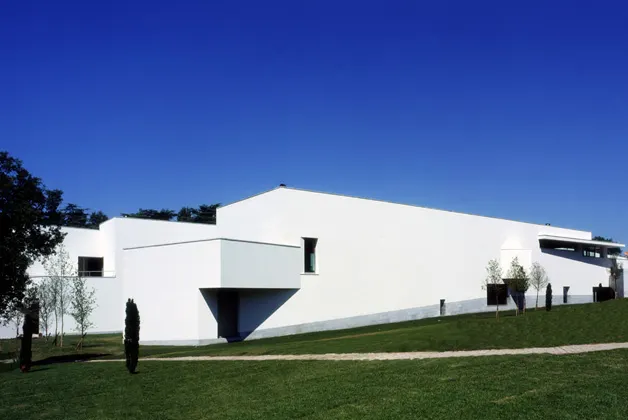
Serralves Museum: Where Minimalist Architecture Meets Lush Northern Gardens
Late afternoon light spills across the manicured lawns, gilding the stark, whitewashed concrete facade of the main building. The air hums with the drone of cicadas and the distant, rhythmic splash of water from the Art Deco fountains. You walk the winding, geometric pathways—crunching softly on white gravel—toward a structure that refuses to compete with nature. Conceived in the late twentieth century by Pritzker laureate Álvaro Siza Vieira, the Serralves Museum stretches across 18 hectares (45 acres) of prime northern Porto real estate. It is a masterclass in restraint; a vast, luminous volume of reinforced concrete that appears to float effortlessly above the landscape. Inside, floor-to-ceiling glass walls dissolve the boundary between interior and exterior. It matters because this space fundamentally solved Porto’s struggle to reconcile its deeply traditionalist soul with the avant-garde, offering a physical sanctuary where contemporary art breathes freely amidst the raw elements of earth, water, and light.
Why the Serralves Museum Embodies Minimalist Architecture
To understand the Serralves Museum is to recognize the profound aesthetic problem it solved for a city burdened by heavy historicism. By the time the museum was commissioned, Porto’s cultural identity was entirely defined by Baroque granite and azulejo tiles. The city desperately needed an architectural counterweight—a space that could house modern art without apologizing for its modernity. The engineering required to achieve this delicate balance was staggering. Siza Vieira utilized a specialized plasterwork mixed with local pigments, applying it to the facade to create a glowing, ethereal surface that softens the brutalist aesthetic of raw concrete. To protect the delicate interior artworks from the harsh Atlantic climate, he engineered deep, overhanging eaves that shield the glass walls from direct summer sun, while still allowing reflected light to wash over the polished floors. The museum’s most spectacular technical feat is its structural illusion; from a distance, the sprawling single-story building appears to lack scale, yet inside it spans over 12,000 square meters (129,166 square feet) of uninterrupted exhibition space. This spatial trickery was accomplished by burying the mechanical systems deep underground, allowing the roof to rest on a hidden grid of steel columns. By perfectly integrating landscape architecture—designed by Eduardo Souto de Moura, featuring a 400-year-old oak tree and complex hydrological systems—the museum fulfilled the deep psychological need of the era: proving that modern, minimalist design could enhance, rather than erase, the natural topography of Portugal.
The Best Time to Experience the Serralves Museum
To fully appreciate the nuanced interplay between the whitewashed concrete and the shifting northern light, precise timing is absolutely essential. Plan your visit between May 18 and June 12, or from September 25 to October 15. During these specific windows, the ambient temperature sits at a comfortable 18°C to 22°C (64°F–72°F), making the extensive garden walkways a joy rather than a chore. Arrive precisely at 10:00–11:30 AM. At this hour, the morning sun hits the eastern glass walls at a low, lateral angle, flooding the galleries with a brilliant, diffuse luminosity that makes the white plaster walls glow from within. Avoid July 15 through August 25. During this brutal stretch, temperatures routinely exceed 30°C (86°F), the intense glare off the white concrete creates visual fatigue, and the outdoor sculptures are drained of their atmospheric drama by the relentless sun. For current exhibition schedules, temporary closures, and advance ticketing, consult the official foundation portal: www.serralves.pl.
Approximate Budget for a 7-Day Trip
Calculating the cost of a luxury cultural immersion in Porto requires prioritizing the refined neighborhoods of Boavista and Foz do Douro. This methodology factors in premium accommodations with architectural significance, eliminating transit friction so you can maximize your time absorbing the art rather than navigating city traffic.
- • Accommodation: €160–€280 per night (boutique design hotel in Foz do Douro, featuring minimalist décor, ocean views, and a private garden terrace)
- • Food: €85 per day (breakfast €15 for avocado toast and single-origin coffee at a design-led café, lunch €30 for an elevated seafood tasting menu at a riverside restaurant in Ribeira, dinner €40 for a multi-course tasting menu paired with vintage Douro wines at the museum’s own restaurant)
- • Transportation: €45 total (€20 for a premium executive transfer from Francisco Särneiro Airport; €25 for a dedicated driver to access the vineyards of the Douro Valley)
- • Attractions: €42 individual prices listed (Serralves Museum entry: €14, Serralves Park access: free, Port wine cellar tour in Vila Nova de Gaia: €15, Sea Life Porto: €13)
- • Miscellaneous: €75 (limited-edition monograph on Álvaro Serralves Museum architecture: €40, hand-thrown ceramic sculpture from a local artisan: €25, bottle of 40-year Vintage Port: €10)
Total: €1,257–€2,272
7 Essential Serralves Museum Experiences
- Walking the Alvaro Siza Wing: Enter the main hall and let the spatial geometry wash over you. Feel the cool, polished concrete floors beneath your shoes. Look up to see how the natural light refracts through the massive glass walls, casting soft, shifting shadows across the pristine white plaster—a masterclass in architectural acoustics and light manipulation.
- Viewing the Joan Miró Foundation Room: Locate the dedicated gallery showcasing the artist’s vibrant tapestries. Stand close to examine the thick, textured wool fibers. The vivid blues and reds leap out from the muted concrete backdrop, creating a sensory collision of color that demands absolute stillness from the viewer.
- Exploring the Cândido Villar Sculpture Garden: Exit through the southern glass pivots into the open air. Listen to the crunch of gravel underfoot as you walk among the massive, geometric bronze forms. The rough, oxidized patina of the metal contrasts sharply with the soft, undulating green lawns, creating a dialogue between the heavy permanence of art and the fleeting nature of seasons.
- Dining at the Serralves Restaurant: Sit at a table by the floor-to-ceiling windows overlooking the reflecting pool. Order the chef’s seasonal tasting menu. As you eat, watch a heron land silently on the water, framed perfectly by Siza’s minimalist framing—a masterful integration of culinary and spatial design.
- Discovering the Art Library: Descend into the subterranean archive room. The air smells faintly of vanilla and aged paper. Pull a rare exhibition catalog from the shelves; the tactile dryness of the heavy stock connects you to the intellectual weight of the collection.
- Witnessing the Light Installation: Visit the central atrium where a dynamic, programmed light installation interacts with the concrete pillars. Feel the subtle warmth of the light beams as they sweep across the floor, turning the stark architecture into a living, breathing organism.
- Watching the Pink Flamingos at the Lake: Walk to the northern edge of the park. Look down into the reed beds to spot a flock of flamingos feeding. Their shocking pink plumage provides a brilliant, organic counterpoint to the strict, monochromatic palette of the museum.
3 Overlooked Wonders Most Travelers Miss
- The Passeio dos Castanheiros: Located at the highest elevation of the park. It is overlooked because most visitors stick to the central pathway connecting the museum to the tea house. This elevated, winding trail through a dense canopy of ancient chestnut trees offers an entirely different perspective of the museum’s roofline. Insider tip: walk this path at exactly 4:30 PM when the setting sun silhouettes the concrete eaves against the golden sky.
- The Boa Nova Tea House: Designed by Siza Vieira just outside the park gates, this small, red-capped pavilion is frequently ignored by art crowds rushing to the main galleries. Its interior is a stunning exercise in forced perspective; the blue-tiled walls and curved glass windows create a disorienting, aquatic illusion. Insider tip: order a pot of chá azul and sit alone in a leather booth to fully absorb the acoustic intimacy of the space.
- The Casa de Serralves: Located a 10-minute walk from the museum entrance. It is missed because it looks like a private residential farmhouse. This restored agricultural estate features original stone threshing floors and explains the agrarian history of the 18-hectare plot before it became a cultural institution. Insider tip: ask the museum staff for the map to the farmhouse; the unmarked route takes you past working vegetable gardens that supply the museum restaurant.
Cultural & Practical Tips
Conclusion: Travel with Reverence, Not Just Superficiality
The Serralves Museum is not merely a pristine container for expensive art; it is a philosophical statement rendered in concrete and light. When you choose to travel with reverence rather than rushing through the galleries to capture the perfect wide-angle shot, you begin to honor the immense architectural courage required to build a minimalist sanctuary in a city obsessed with ornamental excess. Slow down. Resist the urge to immediately pull out your phone and instead sit on the polished concrete floor, letting the refracted light wash over you. Mindful tourism recognizes that the immaculate white plaster floors and fragile tapestries possess a finite tolerance for the friction of millions of passing footfalls. By engaging deeply—understanding Siza Vieira’s structural subterfuge, respecting the strict photography rules, allowing the art to challenge your preconceptions—you shift from being a passive consumer of culture to an active guardian of modernism. Let the raw, empty silence of the main hall humble you; that is where the true masterpiece of Serralves resides.