
Tsukiji Outer Market: Where Tokyo's Kitchen Feeds the Modern Soul
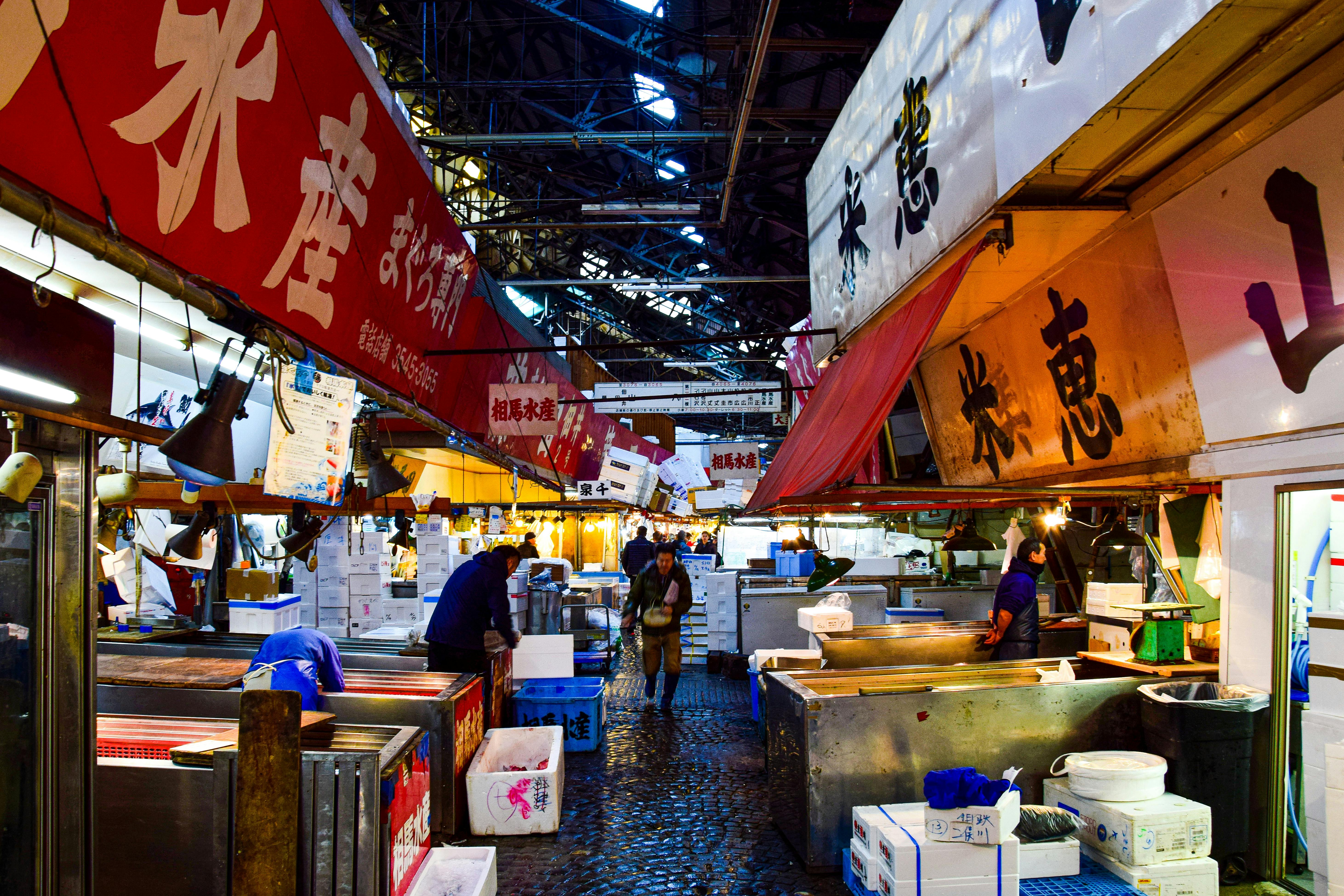
The sound of sizzling scallops fills the narrow alleyway as a vendor's knife slices through a 20-kilogram tuna belly, revealing marbled fat that glistens like pink snow. It is 8:00 AM in Tsukiji, and 400 small shops are awakening—each shutter rolling up to reveal treasures from the sea . You navigate the 4-meter-wide lanes past stalls selling everything from kombu seaweed to hand-forged sashimi knives, the air thick with grilled soy sauce and morning bustle. This is the Tsukiji Outer Market, the beating heart of "Tokyo's Kitchen," a district that has fed this city for over 400 years, ever since the Great Fire of 1657 prompted the shogunate to reclaim this land from Tokyo Bay . Even after the wholesale auction moved to Toyosu in 2018, the outer market's 400+ vendors remain—chefs in white coats haggling over live crabs, tourists biting into fluffy tamagoyaki skewers, and you, suddenly starving at dawn, discovering why this labyrinth of food endures when all else changes .
Why Tsukiji Embodies Tokyo's Culinary Resilience
The market solves a historic problem: how to recover from catastrophe through food. After the 1923 Great Kanto Earthquake leveled Tokyo's Nihonbashi Fish Market, authorities reclaimed the Tsukiji area—whose name means "constructed land"—building a modern facility that opened in 1935 . For decades, 900 tons of seafood passed through these gates daily, feeding a hungry, rebuilding metropolis. Then came October 2018, when the inner wholesale market relocated to Toyosu . Most expected the outer market's 400 shops to wither. Instead, they adapted: wholesalers started selling retail-sized portions, restaurants began opening earlier, and knife shops offered sharpening classes . The Tsukiji Outer Market survived because it solved a more profound need—Tokyo's craving for authenticity and connection in an increasingly packaged world. Today, you can buy a single oyster for ¥300 or a whole box of uni for ¥3,000, eat sushi for breakfast at 7:00 AM, or watch a fourth-generation knife sharpener demonstrate his craft . The market's resilience lies not in its size but in its flexibility—a lesson Tokyo knows by heart.
The Best Time to Experience Tsukiji Outer Market
To witness the market at its most electric—when the first batches of grilled seafood emerge and locals elbow in for the freshest cuts—arrive between 6:00 AM and 9:00 AM, Tuesday through Saturday . The fish is freshest at dawn, and the morning sun illuminates the narrow alleys beautifully for photography . Winter (December–February) offers the clearest, crispest air (temperatures 2-10°C / 36-50°F) and fewer tourists, though dress warmly—the market's outdoor lanes channel cold winds. Spring (March–May) brings 10-20°C (50-68°F) and cherry blossoms in nearby parks, but crowds swell with the season. Avoid Wednesdays and Sundays . Wednesdays see staggered openings (many stalls start at 10:00 AM instead of 6:00 AM), and Sundays are busiest, with many shops closed entirely . The market also closes for New Year's holidays (December 29–January 3) and some Wednesdays—always check the Tsukiji Market calendar before going . The official opening hours are Monday–Saturday 6:00 AM–2:00 PM, Sunday 10:00 AM–2:00 PM . For vendor lists, event schedules, and closure dates, consult the official Tsukiji Outer Market Association: www.tsukiji.or.jp/english/ .
Approximate Budget for a 7-Day Trip Including Tsukiji
This breakdown treats Tsukiji as a culinary highlight within a broader Tokyo itinerary. Prices in Japanese Yen (¥) and US Dollars ($), based on 2026 data.
- Accommodation: ¥10,000–¥18,000 ($65–$120) per night near Tsukiji or Ginza. Tokyu Stay Tsukiji offers a "Breakfast at Tsukiji Plan" with a ¥900 voucher for market restaurants . Budget hotels near Higashi-Ginza start at ¥8,000 ($53).
- Food: ¥2,500–¥6,500 ($17–$45) per day (heavier on market mornings). Breakfast set at Uogashi Shokudou: ¥1,500–¥2,500 ($10–$17) . Tamagoyaki skewer: ¥100–¥200 ($0.65–$1.30) . Grilled seafood skewers (scallop, squid, Wagyu beef): ¥500–¥1,500 ($3.30–$10) each . Sushi breakfast omakase: ¥4,000–¥5,000 ($27–$33) . Uni (sea urchin) rice bowl: ¥2,000–¥3,000 ($13–$20) . Dinners are typically eaten elsewhere as the market closes by 2:00 PM .
- Transportation: Subway to Tsukiji Station (Hibiya Line) or Tsukiji-Shijo Station (Oedo Line): ¥180–¥220 ($1.20–$1.50) from most central Tokyo locations . One-week Tokyo Metro pass: ¥1,500 ($10).
- Attractions: Strolling the market: FREE . Guided 90-minute walking tour: ¥6,000 ($40) includes English-speaking guide and samples . Knife-sharpening demonstration at Aritsugu (near the information center): FREE to watch, ¥3,000–¥10,000 ($20–$67) for service .
- Miscellaneous: Namiyoke Shrine at the market's western end: FREE (donation optional) . Fresh matcha from a market tea vendor: ¥500 ($3.30). Japanese kitchen knife (entry-level): ¥5,000–¥10,000 ($33–$67) . Ceramic soy sauce dish: ¥800–¥2,000 ($5–$13) .
Total 7-day mid-range budget including a full Tsukiji breakfast and shopping: ¥85,000–¥115,000 ($560–$760) per person, excluding international flights.
7 Essential Tsukiji Outer Market Experiences
- Eat Sushi for Breakfast (It's a Local Tradition): Queues begin forming at legendary spots like Sushi Dai (Toyosu) and Sushi Zanmai (Tsukiji) as early as 5:00 AM . For a less punishing wait, try Uogashi Shokudou, a standing bar popular with wholesalers, open from 6:00 AM . Their "morning sushi set" (¥2,000) includes seven pieces of premium nigiri. The best part? You're eating fish that was swimming 12 hours ago—and drinking beer at 7:00 AM is not just allowed but encouraged.
- Watch Tamagoyaki Being Made at Marutake: Approaching Marutake or Yamacho, you'll smell sweet dashi before you see the vendor. Watch as chefs pour egg batter into small rectangular copper pans, rolling layer upon layer with chopsticks with surgical precision . Skewered tamagoyaki costs ¥100–¥200—cheap, warm, and perfectly salty-sweet . Ask for the version with grated daikon radish and soy sauce for an umami kick most tourists miss.
- Hunt for Bargains at Tsukiji Uogashi: The "Tsukiji Fishing Riverbank" section, located adjacent to the main market, sells seasonal seafood directly to local families . Many tourists walk past, intimidated by the lack of English signs. Don't. Here, a large otoro (fatty tuna) block might cost ¥900 instead of ¥2,500 a few stalls over . The third floor is a massive open-air dining area where you can eat your haul immediately. Compare prices before buying—the first stall is rarely the best .
- Try Wagyu Beef Skewers at Senri-ken: While seafood dominates, Tsukiji's Wagyu beef skewers (¥800–¥1,500) are legendary. Marbled A4-grade beef, grilled over binchotan charcoal, seasoned simply with salt or tare sauce. The fat caramelizes to a smoky sweetness, melting on your tongue . Senri-ken, near the market's southern edge, is a favorite among market insiders . Eat it standing at the shop's tiny counter, watching the chef wield his tongs like an artist.
- Take a 90-Minute Guided Walking Tour: For first-time visitors, the maze of 400+ stalls is overwhelming. A 90-minute guided tour (¥6,000) includes an English-speaking guide who introduces you to hidden back-alley vendors, explains seasonal specialties, and arranges complimentary tastings . Tours meet at Tsukiji Hongwan-ji Temple (the massive Indian-style Buddhist temple at the market's edge) or the Tsukiji Bon Marché souvenir corner. The guide can also help purchase items that require Japanese negotiation.
- Visit Namiyoke Shrine (The Wave-Protector): Tucked at the market's northwestern corner, this small Shinto shrine served as a guardian for fishermen and wholesalers for centuries—its name means "wave protection" . Today, vendors still stop here before opening, leaving offerings of salt, sake, and fresh fish. The shrine survived the 1945 firebombing and the 2011 earthquake. Most tourists pass it entirely. Don't. Wash your hands at the stone basin, bow twice, and thank the market's ancestors for 400 years of feeding Tokyo.
- Shop for a Handmade Sashimi Knife at Aritsugu: Tsukiji is the best place in Tokyo to buy professional-grade kitchen knives. Aritsugu, a Kyoto-based knife shop with a Tsukiji branch, has been forging blades since 1560. A basic stainless-steel sashimi knife (yanagiba) starts at ¥5,000, but the single-bevel carbon steel blades (¥15,000+) hold an edge sharper than a surgeon's scalpel . Staff will demonstrate sharpening techniques, and they can engrave your name in kanji for free. Pack knives in checked luggage—carry-on not permitted.
3 Hidden Gems Most Travelers Miss
- The Upper Floors of Tsukiji Uogashi: Most visitors eat their purchases standing in crowded alleys, unaware that Tsukiji Uogashi (the main wholesale fish building's adjacent market) has a third-floor open-air dining area with tables, vending machines, and stunning views of the surrounding neighborhood . Access via elevators near the sea urchin stalls. Bring your market haul upstairs, spread it out on a table, and enjoy a civilized picnic while locals rush past below. Free, no reservation, available as long as the building is open (until 2:00 PM).
- Tsukiji Hongwan-ji Temple's Rooftop Garden: The massive Indian-style Buddhist temple at the market's entrance (hard to miss—it looks like a South Asian palace) offers a free-access rooftop garden on its upper levels . From here, you can photograph the entire Tsukiji market spread below, with Tokyo Tower and the Sumida River in the background. Most tourists bow at the main altar and leave, missing the elevator signs pointing to "Roof Garden." Open 9:00 AM–4:00 PM daily. Bring a telephoto lens for market-wide shots.
- Toto Grill's Breakfast Curry (Not Ramen): Everyone lines up for sushi, but few find Toto Grill, a tiny Western-style diner tucked behind the main fish stalls . Open since 1946, they serve breakfast curry (¥900, including coffee) that has fueled fish porters for generations. The recipe—brown roux, beef chunks, potatoes, carrots—comes from a 78-year-old handwritten notebook. No English sign; look for the red awning and the smell of roux. Go at 7:00 AM, when sushi queues are terrifying but this counter has three open stools.
Cultural & Practical Tips
- Bring Cash, Lots of Cash: The majority of Tsukiji's stalls operate on a cash-only basis . Withdraw ¥5,000–¥10,000 ($33–$67) per person before arriving. The nearest reliable ATMs: 7-Eleven outside Tsukiji Station (Hibiya Line exit 2) or Tsukiji-Shijo Station (Oedo Line exit A1). Some larger shops now accept credit cards, but do not rely on it.
- Arrive Early (5:30–6:30 AM) for the Freshest Fish and No Crowds: By 9:00 AM, the market is packed with tourists. By 10:00 AM, the most popular stalls have sold out of top cuts. The golden window is 5:30–7:30 AM . You can photograph empty alleys, chat with vendors, and eat breakfast without elbowing anyone. If you're not a morning person, arriving at 6:00 AM is non-negotiable for the full experience.
- Market Etiquette: Don't Block, Don't Touch Without Asking: The market is a real workplace, not a theme park. Do not block narrow passages while taking photos—step aside into shop alcoves . Do not touch fish, vegetables, or knives without explicit vendor permission. If you want to photograph a specific vendor, ask "Shashin o totte mo ii desu ka?" (Shah-sheen oh toht-teh moh ee dess kah?). Most will nod and smile. Do not haggle on prepared food prices; it's considered rude.
- Essential Japanese Phrases for the Market: Kore wa ikura desu ka? (Koh-reh wah ee-koo-rah dess kah?)—"How much is this?" Osusume wa nan desu ka? (Oh-soo-soo-meh wah nahn dess kah?)—"What do you recommend?" (Vendors love this question). Naka de tabete mo ii desu ka? (Nah-kah deh tah-beh-teh moh ee dess kah?)—"Can I eat this inside?" (Some stalls have small standing tables).
- Check the Market Calendar Before Going: The market is not fully open every day. Many shops close on Wednesdays and Sundays . On Sundays, only about half the stalls operate, and hours are reduced (10:00 AM–2:00 PM vs. 6:00 AM–2:00 PM). The market also closes for New Year's holidays (December 29–January 3) and for a few days in August during Obon. Check www.tsukiji.or.jp/english/ before you go .
- Public Trash Cans Are Rare—Bring a Bag and Use Convenience Store Bins: Japan has few public trash cans, and Tsukiji is no exception. You will generate skewer sticks, plastic sauce packets, and styrofoam trays. Carry a small plastic bag for your trash, or deposit it in the bins at any 7-Eleven or FamilyMart (find them at the market's perimeter). Do not dump trash in shop waste bins—it's considered disrespectful.
- Footwear: Wear Closed-Toe, Non-Slip Shoes: Tsukiji's alleys are paved with uneven stone, frequently wet, and littered with fish scales and vegetable scraps. Open-toed sandals or heels are a disaster waiting to happen. Wear comfortable, closed-toe, non-slip walking shoes. Your feet will thank you after 4 hours of standing.
Conclusion: Travel with Appetite, Not Just Checklist
Tsukiji is not a museum. It's not a theme park. It's a living, working market where people have cut fish, poured coffee, and sharpened knives since before your grandparents were born. Approach it that way. Ask the octopus seller what's good today (she'll tell you). Watch the tuna butcher wield his 1-meter blade. Eat a scallop fresh off the grill, hot juice running down your chin, while standing in an alley that smells of the sea and soy sauce and history. Traveling with appetite means leaving space for surprise—the skewer you didn't plan for, the vendor who offers you a free sample of pickled plum, the shrine you almost walked past. Tsukiji's 400 vendors have survived earthquakes, fires, wars, and the wholesale market's relocation because they understand that feeding people isn't just commerce—it's connection. You are not just a tourist here. You are a guest. Eat well, say thank you, and carry the flavors home with you.