
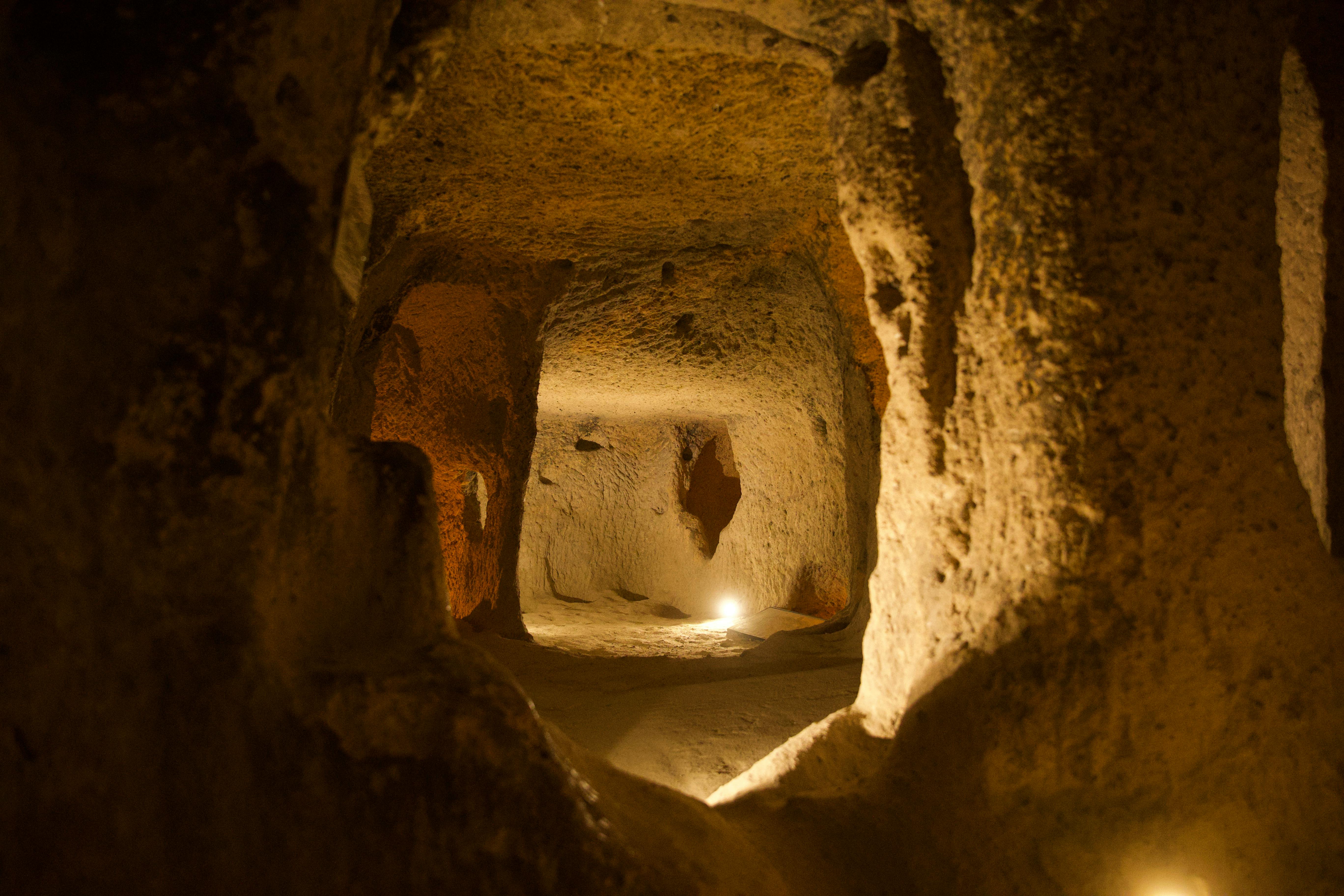
Underground Cities: Where Ancient Refuge Meets Volcanic Stone
You descend a narrow stone staircase into cool, mineral-scented air, leaving the Cappadocian sun behind as your eyes adjust to the dim glow of the underground cities—labyrinthine complexes carved deep into volcanic tuff, where over 20,000 people once sought refuge from invading armies. The passage narrows to just 1.2 meters (4 feet) wide, its walls smooth from centuries of footsteps, while above, ventilation shafts pierce 85 meters (279 feet) of rock to bring fresh air from the surface. You hear only your own breath and the distant drip of water echoing through chambers that once housed stables, wineries, chapels, and sleeping quarters for entire communities. This is not merely an archaeological site; it is a testament to human resilience, where early Christians and later Byzantine families engineered self-sustaining worlds beneath the earth to survive persecution, warfare, and uncertainty. Standing in the vast central atrium of Derinkuyu—eight levels deep, with rolling stone doors weighing 500 kilograms (1,100 pounds) that could seal passages in seconds—you feel the weight of history not as burden, but as inspiration: a reminder that when the world above grows dangerous, human ingenuity can carve sanctuary from stone itself.
Why Underground Cities Embody Ingenious Survival
The underground cities of Cappadocia—most notably Derinkuyu and Kaymaklı—represent one of antiquity's most sophisticated solutions to a fundamental human need: creating secure, self-sustaining refuge during times of threat. Originally expanded by Phrygians around 1200 BCE and later enlarged by early Christians between the 7th and 12th centuries, these subterranean complexes solved the critical problem of protecting entire communities from invasion while maintaining daily life underground for weeks or months at a time.
Technically, the engineering is extraordinary. Derinkuyu descends eight levels to a depth of 85 meters (279 feet), encompassing approximately 44,000 square meters (473,000 square feet) of usable space. Artisans carved rooms, chapels, wine presses, and ventilation shafts directly into soft volcanic tuff—a material soft enough to excavate with iron tools yet durable enough to support massive overhead weight. The cities feature over 15,000 small ducts connecting to 52 vertical ventilation shafts, ensuring fresh air circulation even at the deepest levels. Massive circular stone doors—1.5 meters (5 feet) in diameter and weighing up to 500 kilograms (1,100 pounds)—could be rolled into place from inside to seal passageways against intruders. Water management systems included wells reaching the water table and cisterns carved into rock to store rainwater.
Beyond their structural brilliance, the underground cities fulfilled a profound social need: preserving community cohesion during crisis. Families could maintain religious practices in rock-cut chapels, produce food in underground wineries and stables, and educate children in carved schoolrooms—all without surfacing. Today, as visitors navigate these cool, silent corridors, the cities continue to inspire: a reminder that true security lies not in walls alone, but in the human capacity to adapt, collaborate, and endure.
The Best Time to Experience Underground Cities
Timing your visit to the underground cities requires balancing interior conditions, crowd levels, and seasonal accessibility for the optimal experience. The ideal window runs from April 15–June 12 and September 15–October 31, when Cappadocia's surface temperatures hover between 12–24°C (54–75°F), while the underground chambers maintain a constant 13–15°C (55–59°F) year-round—providing refreshing refuge from summer heat or winter chill above.
For the most contemplative experience, arrive at 8:00–9:00 AM when Derinkuyu or Kaymaklı opens. This is when the narrow passages are least crowded, allowing you to appreciate the engineering details—rolling stone doors, ventilation shafts, carved chapels—without jostling tour groups. Morning light filtering through entrance shafts creates atmospheric photography conditions. Alternatively, visit between 3:00–4:30 PM when afternoon crowds thin and the cool interior offers welcome relief from peak-day warmth. Both sites operate daily from 8:00 AM to 7:00 PM (April–October) or 5:00 PM (November–March).
Avoid July 15–August 31 if possible: surface temperatures climb to 28–35°C (82–95°F), and while underground chambers remain cool, entrance queues can exceed 60 minutes in the heat. Also skip Turkish national holidays (April 23, August 30, October 29) when domestic tourism surges. Winter months (December–February) offer atmospheric quiet and fewer visitors, with surface temperatures of -2–8°C (28–46°F), but pathways to entrances can be icy—wear shoes with good traction.
For current information on opening hours, ticket prices, and conservation updates, visit: www.goturkey.com
Approximate Budget for a 7-Day Trip
Cappadocia offers exceptional value for cultural and adventure travelers, with costs remaining moderate despite recent inflation. The following budget assumes mid-range travel with comfortable cave-hotel accommodations in Göreme, quality Turkish cuisine, and comprehensive sightseeing including visits to Derinkuyu and Kaymaklı underground cities. All prices reflect current rates in euros (€1 ≈ 35 Turkish Lira).
Accommodation: €60–€130 per night
• Budget cave pension in Göreme: €35–€55/night
• Mid-range cave hotel (3-star): €60–€95/night
• Luxury cave suite with valley view: €130–€220/night
7 nights total: €420–€910
Food: €22–€45 per day
• Breakfast: €5–€8 (Turkish tea, simit, menemen, olives, feta)
• Lunch: €7–€14 (testi kebab, lentil soup, pide, fresh salads)
• Dinner: €12–€25 (mezze platter, grilled lamb, stuffed eggplant)
• Street food/snacks: €3–€5 (simit, baklava, Turkish coffee)
7 days total: €154–€315
Transportation:
• Airport transfer (Nevşehir/Kayseri): €15 each way
• Local shuttle/taxi rides: €3–€8 per trip
• Car rental (optional): €35/day
• Guided underground city tour: €20/day
7 days total: €90–€155
Attractions:
• Derinkuyu Underground City: €8
• Kaymaklı Underground City: €8
• Göreme Open-Air Museum: €12
• Red Valley hike (guided): €25
• Pottery workshop in Avanos: €15
• Hot air balloon flight: €180–€250
Total: €248–€318
Miscellaneous:
• Travel insurance (adventure coverage): €40
• Souvenirs (ceramics, textiles, evil eye): €30–€90
• SIM card (10GB data): €12
• Tips for guides: €20–€40
Total: €102–€182
TOTAL 7-DAY BUDGET: €1,014–€1,880
7 Essential Underground Cities Experiences
1. Descend into Derinkuyu's Central Atrium: Enter through the main gateway and follow the carved staircase downward, noting how passages narrow strategically to impede invaders. At the fourth level, pause in the vast central atrium—approximately 10 meters (33 feet) in diameter—where ventilation shafts create dramatic columns of light. Look upward to see how 52 shafts interconnect to circulate fresh air throughout eight levels. Visit early morning (8:00–9:00 AM) to experience this engineering marvel without crowds.
2. Test the Rolling Stone Doors: Locate one of Derinkuyu's massive circular stone doors—1.5 meters (5 feet) in diameter, weighing up to 500 kilograms (1,100 pounds)—designed to seal passageways from inside only. With staff permission, gently push the door to feel its weight and understand how defenders could isolate sections during attack. These doors, carved from local andesite, represent one of history's most elegant security solutions. Photograph from multiple angles to capture their scale against the narrow corridors.
3. Explore the Rock-Cut Chapel: On Derinkuyu's second level, find the small chapel with a cruciform floor plan and faint fresco remnants on the apse wall. Though iconoclasm and time have faded most paintings, the space's sacred purpose remains palpable. Stand quietly and listen to the acoustics: the carved stone amplifies whispered prayer. This chapel reminds us that faith sustained communities even in confinement. Visit mid-morning when light from ventilation shafts illuminates the space.
4. Navigate Kaymaklı's Narrow Passages: While Derinkuyu impresses with depth, Kaymaklı offers a more intimate experience with its labyrinthine layout. Follow the marked route through four accessible levels (of eight total), noting how corridors widen and narrow strategically. The wine press room, with its carved grape channels and fermentation vats, demonstrates how residents maintained daily life underground. Allow 60–90 minutes for exploration; wear comfortable shoes for uneven stone floors.
5. Study the Ventilation System: Pause at any ventilation shaft to understand the cities' sophisticated air circulation. Small ducts—just 10–15 centimeters (4–6 inches) in diameter—connect rooms to vertical shafts that draw fresh air downward through convection. This passive engineering, developed without modern technology, kept 20,000 residents breathing comfortably even during extended stays. Bring a small flashlight to illuminate the ductwork's intricate network.
6. Visit the Stable and Storage Chambers: On lower levels, locate rooms carved for animals, with stone mangers and drainage channels. Adjacent storage chambers feature niches for grain, oil, and dried foods—evidence of meticulous preparation for siege conditions. These functional spaces, often overlooked by visitors focused on chapels and atriums, reveal the practical ingenuity that made long-term underground life possible.
7. Ascend to the Surface with New Perspective: After exploring the depths, emerge into Cappadocia's sunlight and pause to appreciate the contrast. The fairy chimneys and valleys above seem transformed after experiencing the hidden world beneath. This moment of reorientation—moving from cool darkness to warm light—mirrors the emotional journey of the communities who once called these cities home. Take a final photograph of the entrance framed against the blue sky.
3 Hidden Gems Most Travelers Miss
• Derinkuyu's School Room: Tucked on the third level, a small chamber with carved stone benches and a central teaching platform served as a school for children during extended stays. Most visitors rush past this quiet space, but its preservation offers poignant insight into how communities maintained education and normalcy underground. Access: Follow the main route; ask staff to point out the room. Best viewed mid-morning when light from nearby shafts illuminates the carved details.
• Kaymaklı's Secret Escape Tunnel: Beyond the public route, a narrow, unmarked passage once connected Kaymaklı to Derinkuyu via a 9-kilometer (5.6-mile) underground corridor—now closed for safety but visible from a viewing point. This engineering feat demonstrates the cities' integrated defense strategy. Access: Ask guides about the viewing location near the exit. Visit late afternoon when fewer crowds allow quiet contemplation of this remarkable connection.
• The Surface Village of Derinkuyu: Above the underground city, the modern village of Derinkuyu preserves traditional stone architecture and local crafts rarely experienced by tour groups. Wander the cobblestone streets to find family-run pottery studios using volcanic clay and bakeries preparing tandır bread in wood-fired ovens. Access: Exit the underground city and explore the village center; allow 45 minutes. Visit mid-week when local life unfolds without tourist crowds.
Cultural & Practical Tips
• Dress for cool, confined spaces: Underground chambers maintain 13–15°C (55–59°F) year-round. Bring a light jacket even in summer. Wear sturdy, closed-toe shoes with good grip—stone floors can be uneven and occasionally damp. Avoid loose scarves that might catch on narrow passage edges.
• Photography guidelines: Photography is permitted without flash to protect fragile stone surfaces and respect other visitors in confined spaces. Tripods and selfie sticks are prohibited in narrow corridors for safety. The phrase "Fotoğraf çekebilir miyim?" (foh-toh-raf cheh-keh-bee-leer mee-yim) means "May I take a photo?" Always ask before photographing other travelers.
• Manage claustrophobia proactively: Passages can feel confining; if you experience anxiety, focus on the engineering ingenuity rather than the enclosure. Travel with a companion, take slow breaths, and remember that exits are clearly marked and staffed. Both sites have alternative routes for visitors who prefer wider corridors.
• Combine with surface attractions: Pair your underground city visit with nearby sites: Derinkuyu is 30 minutes from Göreme Open-Air Museum; Kaymaklı is 20 minutes from Ürgüp's historic center. Plan a half-day itinerary: underground exploration in the morning, lunch in a local village, afternoon valley hiking.
• Learn essential Turkish phrases: "Teşekkür ederim" (teh-shek-kur eh-deh-rim) = Thank you; "Yeraltı şehri harika" (yer-al-tuh sheh-ree har-ee-kah) = The underground city is wonderful; "Yardım eder misiniz?" (yar-duhm eh-der mi-si-niz) = Can you help me? Attempting Turkish shows respect and often sparks warm interactions with local guides.
• Respect the sacred space: These cities were homes, not just tourist attractions. Speak softly in chapel areas, avoid touching carved surfaces (oils from skin accelerate erosion), and follow all posted guidelines. Your mindfulness helps preserve these irreplaceable sites for future generations.
• Stay hydrated: Despite cool temperatures, exploring multiple levels involves physical exertion. Carry a small water bottle; refill stations are available near entrances. The dry underground air can cause dehydration more quickly than expected.
Conclusion: Travel with Reverence, Not Just Curiosity
The underground cities demand more than casual exploration—they ask for reverence. As you navigate corridors where families once huddled during siege, where chapels echoed with whispered prayer, and where ingenuity carved sanctuary from stone, remember that you are not merely a visitor but a witness to human resilience. These subterranean worlds offer a narrative of hope: that even in darkness, communities can thrive; that fear can be transformed into preparation; that survival itself is an act of faith.
Travel here with intention. Pause in the chapel to reflect on the devotion that sustained people underground. Touch the rolling stone door gently, imagining the hands that moved it centuries ago. Support conservation by respecting all guidelines and contributing to preservation efforts. These small acts of mindfulness accumulate into something larger than tourism—they become participation in honoring the courage of those who came before.
The underground cities will endure long after we're gone, their stone corridors continuing to shelter stories of survival while inspiring future generations. Your visit should honor that continuity, supporting the delicate balance between access and preservation that allows this wonder to endure. Slow down. Breathe the cool, mineral air. Let the silence of these ancient chambers remind you that the most profound strength often emerges not from dominance, but from adaptation—from the quiet, persistent work of building sanctuary, one stone at a time. That is how you truly experience the underground cities.