
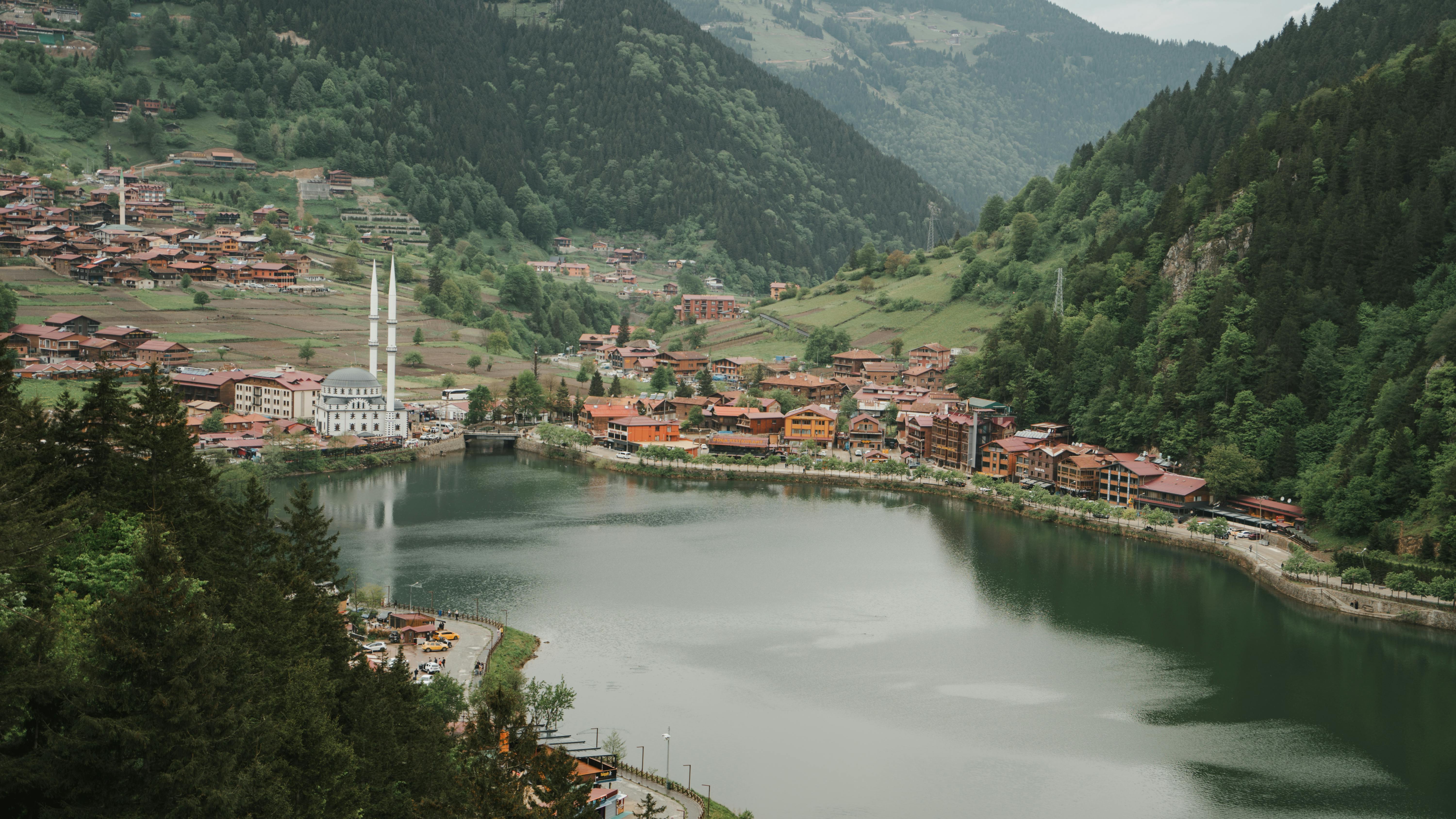
Uzungöl: Where Emerald Waters Meet the Misty Pontic Peaks
The first light of dawn breaks over the Pontic Mountains as mist curls across the surface of Uzungöl, a pristine alpine lake nestled at 1,090 meters elevation in the verdant highlands of Trabzon province. The air carries the scent of pine resin, damp earth, and wild mountain herbs blooming in hidden meadows. You stand on the lakeshore path, where the only sounds are the gentle lap of water against pebbled banks, the distant call of a blackbird echoing through the forest, and the soft crunch of your footsteps on dew-covered grass. Before you stretches a mirror of emerald water—approximately 1,000 meters long and 500 meters wide—formed centuries ago when a landslide dammed the Haldizen Stream, creating a natural basin that now reflects snow-capped peaks, dense fir forests, and traditional wooden chalets with red-tiled roofs. The lake's surface, so still in the early morning, creates perfect reflections that blur the line between water and sky, reality and dream. Uzungöl matters because it embodies the extraordinary beauty of Turkey's lesser-known mountain landscapes—a place where nature's artistry remains largely unspoiled, where local culture thrives in harmony with the environment, and where travelers can reconnect with the simple pleasure of watching light dance across water while mountains stand sentinel in the distance.
Why Uzungöl Embodies Mountain Serenity in a Changing World
Uzungöl represents far more than a picturesque mountain lake—it embodies the delicate balance between natural preservation and sustainable tourism in one of Turkey's most biodiverse regions. Formed by a prehistoric landslide that blocked the Haldizen Stream, this glacial-fed lake sits in a valley surrounded by peaks rising to 2,500 meters, creating a microclimate that supports dense Pontic forests of fir, spruce, and rhododendron. The lake solves fundamental ecological needs: providing habitat for endemic fish species, regulating local water flow, and creating a natural amphitheater that concentrates mist and cloud formations, resulting in the ethereal atmosphere that defines the Uzungöl experience.
The landscape's engineering is entirely natural yet remarkably sophisticated. The landslide dam that created the lake consists of compacted rock and soil approximately 30 meters high, forming a stable barrier that has held for centuries. The lake's depth averages 15 meters, with maximum depths reaching 25 meters near the center, creating thermal stratification that supports diverse aquatic life. Surrounding slopes feature terraced meadows where local communities practice traditional transhumance—seasonal movement of livestock between highland and lowland pastures—a practice that has shaped the landscape for over a millennium while maintaining biodiversity.
What makes Uzungöl unique is its cultural integration: traditional wooden chalets built with local timber and stone, family-run guesthouses serving regional specialties like Trabzon butter and mountain honey, and walking paths that follow ancient shepherd routes. Unlike heavily developed tourist destinations, Uzungöl has maintained its character through community-led initiatives that prioritize environmental protection. The lake's emerald color—created by mineral content and light refraction through clear mountain water—combined with frequent morning mist and dramatic cloud formations, creates a visual poetry that has drawn artists, photographers, and seekers of tranquility for generations. This convergence of natural wonder and cultural authenticity—where wooden architecture complements forested slopes, where local hospitality meets environmental stewardship—creates a destination that speaks to both the heart and the conscience of mindful travelers.
The Best Time to Experience Uzungöl
To experience Uzungöl at its most enchanting, plan your visit between May 20–June 25 or September 15–October 20, when daytime temperatures range from 16-24°C (61-75°F) and the surrounding forests bloom with wildflowers or glow with autumn gold. During these windows, you'll enjoy comfortable conditions for lakeside walks, photography, and hiking without summer's crowds or winter's challenging weather.
For optimal photography of the lake's mirror-like reflections, arrive at 6:30–8:00 AM when morning mist often hovers above the water and the first light creates perfect symmetry between peaks and their reflections. Alternatively, visit at 5:00–6:30 PM
Avoid the peak summer period of July 1–August 20 when crowds reach their maximum, temperatures can exceed 28°C (82°F) in the valley, and the lake's tranquility diminishes with increased tourism activity. While summer offers the most reliable weather, the experience can feel commercialized. Winter months (December–February) bring harsh conditions: temperatures drop to -8°C to 2°C (18°F to 36°F), snow frequently covers the region, fog reduces visibility, and some access roads may close due to weather. While winter visits offer dramatic photography with snow-covered landscapes, access is unreliable and requires special preparation including winter tires and appropriate clothing.
For current information on visiting conditions, regional events, and tourism services, visit the official Turkish Ministry of Culture and Tourism website: www.ktb.gov.tr
Approximate Budget for a 7-Day Trip
Visiting Uzungöl requires basing yourself in Trabzon city or staying in lakeside accommodations, with day trips to surrounding mountain attractions. The following budget assumes moderate travel style—comfortable local guesthouses, authentic regional dining, and a mix of public transportation and occasional private transfers. Prices are listed in euros for international travelers, though Turkey uses the Turkish Lira (₺).
- Accommodation: €30–€55 per night in Uzungöl village or Çaykara. Budget pensions start at €24; boutique wooden chalets with lake views run €58-85. Staying in Uzungöl provides immediate access to the lake while Trabzon city offers more amenities 99 kilometers away.
- Food: €14-21 per day total. Breakfast: €4-6 for traditional Turkish breakfast with menemen, Trabzon butter, local honey, and çay. Lunch: €4-7 for regional specialties like hamsi (Black Sea anchovies), Akçaabat köfte, and Turkish pide at local esnaf lokantası. Dinner: €7-11 for sit-down meals featuring mountain trout, baklava, and ayran.
- Transportation: Round-trip flight to Trabzon Airport from Istanbul: €58-125. Airport shuttle to city center: €3. Local dolmuş within Trabzon: €0.50 per ride. Bus or shared taxi to Uzungöl: €18 round-trip. Car rental: €33/day.
- Attractions: Uzungöl lakeside access: Free. Boat ride on the lake: €6. Şekersu Plateau day trip: €25. Guided nature walk: €30. Photography workshop: €40.
- Miscellaneous: Handwoven Pontic wool scarf: €35-100. Local mountain honey: €7/jar. Traditional wooden crafts: €15-45. Black Sea tea: €5/box.
Total 7-Day Budget: €420–€610 per person (excluding international flights to Turkey)
7 Essential Uzungöl Experiences
- Walk the Lakeside Path at Dawn: Begin your day at 6:30 AM with a leisurely stroll along the 2.5-kilometer path encircling Uzungöl. The morning mist often creates ethereal conditions where mountains appear to float above the water. Stop at wooden viewing platforms to photograph perfect reflections. The path is flat and accessible, lined with pine trees and wildflowers in season. Bring a light jacket—morning temperatures can be 8-10°C cooler than midday. Allow 45-60 minutes for the full circuit.
- Photograph the Mirror Reflections: Position yourself on the eastern shore at 7:00 AM to capture the lake's famous mirror effect, where peaks, forests, and chalets reflect perfectly in the still water. Use a polarizing filter to enhance colors and reduce glare. The best conditions occur when there's no wind—typically early morning before thermal currents develop. This iconic view is most reliable in spring and autumn when atmospheric stability is optimal.
- Take a Traditional Rowboat: Hire a wooden rowboat from the lakeside dock for a peaceful journey across Uzungöl's emerald waters. The 30-minute ride offers unique perspectives of the surrounding mountains and the chance to experience the lake's tranquility from its center. Boats accommodate 2-4 people; cost approximately €6 per person. Best done mid-morning (9:00–11:00 AM) when light illuminates the water's color. Ask your boatman to point out endemic fish and bird species.
- Hike to Şekersu Plateau: Embark on the 4-kilometer trail ascending from Uzungöl to Şekersu Plateau, a highland meadow offering panoramic views of the lake and surrounding peaks. The moderate climb gains 300 meters elevation and takes 60-90 minutes. The plateau features wildflower meadows in spring, traditional shepherd huts, and spectacular vistas. Start by 8:00 AM to avoid afternoon clouds. Bring water, sun protection, and sturdy shoes for the uneven trail.
- Experience Local Hospitality: Visit a family-run guesthouse for traditional Pontic cuisine and cultural exchange. Many hosts welcome visitors for tea and conversation, sharing stories of mountain life, traditional crafts, and regional history. Look for establishments offering "köy kahvaltısı" (village breakfast) featuring homemade bread, local cheeses, and mountain honey. Best visited mid-morning (10:00 AM–12:00 PM) when hosts have time to share their knowledge.
- Watch the Mist Roll In: Find a quiet spot on the western shore at 4:00–5:30 PM to observe the daily phenomenon of mist rising from the lake as temperatures cool. The interplay of light, water, and vapor creates ever-changing atmospheric effects that photographers prize. Bring a tripod for long exposures capturing the mist's movement. This experience requires patience—sit quietly and let the landscape reveal its secrets.
- Explore the Forest Trails: Venture beyond the lakeside into the surrounding Pontic forest on marked trails that wind through ancient fir and spruce stands. The trails vary from easy 1-kilometer loops to challenging 8-kilometer hikes gaining significant elevation. Look for endemic plants, bird species, and occasional wildlife. Best explored mid-morning (9:00–11:00 AM) when forest light is optimal. Bring insect repellent and stay on marked paths to protect fragile ecosystems.
3 Hidden Gems Most Travelers Miss
- The Hidden Waterfall Trail: A lesser-marked path branching from the main lakeside trail leads to a secluded waterfall cascading 25 meters through moss-covered rocks into a crystal-clear pool. Most visitors overlook this feature because it's not prominently signposted. Access: From the northern lakeside path, look for a stone cairn marking the trailhead approximately 800 meters from the main village. The hike takes 20 minutes each way. Best visited mid-morning (10:00 AM–12:00 PM) when light penetrates the forest canopy. Bring water shoes if you wish to wade in the pool. No entrance fee; allow 45 minutes total.
- The Shepherd's Stone Shelter: High on the eastern slope above Uzungöl, a traditional stone shelter built by transhumant shepherds offers panoramic views and a tangible connection to centuries of mountain pastoral life. The structure, partially reclaimed by vegetation, features dry-stone construction techniques unchanged for generations. Access: From the Şekersu Plateau trail, follow the faint path upward for 300 meters. The shelter is unmarked but visible as a stone outline against the meadow. Best photographed late afternoon (4:00–5:30 PM) when side-lighting reveals the stonework. No facilities; bring water and practice Leave No Trace principles.
- The Dawn Birdwatching Point: A quiet clearing on the lake's southern shore, known locally as "Kuş Gözlem Noktası" (Bird Observation Point), offers exceptional opportunities to observe endemic Pontic bird species including the Caucasian black grouse and various woodpeckers. The spot is rarely visited by tourists focused on photography. Access: From the main village, follow the southern lakeside path for 600 meters to a small clearing marked by a wooden bench. Best visited at dawn (6:00–7:30 AM) when birds are most active. Bring binoculars and a field guide. No entrance fee; maintain silence to avoid disturbing wildlife.
Cultural & Practical Tips
- Respect the Natural Environment: Uzungöl's beauty depends on careful preservation. Stay on marked paths to protect fragile vegetation, pack out all trash, and avoid feeding wildlife. The lake's ecosystem is sensitive—do not introduce foreign substances or disturb aquatic life. Speak quietly to maintain the tranquil atmosphere that defines the experience.
- Weather Preparedness: The Pontic Mountains create unpredictable conditions: morning fog often burns off by midday, afternoon showers are common in summer, and temperatures can drop suddenly. Pack layers, rain protection, and sun protection regardless of season. The lake's elevation means conditions are cooler and wetter than in Trabzon city.
- Essential Phrases: "Teşekkür ederim" (teh-shek-kür eh-deh-rim) = Thank you; "Uzungöl nerede?" (oo-zun-gheul neh-reh-deh) = Where is Uzungöl?; "Ne kadar?" (neh kah-dar) = How much?; "Hoş geldiniz" (hosh gel-din-iz) = Welcome.
- Photography Guidelines: Photography is permitted throughout the area. Tripods are allowed but must not obstruct pathways. Drone photography requires advance permission from provincial authorities (contact: trabzon.kultur@ktb.gov.tr). The best light for landscape photography is early morning (6:30–8:30 AM) and late afternoon (5:00–7:00 PM).
- Cultural Sensitivity: Uzungöl is a living community, not just a tourist destination. Respect local customs: dress modestly in village areas, ask permission before photographing residents, and support local businesses. Learn a few words of Turkish—effort is appreciated even if pronunciation isn't perfect.
- Accessibility Considerations: The main lakeside path is relatively flat and suitable for most mobility levels, though surfaces can be uneven. Wooden viewing platforms have gentle ramps. Boat access requires stepping into small vessels. The forest trails and plateau hikes involve steep, uneven terrain and are not suitable for those with limited mobility.
- Understand the Context: Uzungöl represents both natural beauty and community livelihood. Approach the area with curiosity about local culture and respect for ongoing efforts to balance tourism with preservation. Consider hiring a local guide who can explain the region's ecology, history, and traditions.
Conclusion: Travel with Reverence, Not Just Checklists
Uzungöl invites you to do more than photograph emerald water against mountain backdrops. This is a place to stand where mist and light dance across a lake formed by ancient earth movements, where wooden chalets reflect centuries of mountain adaptation, where the simple act of watching water ripple can reconnect you with nature's rhythms. When you walk the lakeside path at dawn, when you listen to birds calling through pine forests, when you share tea with a local family who has called these mountains home for generations, you participate in a continuity that transcends any single lifetime.
Travel to Uzungöl with reverence for the ecosystems that create this beauty, for the communities that steward this landscape, for the delicate balance that allows both nature and culture to thrive. Respect the fragility of the environment—mountain ecosystems recover slowly from disturbance, and every visitor's choices matter. Understand that the tranquility you cherish depends on the restraint of every traveler who comes after you. Let the lake's stillness slow your pace, let the mountains' grandeur humble your expectations, and let the harmony of water, forest, and sky remind you that the most profound journeys are those that deepen our connection to the natural world and our responsibility to preserve it for those who follow.