Bird's Nest Stadium: Where Architectural Innovation Meets Olympic Legacy
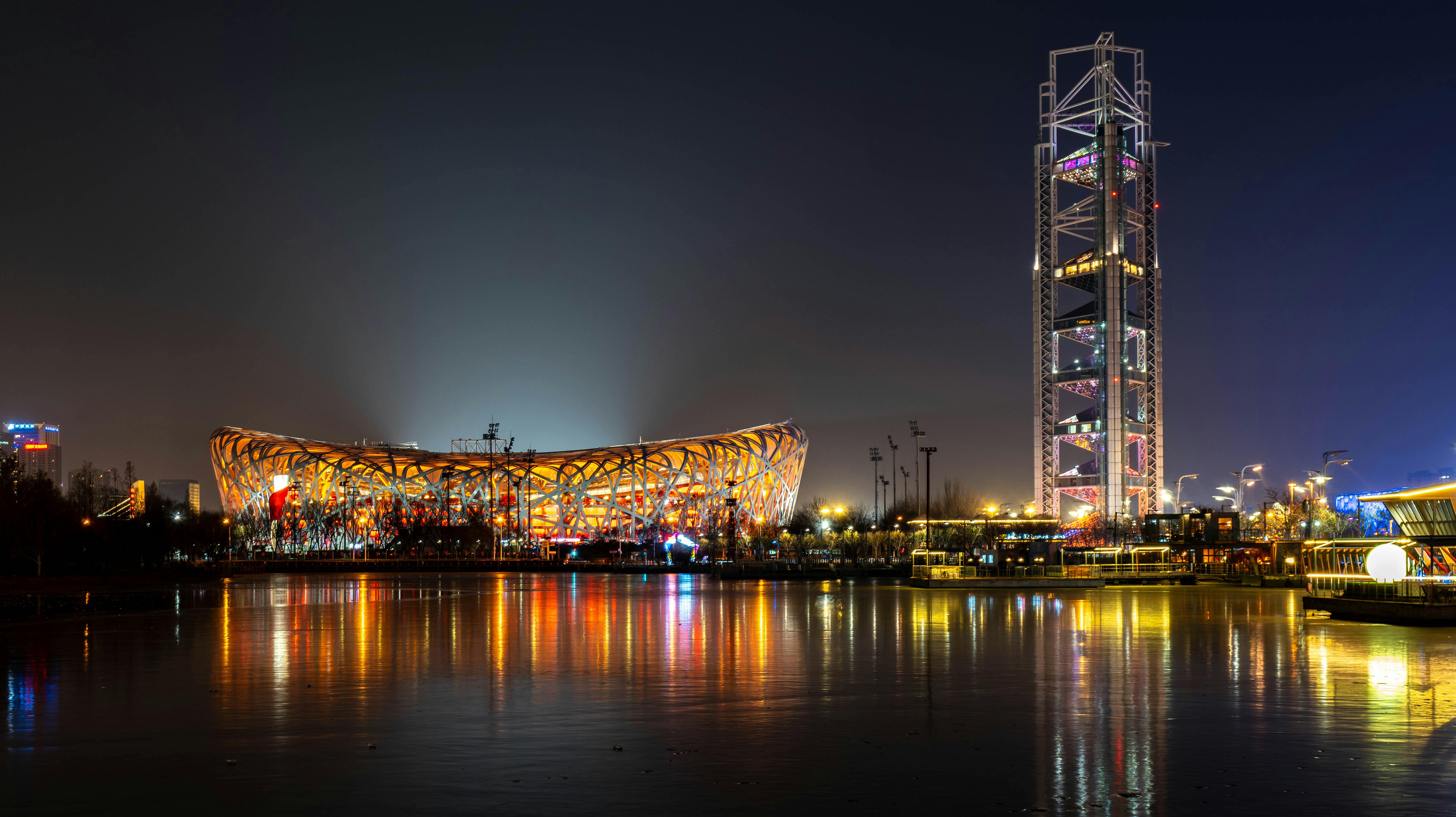
Bird's Nest Stadium: Where Steel Lattice Meets Olympic Legacy
I stepped off the subway at Olympic Green station at 8 AM, the morning sun already warming the vast plaza. The Bird's Nest loomed ahead—a colossal tangle of steel girders that seemed to defy logic. I'd paid 50 RMB for a standard daytime tour ticket, which lets you explore the stadium's interior, walk on the track, and climb to the top of the stands . The 91,000-seat arena, officially the Beijing National Stadium, was completed in 2008 at a cost of $500 million . It took 52 months to build, and at its peak, 17,000 workers were on site . Standing at the centre of the field, looking up at the interlocking steel beams, I felt the weight of the history that had unfolded here. The 2008 Olympics. Usain Bolt's record-breaking sprints. The opening ceremony that stunned the world. The Bird's Nest has become more than a stadium—it's a symbol of modern China.
Why the Bird's Nest Matters
The Bird's Nest is an architectural icon, a collaborative masterpiece by Swiss architects Herzog & de Meuron and the Chinese artist Ai Weiwei . Its design beat dozens of entries in a 2003 international competition . The "random" lattice pattern of the steel exterior was inspired by the cracked patterns of ancient Chinese pottery . It's the largest steel structure in the world, using 45,000 tonnes of steel and 36 kilometres of unwrapped steel beams . Time magazine listed it as the top architectural design of 2007 . The stadium's design also set a new standard for Olympic venues, breaking down the monolithic, authoritarian style of earlier stadiums to create a porous, open structure that feels like a giant social organism . The Bird's Nest was the centrepiece of a successful Olympic bid that showcased China's rise to the world stage.
The Best Time to Experience the Bird's Nest
The best time to visit is late afternoon, arriving around 4 PM to explore the interior and then stay for the evening light show when the stadium is illuminated. The Bird's Nest is open daily from 9 AM to 5:30 PM in peak season and 9 AM to 4:30 PM in winter. The night lighting, especially the warm yellow glow, is a spectacular contrast to the surrounding Olympic Green. Autumn (September to October) offers the most comfortable temperatures, ranging from 15°C to 25°C (59°F to 77°F). Spring is also good, but summer can be hot and hazy. Weekday mornings are the quietest, while weekends and holidays are packed.
Approximate Budget for a 7-Day Trip
My total for a week in Beijing came to roughly 3,500 RMB (480 USD). A visit to the Bird's Nest is affordable.
- Accommodation: 200-600 RMB per night. Staying near the Olympic Green is convenient, but the city centre offers better value.
- Food: 100-200 RMB daily. There are a few cafes near the Bird's Nest, but the best food is in the city centre.
- Transport: Metro Line 8 to Olympic Green Station costs about 5 RMB from most parts of the city.
- Attractions: A standard entry ticket costs around 50 RMB. A combination ticket with the Water Cube costs 80-100 RMB.
- Miscellaneous: A power bank, a light jacket for the evening, and a camera.
Total for 7 days: Approximately 3,500 RMB (480 USD). The most overpriced thing is the souvenir shop inside the stadium—it sells the same keychains and fridge magnets you can find anywhere in Beijing, at inflated prices.
Essential Bird's Nest Experiences
- Walk on the Track: The standard tour lets you step onto the running track and walk where Olympic champions once raced. The view from the centre of the field, looking up at the 91,000 seats, is a powerful experience.
- Climb to the Top of the Stands: The bird's-eye view from the highest seats offers a panoramic perspective on the stadium's steel lattice structure and the Olympic Green.
- Photograph the Steel Lattice: The stadium's exterior is a photographer's dream. The interplay of light and shadow through the steel beams creates a constantly changing, photogenic surface.
- Visit at Night for the Light Show: When the stadium is illuminated, the steel lattice glows, and the reflection in the nearby lake creates a stunning view.
- Explore the Olympic Green: The Bird's Nest is surrounded by a large public park, the National Aquatics Centre (Water Cube), and the Olympic Torch Tower. The park is free and open to the public, and it's the perfect place to relax after visiting the stadium.
Skip the guided tour if you're on a budget. The standard entry ticket gives you access to the main areas, and the audio guide is informative.
Hidden Gems Most Travelers Miss
- The Water Cube at Night: Next to the Bird's Nest, the Water Cube is illuminated with a spectacular blue light show in the evenings. Most tourists visit during the day and miss it.
- The Olympic Green Park: The park surrounding the stadium is a peaceful public space with walking paths, lakes, and sculptures. It's a great way to see the Bird's Nest from different angles.
- The View from the Lake: The reflection of the Bird's Nest in the artificial lake is a classic photo. Most tourists take their photos from the front of the stadium, not from the water's edge.
- The Stadium's Use as a Winter Sports Venue: In 2022, the Bird's Nest was transformed into a Winter Olympics venue for the opening and closing ceremonies. The interior now has a more intimate winter sports feel.
Overrated gem: The "Olympic Flame" souvenir shop. The trinkets are generic and overpriced. The real souvenir is the memory of the stadium itself.
Cultural & Practical Tips
- Take the subway to Olympic Green Station: It's the most convenient way to reach the Bird's Nest. The station is a 5-minute walk from the stadium.
- Wear comfortable shoes: The Olympic Green is large, and you'll be walking more than you expect. The stadium is 330 metres long and 220 metres wide—it's a big building.
- Bring a power bank for your phone: The photo opportunities are endless. You will drain your battery fast.
- Common tourist mistake: Visiting only the Bird's Nest and leaving. The Olympic Green is a public park, free to explore. The Water Cube, the Olympic Torch Tower, and the walking paths are all worth your time.
- Common tourist mistake: Visiting on a weekend. The crowds can be thick on Saturdays and Sundays. Visit on a weekday morning or late afternoon for the best experience.
- Check the opening hours before you go: The interior is open from 9 AM to 5:30 PM, but the park stays open longer. The evening light show is best after sunset.
Essential Visitor Information
Location & Access: The Bird's Nest is at No. 1 National Stadium South Road, Chaoyang District, Beijing, on the Olympic Green . Option 1: Metro Line 8 to Olympic Green Station, Exit D. Option 2: Bus routes 386, 407, 656, 737, 740, 753, 804, 827, 939, 944, 983, or Yuntong 113 to Beichenqiaoxi Stop . Option 3: Taxi from the city centre—it's a well-known landmark.
Tickets & Booking: A standard entry ticket costs around 50 RMB. A combination ticket with the Water Cube costs 80-100 RMB. Booking is recommended online to skip the queue.
Operating Hours: Peak season (April-October): 9 AM to 5:30 PM. Off-season (November-March): 9 AM to 4:30 PM.
Visit Duration: Minimum time is 1.5 hours for the interior. Recommended time is 2.5 to 3 hours for a full experience, including the Olympic Green and the Water Cube.
Family Suitability: Children are welcome. The stadium is wheelchair accessible, and the open spaces of the Olympic Green are great for kids. The Water Cube has a family-friendly water park.
Timing: Best season is autumn for clear skies and comfortable temperatures. Best time of day is late afternoon for the interior and the evening light show.
Highlights: The steel lattice exterior. The running track. The view from the top of the stands. The Olympic Green park. The Water Cube light show at night.
Nearby & Day Trip: The Water Cube is adjacent. The Olympic Torch Tower is a 10-minute walk. The China National Convention Centre is nearby. The Beijing Zoo is a 20-minute metro ride away.
Conclusion: Travel with Awe, Not Just Photos
The Bird's Nest is a stadium that defies expectations. It's a vast tangle of steel that feels organic, a monument that celebrates athletic achievement and national pride. Standing on the track, looking up at the 91,000 seats, you feel the weight of the 2008 Olympics, the roar of the crowd, the electricity of Usain Bolt's world records. The stadium is a global icon, and it's a symbol of China's modern ambition. The entry is affordable, the park is free, and the view from the outside is just as impressive as the view from inside. Arrive late, stay for the lights, and take a moment to appreciate the architecture. The Bird's Nest isn't just a building—it's a piece of history.
Post a Comment