
Dogo Onsen: Where 3,000-Year-Old Thermal Waters Meet Living Architectural History
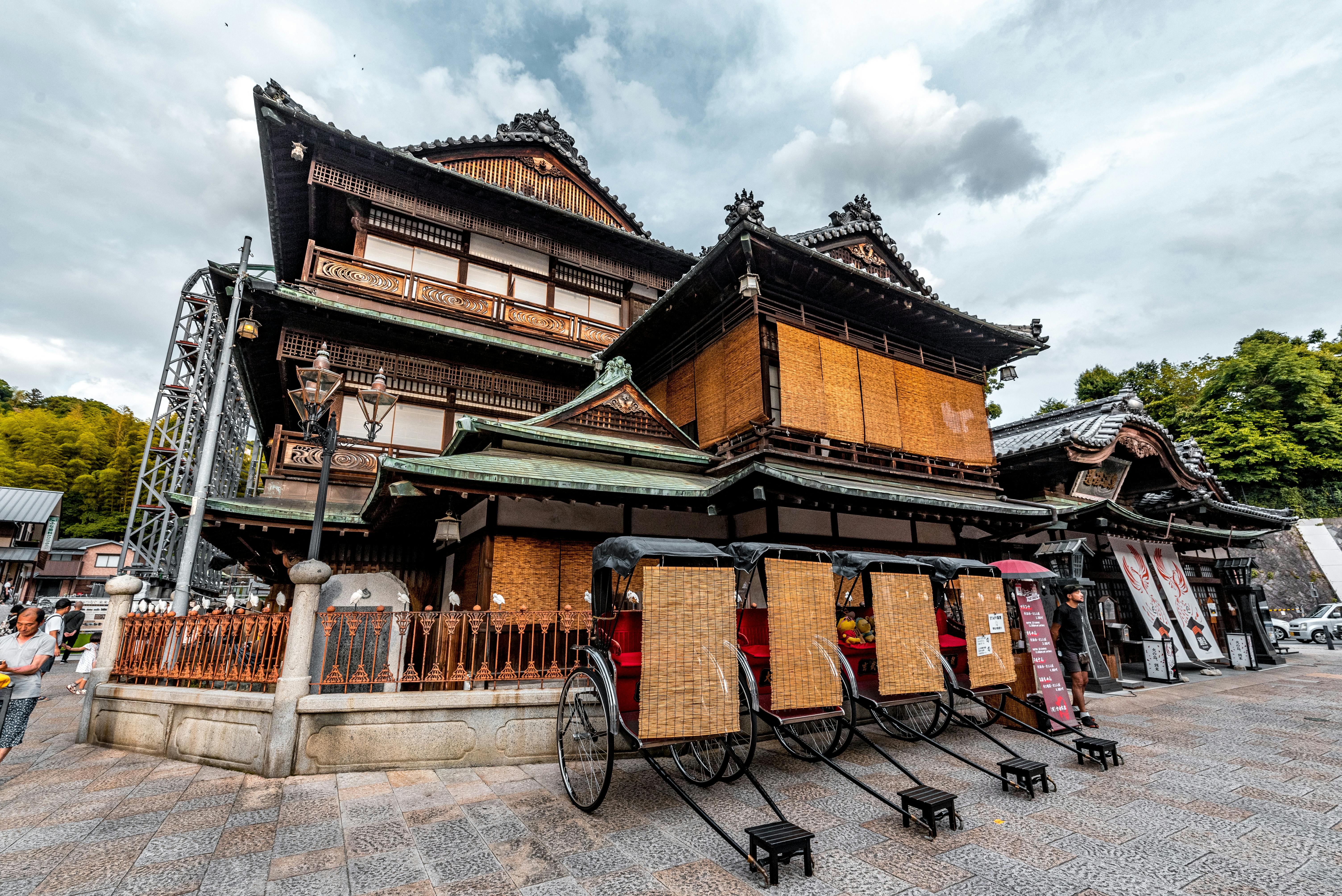
The late afternoon light filters through the cedars lining the approach to Dogo Onsen Honkan, casting elongated shadows across the cobblestone square. Steam rises gently from the Kami-no-Yu bathhouse vents—not as industrial exhaust, but as the visible breath of geothermal springs that have surfaced here since before recorded history. At precisely 8:00 AM, the resonant strike of the Botchan Karakuri Clock echoes across the courtyard, its mechanical figures—characters from Natsume Sōseki’s beloved novel—emerging to bow and dance. The air carries layered scents: hinoki cypress wood soaked by decades of mineral steam, freshly-pounded mochi from nearby confectioners, and the faint alkaline tang unique to thermal waters. This is not a restored museum or a modern spa dressed in tradition—this is Japan bathing as it has for three millennia, in a three-story wooden structure designated a National Important Cultural Property, the first public bathhouse in Japan to receive such distinction . Here, wellness isn't a trend; it's a continuous, unbroken ritual.
Why Dogo Onsen Embodies Japan’s Oldest Wellness Wisdom
Before Kyoto was Japan’s capital, before samurai codified their code—there was Dogo Onsen. The Kojiki (Records of Ancient Matters), completed in 712 CE, and the Manyoshu (Collection of Ten Thousand Leaves), compiled circa 759 CE, both reference the healing springs of Iyo Province—present-day Ehime on Shikoku Island . Local legend speaks of a white egret (sagi) that discovered the spring while nursing an injured leg, submerging it daily until fully healed. That egret now perches eternally atop the Shinrokaku, the sentinel-like copper-clad cupola crowning the Honkan’s third floor . The current Honkan structure, rebuilt in 1894 during the Meiji era, solved a unique architectural problem: how to accommodate mass public bathing, private imperial chambers, and literary lounges within a single wooden frame without compromising thermal integrity. The answer lies in the building’s complex, almost maze-like layout—multiple wings, staircases, and levels layered organically over decades. The Yushinden (Imperial Bathing Room), built exclusively for the Imperial Family, remains the only facility of its kind in Japan, accessible to visitors for guided viewing . The spring water itself—pumped from 18 separate sources at temperatures ranging from 20°C to 55°C (68°F to 131°F)—requires no heating or added water, a rarity among Japanese onsen . Its alkaline composition, pH 8.3, gently exfoliates dead skin cells, earning it the nickname "beauty water."
The Best Time to Experience Dogo Onsen
Matsuyama’s mild Seto Inland Sea climate makes Dogo Onsen accessible year-round, but specific windows reward the intentional traveler. For comfortable sightseeing and pleasant outdoor bathing transitions, target April 1–May 15 (average highs 18–24°C / 64–75°F, cherry blossoms typically peak April 1–8) or October 10–November 30 (average highs 16–22°C / 61–72°F, autumn foliage at Dogo Park peaks early November). For the quintessential post-bath experience—emerging flushed and relaxed into cool evening air—arrive on weekdays between 4:00 PM and 6:00 PM, when the Honkan’s wooden exterior glows amber in sunset light. Periods to avoid: August 10–18 (Obon holiday, immense crowds, daytime highs 32°C / 90°F with sauna-like humidity) and December 29–January 3 (New Year closure of many facilities and extreme congestion at those remaining open). The Honkan fully reopened after a 5.5-year preservation restoration on July 11, 2024, now operating at 100% capacity for 2026 . For the most current bath schedules, private room availability, and seasonal event listings, consult the official site: https://dogo.jp/en/.
Approximate Budget for a 7-Day Trip to Dogo Onsen & Matsuyama
This budget assumes a balanced 7-night stay in Matsuyama, incorporating Dogo Onsen bathing, castle visits, and local dining. Prices are in Japanese Yen (JPY) as of 2026; USD equivalents approximate at ¥150 = $1.
- Accommodation: ¥8,000–¥25,000 per night (Budget: business hotel near Matsuyama Station; Mid-range: ryokan near Dogo Onsen Station with breakfast; Luxury: Dogo Onsen Funaya or Koto no Niwa with private in-room onsen baths from ¥47,850 for two—approximately ¥24,000 per person) .
- Food: ¥3,500–¥8,000 per day (Breakfast ¥500–¥1,500 for convenience store or cafe; Lunch ¥1,000–¥2,000 for taimeshi (sea bream rice) set; Dinner ¥2,000–¥4,500 for yakitori, udon, or a multi-course kaiseki at a ryokan.)
- Transportation: ¥2,500–¥5,000 total. Iyotetsu Tram: ¥230 per ride or ¥600 day pass. Bus from Matsuyama Airport to Dogo Onsen: ¥1,000 one-way. Matsuyama Ropeway to Matsuyama Castle: ¥520 round-trip .
- Attractions: Dogo Onsen Honkan: ¥700 (Kami-no-Yu public bath) to ¥2,500 (Tama-no-Yu with private third-floor room, tea, and Botchan dango sweets) . Asukanoyu annex bathhouse: ¥1,600. Matsuyama Castle keep: ¥520. Ishite-ji Temple (Shikoku Pilgrimage Temple No. 51): free entry, grounds donation appreciated.
- Miscellaneous: ¥2,000–¥5,000. Imabari towel (local luxury textile): ¥1,500–¥4,000. Botchan dango (three-color mochi skewer): ¥500. Foot bath (ashiyu) outside Honkan: free.
- Total (7 days, mid-range, per person excluding international flights): ¥85,000–¥150,000 ($565–$1,000 USD)
6 Essential Dogo Onsen Experiences
- Soak at Dawn in Kami-no-Yu: Arrive at the Honkan by 6:00 AM (opening time) to experience the yugama fountainhead—the cast-iron pot where thermal water boils up from the earth—before tour groups arrive. The high-ceilinged stone bath, adorned with blue-and-white Tobe porcelain panels, offers two spouts gushing 42°C (108°F) alkaline water directly from the source .
- Climb to the Shinrokaku After Your Bath: With the Tama-no-Yu package (¥2,500), ascend to the Honkan’s third floor, where you’ll rest in a tatami lounge wearing provided yukata. An attendant serves Botchan dango and tea while you gaze up at the copper egret perched directly above—the same bird that discovered these springs three millennia ago.
- Walk the Dogo Arcade (Dogo Haikara Dori): This covered shopping street, stretching 250 meters from the tram stop to the Honkan, houses 60 shops selling taimeshi lunch sets, hand-painted Tobe-yaki ceramics, and sweet potato soft serve. Visit at 6:00 PM when lanterns illuminate and the evening crowds thin.
- Visit Asukanoyu for the Yukata Bathing Experience: Located a three-minute walk from the Honkan, this annex bathhouse, constructed in the architectural style of the Asuka period (552–646 CE), offers the rare opportunity to bathe while wearing a yukata (cotton kimono)—practice as ancient Japanese did. The spacious bath features beautiful decorative tiles and a lounge with panoramic views .
- Spend an Evening at Tsubaki-no-Yu: The Honkan’s "sister" facility, established in 1953 and renovated in 1984, offers a modern alternative with the same natural spring water. Its white-walled kura-yashiki (storehouse) exterior belies high-ceilinged, contemporary baths with excellent ventilation—ideal for those who find the Honkan’s historical atmosphere too humid .
- Hike the Dogo Park Loop at Golden Hour: From the Honkan, a 15-minute uphill walk leads to Dogo Park (also known as Yunoara Park), site of the ruins of Yuzuki Castle. The 2-kilometer loop trail offers elevated views of Matsuyama’s city lights as they flicker on during the 30 minutes after sunset—best timed after an evening bath.
3 Hidden Gems Most Travelers Miss
- Dogo Onsen Stonemason’s Graffiti: On the north exterior wall of the Honkan, near the Tsubaki-no-Yu entrance, look for faint kanji characters carved directly into the wooden pillars. These are signatures and dates left by the stonemasons who rebuilt the structure in 1894, hidden from official view but preserved by generations of maintenance workers. No signage marks the spot—it’s between the second and third lantern posts from the corner.
- Ishite-ji’s Cave Pilgrimage at Night: Temple No. 51 on the Shikoku 88 Temple Pilgrimage, located a 25-minute walk east of Dogo, is famous for its Nerikan—a dark, tunnel-like cave beneath the main hall. Pilgrims walk through it in complete darkness, feeling the walls to find carved Buddhist images. Visit on the 21st of any month, when night pilgrimages are permitted until 9:00 PM, and the temple provides candles.
- The Second-Hand Kimono Shop Behind the Arcade: Tucked down the alley beside the Dogo Onsen Post Office, “Sagi no Iro” (no website, no English sign—look for the hanging indigo noren curtain) sells vintage kimono and haori jackets from Ehime’s textile mills. Owner Nakamura-san speaks limited English but offers tea and unwraps bolts of Iyotex (a shibori-adjacent local dye technique) not sold elsewhere. Open only Thursday–Sunday, 11:00 AM–4:00 PM.
Cultural & Practical Tips for Dogo Onsen
- Photography Rules: Absolutely no photography inside the Honkan’s bathing areas or lounges—not just prohibited but culturally taboo. The exterior, however, is most photogenic during the “magic hour” (5:30–6:15 PM June–August, 4:00–4:45 PM December–February) when the Shinrokaku’s copper oxidizes green against the amber wooden façade.
- Essential Phrase: “Kami-no-yu wa doko desu ka?” (Where is the Divine Hot Spring bath?) — Pronounced: Kah-mee noh yoo wah doh-koh dess kah? At the Honkan, Kami-no-yu is the larger public bath (¥700), while Tama-no-yu (¥1,200–¥2,500) includes lounge access.
- Entry Protocol: Remove all clothing before entering the bath area, bringing only the small towel provided. Never dip your towel—or your hair—into the bathwater. Wash thoroughly at the seated shower stations before entering the spring.
- Booking Private Rooms: For the Tama-no-yu experience with a private third-floor lounge, advance booking is strongly recommended—particularly on weekends and cruise ship days. Walk-ins for private facilities are rare . Use the official Dogo Onsen portal in English.
- Tattoo Policy: Dogo Onsen Honkan and Tsubaki-no-Yu permit small tattoos covered with adhesive skin-colored patches (available for ¥300 at the front desk). Large or multiple tattoos may be asked to use the private bath options only—informed before purchasing entry.
- What to Wear: After bathing, you’ll dry off and dress in provided yukata (cotton robes) if using the lounge floors. Many Japanese visitors then walk directly to nearby cafes in their yukata—this is not only accepted but encouraged as part of the Dogo aesthetic.
- Hydration Note: The alkaline spring water is potable, but not all fountains are drinking-safe. A dedicated drinking fountain near the Honkan’s east entrance dispenses safe, mineral-rich thermal water said to aid digestion—available free during operating hours.
Conclusion: Travel with Presence, Not Just Pilgrimage
Three thousand years is a span so vast it collapses into abstraction—empires rising and falling, technologies transforming, languages evolving beyond recognition. And yet, the water that emerges from beneath Dogo Onsen today is chemically identical to the water that healed the egret, that soothed the poets of the Manyoshu, that steamed the cypress walls of the original bathhouse built for emperors. You cannot experience a three-thousand-year-old culture by rushing through it. You can, however, lower yourself into 42-degree alkaline water at 6:00 AM, feel your skin soften and your breath deepen, and understand that you are participating in the same ritual as countless generations before. The Honkan is not a backdrop for your social media—it is a living, breathing, steaming vessel of continuity. So slow down. Stay for a second bath. Sit on the tatami and eat your dango without checking your phone. The egret has waited three millennia; you can spare an afternoon.