
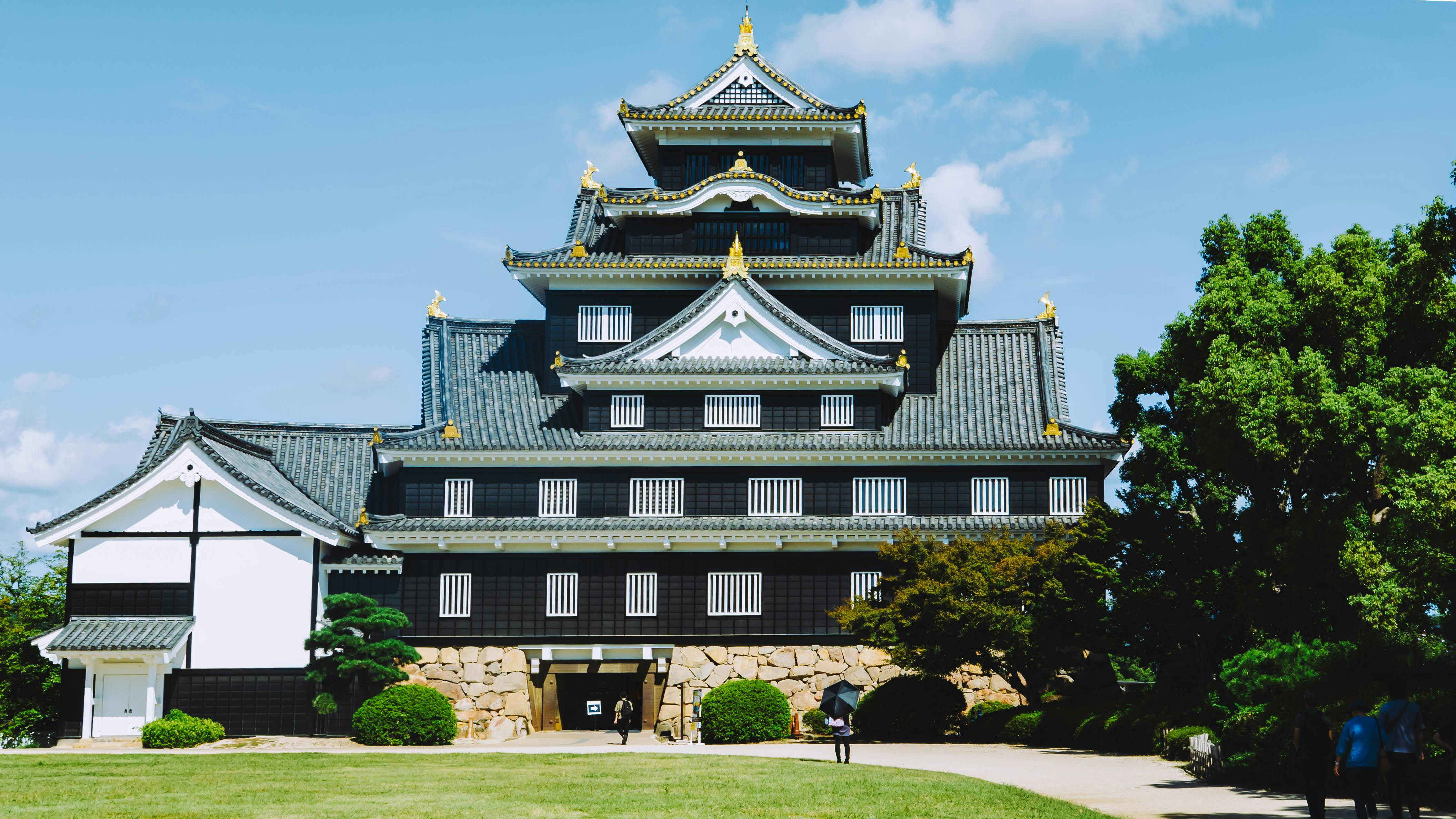
Matsuyama Castle: Where Ropeway Views Meet One of Japan's Twelve Original Keeps
The gondola lifts you through the canopy of cherry trees—their branches heavy with pink blossoms brushing against the glass. Below, the city of Matsuyama unfurls toward the Seto Inland Sea, a tapestry of gray rooftops and green parkland. In three minutes, the ropeway delivers you 132 meters up Mount Katsuyama, to the gates of a castle that has witnessed four centuries of Japanese history . This is not a ferroconcrete replica. Matsuyama Castle is one of Japan's twelve remaining original keeps—a genuine Edo-period fortress where the wooden floors creak beneath your feet, the staircases are steep enough to defeat intruders, and the view from the top balcony stretches all the way to the sea . You are walking through the same corridors where samurai once stood guard, their armor displayed in glass cases beside the original blueprints of this architectural masterpiece .
Why Matsuyama Embodies the Enduring Spirit of Japan's Original Castles
Matsuyama Castle solved a problem faced by most Japanese castles: how to survive into the modern era as an authentic structure, not a concrete reproduction. Construction began in 1602 under the命令 of Lord Katō Yoshiaki, a renowned castle builder who had worked on the great fortress of Kumamoto . After Yoshiaki's transfer to Aizu in 1627, Lord Gamō Tadatomo completed the project in 1628 . The castle suffered a catastrophic lightning strike in 1784, which destroyed the original keep . But instead of abandoning the site, the lords rebuilt—using traditional wooden architecture, not shortcuts. The current castle keep was reconstructed in 1854, just before the Meiji Restoration ended the samurai era forever [citation:5][citation:10]. While many of Japan's castles were destroyed by fire, war, or the post-feudal order to dismantle fortifications, Matsuyama's keep survived. Today, it stands as one of only twelve "genzon tenshu" (existing original keeps) in the nation [citation:5]. The stone walls reach 17 meters in height in places, and hidden gates, turrets, and containment zones still reveal the genius of Edo-period military engineering . Unlike the crowded, tourist-slicked Himeji Castle, Matsuyama offers an intimate experience: steep wooden staircases, creaking floorboards, and the rare privilege of standing inside a building that samurai once defended .
The Best Time to Experience Matsuyama Castle
The ideal windows to visit Matsuyama Castle are mid-March through mid-April for cherry blossoms (sakura) and late October through November for autumn foliage [citation:8][citation:10]. During these months, average temperatures range from 12–22°C (54–72°F), making the exploration of the keep and grounds comfortable. Cherry blossoms typically bloom from mid-March to mid-April, with peak viewing often in early April [citation:8][citation:10]. The castle grounds transform into a sea of pink and white, with both somei yoshino and yaezakura varieties blooming—a rare double display . For the most serene experience, arrive at the ropeway station at 8:30 AM (the castle opens at 9:00 AM) and take the first gondola up. You will have the keep nearly empty for the first hour [citation:6]. Avoid Golden Week (April 29–May 5) and Obon week (August 13–16), when the castle becomes congested with domestic tourists. Summer (June–August) is hot and humid (28–32°C / 82–90°F), while winter (December–February) is chilly (6–12°C / 43–54°F) but uncrowded. The castle is open year-round, closing only on the third Wednesday of December [citation:6]. For official information, consult: www.matsuyamajo.jp [citation:6].
Approximate Budget for a 7-Day Shikoku & Matsuyama Trip
Matsuyama is best visited as a 2–3 day stop on a Shikoku itinerary (often combined with Dogo Onsen, Kotohira-gu, and the Shimanami Kaido). These estimates are per person for mid-range travel (excluding international flights). Matsuyama is Shikoku's largest city and offers good tourist infrastructure [citation:10].
- Accommodation: ¥5,000–¥25,000 ($35–$170) per night. Budget: Guesthouses near the ropeway station from ¥4,500. Mid-range: Business hotels (e.g., Dormy Inn Matsuyama) from ¥9,000 ($60). Luxury: Traditional ryokan in the Dogo Onsen district from ¥20,000–¥40,000 ($135–$270).
- Food: ¥3,000–¥8,000 ($20–$55) per day. Breakfast: A morning coffee set at a local cafe (¥600). Lunch: Gansui's famous Uwajima-style tai-meshi (sea bream rice) for ¥1,800–¥2,500 . Dinner: 錦 iwamoto (Michelin Bib Gourmand) specializing in sea bream, from ¥3,000–¥6,000 [citation:10]. Don't miss botchan dango (three-colored dumplings) from the arcade shops (¥500) [citation:10].
- Transportation: ¥270–¥5,000 ($1.80–$33) per day. Ropeway/lift round trip: ¥520 ($3.50) for adults, ¥160 for children [citation:6][citation:2]. Matsuyama's retro streetcars cost ¥200–¥250 per ride; a 1-day pass is ¥800 . Rental car (recommended for exploring Shikoku): ¥6,000–¥9,000 per day.
- Attractions: Matsuyama Castle Keep: ¥520 ($3.50) for adults, ¥160 ($1.10) for children [citation:6]. Ninomaru Garden: Free. Dogo Onsen Honkan (public bathhouse): ¥450–¥1,600.
- Miscellaneous: ¥2,000–¥10,000 ($13–$67). Jako-ten (fried baby sardines—an Ehime specialty) from the arcade: ¥800–¥1,200 . Matsuyama Castle omamori (protective charm): ¥500–¥1,000. Postcards and castle history books at the keep's souvenir shop: ¥500–¥2,000.
Total estimated 7-day trip (per person, mid-range, including 2 nights in Matsuyama): $1,000 – $1,500 USD.
7 Essential Matsuyama Castle Experiences
- Ride the Ropeway (or Chairlift) Up Mount Katsuyama: The three-minute gondola ride offers stunning views of the city emerging through the trees [citation:2][citation:10]. For the adventurous, the chairlift provides an open-air alternative—no strollers allowed, but the breeze and unobstructed views are unbeatable [citation:5]. From the upper station, it is a 10-minute walk to the keep. Round-trip ticket: ¥520 for adults, with toddlers riding free [citation:2][citation:6]. The ropeway runs every 10 minutes, the chairlift continuously [citation:5].
- Walk Through the Original Wooden Keep (Tenshu): Built in 1854, this three-story tower is the real thing—not a concrete reproduction [citation:10]. Inside, steep wooden staircases connect the levels; the steps were deliberately built narrow and tall to slow down attackers. The creaking floorboards, the cool shadows, the samurai armor on display—every detail transports you back to the Edo period [citation:5]. The top floor features an open-air balcony with 360-degree panoramic views of Matsuyama city, the Seto Inland Sea, and the surrounding mountains [citation:5][citation:9]. Allow 30–45 minutes to explore the keep.
- Stand on the Stone Walls (17 Meters High): The castle's outer defensive walls reach up to 17 meters (55 feet) in some sections—a staggering height for Edo-period engineering [citation:9]. Walk along the base of these walls and look up at the keep. The massive granite stones, each carefully cut and fitted without mortar, have stood for over 400 years [citation:5]. The best viewpoint is from the Ninomaru Garden, which once housed the castle's outer buildings and now offers a green space with historical charm [citation:7].
- Find the Hidden Gates and Turrets: Matsuyama Castle is a masterwork of defensive design, with hidden gates, masugata (containment zones), and three surviving turrets (yagura) [citation:5][citation:9]. The Tsutsumimon Gate is a classic example: a sharp, 90-degree turn forces invaders to slow down and expose their unshielded side to archers above. Pick up a map at the entrance and hunt for these architectural surprises—they are easy to miss if you rush.
- Visit During Cherry Blossom Season (Early April): The castle grounds are planted with approximately 200 cherry trees, including both the common somei yoshino and the double-flowered yaezakura [citation:10]. When both varieties bloom simultaneously—a rare occurrence—the effect is breathtaking. The blossoms frame the keep's whitewashed walls, and petals drift across the stone paths like snow. On a sunny April morning, the view from the top balcony of the pink canopy spreading below is unforgettable [citation:5][citation:10].
- Explore the Ninomaru Garden and Historical Walk: At the base of the hill, the Ninomaru area once contained the castle's outer administrative buildings. Today, it is a tranquil Japanese garden with a pond, carefully raked gravel, and interpretive signs explaining the original layout [citation:7]. A walking path leads from the garden up through the forest to the main keep—a 20- to 30-minute hike that is shady, quiet, and full of birdsong [citation:5][citation:7]. On the descent, take this path instead of the ropeway. It is a gentle, meditative walk through the same woods that samurai once patrolled.
- Eat Tai-Meshi (Sea Bream Rice) After Your Descent: Matsuyama sits on the Seto Inland Sea, renowned for its sea bream (tai or madai). Two local traditions dominate: the cooked Matsuyama style and the raw Uwajima style [citation:10]. Gansui, a short walk from the ropeway entrance, has been serving Uwajima-style tai-meshi for over a hundred years. The dish arrives as a whole sea bream cooked over rice in a traditional pot—the fish's essence infuses every grain. Lunch sets cost ¥1,800–¥2,500 and are worth every yen [citation:10].
3 Hidden Gems Most Travelers Miss
- The Haikara-san Sights and City Tram: Just below the ropeway station, you can spot Matsuyama's vintage streetcars—some dating back to the 1950s. The "Botchan" train, named after the protagonist of Natsume Soseki's famous novel, runs between the castle area and Dogo Onsen . It costs ¥200–¥250 per ride. Most tourists take taxis or buses; riding the tram is a nostalgic, affordable way to see the city and connect to the literary heart of Matsuyama.
- Gintengai Covered Arcade (Morning Walk): The Gintengai arcade runs for nearly a kilometer through the city center [citation:10]. In the morning (7:00–9:00 AM), before the shops open, it is almost empty—shutters down, lights off, the long glass-roofed corridor stretching ahead without a soul in sight [citation:10]. The scale registers differently when it is empty. Walk it before your castle visit for a quiet, atmospheric start to the day. Near the castle approach, stop at Kadoya's Eating Around, a takeout window that fries jako-ten (baby sardine tempura) to order—an Ehime specialty not to be missed [citation:10].
- The "My Botchan Dango 30" Shop: Botchan dango—three-colored dumplings (pink, green, white) skewered together—are Matsuyama's signature sweet. Most tourists buy the standard version. Hidden in the arcade area, My Botchan Dango 30 extends the concept to thirty flavors made to order [citation:10]. Matcha, strawberry, sesame, yuzu, black sugar—you choose any combination. A few hundred yen per skewer. It is a hidden, delightful detour between the arcades and the castle.
Cultural & Practical Tips for Matsuyama Castle
- Bring a Stroller? Take the Gondola, Not the Chairlift: The gondola (ropeway) can accommodate strollers without folding them [citation:2][citation:10]. The chairlift cannot. Families with toddlers should plan to take the gondola up and down. The castle grounds themselves are flat and sandy, stroller-friendly up until the keep entrance, where you will leave the stroller and climb the steep stairs inside [citation:10].
- "Konnichiwa" (Kon-nee-chee-wah) and Local Phrases: "Konnichiwa" is hello. At the ropeway ticket counter, "Sumimasen" (Soo-mee-mah-sen)—"excuse me"—is useful. After viewing the castle, a simple "Arigato gozaimasu" (Ah-ree-gah-toh go-zahee-mahs) thanks the staff. At the arcade food stalls, "Oishii!" (Oh-ee-shee-ee) —"delicious!"—will earn you a warm smile [citation:10].
- Photography Guidelines: Photography is permitted everywhere, including inside the keep. Flash is prohibited in the interior displays (armor, documents) to protect the artifacts. Tripods are allowed in the castle grounds but not inside the keep due to space constraints. The best photo spots: the top balcony (panoramic sea view), the Ninomaru Garden (castle reflected in the pond), and the approach path during cherry blossom season [citation:5][citation:9].
- Closure Days and Hours: The castle keep is open from 9:00 AM to 5:00 PM (last entry 4:30 PM), with seasonal variations. It closes on the third Wednesday of December and over the New Year period [citation:6]. The ropeway's last ascent is usually around 4:30–5:00 PM, so plan accordingly [citation:5]. The Ninomaru Garden is always open and free.
- Wear Comfortable Shoes for the Steep Stairs: The stairs inside the keep are famously steep and narrow—deliberately designed that way to impede attackers. They are manageable for most visitors, but high heels, dress shoes, or slippery soles are a hazard. Wear sturdy walking shoes or sneakers. The approach paths from the ropeway station to the keep are a 10-minute uphill walk on packed gravel and stone [citation:5].
- Combine Your Visit with Dogo Onsen: Matsuyama Castle and Dogo Onsen (one of Japan's oldest hot springs) are the city's two must-see attractions. They are a 15-minute tram ride apart [citation:5][citation:10]. A perfect itinerary: take the ropeway up to the castle at 9:00 AM, explore for 2 hours, descend, lunch at Gansui, then tram to Dogo Onsen for an afternoon soak. The onsen's Honkan building, opened in 1894, is said to have inspired the bathhouse in Studio Ghibli's Spirited Away.
- English Resources Are Available: The castle provides English pamphlets at the entrance, and many exhibits include English signage [citation:5]. The ropeway ticket machine has an English option. Matsuyama is the most visitor-ready city on Shikoku, with multilingual menus and signs [citation:10].
Conclusion: Travel With Reverence, Not Just a Ropeway Ticket
Matsuyama Castle is rare. In a country where most historic fortresses are ferroconcrete reproductions built to satisfy tourist expectations, this one is authentic. The wooden floors creak because they are original. The staircases are steep because they were meant to stop arrows and swords. The view from the top balcony has changed little since 1854—the same sea, the same mountains, the same city below. When you walk these corridors, you are not visiting a museum; you are entering a space where samurai once stood, where lords once planned, where history was lived, not staged. Do not rush through it. Sit on a bench in the Ninomaru Garden. Watch the cherry blossoms fall. Listen to the quiet creak of the old wooden gates. In a hyper-modern nation, Matsuyama offers something precious: a genuine connection to the Edo period, preserved not through concrete but through care. That is the deeper journey—not to check a castle off a list, but to stand inside a moment of history that has refused to disappear.