
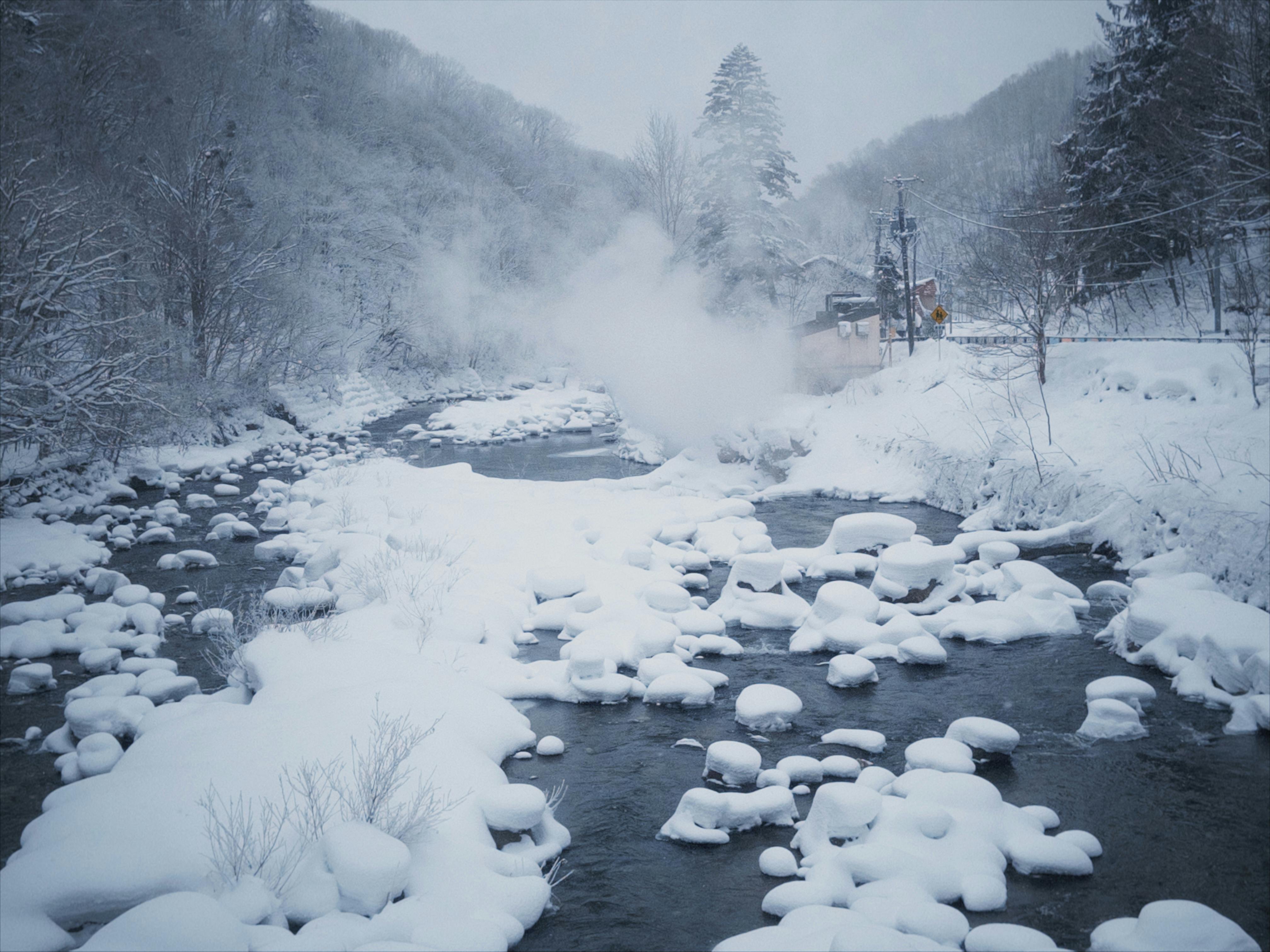
Noboribetsu Onsen: Where Volcanic Hell Meets Healing Heaven
The air hits you first—a sharp, primal scent of sulfur that somehow promises not decay but renewal. At 7:15 AM, before the day-trippers arrive, you stand at the edge of Jigokudani—"Hell Valley"—where steam rises from 11 distinct geothermal sources across a 24-acre crater formed by Mount Kuttara's eruption approximately 20,000 years ago . Below you, the Oyunuma pond bubbles at surface temperatures reaching 40–50°C (104–122°F) or higher, its jade-green waters belching volcanic gas . This is Noboribetsu, Japan's most diverse onsen resort, where water emerges from the earth carrying no fewer than seven different mineral compositions—sulfur, salt, iron, aluminum, calcium, magnesium, and bicarbonate . What looks like the underworld becomes a sanctuary: each night, 10,000 liters of healing water flow through the pipes of ryokan that have hosted travelers for over 150 years, transforming geothermal hell into human heaven.
Why Noboribetsu Embodies Japan's Most Diverse Onsen Waters
The problem Noboribetsu solved was geological uniformity. Most hot spring towns offer one, maybe two water types. Here, volcanic activity created a subterranean chemistry set: Jigokudani's vents pipe water through different mineral layers before it resurfaces. The result? Noboribetsu produces seven distinct spring qualities within walking distance of each other. Sulfur springs (the signature scent) soothe skin conditions. Salt springs retain heat longer than any other onsen type, ideal for winter recovery. Iron springs (Chloride spring) turn water reddish-brown and benefit anemia. Aluminum springs clarify and soften skin . The Dai-ichi Takimotokan hotel alone channels two natural spring sources into its baths, including the "Rental source" that provides mineral water to multiple facilities. This diversity earned Noboribetsu its reputation as Hokkaido's premier onsen destination, drawing visitors since the late 19th century when the first ryokan opened following the area's development by early pioneers .
The Best Time to Experience Noboribetsu Onsen
Each season transforms Noboribetsu while keeping its waters perpetually warm. For autumn's dramatic contrast—bright foliage against grey volcanic steam—plan your visit between mid-October and late October , the peak fall foliage period when Jigokudani's slopes explode in crimson and gold . Daytime temperatures average 13.8°C (57°F) , cool enough for long hikes without overheating . For winter's snow-and-steam magic, visit late January through February , when temperatures average -1.2°C to -0.2°C (30°F–32°F) and light snow dusts the valley . Summer (June–August) brings warmth (16°C–22.8°C / 61°F–73°F) but also heavy rainfall, with August receiving 218.8mm—the wettest month . Avoid Golden Week (April 29–May 5) and New Year's (December 30–January 3) when domestic tourism peaks. For crowds, arrive before 10:00 AM or after 3:00 PM daily. Official tourism resources: www.noboribetsu-spa.jp and gwc.noboribetsu.co.jp .
Approximate Budget for a 7-Day Noboribetsu Area Trip
This budget assumes moderate travel during autumn shoulder season (October) excluding international flights. Noboribetsu is best experienced as a 2–3 night onsen stay combined with wider Hokkaido exploration. Prices in Japanese Yen (¥) with USD equivalents at ¥150 = $1.
- Accommodation: ¥10,000–¥35,000 per night ($67–$233) per person (ryokan rates are per person with two meals). Mid-range: Hotel Mahoroba (¥12,000–¥15,000/pp), Dai-ichi Takimotokan (¥15,000–¥20,000/pp) . Budget: Business hotels near JR Noboribetsu Station (¥7,000–¥10,000) without onsen access
- Food: ¥4,000–¥8,000 per day ($27–$53) — Breakfast at ryokan (often included in room rate). Lunch ¥1,200–¥2,500 (Hokkaido crab ramen at local shops, ¥1,500–¥2,000). Dinner ¥2,800–¥4,500 (kaiseki included in ryokan stay; otherwise, yakitori and izakaya on Onsen Street)
- Transportation: ¥2,500–¥6,000 per day — JR Limited Express from Sapporo to Noboribetsu Station: ¥3,500–¥4,000 (75 minutes). Local bus from station to Onsen town: ¥340 each way. Rental car from New Chitose Airport: ¥5,000–¥7,000/day
- Attractions: Jigokudani (Hell Valley): free; Oyunuma and footbath: free; Scenic Forest Walk guided tour (3 hours): Adults ¥7,500, Children ¥5,000 (advance English booking available) ; Noboribetsu Date Jidaimura (historical theme park): ¥3,300; Bear Park (with ropeway): ¥2,800 (¥2,520 winter)
- Miscellaneous: Onsen-themed omamori (Shinto amulets) at Yuzawa Shrine: ¥500–¥1,000 ; Local sulfur soap: ¥800–¥1,500; Soft-serve ice cream (try it in below-freezing weather): ¥500–¥600 ; Face mask for sulfur sensitivity: ¥300–¥500
Total estimated for 7 days (including 2 nights onsen ryokan): ¥95,000–¥185,000 ($630–$1,235) excluding international flights. Budget 3–4 nights in Sapporo area, 2–3 nights in Noboribetsu.
7 Essential Noboribetsu Onsen Experiences
- Jigokudani Boardwalk at Sunrise (Free, Year-Round): Arrive at the Hell Valley entrance by 6:30 AM (summer) or 7:00 AM (winter) to watch steam rise from the crater floor as morning light hits Mount Kuttara's rim. The main 600-meter boardwalk takes 20 minutes round-trip; from the observation deck, you'll see all 11 spring sources. The sulfur smell is strongest here—bring a mask if sensitive .
- Oyunuma River Natural Footbath (Free, 8:00–17:00): A 10-minute walk from the Jigokudani parking area leads you to this hidden gem—a shallow section of the Oyunuma River where geothermal water warms the riverbed to a perfect soaking temperature. Remove shoes and socks, sit on the wooden benches, and let 40°C (104°F) water flow over your feet while volcanic steam rises around you. The sandy riverbed is soft and pebble-free. Open 8:00 AM–5:00 PM (trail may close in heavy snow) .
- Scenic Forest Walk with Snowshoes (¥7,500 adults, ¥5,000 children, 3 hours): Year-round guided walking tour through the primeval forest surrounding Jigokudani. Your guide explains the area's natural history, hot spring geology, and Ainu cultural connections. In winter (December–March), the tour provides snowshoes. Advanced English reservations required via Noboribetsu Gateway Center (+81 143-84-2200 or contact@noboribetsu.co.jp) .
- Dai-ichi Takimotokan Multi-Source Bathing (Day use available, approximately ¥2,000–¥3,000): Japan's largest ryokan offers day onsen passes (9:00 AM–5:00 PM) granting access to baths fed by two natural spring sources: "Gensen-no-Yu" (the original source) and "Rental-source" (borrowed water rights). The open-air rock bath ("Takinoyu") channels a waterfall directly into the pool. For the full experience, rotate through salt, sulfur, iron, and aluminum baths—each with different reported therapeutic benefits. Check-in at the front desk for day use; towels and amenities provided .
- Yuzawa Shrine Torii Gate at Dusk (Free, 24 hours): Tucked at the end of Onsen Street en route to Jigokudani, this compact Shinto shrine features striking black-and-white architecture. Founded by the area's original hot spring developers, it honors the spirits of the geothermal waters. The bright red torii gate against Noboribetsu's forested hillside becomes particularly photogenic when lit at dusk. Follow the "two bows, two claps, one bow" ritual at the main hall—a uniquely Noboribetsu spiritual experience before entering your onsen .
- Hotel Mahoroba's "Bathhouse of 31 Pools" (Day use available, approximately ¥2,500): The most extensive onsen facility in Noboribetsu features 31 indoor and outdoor baths, including Japan's largest露天風呂 (open-air bath) — the "Daiyokujo no Yu" accommodating up to 200 bathers. Day passes available 11:00 AM–5:00 PM (purchase at front desk, 65 Noboribetsu-Onsencho). The highlight: the "Seven Springs Bath" where each of Noboribetsu's seven mineral types is channeled into a separate pool, allowing you to compare spring qualities side by side. Dinner buffet is excellent but requires advance reservation .
- Noboribetsu Bear Park Ropeway (¥2,800 adults, ¥1,400 children, 8:30–16:30): A 7-minute ropeway ride to Mount Shikotsu-Fuji's summit (elevation 550 meters) houses Hokkaido's only bear park. While the captive bear exhibits may be ethically nuanced, the ropeway's panoramic views of Lake Kuttara—a perfectly circular caldera lake with 148-meter depth—are spectacular. The observation deck offers photography angles of Jigokudani's steam vents from above, unavailable from the ground-level boardwalk. Visit before 10:00 AM to avoid tour bus crowds.
3 Hidden Gems Most Travelers Miss
- Mount Tarumae Observatory (Free, Unmarked Turnoff): Located on the drive from New Chitose Airport to Noboribetsu, look for a small brown road sign indicating "樽前山展望台" (Tarumae-zan Tenbodai). A short, easily missed turnoff leads to an unpaved parking area and a 5-minute walk to a viewpoint overlooking Mount Tarumae's active crater—a near-perfect volcanic cone that last erupted in 1981. No signs, no facilities, no crowds. Best visited in early morning (before 9:00 AM) when clouds haven't yet formed over the summit .
- Noboribetsu Local History Museum (Approximately ¥300, Closed Mondays): Housed in a converted 1920s wooden school building near JR Noboribetsu Station, this small museum contains photographs of Jigokudani from the 1910s–1930s, showing how early visitors in formal attire walked the same steaming paths you walk today. The most compelling exhibit: original onsen inn registration books from 1892, listing guests and the exact fees they paid (approximately ¥0.50 per night). Staff speak limited English but will show you the English translation folder if you ask.
- Kuttara Lake Forest Trail (Free, Unmarked Access): While most visitors take the ropeway to Bear Park, a free forest trail circles Lake Kuttara's shoreline. Access via an unmarked gravel path 200 meters before the Bear Park ropeway station (look for the small wooden gate with no signage). The 3-kilometer loop takes 90 minutes through primeval forest with occasional shoreline openings where the perfectly round caldera lake reflects Mount Shikotsu-Fuji. Carry a bear bell—brown bears frequent this area. The trail is muddy in spring; hiking boots required. No facilities beyond trailhead.
Cultural & Practical Tips
- Sulfur sensitivity preparation: Jigokudani's sulfur dioxide levels can trigger respiratory sensitivity. If you have asthma or chemical sensitivities, purchase a face mask (¥300–¥500 at any convenience store) before entering the valley. The odor is strongest near Oyunuma pond and the main Jigokudani viewing platform. Most visitors adapt within 15 minutes, but 5–10 percent report headaches or nausea .
- Public bathing etiquette for international visitors: In ryokan onsen baths, wash thoroughly at the shower stations before entering any pool. Swimsuits are not permitted in gender-segregated baths (separate men's and women's facilities). Small towels (tenugui) are for drying your face while soaking, not for covering your body. Tattoo policies vary: Dai-ichi Takimotokan and Hotel Mahoroba allow small tattoos if covered with patches (available at front desk); stricter ryokan may prohibit all tattoos. Check in advance .
- Cash remains king: Many onsen town restaurants, small souvenir shops, and the Oyunuma footbath area do NOT accept credit cards. ATMs are available at the 7-Eleven on Onsen Street (24 hours) and at JR Noboribetsu Station (7:00–23:00). Budget ¥10,000–¥15,000 per person in cash for meals, small purchases, and onsen day passes.
- What to wear for Jigokudani hiking: The valley's boardwalk is paved and wheelchair-accessible near the entrance, but the extended trails (including the path to Oyunuma) involve unpaved, uneven terrain. Wear closed-toe hiking shoes or trail runners—not sandals. The ground temperature near steam vents can be warm even in winter, but the surrounding air is cold. Layering is essential: thermal base, fleece, windproof shell .
- Local phrase for onsen appreciation: "Kono yu wa totemo kimochi ga ii desu ne" (この湯はとても気持ちがいいですね) — "This bath feels wonderful, doesn't it?" Pronounced koh-no yoo wah toh-teh-moh kee-moh-chee gah eeh dehss neh. For foot bath: "Ashiyu wa gochiso-sama desu" (足湯はごちそうさまです) — "Thank you for the foot bath meal" (using meal-honorifics to convey gratitude).
- Photography guidelines in onsen areas: Cameras and smartphones are strictly prohibited inside bathhouses (visible from pool areas). However, photography is permitted in Jigokudani, Oyunuma, and all outdoor hiking trails. For sunrise shots (best light 6:30–7:30 AM October–March, 5:00–6:00 AM April–September), arrive at Jigokudani's main deck 30 minutes before sunrise to establish composition. A polarizing filter reduces steam haze and deepens the jade-green pool colors.
Conclusion: Travel with Restoration, Not Just the Photograph
Noboribetsu confounds our categories. It is hell—look at the steam vents, the sulfurous pools, the landscape that earned "Jigokudani" for good reason. But it is also heaven—hands-down the best place in Japan to understand why humans have soaked in geothermal waters for 20,000 years. When you lower yourself into a 40°C open-air bath at Dai-ichi Takimotokan, snow falling around you, steam rising from the pool and from the valley below, you realize what this place offers beyond minerals and temperatures. It offers permission to stop. To be stationary. To let water older than your civilization carry away the exhaustion you didn't know you were carrying. The Ainu, Hokkaido's indigenous people, believed the kamuy (spirits) lived in these volcanic landscapes. Standing ankle-deep in Oyunuma's warm river, watching steam rise from the green pond, you might understand why. Some places heal not because of what they contain, but because you finally pause long enough to let them work.