
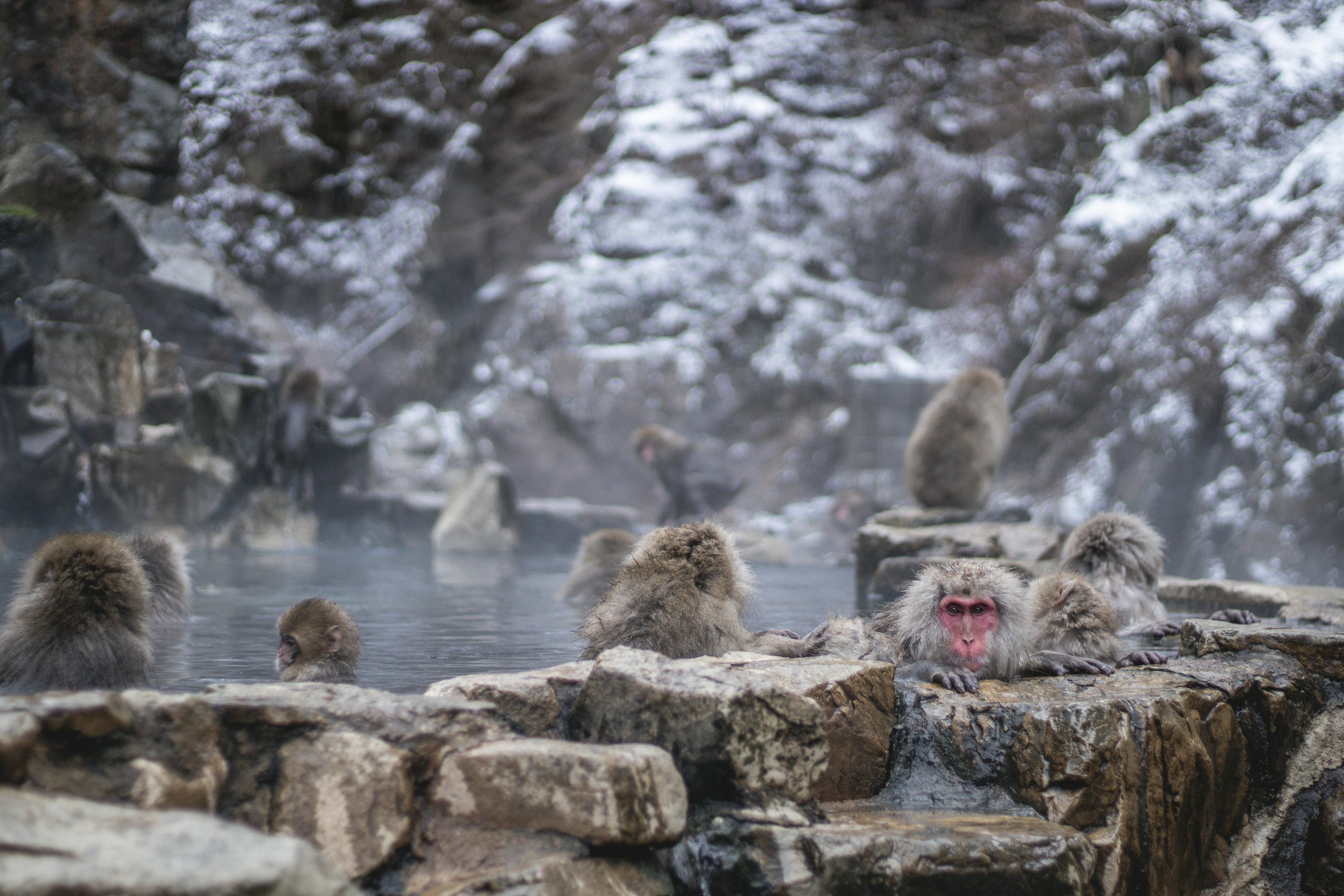
Jigokudani Snow Monkeys: Where Wild Macaques Meet Steaming Hot Springs
The first thing you notice is the silence—broken only by the crunch of your boots on packed snow and the distant gurgle of the Yokoyu River somewhere below the trail. Then you hear them: soft chattering, the splash of water, and the occasional squeal of an infant play-fighting on the bank. At 9:15 AM on a February morning, the monkeys of Jigokudani Yaen-koen are already in residence. Some sit motionless in the steaming 40°C (104°F) waters, their frost-covered faces giving them the appearance of wise, furry philosophers. Others groom each other on the rocky edges, meticulously picking through fur for salt and parasites. This is the only place on Earth where wild primates soak in natural hot springs—a behavior these Japanese macaques developed as a survival strategy in a valley buried under snow for nearly one-third of the year . At an elevation of 850 meters, where winter temperatures plummet to -10°C to -20°C (14°F to -4°F), the monkeys discovered that geothermal water makes life bearable .
Why Jigokudani Embodies Wild Adaptation at Its Most Spectacular
The problem the snow monkeys solved was survival in a habitat no other non-human primate would tolerate. Jigokudani—"Hell Valley"—earned its name from the steep cliffs and steaming hot water fountains that rise from the earth . Yet this hell became heaven for the macaques. No other primate species on Earth lives farther north, and the harsh winters of the Shimokita Peninsula in Aomori Prefecture represent the northernmost habitat of any primate except humans . In 1964, recognizing the unique behavior of these monkeys and the value of protecting them for observation, the Jigokudani Yaen-koen was established as a conservation area . The monkeys are not captive—they roam freely in the surrounding forest of Joshinetsu-Kogen National Park . Park staff do not stage bathing sessions; the monkeys descend to the hot spring area on their own terms. The pool itself is not artificial—it's a natural hot spring formed by geothermal activity, and the monkeys have simply learned that soaking there during the bitter winter months helps them retain body heat.
The Best Time to Experience the Jigokudani Snow Monkeys
Each season transforms the park while offering different wildlife viewing opportunities. For the iconic image of monkeys soaking in a steaming hot spring surrounded by snow, visit between late December and mid-March, when heavy snowfall blankets the valley and temperatures range from -10°C to -1°C (14°F–30°F) . During this period, the monkeys enter the hot spring most frequently—sometimes multiple times daily—to conserve body heat . For those who prefer milder conditions and smaller crowds, April through June offers temperatures between 5°C and 20°C (41°F–68°F), and you may witness newborn monkeys clinging to their mothers—infants are typically born from April to June . Autumn visits (September through October) bring spectacular fall foliage, but note that monkeys may not visit the park daily as food sources are plentiful in the mountains . Avoid July through August if your goal is hot spring bathing; while monkeys are present, they rarely enter the water when summer temperatures climb. Peak winter visiting hours: Arrive before 10:00 AM to catch monkeys at their most active; the park opens at 9:00 AM (winter season, November–March) and 8:30 AM (summer season, April–October) . Official Tourism Website: en.jigokudani-yaenkoen.co.jp.
Approximate Budget for a 7-Day Nagano / Jigokudani Trip
This budget assumes moderate travel during winter (peak snow monkey season) excluding international flights. Visitors typically base themselves in Nagano City or Yudanaka Onsen for monkey access. Prices in Japanese Yen (¥) with USD equivalents at ¥150 = $1.
- Accommodation: ¥7,000–¥30,000 per night ($47–$200) — Budget: Nagano City business hotels (¥7,000–¥12,000). Mid-range: Yudanaka Onsen ryokan with meals (¥12,000–¥30,000 per person). Luxury/Convenient: Shiga Kogen-area hotels near the monkey park bus stop
- Food: ¥3,500–¥7,000 per day ($23–$47) — Breakfast ¥500–¥1,000 (konbini or hotel). Lunch ¥1,000–¥2,000 (soba or ramen in Yamanouchi town). Dinner ¥2,000–¥4,000 (Japanese set meals or shabu-shabu)
- Transportation: ¥3,000–¥8,000 per day — JR Limited Express from Tokyo to Nagano: ¥6,500–¥8,000 (90 minutes via Hokuriku Shinkansen). Nagano Dentetsu Line to Yudanaka Station: approximately ¥1,500. Shiga Kogen bus from Yudanaka to Snow Monkey Park entrance: ¥500–¥700 each way . Rental car: ¥5,000–¥8,000/day
- Attractions: Jigokudani Snow Monkey Park: ¥800 adults, ¥400 children (no advance ticket sales—pay at entrance) . Nagano's Zenko-ji Temple: free entry (¥500 for inner sanctum tour). Yudanaka Onsen public baths: ¥500–¥800
- Miscellaneous: Monkey-themed souvenirs ¥500–¥2,000. Hand and foot warmers (¥200 each—essential in winter). Snow boots rentals ¥1,000–¥2,000/day. Hot sake after monkey-watching ¥500–¥800
Total estimated for 7 days: ¥75,000–¥165,000 ($500–$1,100) excluding international flights. Day trips from Tokyo (¥15,000–¥18,000 including transport and entry) are possible but rushed.
7 Essential Jigokudani Snow Monkey Experiences
- Pre-Dawn Monkey Watch (Winter Only, 8:15–9:30 AM): The park opens at 9:00 AM, but arrive at the entrance parking lot by 8:00 AM to begin the 30–40 minute forest trail while it's still quiet . This timing gives you the best chance to be among the first visitors at the hot spring pool. The monkeys are most active in the morning, and the steam rising from the water against the cold creates spectacular photographic conditions.
- The Forest Approach Trail (30–40 Minutes, Free): Before reaching the monkey pool, you'll walk a scenic trail through the snow-covered Yokoyu River Valley. In winter, this path can be icy and slippery—sturdy winter boots and possibly traction cleats are recommended . The walk itself is part of the experience, with views of frozen waterfalls and steaming river sections. Allow at least 20 minutes each way, more if taking photographs.
- Hot Spring Bathing Observation (Most Frequent December–March): Position yourself at the main viewing area near the rectangular concrete bathing pool—the only pool monkeys use for soaking. Watch as macaques of all ages enter the 40°C (104°F) water, often sitting motionless with only their heads and frost-dusted shoulders visible. Adults typically soak for 15–30 minutes before emerging to feed or groom .
- Baby Monkey Season (April–June): If you visit during spring, focus your attention on the mothers carrying tiny infants. Newborns cling to their mothers' bellies for the first few weeks before gaining enough confidence to explore short distances. The infants' bright pink faces and playful antics provide some of the park's most heartwarming moments .
- Social Grooming Observations (Year-Round, Most Active Mid-Morning): The monkeys spend considerable time grooming one another, picking through fur for salt crystals, dead skin, and parasites. This behavior serves both hygienic and social bonding purposes. Watch for the intricate social hierarchy—lower-ranking monkeys often groom higher-ranking individuals as a form of submission or appeasement .
- Winter Feeding Times (December–March, Approximately 9:30–10:00 AM): While feeding wild monkeys is strictly prohibited for visitors, park staff occasionally scatter barley or soybeans in designated areas to supplement the monkeys' winter diet when natural food is scarce beneath the snow . This concentrated feeding draws monkeys to specific spots, offering excellent, predictable viewing and photography opportunities.
- Sunset Return through Kanbayashi Onsen Village (Late Afternoon): After your monkey observation, walk back through Kanbayashi Onsen village—a traditional hot spring town with several ryokan and foot baths. Many of these establishments offer day-use onsen baths for ¥500–¥1,000. Soaking in geothermal water after watching monkeys do the same creates a satisfying symmetry to your day. Try the local sake or soba noodles before catching the bus back to Yudanaka Station .
3 Hidden Gems Most Travelers Miss
- Tamagoyama Jigokudani Forest Path (Unmarked Alternate Route): Most visitors follow the main paved road from the Kanbayashi Onsen parking lot to the monkey park entrance. But locals know an alternate forest path that begins near the Kanbayashi Onsen bus stop, following the Yokoyu River's opposite bank. This narrower, unpaved trail offers more intimate views of the river's geothermal features and virtually no crowds. Look for the small wooden sign reading "林道" (forester's road) near the public restroom. In winter, this path may be closed due to ice; check with the visitor center before attempting.
- Shiga Kogen Rest House Observation Deck (Free, 15 Minutes Beyond Park): While most visitors turn back after the monkey pool, continue walking another 15 minutes past the park exit gate (follow signs toward Shiga Kogen Ski Resort) to reach a rarely visited rest house. From its observation deck, you can look back down the valley toward the monkey park and see how the monkeys' habitat connects to the larger Joshinetsu-Kogen National Park ecosystem. In winter, this area hosts wild serow (Japanese goat-antelopes) and occasionally Eurasian nutcrackers. The building has a wood stove, basic snacks, and no crowds.
- Onsen-ji Temple Foot Bath (Donation Recommended, Year-Round): Located in Shibu Onsen town (not the Kanbayashi area), this small temple maintains a free foot bath fed directly from the same geothermal source that warms the monkey park. Unlike the commercial foot baths in Yudanaka, this one is unsigned—look for the stone basin near the temple's entrance gate. The water temperature averages 38–40°C (100–104°F). Most tourists miss it because they head directly from the monkey park back to Nagano or Tokyo. Access: 15-minute walk from Yudanaka Station toward Shibu Onsen; the temple is distinguished by its vermilion torii gate and the sulfur smell emanating from the basin.
Cultural & Practical Tips
- Winter clothing is non-negotiable: The walk to the monkey park takes 30–40 minutes through deep snow in temperatures as low as -15°C (5°F) . Wear waterproof insulated boots (¥1,500–¥3,000 rentals available at Yudanaka Station if needed), thermal base layers, fleece mid-layer, insulated waterproof outer jacket, wool socks, winter hat, neck gaiter, and insulated gloves. Hand and foot warmers (kairo, ¥200 each) placed inside boots and gloves are essential—purchase at least 10–20 before your visit.
- Trail conditions and footwear: The unpaved approach trail becomes icy in winter. Spiked cleats (available at convenience stores in Yamanouchi town for ¥1,500–¥2,000) can be lifesavers. If you don't have cleats, walk on the snow-packed sides of the path rather than the polished center. The park service does not clear the trail beyond basic snow compaction .
- Monkey etiquette—strictly enforced: Do NOT feed, touch, or make eye contact with the monkeys. Maintain at least one meter of distance from all animals . The monkeys are wild, not trained performers. If a monkey approaches you, stand still and avoid sudden movements. Keep children close and quiet. Loud noises or flash photography may startle the animals. Violations can result in fines or park expulsion.
- Photography guidelines: Telephoto lenses (200–400mm) work best for isolating individual monkeys. For panoramic shots, a 24–70mm lens captures the valley setting. No tripods near the main pool area as they create space hazards, though small tabletop tripods are usually permitted. The best light occurs within two hours of sunrise (approximately 7:00–9:00 AM in February). Recommended camera settings: ISO 400–800, aperture f/5.6–f/8, shutter speed 1/250–1/500 for active monkeys .
- Local phrase for the monkeys: "Nihon-zaru wa doko ni imasu ka?" (ニホンザルはどこにいますか) — "Where are the Japanese monkeys?" Pronounced Nee-hon-zah-roo wah doh-koh nee ee-mahs kah? For park staff: "Konya wa samui desu ne" (今夜は寒いですね) — "It's cold tonight, isn't it?" Acknowledges the shared experience of bitter winter.
- Check monkey presence before traveling: The monkeys are wild and may not visit the park every day, particularly during autumn when natural food is abundant in the mountains . Before your visit, check the official website's "Latest Status of Monkeys" section for daily updates. During heavy snowstorms, the access road may close. If monkeys are absent when you arrive, consider waiting 1–2 hours—troops often arrive mid-morning.
- Payment and facilities: The monkey park accepts credit cards and electronic money for entry . However, the trailhead parking lot (¥500–¥1,000), mountain-side food vendors, and local buses often require cash only. Budget ¥3,000–¥5,000 in cash for incidentals. Restrooms are available at the park entrance and at the trailhead parking area but not along the trail itself. No restaurants inside the park; bring trail snacks and hot tea in a thermos.
Conclusion: Travel with Respect, Not Just the Photograph
The snow monkeys of Jigokudani ask nothing from you but your stillness. They have soaked in these hot springs for decades—long before the park opened in 1964, before the trail was groomed, before photographers came seeking the perfect shot. What you witness is not a performance but survival: primates enduring conditions no other non-human primate on Earth would tolerate, not through captivity or coercion, but through adaptation. The valley earned its "Hell" name for good reason—steep cliffs, steaming vents, bitter cold. Yet the monkeys transformed it into a sanctuary. When you watch an infant cling to its mother's frost-covered fur, when you see an alpha male lower himself into the steaming water with a visible sigh, you are seeing something no zoo can manufacture: wild animals choosing comfort, choosing community, choosing to persist. Carry that image beyond the trail—not as a trophy photograph, but as a reminder that resilience wears many faces, some of them red, cold, and completely beautiful.