
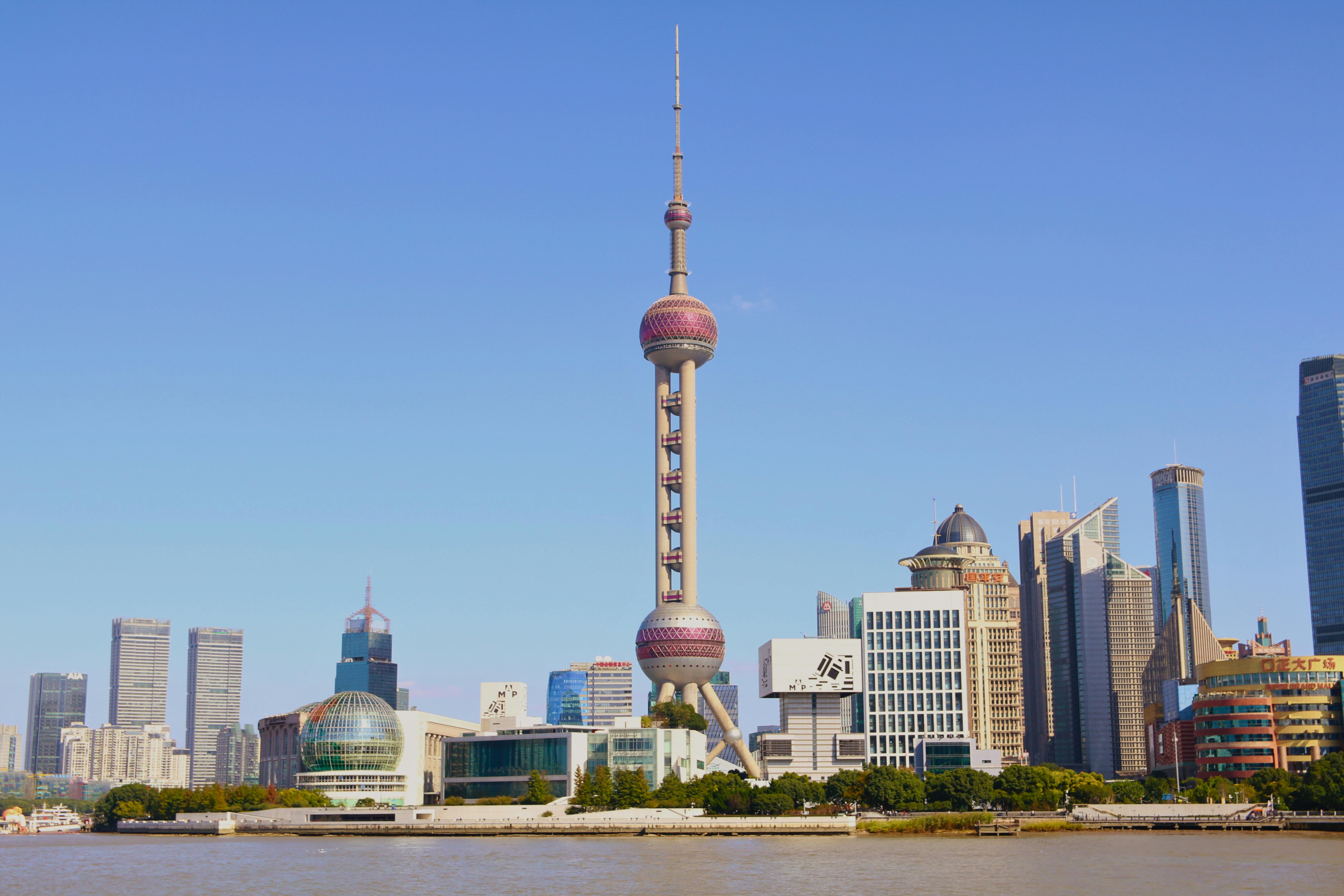
Oriental Pearl Tower: Where Futuristic Design Meets Shanghai's Skyline Soul
Twilight ignites the 468-meter steel lattice of the Oriental Pearl Tower as the three colossal spheres—11 meters, 14 meters, and 45 meters in diameter—glow amber against the deepening indigo sky, their reflective surfaces mirroring the Huangpu River's gentle currents 60 meters below. You hear the soft hum of high-speed elevators ascending at 7 meters per second, the distant chime of ferry horns echoing between Pudong's glass giants, and the whispered excitement of visitors pressing against the glass-floor observation deck 263 meters above the city. This is not merely a broadcast tower; it is a 100,000-square-meter monument to Shanghai's meteoric transformation, a structural poem where Tang dynasty poetry inspired spherical forms that now pierce the clouds, and where engineering audacity meets artistic vision in a landmark that has defined a city's identity for three decades. Standing at the tower's base, gazing upward at the eleven spheres strung like pearls on a celestial thread, you feel the profound ambition of a structure designed to announce China's reemergence on the global stage—and the enduring responsibility to preserve this icon of innovation for generations yet to come.
Why the Oriental Pearl Tower Embodies Visionary Engineering
Constructed between 1991 and 1994 by the Shanghai Urban Construction Design Institute, the Oriental Pearl Tower was engineered to solve a singular national need: to create a telecommunications and observation landmark that could symbolize Shanghai's economic renaissance while withstanding the region's typhoon-force winds and seismic activity. The tower's revolutionary design—inspired by the Tang dynasty poem "Pipa Xing" describing large and small pearls dropping onto a jade plate—features 11 spheres of varying sizes interconnected by three massive columns; the largest lower sphere (45-meter diameter) houses a revolving restaurant and observation deck, while the upper sphere (14-meter diameter) contains the "Space Capsule" observation level at 351 meters. Engineering precision defines the structure: the steel frame incorporates 70,000 tons of high-strength alloy capable of flexing 1.2 meters in 100-km/h winds; the foundation extends 86 meters below ground with 388 concrete piles anchoring the tower to Shanghai's soft alluvial soil; the spherical shells use double-layered glass with UV-filtering properties to protect interior exhibits while maintaining panoramic visibility. The tower fulfilled its purpose so completely that it became Asia's tallest structure upon completion (surpassed only in 2007), and today its distinctive silhouette remains the most recognizable symbol of Shanghai's Pudong district—a testament to how functional infrastructure can achieve iconic cultural status when visionary design honors both technical excellence and poetic inspiration.
The Best Time to Experience the Oriental Pearl Tower
For optimal conditions, target April 10–May 28 or September 16–October 30, when daytime temperatures range 17–26°C (63–79°F) with moderate humidity and clear skies that maximize visibility from the 351-meter observation deck. Arrive at the tower's main entrance on Century Avenue between 4:30–6:00 PM to experience the magical transition from daylight to illuminated skyline—when the tower's LED lighting system activates its evening choreography and Pudong's supertalls begin their luminous display. Avoid July 12–August 27, when temperatures reach 30–37°C (86–99°F) with humidity exceeding 85% that creates hazy conditions limiting long-distance views, and October 1–7 (National Day holiday), when domestic tourism peaks and queue times exceed 90 minutes. Winter visits (December–February) offer crisp, crowd-free mornings but require preparation for temperatures averaging 3–9°C (37–48°F) and occasional river fog that may obscure panoramic vistas. Entry fees: ¥160 ($22) standard access to 263m deck; ¥220 ($30) includes 351m Space Capsule; ¥380 ($53) VIP fast-track with glass-floor experience. Note: the tower operates daily 8:00 AM–9:30 PM; last elevator ascent is 9:00 PM. Weather-dependent closures may occur during typhoon warnings—verify conditions 24 hours before your visit.
Approximate Budget for a 7-Day Trip
Pricing methodology reflects mid-range travel with authentic local experiences, excluding international flights. Costs quoted in Chinese Yuan (CNY/¥) with USD equivalents (¥7.2 ≈ $1 USD).
-
• Accommodation: ¥540–¥1,150 ($75–$160) per night for a boutique hotel or upscale guesthouse in Pudong District, within 15 minutes' walk of the Oriental Pearl Tower
• Food: ¥200 ($28) per day: breakfast ¥38 ($5) for shengjianbao (pan-fried dumplings) and sweet soy milk at a local vendor; lunch ¥70 ($10) for xiaolongbao or noodle soup at a traditional eatery; dinner ¥92 ($13) for Shanghainese cuisine like braised pork or seasonal hairy crab with jasmine tea
• Transportation: Metro single-ride fares ¥3–¥7 ($0.40–$1); Maglev train from airport ¥50 ($7); DiDi ride from airport to Pudong area ¥145–¥210 ($20–$29); 7-day transportation card deposit ¥20 ($3)
• Attractions: Oriental Pearl Tower entry ¥160–¥220 ($22–$30); Shanghai Tower observation deck ¥180 ($25); Huangpu River cruise ¥80–¥150 ($11–$21); Yu Garden adjacent visit ¥40 ($5.50); Shanghai Urban History Museum (tower base): free with tower ticket
• Miscellaneous: Tower souvenir photo package ¥60–¥150 ($8–$21); limited-edition architectural print ¥100–¥280 ($14–$39); traditional tea ceremony experience ¥105 ($15); travel insurance ¥58 ($8)
Total estimated budget: ¥8,000–¥12,200 ($1,110–$1,695) for one person
6 Essential Oriental Pearl Tower Experiences
- Ascend to the Space Capsule at Sunset: Purchase the ¥220 ($30) ticket for access to the 351-meter upper sphere. Arrive by 5:00 PM to secure a window position; the 360-degree panoramic views of Shanghai's 26-million-person metropolis are breathtaking as golden hour illuminates the Huangpu River and colonial Bund across the water. Allow 45 minutes for this experience; photography permitted without flash.
- Walk the Glass-Floor Observation Deck: At the 263-meter main sphere, step onto the transparent circular platform where the city appears 263 meters below your feet. Visit between 6:30–7:30 PM when tower illumination creates dramatic reflections on the glass; hold the handrail if vertigo strikes—the engineering is certified for 1,000 kg per square meter.
- Dine at the Revolving Restaurant: Reserve a window table at the 267-meter rotating eatery (¥280–¥450/$39–$63 for dinner). The restaurant completes one full rotation every two hours, offering continuously shifting views of Pudong's skyline while you enjoy Shanghainese specialties; book 48 hours ahead via www.shanghaitourism.com.
- Explore the Shanghai Urban History Museum: Located in the tower's base (included with admission), this immersive exhibition features life-size dioramas, vintage vehicles, and interactive displays tracing Shanghai's transformation from fishing village to global metropolis. Allow 60 minutes; best visited weekday mornings to avoid crowds.
- Photograph the Tower from Lujiazui Ring Road: Position yourself at the pedestrian overpass near the tower's southern entrance for the iconic perspective where all three main spheres align against the sky. Shoot during blue hour (7:00–7:45 PM in summer) when the tower's LED lighting activates; use a tripod for sharp long-exposure shots.
- Experience the 90-Meter Outdoor Observation Deck: This lesser-known open-air platform offers unobstructed 360-degree views and the thrill of feeling wind at elevation. Access via the lower sphere elevator; visit on clear weekday afternoons (2:00–4:00 PM) when visibility exceeds 20 kilometers and crowds are minimal.
3 Hidden Gems Most Travelers Miss
-
• Tower Base Sculpture Garden: Tucked behind the main entrance plaza, this quiet outdoor space features contemporary sculptures inspired by the tower's spherical motifs. Access via the eastern pathway near the ticket office; open daily 9:00 AM–6:00 PM. Insider tip: Visit Sunday mornings when local artists occasionally demonstrate traditional paper-cutting techniques beneath the tower's shadow.
• Binjiang Avenue Riverside Viewpoint: Walk 300 meters east of the tower to this riverside promenade for a unique perspective where the Oriental Pearl frames Pudong's entire skyline across the Huangpu. Best at sunset (5:30–6:30 PM) when golden light illuminates both colonial Bund architecture and futuristic towers; bring a wide-angle lens for panoramic compositions.
• Underground Light Tunnel Connection: The pedestrian tunnel linking the tower to the adjacent Super Brand Mall features an immersive LED light installation that simulates traveling through space. Access via the basement level; open daily 10:00 AM–10:00 PM. Most visitors rush past this 60-meter artistic passage—pause to experience the color-shifting ceiling that echoes the tower's celestial inspiration.
Cultural & Practical Tips
-
• Photography etiquette: Handheld photography permitted throughout observation decks; tripods and selfie sticks require advance permission from management. Flash prohibited in museum exhibits to protect artifacts.
• Local phrases: Learn "Zhèlǐ fēngjǐng zhēn zhuàngguān" (jurr-lee fung-jing jen jwang-gwan = the view here is magnificent) and "Xièxie" (SHYEH-shyeh = thank you). Pronounce with level tones; staff appreciate cultural effort.
• Footwear matters: You'll walk 2–4 kilometers on observation decks and connecting corridors; wear comfortable, closed-toe shoes with good grip—glass surfaces can feel slippery when humid.
• Weather preparedness: Shanghai's air quality fluctuates; download the AirVisual app. The tower's outdoor decks offer minimal shelter—carry a compact umbrella for sudden showers; layer clothing for temperature shifts between ground level and 351 meters elevation.
• Queue strategy: Purchase tickets online via www.shanghaitourism.com to skip the main ticket line. Arrive 30 minutes before opening (7:30 AM) or after 7:00 PM for shortest wait times; avoid weekends and holidays when queues exceed 60 minutes.
• Accessibility: Elevators provide access to all public observation levels; wheelchairs available for loan at the main entrance (deposit ¥200/$28). Signage includes English translations throughout the tower.
• Security protocol: Allow 20–30 minutes for entry screening. Prohibited items include drones, large backpacks (>25L), and professional camera equipment without press credentials. Keep your passport accessible for ticket verification.
Conclusion: Travel with Wonder, Not Just Ascent
The Oriental Pearl Tower does not surrender its panoramic poetry to hurried elevator rides. To truly engage with this iconic structure, slow your gaze—linger where steel spheres frame the endless city; pause to feel the subtle vibration of wind at 351 meters; listen for the quiet hum of a metropolis breathing below. Your visit becomes an act of cultural appreciation when you choose mindful observation over checklist tourism, when you honor the engineering artistry by respecting preservation protocols, when you carry home not just photos but a deeper understanding of how ambition and artistry can elevate a skyline—and a society. This tower has preserved its symbolic power through decades of rapid urban change because each generation recognizes its value beyond utility. As you descend beneath the glowing spheres, let your final intention be this: we are temporary witnesses to a dialogue between earth and aspiration. Travel with wonder—not just to ascend, but to understand; not just to visit, but to honor.