
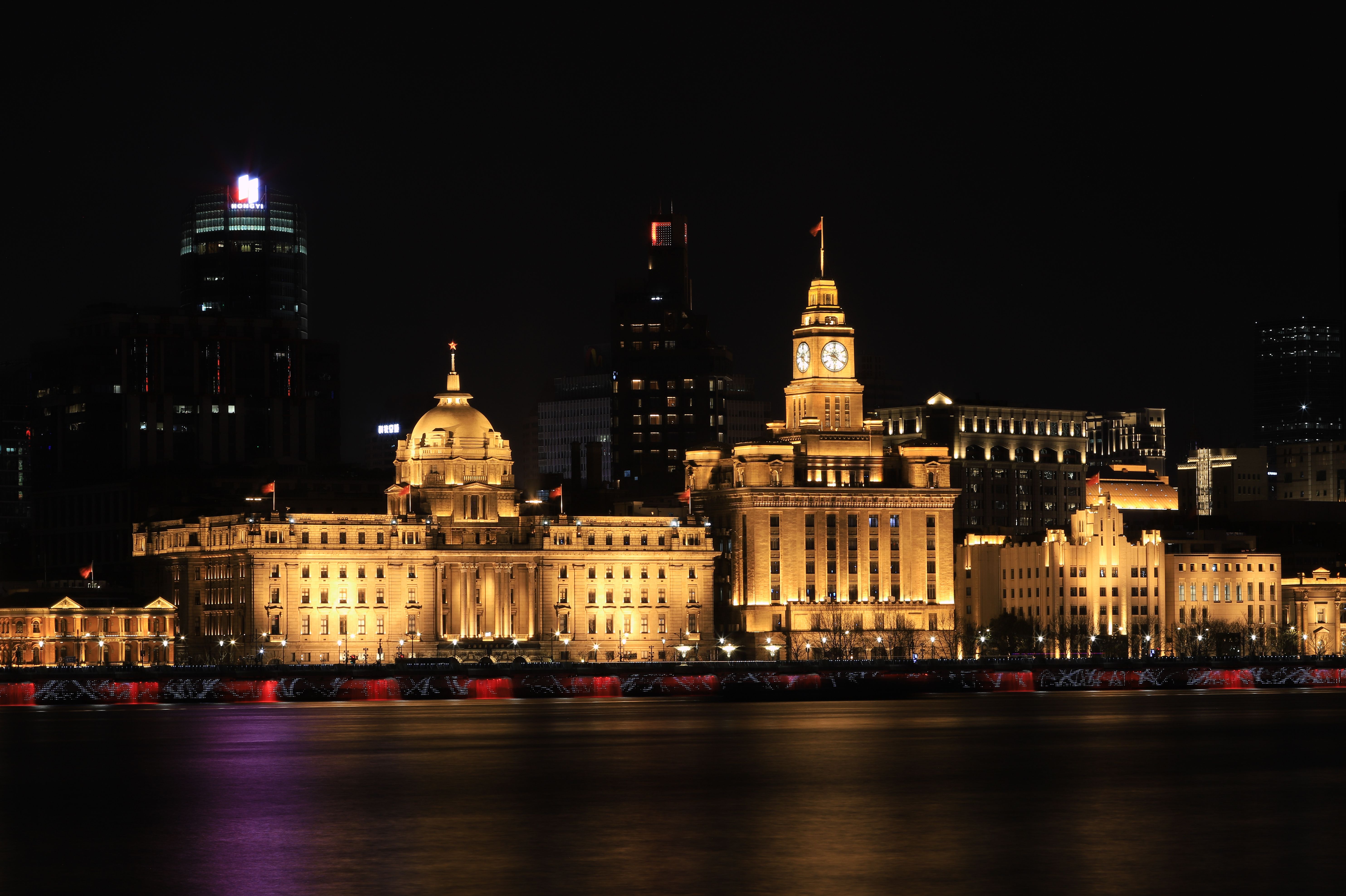
Shanghai Bund: Where Colonial Grandeur Meets Futuristic Skyline
Twilight descends upon the 1.5-kilometer waterfront promenade as golden light bathes the neoclassical facades of 52 historic buildings—each stone column and Art Deco spire reflecting in the gentle currents of the Huangpu River—while across the water, the needle-like Shanghai Tower pierces the deepening sky at 632 meters, its glass surface shimmering with LED patterns. You hear the rhythmic lap of river water against granite embankments, the distant hum of ferry horns echoing between colonial-era customs houses and futuristic skyscrapers, and the soft murmur of evening strollers pausing beneath vintage street lamps that have illuminated this iconic stretch since 1923. This is not merely a riverside walk; it is a living timeline of China's modern transformation, a UNESCO-recognized architectural ensemble where British banking halls stand sentinel beside digital billboards, and where every cobblestone whispers stories of treaty ports, economic revolution, and urban reinvention. Standing at the intersection of history and tomorrow, you feel the profound magnetism of a place that embodies Shanghai's soul—and the enduring responsibility to preserve this irreplaceable dialogue between past and future.
Why the Shanghai Bund Embodies Architectural Dialogue
Constructed primarily between 1840 and 1937 following the Treaty of Nanking, the Bund was engineered to solve a singular geopolitical need: to create a prestigious waterfront district that could accommodate international commerce while projecting colonial authority through monumental architecture. The promenade's 52 surviving buildings represent a curated encyclopedia of Western architectural styles—Neoclassical columns at the Customs House (1927, 56 meters tall), Gothic revival spires at the Church of Our Lady of Lourdes, Art Deco geometry at the Peace Hotel (1929), and Beaux-Arts grandeur at the HSBC Building (1923), whose 1,600-square-meter dome was once called "the most magnificent building between the Suez Canal and the Bering Strait." Engineering precision defines the ensemble: granite facades sourced from Fujian Province withstand Shanghai's humid subtropical climate; reinforced concrete foundations extend 30 meters below river level to stabilize structures on soft alluvial soil; the 11-meter-wide granite promenade incorporates drainage channels designed to handle monsoon rainfall exceeding 1,200mm annually. The Bund fulfilled its purpose so completely that it became the financial heart of East Asia by 1930; today, its preservation alongside Pudong's futuristic skyline creates a unique urban dialogue where 19th-century banking halls face 21st-century supertalls, proving that architectural heritage can coexist with innovation when thoughtful planning honors both memory and progress.
The Best Time to Experience the Shanghai Bund
For optimal conditions, target April 8–May 26 or September 14–October 29, when daytime temperatures range 17–26°C (63–79°F) with moderate humidity and clear skies that enhance reflections of colonial facades and Pudong towers on the Huangpu River. Arrive at the Bund's southern entrance near Yan'an Road between 5:30–7:00 PM to witness the magical transition from daylight to illuminated skyline—when vintage street lamps ignite, building facades glow amber, and Pudong's LED displays begin their evening choreography. Avoid July 10–August 28, when temperatures reach 30–36°C (86–97°F) with high humidity exceeding 80% that makes riverside walking uncomfortable, and October 1–7 (National Day holiday), when domestic tourism peaks and the promenade exceeds 100,000 daily visitors. Winter visits (December–February) offer crisp, crowd-free evenings but require preparation for temperatures averaging 3–8°C (37–46°F) and occasional river fog. Entry to the Bund promenade is free; individual building tours range ¥30–¥80 ($4–$11). Note: the Bund is accessible 24 hours, but building interiors typically close at 5:00 PM; night illumination begins at 7:00 PM year-round.
Approximate Budget for a 7-Day Trip
Pricing methodology reflects mid-range travel with authentic local experiences, excluding international flights. Costs quoted in Chinese Yuan (CNY/¥) with USD equivalents (¥7.2 ≈ $1 USD).
-
• Accommodation: ¥520–¥1,100 ($72–$153) per night for a boutique hotel or upscale guesthouse in Huangpu District, within walking distance of the Bund
• Food: ¥195 ($27) per day: breakfast ¥35 ($5) for shengjianbao (pan-fried dumplings) and soy milk at a local vendor; lunch ¥68 ($9.50) for xiaolongbao or noodle soup at a traditional eatery; dinner ¥92 ($13) for Shanghainese cuisine like braised pork or hairy crab (seasonal) with jasmine tea
• Transportation: Metro single-ride fares ¥3–¥7 ($0.40–$1); Maglev train from airport ¥50 ($7); DiDi ride from airport to Bund area ¥140–¥200 ($19–$28); 7-day transportation card deposit ¥20 ($3)
• Attractions: Bund promenade entry: free; Huangpu River cruise ¥80–¥150 ($11–$21); Customs House tower access ¥40 ($5.50); Yu Garden adjacent visit ¥40 ($5.50); Shanghai Tower observation deck ¥180 ($25)
• Miscellaneous: Architectural guidebook ¥50–¥120 ($7–$17); silk scarf souvenir ¥80–¥220 ($11–$31); traditional tea ceremony experience ¥100 ($14); travel insurance ¥55 ($8)
Total estimated budget: ¥7,800–¥11,800 ($1,085–$1,640) for one person
6 Essential Shanghai Bund Experiences
- Walk the Promenade at Blue Hour: Begin at the Bund Signal Tower (southern end) at 6:15 PM and stroll northward as twilight deepens. The 1.5-kilometer route reveals architectural details in soft light before night illumination begins; pause at the Customs House clock tower (56 meters) to photograph its neoclassical facade against the emerging Pudong skyline.
- Cruise the Huangpu River at Night: Board a 45-minute evening cruise from Shiliupu Pier (¥120, departs hourly 7:00–9:00 PM). Secure a window seat on the upper deck for unobstructed views of both Bund heritage buildings and Pudong's illuminated supertalls; the contrast between colonial stone and futuristic glass creates unforgettable photographic opportunities.
- Explore the Peace Hotel's Art Deco Interior: Enter this 1929 landmark (free to lobby; ¥80 for heritage tour) to experience original mahogany paneling, stained-glass ceilings, and the legendary Jazz Bar where 1930s Shanghai glamour endures. Visit between 2:00–4:00 PM when afternoon light filters through Art Deco windows; photography permitted without flash.
- Photograph the Architectural Ensemble: Position yourself at the Bund Observation Platform near Nanjing Road for the iconic perspective where colonial facades frame Pudong's skyline. Shoot during golden hour (5:30–6:30 PM) when warm light enhances stone textures; use a polarizing filter to reduce river glare and deepen sky tones.
- Visit the Bund History Museum: Located beneath the promenade near the Customs House (¥30 entry, open 9:00 AM–5:00 PM), this compact exhibition features scale models, historical photographs, and interactive displays tracing the Bund's transformation from treaty port to global financial hub. Allow 45 minutes; best visited weekday mornings to avoid crowds.
- Experience Riverside Tea at Sunset: Reserve a terrace table at a Bund-side café (¥60–¥100 for tea and pastry) around 5:00 PM. Sip jasmine oolong while watching ferry traffic traverse the Huangpu and the first lights ignite on Pudong towers—a serene moment of reflection amid the urban spectacle.
3 Hidden Gems Most Travelers Miss
-
• Rockbund Art Museum Courtyard: Tucked behind the former Royal Asiatic Society building at No. 20, this quiet contemporary art space features rotating exhibitions in a restored 1932 structure. Access via the unmarked entrance on Yuanmingyuan Road; open Tuesday–Sunday 10:00 AM–6:00 PM (¥60 entry). Insider tip: Visit Thursday evenings for curator-led tours that reveal architectural details invisible during daytime crowds.
• Former French Concession Connection: Instead of ending your Bund walk at Waibaidu Bridge, continue north across the garden bridge into the Former French Concession. This 10-minute detour reveals tree-lined avenues, Art Deco apartments, and hidden cafés where old Shanghai charm persists. Best explored Sunday mornings when local markets animate the streets.
• Bund Source Building Rooftop: This lesser-known heritage building at No. 1 houses a minimalist rooftop terrace with panoramic river views. Access requires advance reservation via WeChat (search "BundSource"); open Friday–Sunday 3:00–7:00 PM. Order a craft cocktail while watching sunset light transform both colonial and futuristic skylines—a privileged perspective most visitors miss by staying at ground level.
Cultural & Practical Tips
-
• Photography etiquette: Handheld photography permitted throughout the promenade; tripods require advance permission from management. Respect privacy when photographing residents or performers; always ask before close-up portraits.
• Local phrases: Learn "Nǐ hǎo" (nee how = hello), "Xièxie" (SHYEH-shyeh = thank you), and "Zhèlǐ fēngjǐng zhēn měi" (jurr-lee fung-jing jen may = the scenery here is beautiful). Pronounce with level tones; locals appreciate cultural effort.
• Footwear matters: You'll walk 3–6 kilometers on granite promenade and cobblestone side streets; wear comfortable, closed-toe shoes with good grip—surfaces become slippery after rain or river mist.
• Weather preparedness: Shanghai's air quality fluctuates; download the AirVisual app. The riverside promenade offers minimal shelter—carry an umbrella for sudden showers; layer clothing for temperature shifts between day and evening.
• Crowd navigation: The Bund is busiest Friday–Sunday evenings; visit weekday mornings (9:00–11:00 AM) for quieter exploration. During peak hours, walk counter to crowd flow (north to south) for easier movement.
• Transportation access: Metro Lines 2 and 10 serve East Nanjing Road Station (5-minute walk to Bund); avoid taxis during rush hours (7:30–9:30 AM, 5:00–7:30 PM) due to heavy traffic congestion.
• Cultural respect: The Bund is both tourist attraction and local gathering space; maintain quiet voices near residential buildings, and never litter—preservation of this heritage landscape depends on collective stewardship.
Conclusion: Travel with Reflection, Not Just Observation
The Shanghai Bund does not surrender its layered history to hurried glances. To truly engage with this iconic waterfront, slow your pace—linger where colonial stone meets futuristic glass; pause to feel the cool granite beneath your palm; listen for the echo of centuries in the river's gentle flow. Your visit becomes an act of cultural appreciation when you choose mindful presence over passive tourism, when you honor the architectural dialogue by respecting preservation efforts, when you carry home not just photos but a deeper understanding of how cities evolve while honoring their foundations. This promenade has preserved its irreplaceable character through revolutions and reinventions because each generation recognized its value beyond spectacle. As you depart beneath the vintage street lamps, let your final intention be this: we are temporary witnesses to a conversation between memory and ambition. Travel with reflection—not just to see, but to understand; not just to visit, but to honor.