
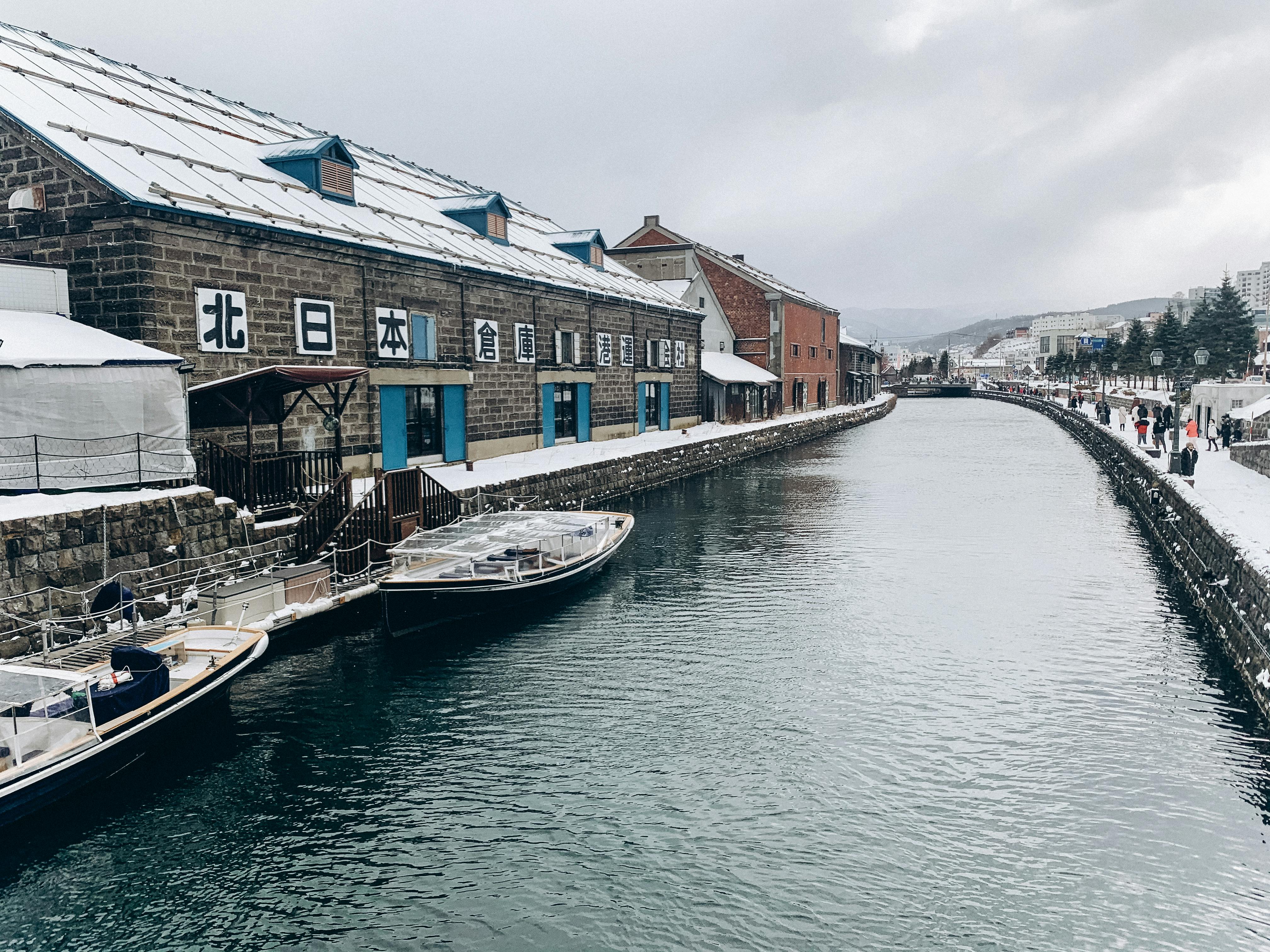
Image Description: Otaru Canal at twilight with historic stone warehouses glowing under warm gas lamps reflecting on dark water
Otaru Canal: Where Hokkaido Stone Meets Twilight Reflection
The first gas lamp flickers to life precisely at sunset—a ritual repeated across 63 cast-iron posts lining this 1,140-meter waterway . Evening air carries brine from Ishikari Bay, mingling with the faint sweetness of baking from converted warehouses now housing cafes behind weathered brick. You hear it before you see it fully: the gentle lap-lap-lap of dark water against stone, punctuated by wooden boat oars dipping in near-silence. Built in 1923 as a cargo thoroughfare for a booming herring trade, this gently curving canal—its northern section still spanning 40 meters in width—solved a problem of maritime efficiency, allowing small vessels to ferry goods from deep-draft ships anchored offshore . Today, that industrial artery has become something else entirely: a living museum of Hokkaido's transformation, where every cobblestone remembers the footsteps of fishermen, merchants, and dreamers.
Why Otaru Canal Embodies Nostalgic Reinvention
When the herring industry collapsed in the 1950s, Otaru's fortunes nearly drowned with it. The canal—by then obsolete for modern shipping—faced outright填埋 (land reclamation). Yet residents rallied, preserving this watery spine of their collective memory. What survives is not a preserved corpse but a reinvention: stone warehouses that once stored salted fish now house Otaru Beer's Depot No.1, where copper brewing kettles gleam beneath century-old wooden rafters . The canal's signature curve resulted from coastal reclamation engineering, not aesthetics, yet today that curve frames photographs taken by thousands daily. Each of the 63 gas lamps—originally functional, now ceremonial—burns with a flame dimmer than electric light, casting a warmth no LED can replicate. Walking the promenade takes roughly 20 minutes end to end, but nobody rushes here .
The Best Time to Experience Otaru Canal
Winter transforms this waterway into something supernatural. Between December 1 and January 31, the Blue Canal illumination event dyes the water surface with approximately 10,000 blue LED lights, creating a cobalt mirror beneath falling snow, with temperatures ranging from -7°C to 0°C (19°F to 32°F) . For the truly magical, target February 7–14, 2026, when the Otaru Snow Light Path festival places hundreds of floating glass "candle buoys" on the canal alongside snow lanterns hand-carved by volunteers . Summer visits between June 15 and August 15 offer comfortable 15°C–26°C (59°F–79°F) weather, with the Otaru Tide Festival in late July bringing fireworks over the water . For photography, arrive between 4:30–5:30 PM (December–February) or 6:30–7:30 PM (June–August) to capture the "blue hour" when gas lamps activate. Avoid late August to early September, when typhoons bring heavy rain and the canal's walking paths become slippery..
Approximate Budget for a 7-Day Otaru Trip
This budget assumes moderate travel during February (high season for Snow Light Path) excluding international flights. Prices in Japanese Yen (¥) with approximate USD equivalents at ¥150 = $1.
- Accommodation: ¥11,000–¥25,000 per night ($73–$167) — Canal-view hotels like Hotel Torifito Otaru Canal (¥11,220+ / $75) or Hotel Sonia Otaru (¥13,970+ / $93)
- Food: ¥4,000–¥8,000 per day ($27–$53) — Breakfast ¥600–¥1,200 (canal-side bakery), Lunch ¥1,500–¥2,500 (Sankaku Market seafood donburi), Dinner ¥2,000–¥4,500 (Naruto main chicken or Genghis Khan lamb)
- Transportation: ¥1,500–¥3,000 per day — JR Rapid Airport train from New Chitose: ¥1,830 one-way (75 minutes) . Local bus day pass: ¥750. Taxi from JR Otaru Station to canal: ¥500–¥800
- Attractions: Otaru Canal Cruise ¥1,800 ($12) for 40 minutes ; Otaru Music Box Museum free entry; Taisho Glass Museum ¥300–¥500; Sumiyoshi Shrine free ; Mt. Tengu Ropeway ¥1,200 round trip
- Miscellaneous: Glass-blowing workshop ¥2,500–¥5,000; Squid ink ice cream ¥500; Music box souvenir ¥1,500–¥5,000; Snow Light Path candle donation ¥500
Total estimated for 7 days: ¥86,000–¥195,000 ($575–$1,300) excluding international flights
6 Essential Otaru Canal Experiences
- Twilight Gas Lamp Walk: Begin at Asakusa Bridge 20 minutes before sunset. Watch the lamplighter—a real person, not automation—move from post to post. The moment the 63rd lamp ignites, the entire canal exhales. The 1.1-kilometer stroll from Central Bridge to Ryugu Bridge takes you past all of them .
- 40-Minute Night Cruise: Board at the canal's northern terminal near Depot No. 1. The covered boat protects you from Hokkaido's famous winter winds while providing unobstructed views of illuminated warehouses. During Blue Canal season (November–January), the boat itself is ringed in matching LEDs .
- Snow Light Path Festival Evening (February only): Return at dusk during festival week to find the canal transformed. Glass "candle buoys"—hollow spheres containing real candles—float directly on the water's surface, their reflections creating double-light illusions. The snow lanterns lining walking paths are carved by local schoolchildren, each unique .
- Beer at Former Warehouse No. 1: Otaru Beer's original location operates inside an 1890s stone warehouse with original timber framing still exposed. Order the Kaitakushi Beer (¥900), brewed using an 1876 recipe. The 20-minute free brewery tour (11:10 AM and 5:10 PM) explains how herring storage transformed into fermentation .
- Morning Photographer's Hour (8:00–9:30 AM, April–October): Cruise ships and day-trippers haven't arrived. The canal's north basin reflects the eastern sun directly off its 40-meter-wide surface. Bring a polarizing filter to cut water glare and capture the contrast between red brick and Hokkaido's famously blue sky.
- Herring Sushi at Sankaku Market: A 10-minute walk from the canal, this covered market's donburi stalls serve nishin (herring)—the very fish that built Otaru. Order a kai-ten-don (¥1,500–¥2,500) piled with crab, salmon roe, sea urchin, and herring. Eat standing at the counter. The bitterness of herring roe tastes like this city's history.
3 Hidden Gems Most Travelers Miss
- Sumiyoshi Shrine Torii Path: Fifteen minutes by foot and bus from the canal, this Shinto shrine dedicated to maritime safety features a vermilion torii gate corridor largely bypassed by tourists. Arrive before 9:00 AM when sunlight filters through wooden lattices, creating striped shadow patterns across the path. Locals pray here for safe sea voyages—appropriate for a canal-born city. The shrine sells traffic safety amulets (¥800) with different meanings depending on whether worn on left or right wrist .
- Old Temiya Line Abandoned Railway: When the canal's crowds press too close, walk 12 minutes south to this converted railway bed. The old Temiya Line ceased operation in 1985, and its tracks now form a 1.4-kilometer footpath framed by wild grasses and rusting signal posts. The route passes beneath the canal's northernmost bridge, offering an engineer's perspective of the waterway's original industrial purpose—far from the romance above .
- Katsunai Seaside Park Coastline: Most visitors never walk beyond the canal's tourist zone, missing the open sea that made this port possible. From the canal's northern end, continue 20 minutes along the harbor wall to this free park. On clear days (best September–October), the view looks across Ishikari Bay toward Shakotan Peninsula's dramatic cliffs. Locals come here to fly kites and escape summer humidity. No shops, no signs, no crowds—just sea wind and the distant sound of fishing boat engines .
Cultural & Practical Tips
- Photography golden hour calculator: Otaru sits at approximately 43°N latitude. In February, sunset occurs near 4:45 PM; in July, near 7:15 PM. Arrive 45 minutes before sunset for the "blue-to-gold" transition, then stay 30 minutes after for the gas lamps to fully register against dark sky.
- Winter survival kit: Temperatures between -10°C and 0°C (14°F–32°F) feel colder due to sea winds. Hand warmers (kairo, ¥200) from any convenience store. Rubber cleats (tsurara-kin) for boots—canal-side pavement becomes black ice. Purchase at JR Otaru Station souvenir shop for ¥1,500.
- Local phrase: "Otaru-ko" (小樽子) refers to someone born and raised in Otaru—a point of considerable pride. Compliment the city: "Otaru wa suteki na machi desu ne" (Otaru is a wonderful town).
- Bus etiquette: Board from the rear door, take a numbered ticket, and exit through the front paying the fare displayed above the driver. Change is provided. The loop bus from JR Otaru Station to the canal runs every 15 minutes (¥210–¥240).
- Shopping hours: Music box and glassware shops along Sakaimachi Street close promptly at 6:00 PM, even during festival periods. The canal promenade and restaurants remain open until 9:00–10:00 PM. Shop first, cruise second.
- Snow Light Path respect: During the February festival, the floating candle buoys are lit daily by volunteers. Do not touch them—the glass becomes hot. The candle wax drips into the canal and biodegrades harmlessly, a calculated environmental choice by organizers .
Conclusion: Travel with Presence, Not Just Pictures
The Otaru Canal tempts you to see it through a screen—to frame that perfect shot, capture those lamps just so, and move on. But this waterway asks something slower. Those 63 gas lamps have burned through economic collapse, post-war reconstruction, and now a tourism boom that nearly overwhelms the very charm visitors seek. When you walk these cobblestones at dusk, you're walking where herring fishermen's wives waited for boats to return, where children skated on frozen canals in 1940s winters, where preservationists fought in 1970s city council meetings to save these bricks from the wrecking ball. The canal endures not because it's photogenic, but because people chose to keep it alive. So put the camera down for ten minutes. Listen to the water. Watch a single lamp flicker. That's the real Otaru—not the image you capture, but the stillness you carry home.