
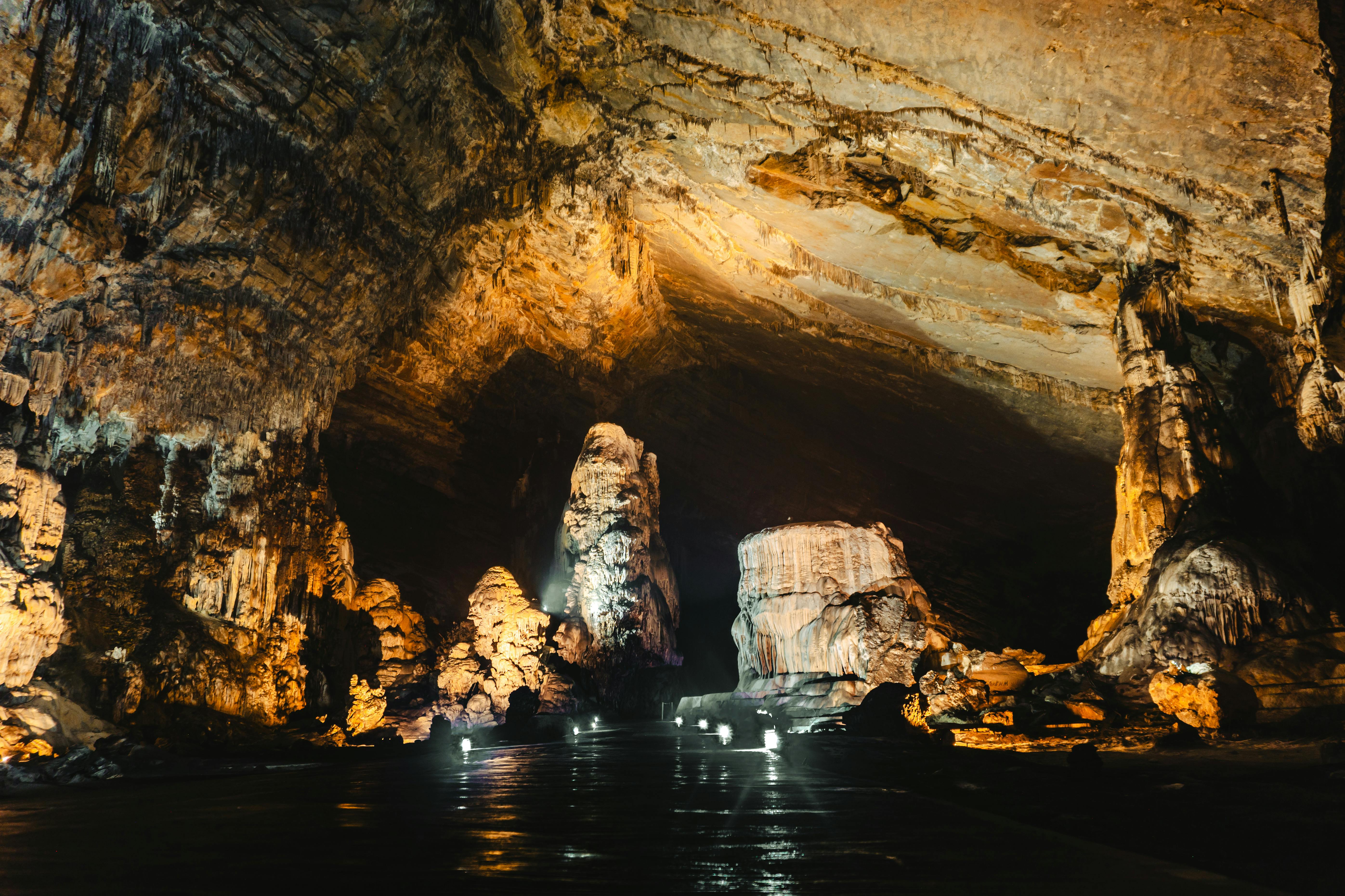
Reed Flute Cave: Where Ancient Stone Meets Ethereal Light
Inside the mountain, time dissolves—colorful LED lights transform limestone formations into a dreamscape of jade, amber, and sapphire, while water droplets echo softly against stone that has been forming for 180 million years. At 2:30 PM, you step into the cool, constant 20°C (68°F) air of Reed Flute Cave, your breath visible in the mist rising from underground pools that reflect illuminated stalactites like inverted chandeliers. The 240-meter illuminated walkway winds through chambers named by poets and pilgrims: the Crystal Palace, where stone curtains cascade from ceilings; the Dragon Pagoda, a natural column rising 18 meters; the Water Moon Gallery, where a still pool mirrors formations with perfect symmetry. Outside, reeds once grew that local craftsmen fashioned into flutes—hence the cave's poetic name, Lúdí Yán. This is not merely a geological attraction; it is a sanctuary where nature's patient artistry—water dissolving limestone at 0.03 millimeters per year—has created a cathedral of stone that has inspired Tang Dynasty poets, modern photographers, and anyone who believes beauty can emerge from darkness given enough time and the right light.
Why Reed Flute Cave Embodies Geological Patience
Reed Flute Cave—Lúdí Yán in Mandarin—represents one of China's most spectacular karst cave systems, formed over 180 million years when this region lay beneath an ancient sea and acidic groundwater gradually dissolved pure limestone bedrock [[1]]. The cave's 240-meter illuminated tour route reveals chambers sculpted by the same processes that created Yangshuo's iconic peaks: carbonic acid in rainwater dissolving calcium carbonate, then redepositing it as stalactites (hanging from ceilings), stalagmites (rising from floors), and stone columns where the two meet [[4]]. This geological theater solves a profound human need: access to the invisible processes that shape our planet, made visible through formations that grow at rates imperceptible to human lifespans yet spectacular in cumulative effect.
The cave's cultural significance extends beyond geology. Over 70 ink inscriptions dating to 792 AD during the Tang Dynasty adorn the entrance walls, proving this sanctuary has drawn visitors for over 1,200 years [[7]]. The name "Reed Flute" originates from the lúdí reeds that once grew outside the cave mouth, used by local craftsmen to create musical instruments whose melodies supposedly harmonized with the cave's natural acoustics. Modern engineering enhances rather than intrudes: a carefully designed LED lighting system (installed 2015) uses fiber-optic technology to illuminate formations without generating heat that could damage delicate calcite structures, while a one-way walkway manages visitor flow to minimize humidity fluctuations that affect formation growth [[9]]. The cave maintains a constant 20°C (68°F) year-round with 95% humidity—conditions essential for ongoing speleothem development. Reed Flute Cave fulfills what travelers seek most: the opportunity to witness deep time made tangible, where every drip of water represents centuries of patient creation.
The Best Time to Experience Reed Flute Cave
To experience Reed Flute Cave at its most enchanting, timing matters less than for outdoor attractions—the cave's interior maintains constant conditions year-round. However, optimal visiting windows align with Guilin's pleasant seasons: April 15–June 10 for mild weather before summer humidity, and September 15–November 5 for clear skies and comfortable temperatures. During these periods, Guilin's ambient temperatures range from 18–26°C (64–79°F) in spring and 16–25°C (61–77°F) in autumn, making the short transfer from city to cave enjoyable [[12]].
For the most serene experience, visit between 9:00–10:30 AM or 2:00–3:30 PM on weekdays—these windows avoid the 11:00 AM–1:00 PM tour bus rush and ensure shorter waits for the illuminated walkway. The cave's lighting system operates on a timed sequence; arriving at the start of a cycle (ask staff for schedule) ensures you experience each chamber at optimal illumination. Photography enthusiasts should note that the colored lighting creates dynamic conditions; allow 15–20 minutes in the Crystal Palace chamber for multiple exposure experiments.
Avoid: Chinese national holidays (October 1–7, Spring Festival in late January/February) when visitor numbers exceed 5,000 daily, creating 45+ minute queues for the narrow walkway; also avoid July–August peak monsoon when Guilin's humidity exceeds 90%, making the cave's natural 95% humidity feel oppressive.
Approximate Budget for a 7-Day Trip
Guilin and surrounding attractions offer excellent value for international travelers. This budget assumes moderate comfort with mid-range hotels, local dining, and comprehensive exploration including Reed Flute Cave. All prices in Chinese Yuan (CNY/¥).
- Accommodation: ¥180–¥450 per night (mid-range hotels in Guilin city center near Two Rivers and Four Lakes; budget hostels from ¥80, boutique riverside hotels ¥500–900)
- Food: ¥100–¥180 per day
- Breakfast: ¥15–25 (rice noodles, soy milk, steamed buns, pickled vegetables)
- Lunch: ¥30–50 (Guilin rice noodles, beer fish, stir-fried vegetables)
- Dinner: ¥40–80 (taro duck, river shrimp, wild mushrooms, rice wine)
- Street snacks: ¥10–20 per item (osmanthus cakes, fried tofu, sticky rice)
- Transportation:
- High-speed train to Guilin: ¥300–500 from major cities
- Airport shuttle bus: ¥20
- City taxi to Reed Flute Cave: ¥35–50 one-way
- Public bus Route 3 or 18 to cave: ¥2
- Attractions:
- Reed Flute Cave entrance: ¥90
- Li River cruise (Guilin to Yangshuo): ¥215–360
- Elephant Trunk Hill: ¥75
- Seven Star Park: ¥75
- Impression Liu Sanjie show: ¥198–680
- Miscellaneous:
- Audio guide at Reed Flute Cave: ¥20 (optional)
- Souvenirs (osmanthus tea, chili sauce): ¥80–200
- Travel insurance: ¥50–100
- Tips for guides: ¥30–80
Total for 7 days: ¥4,600–6,700 (approximately $630–920 USD)
6 Essential Reed Flute Cave Experiences
- Witness the Crystal Palace Chamber: The cave's centerpiece features a 30-meter-high cavern where stone curtains—delicate calcite draperies formed by mineral-rich water—cascade from the ceiling like frozen waterfalls. Position yourself at the designated viewing platform for 3–5 minutes as the lighting sequence cycles through colors that accentuate the formations' textures. The chamber's acoustics amplify dripping water into a natural symphony; close your eyes briefly to experience the sensory layering. Photography tip: Use manual mode with ISO 800–1600 to capture details without flash, which is prohibited to protect formations.
- Photograph the Dragon Pagoda: This 18-meter-tall natural column—formed where a stalactite and stalagmite fused over millennia—resembles a multi-tiered pagoda when illuminated from below. The formation's name references Chinese architectural traditions; study the horizontal striations that record centuries of mineral deposition. Best photographed from the eastern walkway position at the start of the lighting cycle; allow 10 minutes for multiple angles. The column's base features a small pool that reflects the formation, creating a mirror effect ideal for symmetrical compositions.
- Contemplate the Water Moon Gallery: This chamber features a still underground pool that perfectly mirrors illuminated stalactites, creating the illusion of infinite vertical space. The name references a classical Chinese poetic motif: the moon reflected in water symbolizing ephemeral beauty. Stand quietly at the railing for 2–3 minutes to observe how water droplets create subtle ripples that distort then restore the reflection—a meditation on impermanence. Visit during weekday mornings when fewer visitors create ripples, ensuring clearer reflections for photography.
- Read Tang Dynasty Inscriptions: Near the cave entrance, over 70 ink inscriptions dating to 792 AD during the Tang Dynasty document early visitors' impressions. These calligraphic works—protected behind glass—represent some of China's oldest tourism graffiti, proving this cave has inspired wonder for over 1,200 years. Allow 5 minutes to examine the characters (staff can provide translations); note how poets described the cave using metaphors of palaces, dragons, and celestial realms—imagery that modern lighting now literalizes. This historical layer adds profound context to the geological spectacle.
- Experience the Cave's Natural Acoustics: Reed Flute Cave's chambers create unique sound environments: the Crystal Palace amplifies dripping water into resonant tones; narrower passages create whispering-gallery effects. Pause midway through the tour, turn off your phone, and listen for 60 seconds to the cave's natural soundtrack—water droplets, distant voices, the soft hum of ventilation systems designed to preserve formations. This sensory practice transforms a visual attraction into a multi-dimensional experience, connecting you to the cave's living processes.
- Combine with Nearby Attractions: Reed Flute Cave lies just 5 kilometers northwest of Guilin city center, making it ideal to pair with Elephant Trunk Hill (morning) or Two Rivers and Four Lakes evening cruise. Allow 90 minutes total for the cave visit (including queue time); the one-way walkway prevents backtracking. Purchase a Guilin attraction pass (¥280 for 4 sites) for savings if visiting multiple locations. End your cave visit at the gift shop featuring local crafts: reed flute replicas (¥45–120) make meaningful souvenirs connecting to the cave's namesake.
3 Hidden Gems Most Travelers Miss
- The Silent Chamber (Jing Shi): Beyond the main illuminated route, a smaller chamber accessible via guided tour (request at entrance) features unlit formations that reveal their natural colors under flashlight illumination. This 15-minute detour offers a rare glimpse of speleothems as they existed before modern lighting, with white calcite and gray limestone creating subtle, monochromatic beauty. Access: Ask staff at ticket counter for "silent tour" availability; limited to 8 visitors per session; additional ¥30 fee; advance booking recommended. Insider tip: Bring a red-light headlamp (available at gift shop, ¥25) to preserve night vision while protecting formations from white-light damage.
- Cave Entrance at Dawn: While most visitors arrive mid-morning, the cave's exterior at sunrise offers dramatic photography: mist rising from the karst hillside, reeds (when in season) glowing golden, and the cave mouth framed by morning light. The 10-minute walk from the parking area passes traditional stone pathways and offers views of Guilin's urban skyline contrasting with natural peaks. Access: Arrive by 6:15 AM; cave opens at 7:30 AM but exterior accessible earlier; free. Insider tip: Combine with early morning tai chi observation in nearby Reed Flute Park, where locals practice as mist lifts—a authentic cultural moment rarely seen by tourists.
- Geological Explanation Panels: Most visitors rush past the educational displays near the entrance, but these bilingual panels explain the science behind formation growth, cave hydrology, and conservation efforts. Understanding that a 10-centimeter stalactite may represent 3,000 years of growth transforms casual observation into profound appreciation. Access: Located in the entrance hall before the illuminated walkway; allow 10 minutes pre-tour. Insider tip: Download the cave's official WeChat mini-program (scan QR code at entrance) for augmented reality overlays that visualize formation growth timelines when you point your phone at specific features.
Cultural & Practical Tips
- Photography Guidelines: Flash photography is strictly prohibited inside the cave to protect delicate calcite formations from light-induced degradation. Use manual camera settings: ISO 800–3200, aperture f/2.8–4, shutter speed 1/30–1/60 second; a small tripod or monopod is permitted if it doesn't block walkways. Smartphone users should enable night mode and avoid digital zoom to maintain image quality.
- Physical Accessibility: The cave's 240-meter walkway features gentle slopes and handrails, making it accessible for most mobility levels. However, the path includes 45 steps total and can be slippery from natural humidity—wear shoes with good traction. The constant 20°C (68°F) temperature feels cool after Guilin's summer heat; bring a light layer even in warm weather.
- Respect Geological Formations: Never touch stalactites, stalagmites, or stone curtains—oils from human skin halt calcite deposition and permanently damage formations that took millennia to grow. Stay on designated walkways; stepping off-path compacts soil and alters water drainage patterns essential for ongoing cave development.
- Weather Considerations: While the cave interior maintains constant conditions, Guilin's external weather affects access. Spring (18–26°C/64–79°F) brings occasional drizzle that enhances misty atmospheres but requires rain gear; summer (25–35°C/77–95°F) features high humidity; autumn (16–25°C/61–77°F) offers ideal conditions; winter (8–18°C/46–64°F) can be chilly. Pack layers year-round.
- Local Phrases:
- "Nǐ hǎo" (nee how) = Hello
- "Xièxie" (shieh-shieh) = Thank you
- "Duōshǎo qián?" (dwo-shaou chyen) = How much?
- "Lúdí Yán" (loo-dee yen) = Reed Flute Cave
- "Zhè lǐ hěn měi" (juh lee hen may) = This place is very beautiful
- Crowd Strategy: Weekday visits (Tuesday–Thursday) see 40% fewer visitors than weekends. The cave's one-way walkway prevents bottlenecks, but popular chambers like Crystal Palace can have brief waits; patience yields better photography opportunities as crowds cycle through. Book tickets online 1–2 days ahead via official platforms to skip entrance queues.
- Conservation Awareness: Reed Flute Cave's formations grow at 0.02–0.05 millimeters per year—meaning a 10-centimeter stalactite represents 2,000–5,000 years of natural processes. Your visit supports preservation efforts; consider donating to the cave's conservation fund (optional ¥10 at exit) to fund humidity monitoring and lighting maintenance that protect these irreplaceable geological treasures.
Conclusion: Travel with Wonder, Not Just Checklists
Reed Flute Cave invites you to recalibrate your sense of time—to stand before stone formations that required millennia to create and recognize that beauty often emerges from patience, not haste. As you walk its illuminated chambers, remember that every drip of water you hear represents centuries of incremental creation, that the colors dancing on limestone are human interpretations of nature's monochrome artistry. This cave teaches that true travel is not about collecting photos but about cultivating presence: pausing to listen to water's rhythm, contemplating inscriptions left by Tang Dynasty poets, understanding that your footsteps tread ground sacred to geological time. Travel here with reverence—respect the formations you cannot touch, support conservation through mindful visitation, carry forward the cave's lesson that the most enduring beauty arises from processes too slow for human impatience to perceive. Leave only footprints on stone pathways; take only wonder at nature's capacity to transform darkness into light, pressure into art, time into treasure. In a world obsessed with speed, Reed Flute Cave offers a radical gift: the permission to slow down, to look closely, to marvel at what 180 million years of patience can create.