Tiananmen Square: Where Imperial History Meets Modern Chinese Identity
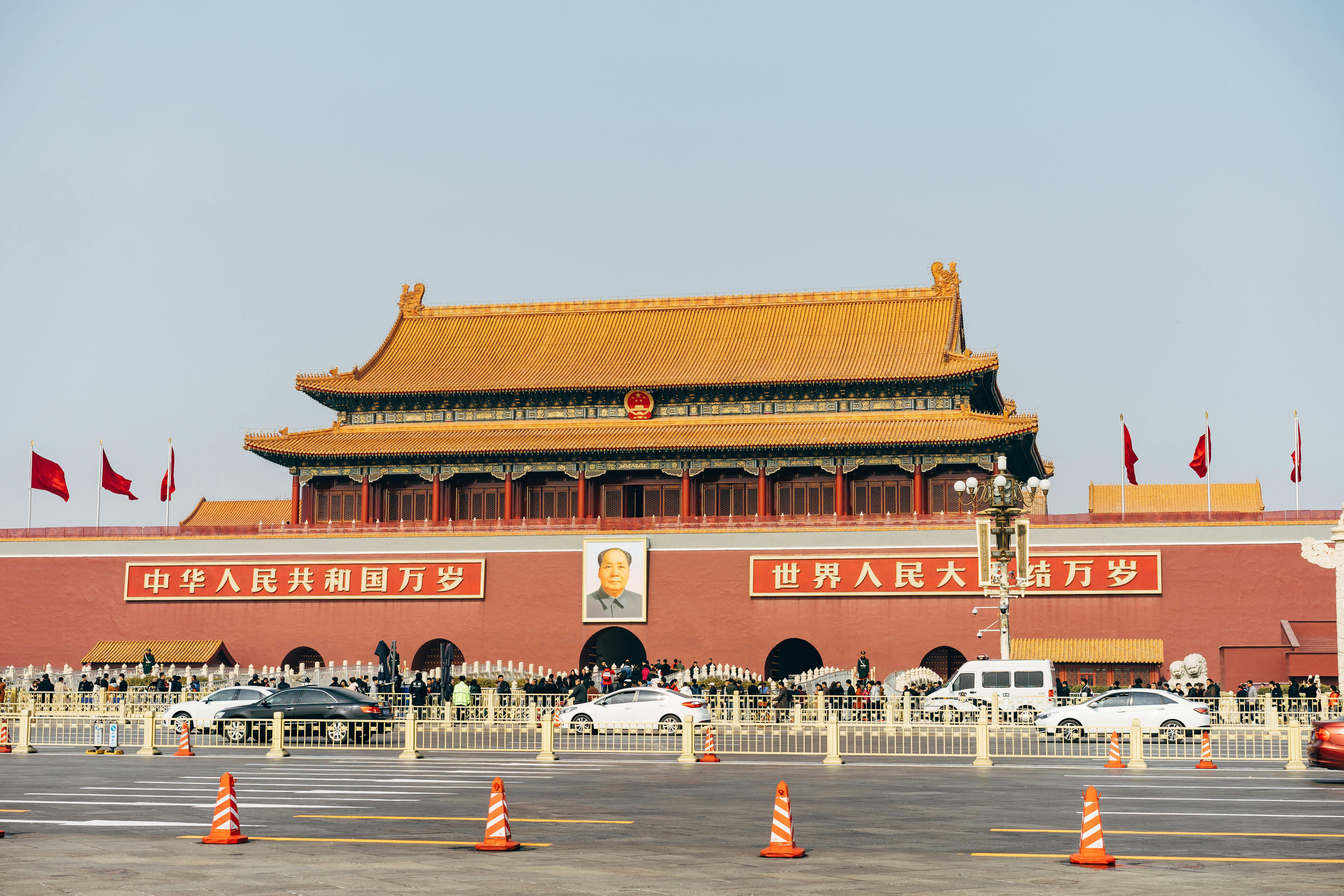
Tiananmen Square: Where Monumental History Meets Modern Chinese Life
It is 5:12 AM on a late October morning and my breath fogs in the sharp Beijing air outside Qianmen subway station. I pay 4 RMB (about $0.55 USD) for the subway ride and join a silent river of people walking north toward the security checkpoint. The loudspeakers crackle with instructions in Mandarin and English. My backpack gets X-rayed, my passport gets scanned, and a guard waves me through with a tired nod. I stand on the vast gray pavement of Tiananmen Square as the sky turns pale pink behind the Gate of Heavenly Peace. The flag-raising ceremony lasts less than three minutes. Hundreds of phones shoot up at once. The wind cuts straight through my jacket. My fingers go numb. I buy a hot soy milk for 6 RMB from a street cart afterward to warm my hands. This is not a relaxed park stroll. It is formal, controlled, and huge.
Why Tiananmen Square Matters
At first glance, Tiananmen Square looks like empty concrete. It is far more than that. The original Tiananmen Gate was built in 1417 during the Ming dynasty as the front entrance to the Imperial City. What you see today mostly dates from later rebuilds, but the symbolism stuck. On October 1, 1949, Mao Zedong stood on that balcony and proclaimed the People's Republic of China. That single moment turned the square into the political heart of modern China. The space itself is enormous, about 440,000 square meters, large enough to hold half a million people. At its center stands the Monument to the People's Heroes, flanked by the Great Hall of the People on the west and the National Museum of China on the east. The Chairman Mao Memorial Hall anchors the south end.
Here is the honest part. The square can feel harsh and heavily controlled. There is almost no shade, few places to sit, and security checks at every entry point. Guards move you along constantly. You cannot fly a drone, bring large lighters, or unfurl banners of any kind. The history presented on plaques focuses only on official achievements. Difficult events are left out entirely. Still, standing there helps you understand how China sees itself. You feel the weight of protocol and scale. Go with patience. Expect lines.
The Best Time to Experience Tiananmen Square
For Tiananmen Square, aim for April 5 to May 25 and September 15 to October 30. Spring days sit around 18°C to 26°C (64°F to 79°F) with clear skies and light wind. Autumn is even better, with crisp air around 12°C to 22°C (54°F to 72°F) and excellent light for photos. Mornings stay cool and bright. Summer, from June 20 to August 31, is rough. Temperatures hit 32°C to 37°C (90°F to 99°F) with high humidity and zero shade on the concrete. You will sweat through your shirt in twenty minutes.
Winter, from December 1 to February 28, drops to -6°C to 4°C (21°F to 39°F). The wind across the open square feels colder. Go early in any season. The flag-raising happens at sunrise, around 5:15 AM in summer and 7:20 AM in winter. Arrive 60 to 90 minutes before to clear security. Late afternoon, around 4:00 PM to 5:30 PM, is quieter for walking. Avoid the first week of October and Chinese New Year. Domestic crowds pack every inch.
Approximate Budget for a 7-Day Trip
Beijing is affordable if you use the subway and eat where locals eat. This estimate covers a full week based in central Beijing with a day focused on Tiananmen Square.
- Accommodation: $420 USD for 7 nights in a clean business hotel or hutong guesthouse near Qianmen, about $60 per night.
- Food: $175 USD, about $25 per day for jianbing breakfasts, noodle lunches, and one Peking duck dinner.
- Transport: $40 USD for subway rides at 3 to 7 RMB each plus two Didi taxi rides.
- Attractions: $110 USD for the Forbidden City (60 RMB), Great Wall at Badaling (40 RMB plus cable car), Summer Palace (30 RMB), and National Museum (free but reserved).
- Miscellaneous: $65 USD for bottled water, SIM card, coffee, and small souvenirs.
- Total Estimated Cost: $810 USD per person for 7 days.
Overpriced warning: The sit-down restaurants on Qianmen Street facing the square charge 120 to 180 RMB for basic duck or noodles aimed at tourists. Walk five minutes west into Dashilan hutongs instead. You will find the same dishes for 30 to 45 RMB, cooked fresh and twice as good.
Essential Tiananmen Square Experiences
- Watch the Sunrise Flag-Raising: Soldiers march out from the Gate and raise the flag in under three minutes. Stand on the east side for a clearer view. Bring gloves in cold months.
- Walk the Central North to South Axis: Start at Tiananmen Gate, pass the Monument to the People's Heroes, and end at Zhengyangmen Gate Tower. The walk shows the full scale. It takes about 30 minutes at a slow pace.
- Visit the National Museum of China: Free entry with passport reservation. The ancient China galleries on the lower floor are excellent. Allow two hours minimum.
- See the Chairman Mao Memorial Hall: You file past Mao's preserved body in silence. The line moves fast but starts very early. Skip if the wait exceeds two hours in summer heat, as the viewing itself lasts less than a minute.
- Study the Monument to the People's Heroes: This 38-meter granite obelisk honors those who died for the revolutionary cause. The stone carvings around the base tell the official story from 1840 onward.
- Photograph Tiananmen Gate at Dusk: Return around 6:30 PM when the gate and portrait are lit. The light is soft. Crowds thin out after the flag-lowering.
Hidden Gems Most Travelers Miss
- Beijing Planning Exhibition Hall: Located just southeast of the square, this museum holds a massive scale model of old Beijing. Few foreign visitors go inside. It puts the square in context.
- Front Gate Museum at Zhengyangmen: Climb the old city gate tower at the south end for a direct overhead view down the central axis. Tickets are cheap and lines are short.
- Yangmeizhu Xiejie: A quiet hutong street west of Dashilan with small bookshops, coffee stands, and craft studios. Locals outnumber tourists here in the morning.
- Page One Bookstore in Qianmen: A large, calm bookstore with English titles and a good second-floor window for people watching. Good stop to rest tired feet.
- Qianmen Snack Street Midday (Overrated Gem): Guidebooks hype this as authentic street food. In reality, most stalls sell reheated skewers at double prices. Take photos, then eat elsewhere. It gets packed by noon.
Cultural & Practical Tips
- Your passport is your ticket: Tourist Mistake Warning: You cannot enter Tiananmen Square or book the Forbidden City or National Museum without your physical passport. A photo copy will get you rejected at the checkpoint. Carry the original.
- Reserve everything days ahead: Tourist Mistake Warning: Many travelers show up expecting to buy tickets on the spot. Entry to the square area, the National Museum, and the Forbidden City all require free or paid reservations made 1 to 7 days in advance on WeChat mini-programs. No reservation means no entry.
- Dress for security and walking: Wear slip-on shoes and light pockets. Large bags, pocket knives, lighters, and selfie sticks over a certain length will be confiscated or force you into a long storage line.
- Do not sit on the ground: Guards will whistle and wave you up immediately. There are almost no benches inside the square itself. Rest at the museum or outside the checkpoints.
- Keep voices low and behavior formal: This is a site of national respect for Chinese visitors. Avoid jokes, loud calls, or poses in front of guards. Photos are fine, but follow instructions.
- Use the bathroom before security: Toilets inside are limited and often have long lines. Use the clean facilities in the National Museum or Qianmen Mall before you line up.
Essential Visitor Information
- Location & Access: Center of Dongcheng District, Beijing, China, GPS 39.9035 N, 116.3976 E, about 3 km south of Jingshan Park. Three transport options: Subway Line 1 to Tiananmen East or Tiananmen West Station, Exit B; Subway Line 2 to Qianmen Station, Exit A, 10 minute walk north; Taxi or Didi to Qianmen East Street drop-off, then walk north through security.
- Tickets & Booking: Entry to the square itself is free, but reservation is required. Booking needed? Yes. Reserve 1 to 7 days ahead via official WeChat account with passport details. National Museum is free with separate reservation. Chairman Mao Memorial Hall is free with separate reservation. Forbidden City next door is 60 RMB peak, 40 RMB off-peak.
- Operating Hours: Square is generally open 5:00 AM to 10:00 PM daily, but times shift with flag-raising and lowering at sunrise and sunset. National Museum is open 9:00 AM to 5:00 PM, closed Mondays. Mao Memorial Hall is open 8:00 AM to 12:00 PM Tuesday to Sunday, closed Mondays.
- Visit Duration: Minimum 1 hour for a quick walk across. Recommended time is 3 to 4 hours if adding the National Museum or Mao Hall.
- Family Suitability: Children are welcome, but this is a tough spot for toddlers. Stroller access is possible on flat pavement, yet long security lines and lack of shade make it tiring. Baby changing rooms are in the National Museum, not on the square. Bring snacks and hats.
- Timing: Best season is mid-April to late May and mid-September to late October. Best time of day is sunrise for the ceremony and 9:00 AM to 11:00 AM for museums.
- Highlights: Tiananmen Gate with Mao portrait, Monument to the People's Heroes, Great Hall of the People exterior, National Museum of China, Zhengyangmen Gate Tower.
- Nearby & Day Trip: Forbidden City is directly north across the road, easy to pair in one day. Qianmen and Dashilan hutongs are 10 minutes south on foot for food. Jingshan Park is 2 km north for a hilltop view. All work as a single central Beijing day trip without extra transport.
Conclusion: Travel with Respect, Not Just Photos
Tiananmen Square is not fun in a classic travel sense. It is strict, gray, and often crowded. Yet it matters because it shows you the official face of China without filters. You walk away with a clearer sense of scale, power, and order. Pair it with the Forbidden City right after for full context. Bring your passport, wear comfortable shoes, and drink water before you enter. Have you thought about what questions you want this place to answer for you before you go?
Post a Comment