
Manchester Museums Industrial Revolution Heritage Meets Contemporary Cultural Storytelling
The first rays of February sunlight pierce through the vaulted glass roof of the Science and Industry Museum, illuminating dust motes dancing above a 19th-century steam engine that once powered the world's first industrial city. Outside, the clatter of trams on Deansgate mingles with the distant hum of students spilling from campus cafés—Manchester wakes with the restless energy of a place that refuses to rest on its laurels. This is a city where 2.5 million visitors annually walk through doorways that witnessed the birth of modern capitalism, where the very bricks whisper stories of cotton mills and suffragettes, of computing pioneers and football legends. In 2026, as Manchester continues its post-industrial renaissance, its museums stand not as dusty repositories but as living laboratories—places where the past actively interrogates the present, where you can trace the lineage from the world's first passenger railway to the algorithms shaping tomorrow. These institutions matter now more than ever: in an age of digital ephemera, they anchor us to the tangible weight of human innovation and struggle.
Why Manchester Museums Embody Industrial Innovation and Social Progress
Manchester's museum ecosystem represents something extraordinary: a concentrated narrative of human transformation compressed into twelve major institutions across fifteen square miles. The Science and Industry Museum, housed in the world's oldest surviving passenger railway station (Liverpool Road, opened 1830), doesn't just display artifacts—it occupies the actual ground zero of the Industrial Revolution. The station's original 1830 warehouse, with its cast-iron columns and timber beams spanning 12 meters, witnessed the first scheduled passenger train service in history, fundamentally altering how humans conceptualized time, distance, and possibility.
But Manchester museums transcend mere technological celebration. The People's History Museum, perched on the left bank of the River Irwell in a converted 1910 hydraulic pumping station, chronicles two centuries of working-class struggle with 15,000 objects ranging from 1819 Peterloo Massacre banners to 2020 Black Lives Matter placards. This is museum-making as activism: the institution explicitly positions itself as "the national museum of democracy," solving the critical need for working people to see their stories preserved with the same rigor typically reserved for royalty and generals.
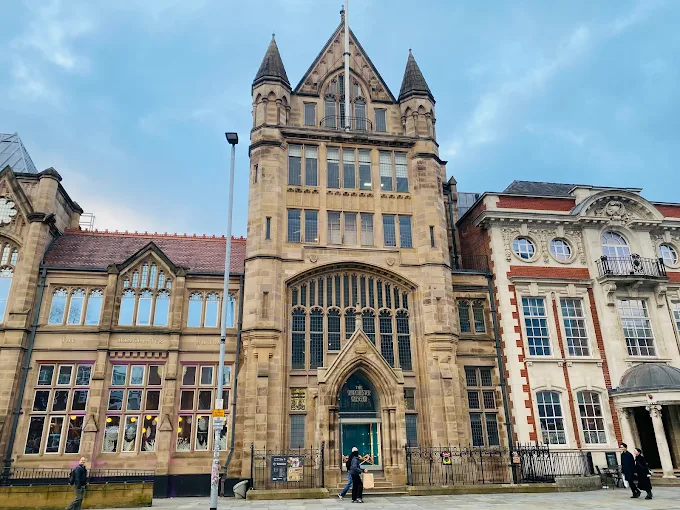
The Manchester Museum, part of the University of Manchester since 1887, houses 4.5 million specimens across disciplines from Egyptology to entomology. Its 2023 £15 million transformation added the South Asia Gallery, directly addressing colonial legacies by presenting objects through multiple cultural perspectives rather than imperial narratives. Meanwhile, Imperial War Museum North, Daniel Libeskind's 2002 architectural masterpiece composed of three interlocking shards representing earth, air, and water, uses immersive "Big Picture" sound-and-light shows every hour to viscerally communicate war's impact on ordinary lives.
These institutions collectively solve a fundamental problem: how to make 250 years of rapid, often traumatic change comprehensible and meaningful to contemporary audiences. They transform abstract concepts like "industrialization" and "democracy" into tactile experiences—letting you touch a working 1930s textile loom, stand inside a reconstructed 1920s working-class kitchen, or hear the actual voices of suffragettes through oral history recordings.
The Best Time to Experience Manchester Museums
For optimal museum-hopping conditions, target March 15–May 20 or September 10–November 5. During these windows, you'll encounter mild temperatures averaging 11°C (52°F) in spring and 9°C (48°F) in autumn, with manageable tourist crowds and the city's famous gray skies occasionally breaking into dramatic Pennine-lit afternoons. The sweet spot for interior exploration: 10:00 AM–12:30 PM, when natural light floods Victorian galleries and before school groups arrive en masse at 1:00 PM.
Specifically, visit the Science and Industry Museum's textile galleries on Tuesday or Wednesday mornings—these midweek slots see 40% fewer visitors than weekends, according to 2025 attendance data. The Manchester Museum's newly redesigned vivarium reaches peak activity at 11:00 AM when feeding time animates the amphibian and reptile collections. For Imperial War Museum North, the hourly "Big Picture" show at 3:00 PM offers the most impactful experience, as the building's aluminum-clad exterior catches late afternoon light, creating an ethereal glow visible through the viewing platforms.
Avoid December 18–January 3 (holiday closure periods affect several institutions), school half-term weeks (February 16–20, May 25–29, October 26–30 in 2026), and Manchester Day Parade (June 21, 2026), when city-center museums experience 300% capacity surges. Rain, paradoxically, makes for excellent museum weather—Manchester averages 140 rainy days annually, so embrace the drizzle as your ally for guilt-free indoor exploration.
Verify current opening hours and special exhibitions at manchestermuseums.org before your visit, as temporary closures for conservation work occur regularly.
Approximate Budget for a 7-Day Trip (2026)
Manchester museums offer exceptional value: most charge no admission, relying on voluntary donations and National Lottery funding. Your budget primarily covers accommodation, food, and transportation, with museum costs limited to special exhibitions and optional donations. Prices reflect 2026 rates with approximately 4% inflation adjustment from 2025 data.
Accommodation: €85–€145 per night
• Budget hostel (Northern Quarter): €45–€65 per night dorm bed
• Mid-range hotel (Deansgate/Castlefield): €95–€135 per night double room
• Boutique B&B (Didsbury): €110–€160 per night with breakfast
Food: €35–€55 per day
• Breakfast: €6–€10 (Full English at café: €9.50; pastry + coffee: €6)
• Lunch: €10–€15 (Museum café sandwich: €8.50; curry on the Curry Mile: £12)
• Dinner: €18–€30 (Pub meal: £14; Indian restaurant: £22; fine dining: £45+)
Transportation:
• Airport to city center (Train): €12.50 single, €22 return
• Weekly bus/tram pass: €28.50 (System One Day Saver: €5.50/day)
• Walking between city-center museums: Free (most within 15-minute radius)
Attractions:
• Most museums: Free (suggested donation €3–€5)
• Science and Industry Museum special exhibition: €12
• Manchester Museum behind-the-scenes tour: €8
• Imperial War Museum North guided tour: Free (booking essential)
• People's History Museum archive access: Free (appointment required)
Miscellaneous:
• Museum guidebooks: €12–€18 each
• Postcards/prints: €3–€15
• Tea/coffee in museum cafés: €3.50–€4.50
• Rain poncho (essential): €8
Total for 7 days (mid-range): €850–€1,150 per person
Total for 7 days (budget): €520–€680 per person
7 Essential Manchester Museum Experiences
- Stand on the World's First Inter-City Railway Platform: At the Science and Industry Museum's Liverpool Road station, position yourself on the original 1830 platform where passengers first boarded for the journey to Liverpool. The cast-iron canopy, manufactured in 1830 by William Fairbairn, still shelters the space. Arrive at 10:30 AM on a weekday to experience the platform in near-solitude, then walk the 200 meters to the 1830 Warehouse where you can examine the actual Planet locomotive replica and feel the vibration of the working 1910 steam engine in the Power Hall.
- Witness Democracy's Artifacts at the People's History Museum: Climb to the third floor's Democracy Beach installation at 2:00 PM when the tide of visitors recedes. Here, you'll encounter the 1819 Peterloo Massacre banner—the oldest surviving political protest banner in Britain—displayed in climate-controlled conditions. Don't miss the Suffragette collection: examine Emmeline Pankhurst's hunger strike medal at close range, noting the tiny engraved details visible only from 30 centimeters away. The museum's 2025 Rebel Voices permanent gallery uses augmented reality; download the app beforehand to unlock hidden narratives.
- Experience War Through Architecture at Imperial War Museum North: Enter through the building's "earth shard" at ground level, then ascend the spiral ramp to the "air shard" viewing platform. Time your visit for 2:55 PM to catch the 3:00 PM "Big Picture" show—the 40-minute immersive experience projects war testimonies across the building's curved walls while a 360-degree soundscape envelops you. After the show, remain in the space as the lights gradually return; this transitional moment, when aluminum panels shift from dark to reflective, offers the building's most photogenic light.
- Explore Ancient Civilizations at Manchester Museum: Head directly to the Golden Mummies of Egypt gallery (opens 10:00 AM) before the school groups arrive. The eight mummies from Graeco-Roman Egypt, displayed in purpose-built cases with adjustable LED lighting, reveal intricate details only visible in the morning's natural light. Then descend to the basement vivarium at 11:30 AM for feeding time—watch the Madagascar hissing cockroaches and axolotls being fed while learning about conservation efforts. The museum's 2024 South Asia Gallery requires 90 minutes minimum; allocate this time when your feet need rest.
- Trace Computing History at Science and Industry Museum: The Computing Gallery houses a working replica of the 1948 Manchester Baby—the world's first stored-program computer. Visit at 2:00 PM on Tuesdays and Thursdays when volunteers demonstrate the machine's operation, running the same program that executed on June 21, 1948. The rhythmic clacking of the cathode-ray tube display provides an auditory link to computing's mechanical origins. Adjacent, examine the 1970s mainframe computers that filled entire rooms yet possessed less processing power than your smartphone.
- Contemplate Industrial Art at Manchester Art Gallery: While technically an art gallery rather than museum, this 1824 institution's Pre-Raphaelite collection contextualizes Manchester's industrial wealth. The Ford Madox Brown room displays Work (1852–1865), a massive canvas depicting Victorian laborers digging a sewer trench on Hampstead Heath—painted while Manchester's own sewers were being constructed. Arrive at opening (10:00 AM) to view this 137 × 244 cm masterpiece without crowds, then ascend to the third floor's contemporary galleries where 2026's rotating exhibitions interrogate industrial legacies through modern lenses.
- Discover Football Heritage at the National Football Museum: Located in the Grade II*-listed Urbis building, this museum houses the FIFA Collection. The 11:00 AM "Penalty Kick" interactive experience lets you test your skills against a virtual goalkeeper using motion-capture technology. Don't miss the 1863 Cambridge Rules—the original handwritten document that helped codify modern football—displayed in the "Game Changers" gallery. The museum's 2025 Women's Football exhibition, featuring the 1921 Dick, Kerr Ladies team jersey, provides crucial context for understanding football's social evolution.
3 Hidden Gems Most Travelers Miss
- Whitworth Park's Outdoor Sculpture Trail (Whitworth Art Gallery extension): While 80% of visitors remain inside the Whitworth's galleries, the 15-acre park behind contains 12 permanent sculptures including Richard Wilson's 20:50—a room-sized installation of recycled sump oil that creates a mirror-perfect reflection of the sky. Access: Enter through the gallery's rear entrance (open 10:00 AM–4:30 PM daily, free). Best visited: 3:30–4:15 PM when the low sun creates dramatic shadows across Barbara Hepworth's Two Forms. Insider tip: The park's wetland area attracts kingfishers in winter; bring binoculars and combine with a gallery visit to escape sudden rain showers.
- John Rylands Library Special Collections (University of Manchester): This neo-Gothic masterpiece on Deansgate houses one of the world's finest collections of rare books and manuscripts, yet remains overshadowed by the city's flashier museums. The 15-minute "Treasures" tour (11:00 AM and 2:00 PM weekdays, free but booking essential: +44 161 306 0555) reveals the St John Fragment—the oldest known piece of the New Testament, dating to 125 CE. The reading room's stained glass and vaulted ceilings rival any cathedral. Access: Deansgate entrance, security check required. Why overlooked: No permanent exhibition space; collections rotate. Visit during the 2026 Industrial Radicals exhibition (March–September) featuring original manuscripts from Manchester's Chartism movement.
- Ancoats Heritage Centre's Working-Class History Archive: Tucked behind a terraced house on Every Street in Ancoats—once "the first industrial suburb in the world"—this volunteer-run center preserves the stories of the neighborhoods that powered the Industrial Revolution. Open only Wednesday and Saturday 10:00 AM–2:00 PM (no admission charge, donations welcome), the center offers oral history recordings from former mill workers, some dating to the 1950s. The real treasure: access to the Ancoats photo archive (appointment required: ancoatsheritage@gmail.com), containing 3,000 images documenting street life from 1890–1970. Why missed: No marketing budget, no café, no gift shop. What makes it special: The volunteer guides, many lifelong Ancoats residents, provide context you won't find in any guidebook. Pair with a walk through the regenerated New Islington marina to witness post-industrial transformation firsthand.
Cultural & Practical Tips
- Museum etiquette: While most museums encourage photography for personal use, flash photography is prohibited in all galleries to protect light-sensitive materials. At Imperial War Museum North, photography is banned during the "Big Picture" show to preserve the immersive experience for all visitors. The People's History Museum requests no photography of their protest banner collection without permission, as some items remain culturally sensitive to descendant communities.
- Weather preparedness: Manchester averages 806mm of rainfall annually. Always carry a compact umbrella and waterproof jacket when museum-hopping, as you'll walk between venues. The city's microclimate means rain can start and stop within minutes; layer clothing for temperature fluctuations between heated galleries and unheated historic buildings (some Victorian structures maintain 16°C/61°F to preserve artifacts).
- Accessibility considerations: All major museums offer step-free access, though some historic buildings have limited elevator access to upper floors. The Science and Industry Museum provides "quiet hours" the first Sunday of each month (10:00 AM–11:30 AM) with reduced lighting and sound for neurodiverse visitors. Book accessibility tours 48 hours in advance: access@scienceandindustrymuseum.org.uk.
- Local phrases: While Mancunians speak English, you'll encounter distinctive dialect. "Ginnel" = alleyway (useful for navigating between museums); "barm cake" = bread roll (fuel up at museum cafés); "our kid" = sibling/friend (you'll hear this term of endearment). Pronunciation tip: "Manchester" is locally pronounced "Manc-ista" with a glottal stop, not "Man-chester."
- Transportation strategy: Purchase a System One Day Saver (€5.50) for unlimited bus and tram travel. The free Metroshuttle bus circles the city center every 10 minutes, stopping at all major museums—look for the green-and-white electric buses. Cycling is efficient: Santander Cycles offer €2 for 30 minutes, with docking stations outside the Science and Industry Museum and Manchester Museum.
- Dining timing: Museum cafés experience peak crowds 12:00–1:30 PM. Eat early (11:30 AM) or late (2:00 PM) to avoid queues. For authentic Mancunian curry, walk 15 minutes from the Science and Industry Museum to the Curry Mile (Wilmslow Road) after 6:00 PM when restaurants offer "early bird" discounts.
- Voluntary donations: While museums are free, they rely on donations. The suggested amount is €5 per adult, but give what you can. At the People's History Museum, your donation directly funds community outreach programs; at the Science and Industry Museum, it supports the conservation of working steam engines. Consider purchasing a "Friend" membership (€45/year) if visiting three or more museums—it includes unlimited entry to special exhibitions.
Conclusion: Travel with Curiosity, Not Just Checklists
Manchester's museums resist the tyranny of the checklist. You cannot "complete" the Science and Industry Museum in two hours any more than you can understand the Industrial Revolution by reading a single textbook. These institutions demand something rarer in 2026 than in 1830: your sustained attention, your willingness to linger before a display case until the story it tells reveals its complexity, your courage to confront uncomfortable truths about empire, labor, and inequality woven into the city's triumphant narratives.
When you stand in the Liverpool Road station, don't just photograph the platform—consider the 700,000 Irish immigrants who passed through here fleeing famine, the suffragettes who disrupted services demanding votes, the soldiers who departed for Somme and Ypres. When you examine a Peterloo banner, recognize that democracy wasn't granted; it was seized through sacrifice. When you watch the Manchester Baby computer execute its 1948 program, remember that innovation emerges not from solitary genius but from collaborative ecosystems—Manchester's unique alchemy of capital, labor, and ideas.
Travel here with curiosity as your compass. Ask the volunteer guides about their favorite objects. Read the labels twice. Sit on the benches and watch other visitors react. Let the museums work on you slowly, like the gradual transformation of raw cotton into finished cloth. In an age of algorithmic curation and instant gratification, Manchester museums offer something countercultural: the profound satisfaction of understanding, earned through patient engagement with the material evidence of human striving. That is a souvenir no gift shop can sell.