
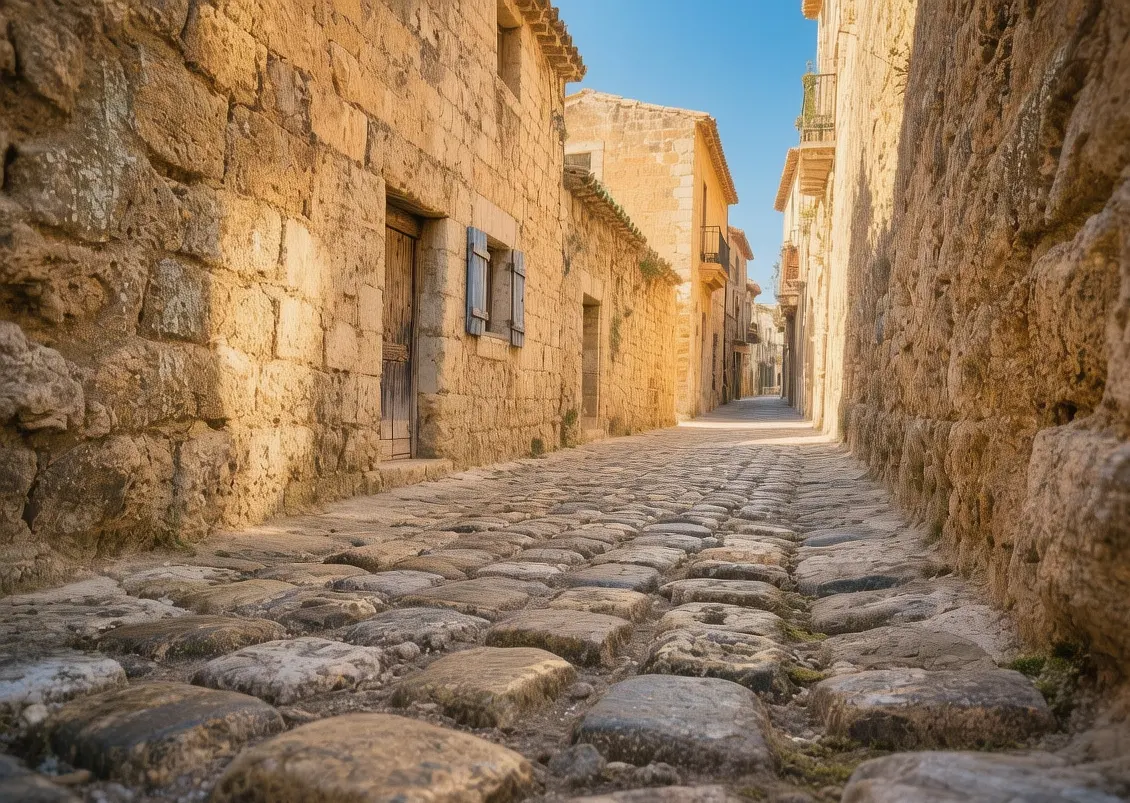
Alcúdia Old Town Medieval Walls Meet Mediterranean Light
The silence inside the ramparts is a physical weight—a stark contrast to the hum of the resort beaches just 5 kilometers away. You stand on the stone walkway of the Alcúdia old town, where the air smells of wild thyme, heated limestone, and the distant salt spray of the bay. The light filters through the embrasures of the 14th-century walls, casting long shadows over the cobblestones that have worn smooth under centuries of footsteps. This is not merely a preserved relic but a living fortress, enclosing 1.5 kilometers of perimeter within its 1,300-meter circuit, where history is not displayed behind glass but lived in every archway. You trace the rough texture of the sandstone, feeling the coolness of the shade against the midday sun. In 2026, as coastal destinations face the pressures of mass tourism, the Alcúdia old town remains a sanctuary of authenticity—a place where the medieval rhythm persists, demanding you slow down to truly hear the echoes of the past within the stone.
Why Alcúdia Old Town Embodies Medieval Heritage
The Alcúdia old town represents one of the best-preserved medieval fortified settlements in the Balearic Islands, solving the critical need for defense against pirates and invaders during the 14th century. Built upon the foundations of the Roman city of Pollentia (founded 123 BC), the current walls were constructed between 1362 and 1390 under King Peter IV of Aragon. The engineering is robust: the walls rise 10 meters high and are 2 meters thick in sections, constructed from local marés sandstone that glows golden in the afternoon light. Four gates punctuate the perimeter—Xara, Moll, Mallorca, and Vila—each serving as a controlled choke point for entry.
The urban layout within the walls follows a medieval grid, narrow and winding to confuse potential invaders and maximize shade. The Church of Sant Jaume, built in the 15th century on the site of a former mosque, anchors the spiritual life of the community, its Gothic facade dominating the main plaza. This integration of Roman ruins, Islamic history, and Christian fortification makes the Alcúdia old town not merely a tourist attraction but a physical document of Mediterranean conflict and coexistence. The density of historical structures per square kilometer is unmatched in northern Mallorca, with every street telling a story of survival. This concentration of heritage makes it a pilgrimage site for historians, where the evolution of military architecture is traced through the very stones that define the skyline.
The Best Time to Experience Alcúdia Old Town
For the optimal Alcúdia old town visit, target May 15–June 12 or September 10–October 20, when temperatures range between 18–26°C (64–79°F) and the light is soft enough for photography. The town is accessible 24 hours, but the ideal viewing window is 8:00–9:30 AM when the sun hits the eastern walls directly, illuminating the stone carvings without harsh shadows. The weekly market on Tuesday and Sunday mornings (8:00 AM–1:00 PM) offers vibrant local culture, though crowds peak by 10:00 AM. Spring coincides with the Alcúdia Music Festival in July, causing accommodation prices to increase 30–50%; book lodging three months in advance if visiting during this period.
Avoid July 15–August 25 unless you tolerate extreme heat and crowds; temperatures regularly exceed 32°C (90°F), making the stone plaza radiate intense thermal energy. The narrow streets trap heat, and parking outside the walls becomes nearly impossible. Winter months (December–February) bring mild weather (10–16°C / 50–61°F) but some shops and restaurants reduce hours. The walls are open daily, but the archaeological site closes earlier; verify current status at www.mallopasca.com or contact the tourist office at info@alcudia.net (+34 971 547 112). Weekday mornings typically see the lowest visitor density, allowing for clearer photography of the gates without obstruction from tour groups.
Approximate Budget for a 7-Day Trip (2026)
Alcúdia offers a range of options, though the old town itself commands premium prices due to its historic charm. The following budget assumes mid-range comfort with a focus on culture and gastronomy, based on 2026 pricing with approximately 3.5% inflation from 2025 figures. Estimates include stays in or near the Alcúdia old town for easy access to the attractions.
- Accommodation: €100–€200 per night for a double room in an agroturismo or boutique hotel in Alcúdia; luxury fincas command €300–€600 per night
- Food: €50–€80 per day—breakfast €8–€12 (café con leche and ensaïmada), lunch €20–€35 (restaurant meal including sobrassada and salad), dinner €30–€50 (traditional Mallorcan stew and local wine)
- Transportation: Flight to Palma de Mallorca Airport: €100–€250 round-trip; rental car: €50 per day; public bus (Line 301 from Palma): €5 per ride; bicycle rental: €15 per day
- Attractions: Wall walk: free; Pollentia Ruins: €6; Church of Sant Jaume: free; Guided town tour: €20; Boat trip to Alcúdia Bay: €40
- Miscellaneous: Local wine €10–€25 per bottle; artisan ceramics €40–€100; map guide €15; market souvenirs €20
Total estimated cost for 7 days: €1,400–€2,300 per person (based on double occupancy; solo travelers should add 35–45% for single supplements)
7 Essential Alcúdia Old Town Experiences
- Walk the Medieval Walls: Stroll the 1.5-kilometer ramparts surrounding the town. The views over the countryside and bay are panoramic. Visit at 8:00 AM when the light is soft. The walk takes 45 minutes. It is free to access. This is the iconic Alcúdia old town experience; do not miss the view from Porta de Mallorca.
- Explore Pollentia Ruins: Visit the Roman city foundations just outside the walls. The theatre and residential quarters are visible. Visit between 10:00 AM–12:00 PM when lighting accentuates the stone. Entry costs €6. It demonstrates the pre-medieval history of the site.
- Visit Sant Jaume Church: Enter the 15th-century Gothic church in the main plaza. The altarpiece is striking. Visit at 11:00 AM when the light illuminates the interior. Entry is free. It anchors the religious life of the community.
- Shop the Tuesday Market: Browse the stalls in the plaza outside the walls. The produce and crafts are local. Visit at 9:00 AM when the selection is best. The atmosphere is lively. It reveals the agricultural heart of the region.
- Walk Carrer de la Vila: Stroll the main street inside the walls. The stone houses are covered in bougainvillea. Visit at 5:00 PM when the temperature cools. The shops sell artisan goods. It is the most atmospheric spot in the Alcúdia old town; arrive early to avoid crowds in your shot.
- Dine at a Plaza Restaurant: Eat at a terrace overlooking the church. The paella is traditional. Visit at 2:00 PM for lunch when the atmosphere is lively. Reservations recommended. This combines culinary tradition with scenic views.
- Watch Sunset from the Walls: Position yourself on the western ramparts. The sun sets over the mountains. Visit at 8:00 PM in summer. The light is dramatic. It creates a magical end to the day.
3 Hidden Gems Most Travelers Miss
- Casa Orlandis: Located at Carrer de la Vila, 6, this 16th-century manor house features a stunning courtyard. Entry: €5; open 10:00 AM–6:00 PM. It is often overlooked as visitors focus on the walls. The architecture is Renaissance. Contact: +34 971 547 112. Visit mid-morning when light illuminates the courtyard. The perspective allows you to see domestic life of the era.
- The Roman Theatre: Located within the Pollentia site, this 1st-century BC structure is one of the largest in the Balearics. Entry: Included in Pollentia ticket; open 9:00 AM–7:00 PM. It is often overlooked by tourists rushing to the beach. The acoustics are still functional. Contact: +34 971 547 112. Visit late afternoon when the light is soft. The perspective allows you to see the stage setup.
- Sa Bassa Blanca: A 10-minute drive from town, this contemporary art museum sits in a historic estate. Entry: €10; open 10:00 AM–6:00 PM. It is often overlooked as visitors focus on history. The sculpture garden is stunning. Contact: +34 971 547 112. Visit mid-morning when light illuminates the art. The perspective allows you to see modern art in a historic setting.
Cultural & Practical Tips
- Parking strategy: The Alcúdia old town is pedestrianized. Park in the designated lots outside the walls (Porta de Moll or Porta de Vila). Fines for driving inside can reach €100. Shuttle buses are not needed; it is a 5-minute walk to the center. Allow an extra 15 minutes to find a spot in summer.
- Master these phrases: "Buenos días" (BWEH-nos DEE-as) for good morning; "Por favor" (por fah-BOR) for please; "¿Cuánto cuesta?" (KWAN-toh KWES-tah) to ask price; "La cuenta, por favor" (lah KWEN-tah) to request the bill.
- Photography guidelines: Tripods are allowed in public squares but not inside the church without permission. Drone usage is strictly prohibited over the town. Flash photography is discouraged inside religious sites. Respect privacy when photographing locals. Early morning offers the best light without crowds.
- Dress code: Shoulders and knees must be covered to enter the church. Security enforces this strictly. Fines for inappropriate dress can reach €50. Respect the sanctity of the space. Wear comfortable shoes for cobblestones.
- Market etiquette: The Tuesday market is crowded. Keep bags zipped and valuables secure. Do not touch produce without asking. Vendors appreciate a greeting in Spanish or Catalan. Cash is preferred for small purchases.
- Weather considerations: The stone plaza provides little shade; wear a hat and sunscreen during summer months. Winter evenings can be chilly; bring a light jacket even if the day is warm. Rain is rare but possible in November; the stone surfaces become slick when wet.
- Security awareness: While the area is safe, theft can occur from unlocked rental cars in parking lots. Keep valuables out of sight. Do not leave bags on viewpoint access points. Allow an extra 15 minutes for parking in villages. Report suspicious activity to local police.
Conclusion: Travel with Reverence, Not Just Reverie
The Alcúdia old town demands more than casual sightseeing—it asks for contemplation of the delicate balance between human heritage and natural grandeur. When you walk these streets in 2026, you're not merely visiting a destination; you're participating in a fragile ecosystem where stone walls, medieval history, and sustainable tourism intersect in delicate balance.
Choose to engage deeply: respect the pedestrian zones that protect the cobblestones, support local artisans that maintain the traditions, and understand that this town is a living community, not just a backdrop. The Alcúdia old town survives not as a theme park but as a cultural landscape—and its preservation depends on visitors who recognize the difference between appreciation and consumption.
Slow down. Sit on a terrace after the market crowds depart. Listen to the wind moving through the plaza trees. Watch the sunset paint the stone in shades of gold and violet. The town rewards those who approach it not as a checklist item but as a conversation between past and present—a dialogue between the builders of the 14th century and modern travelers that continues, like the seasons, in perpetual motion.