Valencia Oceanogràfic Marine Life Meets Futuristic Architecture
Oceanogràfic València: Where Marine Science Meets Mediterranean Curiosity
At 11:47 on a Tuesday morning in May, I hand over 39.45 euros at the Oceanogràfic ticket counter and step into a corridor of glass. A beluga glides past my left shoulder, close enough that I can see the texture of its skin. I have been in Valencia for four days and have eaten more paella than any reasonable person should. But this moment, standing inside a building shaped like a water lily designed by Félix Candela, feels different. The air smells faintly of salt and filtration systems. Children press their palms against the glass. Somewhere ahead, a penguin colony squawks over territory. This is Europe's largest aquarium, and it earns that title not through sheer size alone but through the way it reorganizes nine marine ecosystems into something you can walk through in an afternoon.
Why Oceanogràfic València Matters
The Oceanogràfic opened in 2003 as part of Santiago Calatrava's City of Arts and Sciences complex, built in the dried bed of the Turia River. After a catastrophic flood in 1957, Valencia diverted the river several kilometers south, and the old riverbed became a 9-kilometer garden. The aquarium sits at the eastern end of that garden, a cluster of white concrete structures that look more like a science fiction set than a zoo. It houses more than 45,000 creatures from 500 species across 110,000 square meters. The Mediterranean tank alone holds nearly 7,400 specimens. The underwater tunnel stretching 70 meters beneath the Atlantic Ocean tank is the longest in Europe.
Here's the honest part. Oceanogràfic is not a small, intimate rescue center. It is a major commercial operation that welcomes over a million visitors annually. On a busy weekend in July, the queues for the dolphin show can stretch past the Arctic dome. The dolphinarium itself, while one of the largest in the world, has drawn criticism from animal welfare groups who argue that cetaceans should not be kept in captivity. You can feel the tension when the crowd packs into the stadium seats. It's loud. It's hot. And the show, while impressive technically, raises questions that linger longer than the applause. I loved the belugas and the penguins. I felt uneasy in the dolphin stadium. Both things can be true.
The Best Time to Experience Oceanogràfic València
Late spring and early autumn are the sweet spots. April through June brings daytime temperatures between 20°C and 26°C (68°F to 79°F), with sea breezes that keep the outdoor areas pleasant. September and October are similar, though October can dip to 22°C (72°F) by late afternoon. Avoid July and August unless you enjoy sharing every tank with 3,000 other people. Summer highs regularly hit 30°C to 33°C (86°F to 91°F), and the outdoor zones become genuinely uncomfortable between noon and 4 PM. Winter is workable if you dress warmly: January averages 12°C (54°F), and the indoor exhibits remain cozy. The tradeoff is shorter opening hours and fewer dolphin shows. My visit in mid-May was close to ideal. The queues were manageable, the outdoor sea lion area wasn't a furnace, and I could linger at the shark tunnel without being nudged forward by a school group.
Approximate Budget for a 7-Day Trip
This assumes you stay in Valencia city center and visit Oceanogràfic as a day trip. All prices are per person.
- Accommodation: A mid-range hotel or Airbnb near the City of Arts and Sciences runs 70 to 120 euros per night. Seven nights: 490 to 840 euros.
- Food: Breakfast at a café (3 to 5 euros), lunch at a menu del día (12 to 15 euros), dinner at a neighborhood restaurant (18 to 25 euros). Seven days: roughly 230 to 315 euros.
- Transport: A 72-hour Valencia Tourist Card costs around 20 euros and covers metro, bus, and tram. Buy two for the week, or reload a rechargeable card. Budget 40 to 50 euros for the week.
- Attractions: Oceanogràfic adult ticket is 39.45 euros. Add the Science Museum for 41.60 euros combined, or the full City of Arts and Sciences ticket for 51.25 euros. Budget 60 to 100 euros for other museums and sites.
- Miscellaneous: Coffee, snacks, souvenirs, and the occasional taxi. 100 to 150 euros.
Total: approximately 920 to 1,455 euros for the week.
One overpriced trap: the underwater restaurant inside Oceanogràfic. A lunch menu starts at 40 euros per person without drinks, and the food is fine but not memorable. The hamburger stand near the dolphinarium serves a decent patty for 10 to 12 euros. Better yet, exit the aquarium and walk 15 minutes to the Aqua shopping center, where you can eat a full meal for 12 to 15 euros. Validate your parking ticket at the Oceanogràfic information desk if you drove, and you'll get a discount on the underground lot.
Essential Oceanogràfic València Experiences
- The Atlantic Tunnel. Walk beneath sharks and rays in a 70-meter glass tube. Go early in the morning when the light filters through the water and the crowds are thin. The sensation of a sand tiger shark passing inches above your head never gets old.
- The Arctic Dome. Belugas and walruses swim in a cooled igloo-shaped enclosure. The belugas are curious and will often approach the glass. This is the only place in Europe where you can see a young beluga named Kylu.
- The Dolphinarium Show. Yes, it's controversial. Yes, it's also genuinely impressive to watch dolphins move in synchronized patterns. Arrive 20 minutes early for a seat in the shaded upper rows. Skip it if you have strong feelings about cetacean captivity.
- The Wetlands Sphere. A 26-meter-high sphere recreates a mangrove forest and a Mediterranean marsh. It's humid, green, and unexpectedly quiet compared to the rest of the park. Most visitors walk past it. Don't.
- The Antarctic Penguin Colony. Gentoo and king penguins waddle across a rocky cliff designed to mimic their natural breeding grounds. The viewing area is small, so wait for a gap in the crowd and take your time.
- The Mediterranean Aquariums. Nine separate tanks showcase the biological richness of the sea that borders Valencia. Look for the seahorses and the loggerhead turtles. This section feels more local and grounded than the tropical exhibits.
- The Underwater Restaurant Viewing Window. Even if you don't eat there, walk past the restaurant and look up. The ceiling is a shallow pool filled with fish, and the light ripples across the dining room in a way that makes the 40-euro menu almost tempting.
Hidden Gems Most Travelers Miss
- The Backstage Tour. For an extra fee, you can visit the quarantine area and fish kitchen. You'll see how the animals are fed, how their health is monitored, and how much squid a sea lion eats in a day. It's the least glamorous part of the aquarium and the most revealing.
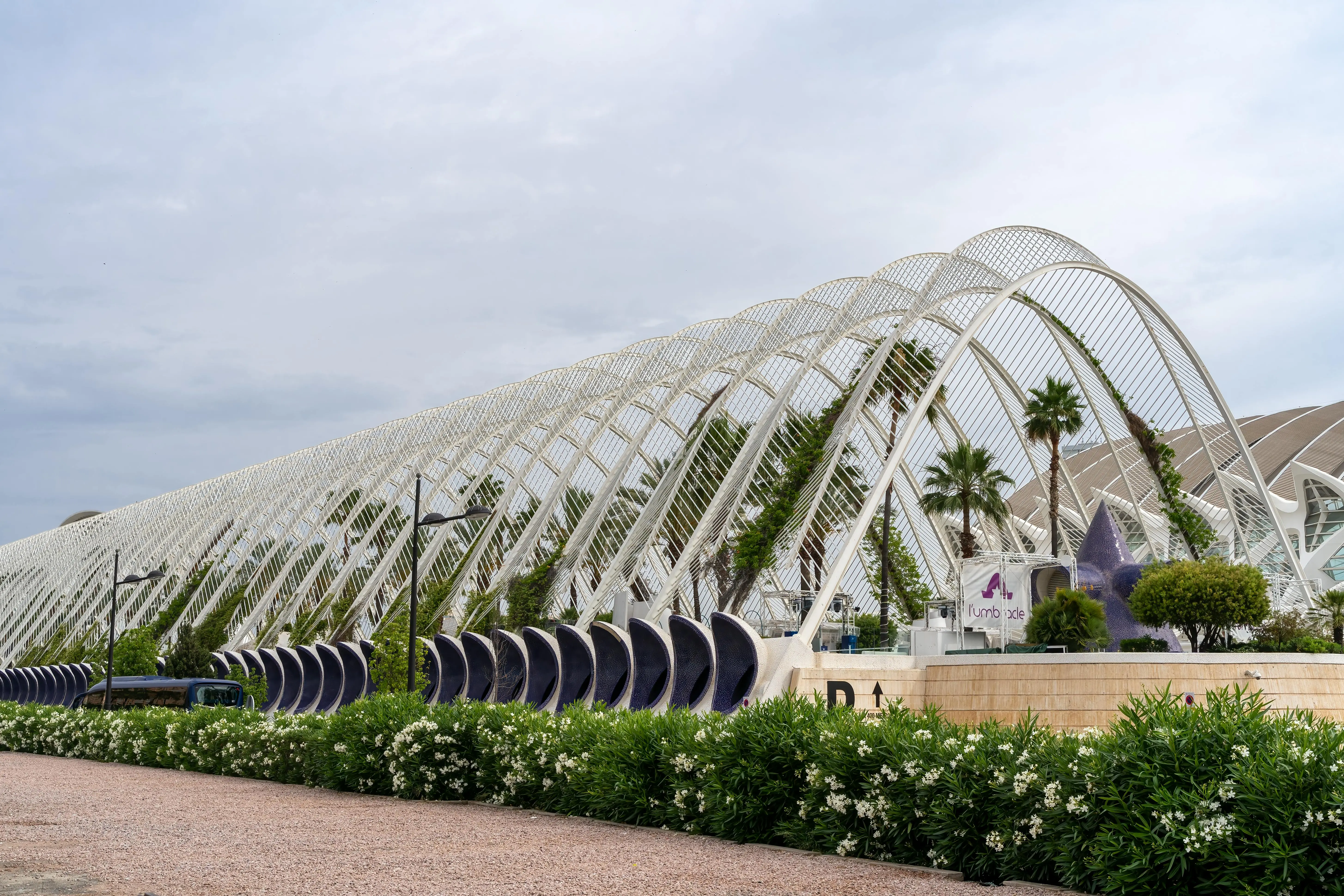
- The Umbráculo Garden. Just outside the Oceanogràfic, this free outdoor space is filled with palm trees and contemporary sculpture. Most people rush past it on their way to the ticket queue. It's a good place to sit and eat a sandwich before your timed entry.
- The Jellyfish Room. Tucked between the temperate and tropical sections, a darkened room holds a wall of illuminated jellyfish tanks. The lighting changes color every few seconds. Children often run past it. Adults tend to stop and stare.
- The Crocodile Enclosure. A pair of Nile crocodiles live in an outdoor pool near the wetlands. They are almost perfectly still, which makes them easy to miss. Watch for the slight movement of an eye.
- The Overrated Gem: The 4D Cinema. It costs extra, the seats are uncomfortable, and the film is a generic ocean documentary with water sprayed in your face. Skip it. Use that time for a second walk through the shark tunnel instead.
Cultural & Practical Tips
- Buy your ticket online before you arrive. The walk-up queue can take 30 minutes in high season, and timed entry slots fill up by mid-morning.
- Wear comfortable shoes. The complex covers 110,000 square meters, and you will walk at least three kilometers without realizing it.
- Bring a refillable water bottle. There are fountains near the restrooms, but the bottled water sold inside costs 2.50 euros.
- Do not schedule Oceanogràfic and the Science Museum for the same day unless you have endless energy. Both need at least three hours to do properly. I tried it once and ended up rushing through the science exhibits with sore feet.
- Tourist mistake number one: assuming the outdoor areas are shaded. They are not. In summer, the sea lion pool and the islands section offer almost no cover. Wear a hat and sunscreen.
- Tourist mistake number two: arriving at noon. The dolphin show at midday draws the largest crowd, and the restaurant queues peak between 1 PM and 2:30 PM. Go at 10 AM, see the indoor exhibits first, and eat lunch at 11:30.
- If you are traveling with a stroller, the main paths are accessible, but some of the smaller viewing areas have steps. The park provides loaner wheelchairs at the entrance, but you need to ask at the information desk.
Essential Visitor Information
Location & Access: Carrer d'Eduardo Primo Yúfera, 1B, 46013 València. GPS: 39°27'09"N, 0°20'53"W. The aquarium is at the eastern end of the City of Arts and Sciences. Three transport options: Metro Line 10 stops at Oceanogràfic station, a two-minute walk from the entrance. Bus lines 95 and 15 stop on Carrer d'Eduardo Primo Yúfera. Taxis from the city center cost 10 to 15 euros and take about 15 minutes.
Tickets & Booking: Adult tickets cost 39.45 euros. Children aged 4 to 12 pay 29.05 euros. Children under 4 enter free. Seniors over 65 and visitors with a disability of 33% or more pay 29.05 euros. Booking online is strongly recommended. Yes, you need a timed entry slot during peak season. Combined tickets with the Science Museum cost 41.60 euros for adults. The full City of Arts and Sciences ticket, including the Hemisfèric, costs 51.25 euros.
Operating Hours: Regular hours are 10:00 to 18:00, Sunday through Friday. Saturdays extend to 20:00. In summer, hours often stretch to 20:00 or 21:00 daily. Last entry is one hour before closing. Check the official website for seasonal variations, especially around public holidays.
Visit Duration: Minimum three hours. Recommended four to five hours if you want to see the dolphin show and eat lunch without rushing. I spent four hours and skipped the 4D cinema.
Family Suitability: Excellent for children. Stroller access is good on main paths. Facilities include nursing rooms, play areas near the dolphinarium, and multiple restrooms with changing tables. The park rents strollers and wheelchairs at the entrance.
Timing: Best season is April to June or September to October. Best time of day is opening time at 10:00. The light in the underwater tunnel is best in the morning. The outdoor areas are most comfortable before noon in summer.
Highlights: The Atlantic underwater tunnel, the Arctic dome with belugas, the dolphinarium, the wetlands sphere, and the Antarctic penguin colony.
Nearby & Day Trip: The Hemisfèric planetarium is a two-minute walk. The Science Museum is adjacent. The Umbracle garden is free and open to the public. The beach at Playa de la Malvarrosa is a 15-minute taxi ride. The Albufera Natural Park, birthplace of paella, is a 30-minute drive and makes a good half-day trip.
Conclusion: Travel with Curiosity, Not Just a Checklist
Oceanogràfic València will not change your life in the way a mountain summit or a desert night sky might. It is a commercial aquarium in a city that has learned how to sell its futuristic architecture. But it is also a place where you can stand beneath a shark and feel small, and where a beluga can look back at you with something that feels uncomfortably like recognition. Go early. Skip the 4D cinema. Eat lunch outside the park. And when you leave, walk west along the old riverbed toward the city center. The Turia gardens stretch for nine kilometers. You will pass fountains and orange trees and teenagers on skateboards. The water is gone, but the shape of the river remains. If you have been to Oceanogràfic, what surprised you most? Tell me in the comments.
Post a Comment