
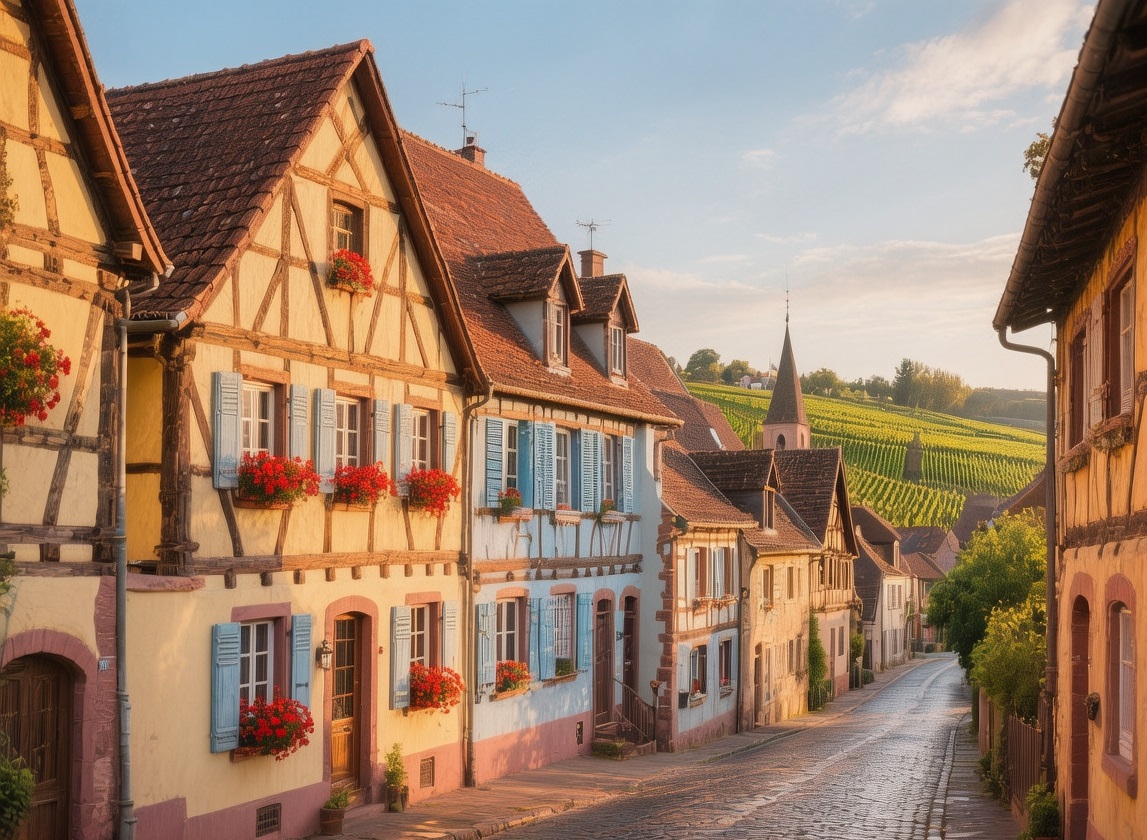
Alsace Wine Route Villages : Vineyards, History, and Terroir Converge
The scent arrives before the village comes into view—a complex perfume of damp earth, ripening Riesling grapes, and woodsmoke from a baker's oven. As the road winds upward through vine-striped slopes, Riquewihr emerges not as a postcard but as living tapestry: cobblestones worn smooth by centuries of wine carts, half-timbered houses leaning companionably toward each other, geraniums spilling from every windowsill in defiant bursts of crimson. An elderly vigneron in blue overalls pauses his pruning to nod at passing cyclists, his hands stained purple from yesterday's harvest. This is the essence of the Alsace Wine Route—not a curated attraction but a working landscape where viticulture shapes daily rhythm. In 2026, these villages remain Europe's most authentically preserved wine culture, where every street corner tells a story of Franco-German heritage, geological diversity, and generations who learned to listen to the language of soil and slope.
Why Alsace Wine Route Villages Offer Unparalleled Authenticity
The Alsace Wine Route villages represent more than picturesque charm—they embody a rare continuity of agricultural tradition uninterrupted by industrialization. Stretching 170 kilometers along the eastern foothills of the Vosges Mountains, this route passes through over 100 communes where winegrowing families have cultivated the same parcels since the 1600s. Unlike commercialized wine regions, Alsace maintains intimate scale: 85% of its 15,000 hectares are farmed by independent vignerons producing under 50,000 bottles annually. The villages themselves—many classified as Plus Beaux Villages de France—retain authentic function rather than museum-like preservation. In Ribeauvillé, the Pfifferdaj festival still celebrates medieval piper guilds with locals in historic costume. In Kaysersberg, winegrowers unload harvest at cooperatives unchanged since 1923. This authenticity stems from Alsace's unique geology: 13 distinct soil types (granite, limestone, volcanic sandstone) within 20 kilometers create micro-terroirs where Riesling grown 500 meters apart expresses radically different minerality—a complexity discernible in every glass.
The Best Time to Experience Alsace Wine Route Villages
For optimal conditions—vineyard activity, comfortable temperatures, and authentic local rhythm—visit between September 15 and October 10. This window captures the vendange (harvest) in full swing: tractors laden with grape bins navigate narrow streets, village squares host impromptu celebrations, and winemakers welcome visitors to taste vin nouveau straight from the press. Daytime temperatures average 14–20°C (57–68°F), creating ideal conditions for cycling vineyard paths without summer heat. Morning light between 8:00–10:00 AM offers soft diffusion perfect for photography—long shadows accentuate half-timbered textures without harsh glare. May 20–June 10 provides a second excellent window: blooming vineyards, fewer crowds, and spring light that gilds the Vosges foothills. Avoid July 15–August 15 when temperatures exceed 28°C (82°F) and parking becomes impossible in core villages. Note that many domaines close for winter November–March—though this offers stark beauty and intimate tastings with vignerons reflecting on the vintage.
Approximate Budget for a 7-Day Trip (2026)
Based on 2025 benchmarks adjusted for 4% inflation (per INSEE and Grand Est Tourism Board projections), here's a realistic mid-range budget for an Alsace-focused itinerary:
- Accommodation: €100–€145 per night for a family-run chambre d'hôtes in a winegrower's home (Eguisheim, Riquewihr) or boutique hotel in Colmar—essential for authentic immersion.
- Food: €85–€100 per day—breakfast at lodging, lunch of tarte flambée at village café (€18–€22), dinner with estate-bottled wine at winstub (€40–€50).
- Transportation: €50 for a 7-day Alsace Pass (covers all regional trains/buses). Car rental alternative: €45/day but challenging parking in villages—park at outskirts and walk/bike.
- Experiences: Wine tastings (typically free with bottle purchase). Guided vineyard hike: €25. Alsace Pass museum access: included. Allocate €90 total.
- Miscellaneous: €60 for direct purchases from domaines (avoid airport markup), artisanal kougelhopf mold, or lavender honey from village markets.
Total Estimated Cost: €1,100–€1,550 for seven days, excluding international flights.
5 Essential Alsace Wine Route Villages
- Riquewihr: Encircled by 16th-century ramparts, this impeccably preserved village features cobbled lanes too narrow for cars—best experienced at dawn when mist rises from surrounding vineyards and bakers pull bretzels from wood-fired ovens.
- Eguisheim: Circular layout radiating from Château des Comtes d'Eguisheim creates intimate courtyards where winegrowers display tasting flags (gyggi) outside homes—follow the stork-top fountain route for optimal village flow.
- Kaysersberg: Dominated by a 13th-century fortified bridge spanning the Weiss River, this village balances tourism with authenticity—visit the Saturday market where vignerons sell bottles alongside seasonal produce.
- Ribeauvillé: Home to three ruined castles overlooking the valley, with the Route des Cinq Châteaux hiking trail connecting them—start early to experience castle views without midday haze.
- Hunawihr: A stork sanctuary village where nests crown church steeples—observe conservation efforts at the Maison du Pèlerin while tasting Crémant d'Alsace from family domaines.
3 Hidden Gems Most Travelers Miss
- Village of Mittelbergheim: Beyond the tourist circuit, this Plus Beau Village features Alsace's finest Romanesque church and Domaine Marcel Deiss' biodynamic vineyards—ask at the town hall for directions to the hidden tasting cellar behind Place de la Mairie.
- Chemin du Vignoble (Bergheim): A 3-kilometer vineyard path starting behind Auberge du Rempart offering panoramic views without crowds—locals walk this route at 7:00 AM to monitor grape ripeness.
- Caveau du Rempart (Ribeauvillé): Not the tourist caveau on Grand Rue—this discreet tasting room at 12 Rue du Château belongs to Cave Vinicole de Ribeauvillé cooperative, offering rare vendange tardive tastings to visitors who speak French.
Cultural & Practical Tips
- Tasting Etiquette: Never request tastings without intention to purchase. A €15–20 bottle purchase is customary after sampling 3–4 wines. Say "Je cherche un Riesling sec pour accompagner le poisson" (I'm seeking a dry Riesling for fish) to engage vignerons meaningfully.
- Transport Strategy: Park at village outskirts (free lots marked "P") and walk—narrow streets become impassable 10:00 AM–4:00 PM. Rent e-bikes (€25/day) from Colmar for vineyard path exploration.
- Learn Key Phrases: "Gude" (hello in Alsatian), "Merci bien", and "Un verre, s'il vous plaît" show respect. Many elders appreciate Alsatian greetings even with imperfect pronunciation.
- Respect Harvest Rhythms: During vendange (mid-Sept–early Oct), domaines may close unexpectedly for pressing. Call ahead (+33 3 89 XX XX XX) rather than arriving unannounced.
- Market Days: Colmar (Saturday), Ribeauvillé (Wednesday), Kaysersberg (Friday)—arrive before 9:00 AM for best produce selection and authentic local interaction.
Conclusion: Travel with Terroir Consciousness, Not Just a Glass
The Alsace Wine Route villages endure not as staged attractions, but as living ecosystems where human hands and geological forces collaborate across generations. As a conscious traveler, your presence should honor this reciprocity: purchase directly from domaines rather than souvenir shops to sustain family farms; walk vineyard paths without straying into active parcels; understand that your tasting experience depends on vignerons' willingness to share—not obligation to sell. Support the Association des Vins Bio d'Alsace producers practicing regenerative agriculture. By approaching these villages not as backdrop for consumption but as communities stewarding fragile terroir, you ensure that Alsace's unique wine culture continues not as performance, but as practice—where every bottle tells the story of a specific slope, a particular vintage, and generations who learned to listen to what the land provides.
Image Description: Alsace Wine Route villages with half-timbered houses, flower-filled balconies, and vineyard-covered slopes under soft morning light.