
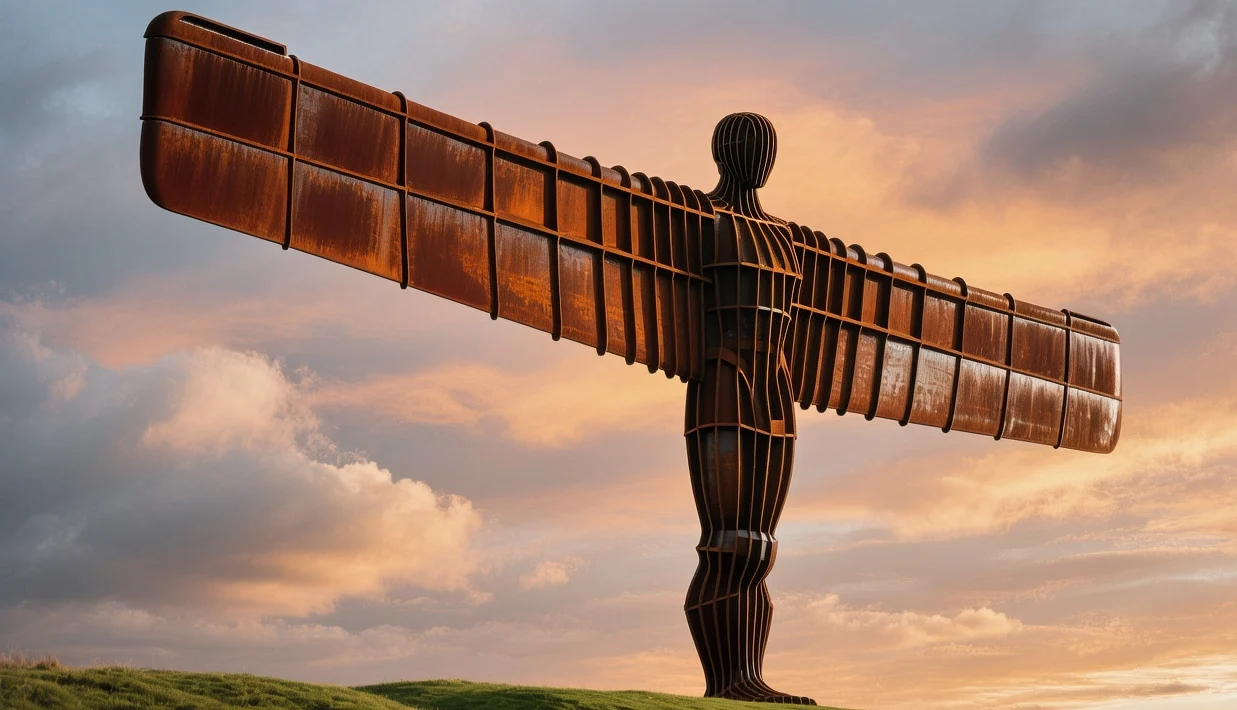
Angel of the North Steel Wings Meet Gateshead Skyline
5:30 AM breaks over the A167—a dual carriageway cutting through the rolling green hills of Gateshead, England. The air bites at 7°C (45°F), sharp with the scent of damp grass, diesel fumes from early lorries, and the earthy perfume of oxidized steel waking from sleep. Dawn light spills over the wings of the Angel of the North, illuminating the rust-colored patina formed on the 200 tonnes of weathering steel. This is not merely a sculpture; it is a sentinel of industry rising 20 meters to the highest point of the head, standing guard over the former coal fields since 1998. You hear the hum of the M62 motorway; a kestrel hovers near the wingtip, its wings breaking the silence with a single powerful stroke. In 2026, as post-industrial cities face identity crises globally, the Angel of the North matters now more than ever. It remains a tactile connection to regional heritage—a place where you stand in the shadow of artistic ambition, where the past isn't behind glass but integrated into the landscape, and where the architecture is preserved against the erosion of time. This is why you visit.
Why the Angel of the North Embodies Industrial Regeneration
The Angel of the North isn't merely a picturesque landmark—it's a testament to economic and cultural evolution spanning 30 years. Designed by Antony Gormley in 1994, the site was constructed on a former coal mine shaft, giving the sculpture deep foundations in the region's history. The current structure dates primarily to 1998, constructed from weathering steel (Corten steel) designed to rust to a stable orange-brown color. The angel solved a fundamental post-industrial need: a symbol of hope that projected cultural power across the North East. The engineering is precise: the wings span 54 meters, wider than a Boeing 757, angled 3.5 degrees forward to create a sense of embrace. In 1998, the sculpture cost £800,000 to build, a fraction of its current cultural value. Today, Gateshead Council manages 1.5 hectares of surrounding land, maintaining the structural integrity against wind loads reaching 100 miles per hour. The site supports a community of artists and visitors who see the sculpture as a beacon of regeneration. When you walk these paths, you traverse a layered history: coal mining foundations beneath the grass, steel wings framing the sky, and a contemporary commitment to public art that defines the future of urban heritage.
The Best Time to Experience the Angel of the North
The Angel of the North reveals its true character during specific windows, though it operates as a public space year-round. The definitive experience occurs between May 18 and June 12. During this window, you'll experience average temperatures of 13–17°C (55–63°F), with daylight stretching until 9:30 PM—ample time for evening photography after dinner. The spring light filters beautifully through the wing structure, creating dramatic contrasts between shadow and illumination on the grass. The tourist hordes of July haven't yet descended. For those seeking quieter browsing, weekday mornings (7:30–9:00 AM) offer a more intimate atmosphere with significantly fewer visitors; you can photograph the sculpture before the tour buses arrive.
Autumn—specifically September 20–October 10—provides a second peak experience, with temperatures cooling to 8–12°C (46–54°F) and the surrounding hills turning russet and gold. This is when you'll witness the steel glowing against the darkening sky. However, avoid August 24–31 unless you enjoy navigating crowds: this UK Bank Holiday period sees visitor numbers swell to 50,000 daily, with parking areas becoming impassable and accommodation prices inflating by 45%. Winter (December–February) brings its own magic but limited services—some paths close due to ice, and daylight shrinks to 8:15 AM–4:00 PM. For real-time events and access conditions, verify current information at www.visitgateshead.com before your visit. Always check the weather forecast; high winds can make the exposed hilltop dangerous.
Approximate Budget for a 7-Day Trip (2026)
Gateshead and Newcastle accommodate various budgets, though 2026 prices reflect post-pandemic tourism recovery and 3.5% UK inflation. The following breakdown assumes mid-range travel with comfortable accommodations, local dining, and comprehensive exploration including public transport. Prices are listed in British pounds (£), the local currency.
- Accommodation: £100–£170 per night for a double room in a traditional Georgian guesthouse or boutique hotel in Gateshead or Newcastle Quayside. Luxury properties like the Hilton command premium rates (£250–£400), while hostels offer better value (£40–£60 per bed).
- Food: £45–£65 per day. Breakfast (£10–£14) typically includes Stottie cake, local bacon, and free-range eggs. Lunch (£12–£18) at Quayside cafés: Panini from the Side, or a pork pie with salad. Dinner (£25–£35) featuring regional specialties: pan haggerty, fresh North Sea cod, or sticky toffee pudding.
- Transportation: London King's Cross to Newcastle train: £80–£120 return via LNER (3 hours). Local Metro day pass: £6.50 (Tyne and Wear Metro). Taxi from station to Angel: £15. Car rental: £50–£70 per day plus £10 daily parking.
- Attractions: Angel of the North access: Free. Baltic Centre entry: Free. Sage Gateshead tour: £12. Guided art tour: £18. Beamish Museum: £26.50.
- Miscellaneous: Ordnance Survey Explorer Map OL42: £11.95. Local wool scarf: £40–£80. Angel guidebook: £12.99. Travel insurance: £35–£50 for the week.
Total estimated cost for seven days: £1,350–£1,850 per person (based on double occupancy)
Seven Essential Angel of the North Experiences
- Approach from the South: Arrive at the viewing layby on the A167 at 7:00 AM. The sculpture looms 20 meters high against the morning sky. The steel glows orange in the dawn light. Photograph the full profile with the green hills behind. The silence is profound—no traffic, no chatter. Notice the rivets on the legs, hand-welded in 1997. Allow 30 minutes to absorb the scale before walking closer.
- Walk the Base Path: Visit the pedestrian path surrounding the sculpture (open 24 hours). The gravel trail circles the mound at a distance of 50 meters. The ground is uneven; wear sturdy boots. The view from the base looking up is definitive. The wingspan blocks out the sky. The light here is cooler, more subdued. It offers a contrast to the distant view. Allow 45 minutes for the circuit.
- Cross the Millennium Bridge: Walk the pedestrian deck at 10:00 AM in nearby Gateshead. The bridge tilts every 30 minutes to allow boats through. The mechanism hums quietly as the arch rotates. The view from the center includes the Angel in the distance. Wear sturdy shoes; the deck can be slippery when wet. Allow 30 minutes for the crossing and photos.
- Drink Ale in a Local Pub: End your morning at The Old Cannon (open 11:00 AM–11:00 PM). Order a pint of local ale (£6.50) in the wood-paneled room. The building dates to 1850 and retains its Victorian character. Speak to the bartender about the city's mining history. The fireplace crackles even in summer. This is the traditional end to a Gateshead exploration.
- Visit the Baltic Centre: Enter the former flour mill at 1:00 PM. The building dates to 1950 and houses contemporary art. The temperature is constant at 18°C (64°F). View the rooftop sculpture garden with views of the Angel. The vaulted ceilings are original industrial concrete. Audio guides are included with entry. Allow 90 minutes to read the displays. It contextualizes the river within art history.
- Watch the Sunset from the Hill: Return to the Angel grounds at 7:00 PM (summer closing varies). The steel glows orange under the evening light. The shadows of the wings stretch across the grass. You can hear the city bells ringing from Newcastle. The city noise diminishes. It is the best time for exterior photography. The silhouette frames the sky perfectly. Allow 30 minutes for a full circuit.
- Dine at the Sage: End your visit at the courtyard café (open 10:00 AM–10:00 PM). Order a scone with jam (£6.50) in the glass-walled room. The building dates to 2004 but blends with the industrial surroundings. Speak to the staff about the venue's acoustics. The fireplace crackles even in summer. This is the traditional end to an Angel of the North exploration.
Three Hidden Gems Most Travelers Miss
- Low Fell Viewpoint: While most visitors focus on the base, this residential hill sits 2 kilometers south. Access: Enter from Durham Road (open dawn to dusk). It is overlooked because it lacks signage, but the view across the valley is the definitive photograph. Best visited: Late afternoon when the sun hits the steel. No facilities; bring water. It offers a perspective on the sculpture's placement.
- Saltwell Park Towers: Located in Gateshead town center, this Victorian folly dates to 1870. Access: Enter from Saltwell Road (open 9:00 AM–5:00 PM). It's overlooked because it functions as a park, but the Gothic architecture is stunning. Insider tip: Look for the hidden caves beneath the tower. Benches available for rest. It provides context for the region's Victorian wealth.
- The Team Valley Retail Park: Beneath the Angel lies a massive commercial zone from 1980. Access: Public roads accessible 24 hours. It is overlooked because it functions as a shopping area, but the contrast with the art is striking. The scale is immense. It's special because you see the economic reality behind the symbol. Best visited: Weekdays when traffic is lighter. A unique socio-economic heritage experience.
Cultural & Practical Tips
- Respect the Mound: The grassy hill is unstable and eroding. Do not climb onto the sculpture itself. Stay on marked paths at all times. This is not just etiquette; it is safety. Falling from the base is a real risk during wet weather. Keep children close.
- Photography Guidelines: Photography is permitted on the public walkways. Tripods are allowed but cannot obstruct paths. Do not use flash inside the museums. Respect other visitors during quiet contemplation. Silence your phone completely in the Sage.
- Booking Strategy: Accommodation books out during the Great North Run (September). Book online at least 30 days in advance. Arrive 15 minutes before your slot to pass through ticket check. Late arrival may result in delayed entry. Print your ticket or save it to your phone wallet.
- Learn these Local Terms: "Howay" (come on, pronounced "how-ay"), "Canny" (good/nice), and "Pet" (term of endearment). Locals appreciate the correct terminology. When greeting, say "Alright pet?" rather than "Hello." It shows respect for Geordie heritage.
- Weather Preparation: Gateshead is windy on the exposed hilltop. Even on sunny days, carry a windproof layer. The grass is slippery when wet; wear sturdy shoes. The sites are unheated; dress in layers even in summer. Check the forecast; rain is common.
- Accessibility Information: The viewing layby is wheelchair accessible via ramps. However, the grassy paths have steep gradients. Virtual tours are available online. Contact the visitor team at +44 191 433 3000 for specific access queries before traveling.
- Support Conservation: Consider donating to the "Gateshead Art Foundation" upon exit. Maintenance costs £500,000 annually. Purchase guidebooks from the shop rather than online to support the local revenue stream. Membership offers free entry to other sites.
Conclusion: Travel with Connection, Not Just Consumption
The Angel of the North in 2026 asks something different of you than mere tourism. This sculpture—steel, sacred, resilient—has witnessed decades of regeneration, art, and cultural rebirth. But it also sustains a fragile ecosystem of public space and community identity threatened by neglect. To travel here responsibly means understanding that you're not just visiting a monument but entering a sanctuary maintained by strict preservation protocols. Walk softly on these paths; they've carried miners, artists, and musicians for generations. Choose the quiet morning visit over the crowded afternoon. Listen to the wind in the wings, not just the guide's facts. Donate to the conservation fund, not just the gift shop. Let the Angel of the North change you, not just entertain you. In an age of mass tourism and digital detachment, this is how we ensure that 2026's visitors don't become the generation that loved this place to death. The Angel will still be here in 2126—if we treat it not as a backdrop to consume but as a legacy to protect.