
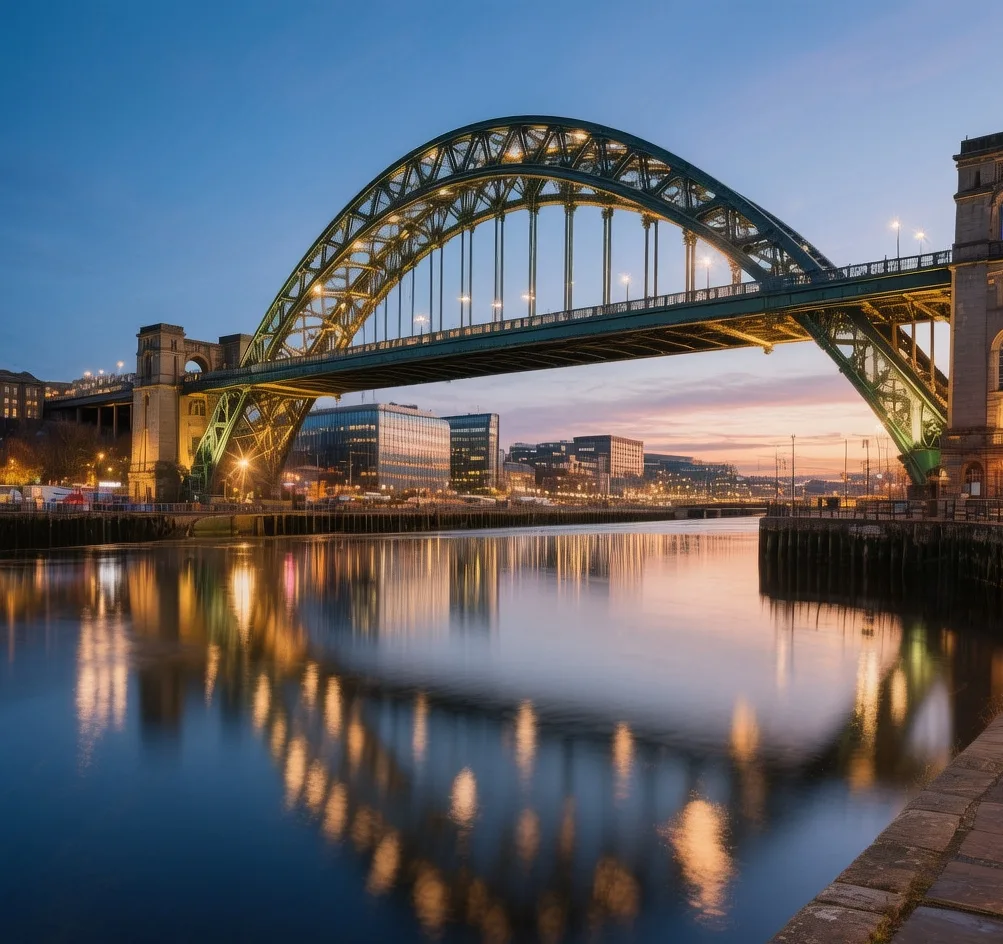
Newcastle Quayside Industrial Heritage Meets Vibrant River Culture
5:00 AM breaks over the River Tyne—a tidal estuary measuring 100 meters wide winding through the heart of Newcastle upon Tyne, England. The air bites at 8°C (46°F), sharp with the scent of diesel from early ferries, roasted coffee beans from opening cafés, and the earthy perfume of wet stone waking from sleep. Dawn light spills over the arch of the Tyne Bridge, illuminating the steel structure constructed by Dorman Long in 1928. This is not merely a waterfront; it is a regenerated artery rising 49 meters to the highest point of the bridge, standing sentinel over the city since the Roman era. You hear the hum of the Metro crossing the Queen Elizabeth II Bridge; a heron takes flight from the reeds, its wings breaking the silence with a single powerful stroke. In 2026, as post-industrial cities face identity crises globally, Newcastle Quayside matters now more than ever. It remains a tactile connection to maritime history—a place where you walk the same cobbles as coal heavers, where the past isn't behind glass but integrated into modern life, and where the architecture is preserved against the erosion of time. This is why you visit.
Why Newcastle Quayside Embodies Urban Regeneration
Newcastle Quayside isn't merely a picturesque promenade—it's a testament to economic and architectural evolution spanning 2,000 years. Founded as Pons Aelius by the Romans in 122 AD, the site was rebuilt by the Normans in 1080, giving the city its name. The current waterfront dates primarily to the 19th century, constructed from local sandstone and imported granite to handle the coal trade. The quayside solved a fundamental industrial need: a deep-water port that projected mercantile power across the North Sea. The engineering is precise: Victorian warehouses feature cast-iron columns supporting brick vaults, designed to hold 5 tons of coal per square meter. In 2002, the Gateshead Millennium Bridge opened, becoming the world's first tilting bridge, a feat of engineering that required hydraulic rams to rotate the deck 40 degrees. Today, the NewcastleGateshead Initiative manages 5 kilometers of riverfront, maintaining the structural integrity against tidal erosion. The site supports a community of 50,000 workers in the service and creative sectors. When you walk these boards, you traverse a layered history: Roman fortifications beneath the pavement, Victorian warehouses framing the sky, and a contemporary commitment to cultural preservation that defines the future of urban heritage.
The Best Time to Experience Newcastle Quayside
Newcastle Quayside reveals its true character during specific windows, though it operates as a public space year-round. The definitive experience occurs between May 18 and June 12. During this window, you'll experience average temperatures of 14–18°C (57–64°F), with daylight stretching until 9:30 PM—ample time for evening photography after dinner. The spring light filters beautifully through the bridge structures, creating dramatic contrasts between shadow and illumination on the water. The tourist hordes of July haven't yet descended. For those seeking quieter browsing, weekday mornings (7:30–9:00 AM) offer a more intimate atmosphere with significantly fewer visitors; you can photograph the shore before the market stalls open.
Autumn—specifically September 20–October 10—provides a second peak experience, with temperatures cooling to 9–13°C (48–55°F) and the river turning a dramatic steel gray. This is when you'll witness the Northern Spire Bridge lit up against the darkening sky. However, avoid August 24–31 unless you enjoy navigating crowds: this UK Bank Holiday period sees visitor numbers swell to 100,000 daily for the Great North Run, with accommodation prices inflating by 50%. Winter (December–February) brings its own magic but limited services—some boats cease operation, and daylight shrinks to 8:15 AM–4:00 PM. For real-time events and tide conditions, verify current information at www.visitnewcastlegateshead.com before your visit. Always check the river levels; high tides can flood the lower walkways.
Approximate Budget for a 7-Day Trip (2026)
Newcastle accommodates various budgets, though 2026 prices reflect post-pandemic tourism recovery and 3.5% UK inflation. The following breakdown assumes mid-range travel with comfortable accommodations, local dining, and comprehensive exploration including public transport. Prices are listed in British pounds (£), the local currency.
- Accommodation: £100–£170 per night for a double room in a traditional Georgian guesthouse or boutique hotel in Quayside or Jesmond. Luxury properties like the Hotel du Vin command premium rates (£250–£400), while hostels offer better value (£40–£60 per bed).
- Food: £45–£65 per day. Breakfast (£10–£14) typically includes Stottie cake, local bacon, and free-range eggs. Lunch (£12–£18) at Quayside cafés: Panini from the Side, or a pork pie with salad. Dinner (£25–£35) featuring regional specialties: pan haggerty, fresh North Sea cod, or sticky toffee pudding.
- Transportation: London King's Cross to Newcastle train: £80–£120 return via LNER (3 hours). Local Metro day pass: £6.50 (Tyne and Wear Metro). Taxi from station to Quayside: £10. Car rental not recommended due to congestion charges and limited parking.
- Attractions: Discovery Museum entry: Free. The Gate cinema: £15. Guided river cruise: £18. Bessie Surtees House: Free. Ouseburn Valley tour: £12.
- Miscellaneous: Ordnance Survey Explorer Map OL42: £11.95. Local wool scarf: £40–£80. Quayside guidebook: £12.99. Travel insurance: £35–£50 for the week.
Total estimated cost for seven days: £1,350–£1,850 per person (based on double occupancy)
Seven Essential Newcastle Quayside Experiences
- Walk the Seven Bridges: Arrive at the Redheugh Bridge at 7:00 AM. The path follows the river for 3 kilometers, passing under seven distinct structures. The steel arches create a tunnel effect. Photograph the empty walkway with soft morning light filtering through the cables. The silence is profound—no traffic, no chatter. Notice the rivets on the Tyne Bridge, hand-driven in 1928. Allow 60 minutes to walk the full length. It is a tangible connection to engineering history.
- Explore the Sunday Market: Visit the Quayside Market (open 9:00 AM–4:00 PM Sundays). Over 150 stalls sell local produce, crafts, and street food. Sample Northumberland cheese (£6 per 200g) or buy a handmade leather wallet (£35). The market operates under the shadow of the Castle Keep. Speak to vendors about their crafts. Allow 90 minutes to browse thoroughly.
- Cross the Millennium Bridge: Walk the pedestrian deck at 10:00 AM. The bridge tilts every 30 minutes to allow boats through. The mechanism hums quietly as the arch rotates. The view from the center is definitive. Wear sturdy shoes; the deck can be slippery when wet. The light here is cooler, more subdued. It offers a contrast to the Victorian bridges. Allow 30 minutes for the crossing and photos.
- Drink Ale in a Historic Pub: End your morning at The Broad Chare (open 11:00 AM–11:00 PM). Order a pint of local ale (£6.50) in the wood-paneled room. The building dates to 1600 and retains its Jacobean character. Speak to the bartender about the city's brewing history. The fireplace crackles even in summer. This is the traditional end to a Quayside exploration.
- Visit the Discovery Museum: Enter the former naval storehouse at 1:00 PM. The building dates to 1834 and houses maritime exhibits. The temperature is constant at 15°C (59°F). View the Turbinia, the first steam-turbine powered ship. The vaulted ceilings are original Victorian iron. Audio guides are included with entry. Allow 90 minutes to read the displays. It contextualizes the river within industrial history.
- Watch the Sunset from Gateshead: Return to the south bank at 7:00 PM (summer closing varies). The stone glows orange under the evening light. The shadows of the bridges stretch across the water. You can hear the city bells ringing from St Nicholas Cathedral. The city noise diminishes. It is the best time for exterior photography. The Angel of the North is visible in the distance. Allow 30 minutes for a full circuit.
- Dine at the Ouseburn: End your visit at the courtyard café (open 10:00 AM–10:00 PM). Order a scone with jam (£6.50) in the brick-walled room. The building dates to 1890 but blends with the industrial surroundings. Speak to the staff about the valley's regeneration. The fireplace crackles even in summer. This is the traditional end to a Newcastle Quayside exploration.
Three Hidden Gems Most Travelers Miss
- Bessie Surtees House: While most visitors focus on the bridges, this Jacobean merchant house sits on the Sandhill. Access: Enter from the Quayside (open 10:00 AM–4:00 PM weekdays). It is overlooked because it lacks signage, but the wooden staircases date to 1600. Best visited: Mid-morning when the light hits the leaded windows. No photography inside. It offers a glimpse into the life of the gentry.
- The Cluny Music Venue: Located in the Ouseburn Valley, this live music hall dates to 1890. Access: Check listings at www.thecluny.com. It's overlooked because it functions as a night venue, but the brick arches are stunning. Insider tip: Arrive early for soundcheck. Bar available for drinks. It provides context for the city's cultural rebirth.
- The Tyneside Cinema: Beneath the Pink Lane lies a restored art deco cinema from 1937. Access: Booking required for screenings (+44 191 227 5500, £12). It is overlooked because it functions as a working cinema. The original projector is still visible. It's special because you watch films where audiences sat in the 1930s. Best visited: Tuesday–Thursday when groups are fewer. The café serves historic recipes. A unique cinematic heritage experience.
Cultural & Practical Tips
- Respect the River Edge: The Quayside has uneven cobbles and steep drops. Do not climb over safety barriers. Stay on marked paths at all times. This is not just etiquette; it is safety. Falling into the tide is a real risk during wet weather. Keep children close.
- Photography Guidelines: Photography is permitted on the public walkways. Tripods are allowed but cannot obstruct paths. Do not use flash inside the museums. Respect other visitors during quiet contemplation. Silence your phone completely in the cinema.
- Booking Strategy: Accommodation books out during the Great North Run (September). Book online at least 30 days in advance. Arrive 15 minutes before your slot to pass through ticket check. Late arrival may result in delayed entry. Print your ticket or save it to your phone wallet.
- Learn these Local Terms: "Howay" (come on, pronounced "how-ay"), "Canny" (good/nice), and "Pet" (term of endearment). Locals appreciate the correct terminology. When greeting, say "Alright pet?" rather than "Hello." It shows respect for Geordie heritage.
- Weather Preparation: Newcastle is windy on the exposed riverbanks. Even on sunny days, carry a windproof layer. The stone steps are slippery when wet; wear sturdy shoes. The sites are unheated; dress in layers even in summer. Check the forecast; rain is common.
- Accessibility Information: The Quayside is mostly wheelchair accessible via ramps. However, some historic buildings have stairs only. Virtual tours are available online. Contact the visitor team at +44 191 277 8000 for specific access queries before traveling.
- Support Conservation: Consider donating to the "Tyne Building Preservation Trust" upon exit. Maintenance costs £1 million annually. Purchase guidebooks from the shop rather than online to support the local revenue stream. Membership offers free entry to other sites.
Conclusion: Travel with Connection, Not Just Consumption
Newcastle Quayside in 2026 asks something different of you than mere tourism. This waterfront—stone, sacred, resilient—has witnessed centuries of trade, industry, and cultural rebirth. But it also sustains a fragile ecosystem of historic masonry and modern community threatened by gentrification. To travel here responsibly means understanding that you're not just visiting a monument but entering a sanctuary maintained by strict preservation protocols. Walk softly on these cobbles; they've carried merchants, sailors, and musicians for generations. Choose the quiet morning visit over the crowded afternoon. Listen to the river's flow, not just the guide's facts. Donate to the conservation fund, not just the gift shop. Let Newcastle Quayside change you, not just entertain you. In an age of mass tourism and digital detachment, this is how we ensure that 2026's visitors don't become the generation that loved this place to death. The Quayside will still be here in 2126—if we treat it not as a backdrop to consume but as a legacy to protect.