
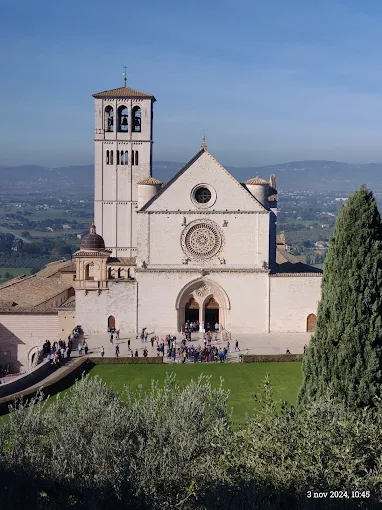
Assisi – Basilica of St. Francis Sacred Light Meets Umbrian Serenity
The late sun gilds the pink limestone of Assisi—casting long shadows across the sloping Piazza Inferiore di San Francesco, where pilgrims and poets alike pause in quiet reverence. You hear the distant chime of monastery bells, the rustle of olive leaves in the valley below, and the murmur of prayers in a dozen languages echoing through the basilica’s vaulted nave. Perched on the western slopes of Monte Subasio, this hilltop town has been a beacon of spiritual simplicity since 1228, when construction began on the Basilica of St. Francis to honor the beloved saint who renounced wealth for communion with nature and the divine. The complex—comprising an Upper and Lower Church, a crypt housing Francis’s tomb, and frescoes by Giotto and Cimabue—rises like a luminous vessel from the Umbrian earth. In 2026, as the world grapples with disconnection and noise, Assisi offers something rare: a sanctuary where silence speaks louder than spectacle, and every stone invites contemplation.
Why Assisi – Basilica of St. Francis Embodies Spiritual Architecture
The Basilica of St. Francis isn’t just a church—it’s a revolutionary fusion of humility and artistic genius. Commissioned by Pope Gregory IX in 1228, just two years after St. Francis’s death, the basilica was built into the steep hillside to symbolize the saint’s descent from worldly power into earthly humility. Its dual-level design—Lower Church (dark, intimate, cave-like) and Upper Church (light-filled, soaring)—represents the journey from penitence to divine grace. The Lower Church, consecrated in 1230, houses the saint’s tomb in a crypt carved directly into the rock, while the Upper Church, completed in 1253, features one of the earliest and most influential fresco cycles in Western art: Giotto’s 28 scenes from the Life of St. Francis, painted around 1295–1300. These works broke from Byzantine rigidity, introducing emotional depth, natural landscapes, and human gesture—laying the groundwork for the Renaissance. Built from local pink and white limestone, the basilica measures 87 meters long and 25 meters wide, with a bell tower rising 45 meters. Despite surviving earthquakes, wars, and a 1997 seismic event that caused a tragic collapse (since meticulously restored), it remains a living place of worship, pilgrimage, and artistic pilgrimage—a testament to how faith and beauty can coexist in enduring harmony.
The Best Time to Experience Assisi – Basilica of St. Francis
To experience the basilica in serene light and manageable crowds, target the precise window of May 10–24, 2026. During these weeks, daytime temperatures range from a comfortable 17–23°C (63–73°F)—ideal for exploring the basilica’s chapels and walking the town’s stone alleys [[24], [27]]. Mornings between 8:00–9:30 AM offer near solitude in the Lower Church and clear views of Giotto’s frescoes before tour groups arrive. Alternatively, September 15–29, 2026 provides similar conditions with softer light and fewer visitors. Avoid visiting during peak periods: all of July and August, when heat exceeds 30°C (86°F) and narrow streets become congested, and major religious holidays like Easter Week or the Feast of St. Francis (October 4), when pilgrim numbers surge [[29]]. For the most profound experience, attend the 7:00 AM Mass in the crypt—locals and pilgrims gather in hushed unity, their voices rising like incense through the ancient stone. Always verify opening hours via the official Sacro Convento portal (sanfrancescoassisi.org).
Approximate Budget for a 7-Day Trip (2026)
This budget reflects mid-range 2025 pricing adjusted for Italy’s projected 2026 inflation rate of 1.5% [[37]], offering a realistic estimate for a solo traveler based in Assisi’s historic center.
- Accommodation: €770–€1,050 total (€110–€150 per night) for a family-run guesthouse or small hotel within the walls—many with views of the basilica or Umbrian valley.
- Food: €490 total (€70 per day). Breakfast at a café (€4 for cappuccino and cornetto); lunch of lentil soup and porchetta sandwich (€15); dinner at a family-run osteria (€45 for truffle pasta, grilled lamb chops, and house Sagrantino wine).
- Transportation: €65 total. Includes train from Rome or Florence (€20 round-trip); local bus from station to center (€2); and occasional taxi for luggage (€43).
- Attractions: €55 total. Basilica audio guide (€6); Rocca Maggiore fortress entry (€5); Museo Diocesano (€8); guided spiritual walk (€20 donation); and wine tasting in Montefalco (€16).
- Miscellaneous: €90 total. A high-quality print of Giotto’s frescoes (€25); locally made saffron (€20); hand-bound journal from Libreria Editrice Francescana (€30); and gelato from Gelateria San Francesco (€4).
Total Estimated Budget: €1,470–€1,760
6 Essential Assisi – Basilica of St. Francis Experiences
- Attend Dawn Mass in the Crypt: Arrive by 6:45 AM for the 7:00 AM service in the crypt where St. Francis is entombed. The candlelit space, filled with whispered prayers, offers a deeply moving start to your day.
- Study Giotto’s Frescoes in the Upper Church: Stand before the Renunciation of Worldly Goods and St. Francis Preaching to the Birds—notice how Giotto uses landscape and gesture to convey emotion, a radical departure from medieval art.
- Walk the Pilgrim’s Path from Porta San Pietro: Enter Assisi through this 13th-century gate and follow Via San Francesco uphill—the same route pilgrims have taken for centuries—to arrive at the basilica as if on a sacred journey.
- Visit the Eremo delle Carceri Hermitage: A 15-minute drive into the Monte Subasio forest leads to this secluded hermitage where St. Francis retreated to pray. The oak-shaded paths and stone cells radiate profound peace.
- Taste Sagrantino di Montefalco Wine: At Enoteca Properzio, sample this bold, tannic red wine—one of Italy’s most powerful—from nearby vineyards. Pair it with aged pecorino and wild boar salami.
- Watch Sunset from Rocca Maggiore: Climb the 12th-century fortress above the basilica for panoramic views of the pink rooftops, the basilica’s silhouette, and the vast Umbrian plain turning gold.
3 Hidden Gems Most Travelers Miss
- Chiesa Nuova Courtyard: Built on the site of St. Francis’s father’s cloth shop, this 17th-century church hides a serene cloister with lemon trees and a well where Francis once drew water. Often empty, deeply atmospheric.
- Orto dei Semplici Botanical Garden: Behind the basilica, this medicinal herb garden features plants used by medieval friars. Entry is free, and you’ll likely have it to yourself—perfect for quiet reflection.
- Libreria Editrice Francescana: Established in 1910, this bookstore near the Piazza del Comune specializes in Franciscan theology, art reproductions, and rare manuscripts. Its reading room overlooks the valley—a haven for contemplative travelers.
Cultural & Practical Tips
- Dress modestly: Shoulders and knees must be covered to enter the basilica. Security enforces this strictly, especially during services.
- Photography is restricted: No flash or tripods inside the churches. In the Upper Church, photography is often prohibited to protect the frescoes—always check signage.
- Book guided tours early: Small-group spiritual walks fill quickly. Reserve via the tourist office or your hotel.
- Learn key phrases: “Dov’è la cripta di San Francesco?” (doh-VEH lah KREEP-tah dee San Frahn-CHEH-skoh?) for directions; “Grazie mille” (GRAHT-see-eh MEE-leh) for sincere thanks.
- Carry cash for small eateries: Many family-run osterias don’t accept cards. Tipping isn’t expected, but rounding up is appreciated.
Conclusion: Travel with Contemplation, Not Just Cameras
In 2026, Assisi calls not for consumption, but for presence. Your visit supports the Franciscan friars who maintain this sacred site and the local artisans who keep Umbrian traditions alive. Choosing a family osteria over a piazza-front café keeps euros in the community; sitting quietly in the Lower Church honors centuries of prayer; walking the pilgrim’s path connects you to seekers across time. Slow down: taste wine pressed from local grapes, listen to the wind in the cypress trees, let the silence of the crypt settle in your bones. By traveling with contemplation—prioritizing stillness over selfies—you help ensure Assisi remains not just a monument, but a living sanctuary of peace. Let your journey be a prayer—and these stones will remember your sincerity long after you’ve descended the hill.