
Bakewell Pudding Town Almond Custard Meets Peak District Stone
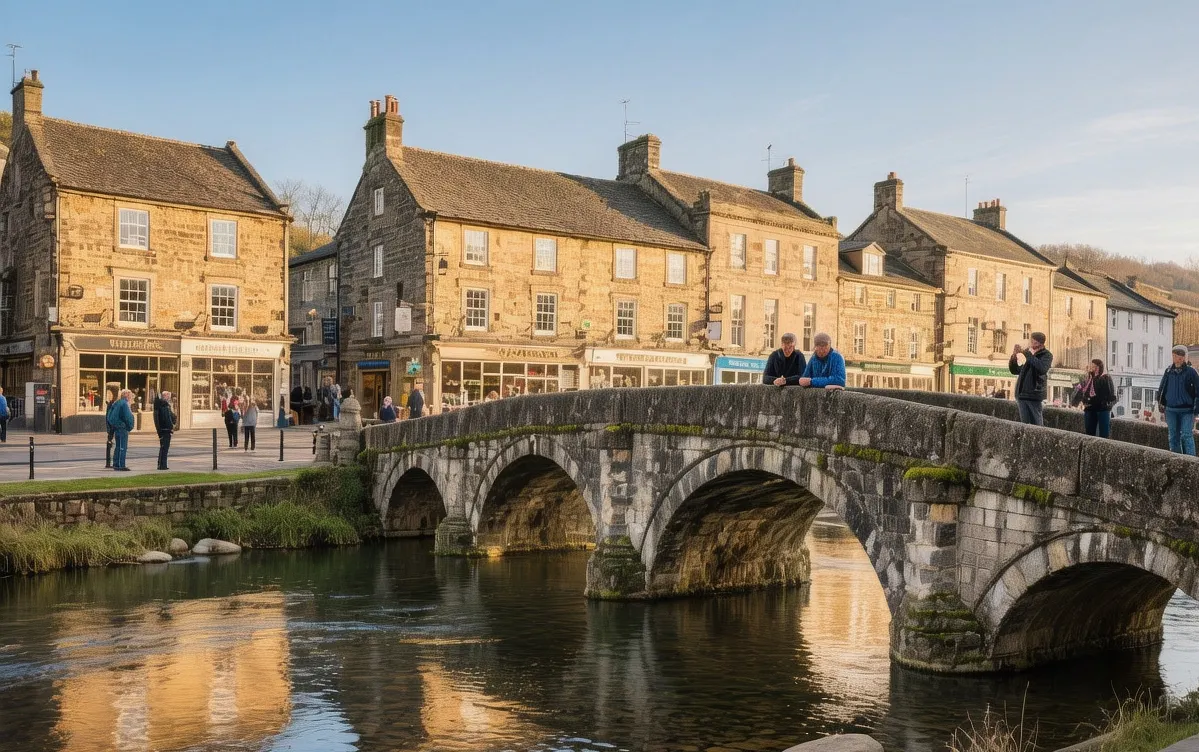
The scent of burnt butter and ground almonds hangs heavy in the air—a sweet, narcotic haze drifting from chimney pots atop gritstone buildings that have stood since the Norman Conquest. You hear the River Wye before you see it, rushing beneath the five arches of the 13th-century bridge, its sound competing with the low murmur of tourists queueing outside the Old Original Bakewell Pudding Shop. This is not merely a village; it is a living monument to culinary accident and architectural endurance, where the market charter dates to 1254 and the pavement stones wear smooth under centuries of footsteps. In 2026, as heritage sites struggle to balance commerce with authenticity, this **Bakewell pudding town** matters now more than ever: it remains one of the few places where history is not just displayed behind glass but consumed, walked upon, and lived within the rhythm of a working market community nestled in the White Peak.
Why Bakewell Pudding Town Embodies Culinary Legend and Architectural Resilience
Bakewell pudding town represents a unique convergence of gastronomic mythology and medieval urban planning. The legend states that in the 1820s, a cook at the White Horse Inn (now the Rutland Arms) misinterpreted instructions for a jam tart, spreading egg and almond mixture over jam rather than mixing it into the pastry. This accidental creation solved a critical economic need: utilizing surplus eggs and almonds from local trade routes to create a high-value export item that put the town on the culinary map. Today, the distinction between the "pudding" (flaky pastry, jam, custard topping) and the commercial "tart" (shortcrust, icing) remains a point of fierce local contention, protected by the Bakewell Pudding Society established to preserve the original recipe.
Beyond the kitchen, the town solves the problem of preserving vernacular architecture amidst modern tourism pressure. The buildings are constructed primarily of local gritstone, quarried within 8 kilometers, giving the streetscape its characteristic honey-gray hue that shifts color with the weather. The Market Hall, built in 1887, features a cast-iron framework supporting a slate roof spanning 400 square meters, protecting vendors from the Peak District's frequent rain while maintaining an open-air feel. All Saints Church, with Saxon origins dating to 920 AD, anchors the town spiritually; its 12th-century round tower is one of only four in Derbyshire. This density of history—where a 10th-century church stands 50 meters from a 19th-century pudding shop—creates a layered narrative. It fulfills the modern traveler's need for tangible connection to the past, proving that a small town can sustain its identity without becoming a sterile museum piece.
The Best Time to Experience Bakewell Pudding Town
For optimal weather and manageable crowds, target May 15–June 10 or September 5–October 15. During these windows, daytime temperatures average 16°C (61°F) in late spring and 14°C (57°F) in early autumn, providing comfortable conditions for walking the 5 kilometers of surrounding trails without the midsummer heat. The ideal arrival time is 9:00–9:30 AM, before the day-trip coaches from Manchester and Sheffield arrive at 10:30 AM. Morning light strikes the Market Square perfectly, illuminating the stone facades for photography without harsh shadows.
Specifically, visit the Monday Market between 8:00 AM and 11:00 AM when local farmers sell fresh produce directly from trucks. The Old Original Bakewell Pudding Shop opens at 9:00 AM; arrive then to purchase warm puddings before the midday rush creates 30-minute queues. Avoid August Bank Holiday weekend (last weekend of August 2026), when the town hosts the Bakewell Show, attracting 20,000 visitors and causing gridlock on the A6 road. Also avoid December 24–January 2, as many independent shops close for private holidays, though the pubs remain open. Rain is common in the Peak District; however, the covered Market Hall and numerous cafés make wet days viable for exploration.
Verify market dates and shop opening hours at bakewell.co.uk before travel, as seasonal adjustments occur regularly without extensive prior notice.
Approximate Budget for a 7-Day Trip (2026)
Using Bakewell pudding town as a base for exploring the Peak District requires budget allocation for accommodation premium due to high demand. Prices reflect 2026 rates with approximately 4% inflation adjustment from 2025 data. While Bakewell is often a day trip, a 7-day stay allows deep exploration of the surrounding White Peak.
Accommodation: £110–£200 per night
• Budget B&B (Bakewell outskirts): £75–£95 per night double room
• Mid-range Hotel (Town center): £130–£180 per night
• Luxury (Chatsworth Estate nearby): £250–£350 per night
Food: £40–£65 per day
• Breakfast: £8–£12 (Full English at café: £11.50; pastry + coffee: £7)
• Lunch: £10–£18 (Pudding slice + drink: £8.50; pub meal: £16)
• Dinner: £22–£35 (Three Kings Head: £26; fine dining: £45+)
Transportation:
• London to Chesterfield (Train): £85–£120 return (advance booking)
• Chesterfield to Bakewell (Bus 218): £4.50 single, £8.50 day rider
• Car rental (compact): £45 per day + fuel (£1.55 per liter)
Attractions:
• Bakewell Museum: £4 adult, £2 child
• All Saints Church Tower Tour: £5 (seasonal)
• Chatsworth House (nearby): £35 adult
• Hiking trails (Peak District): Free
Miscellaneous:
• Bakewell Puddings (to take home): £12 per box of 4
• Guidebook and map: £12
• Parking (if driving): £8 per day (free after 4:00 PM)
• Rain gear (essential): £25
Total for 7 days (mid-range): £1,350–£1,750 per couple
Total for 7 days (budget): £850–£1,100 per couple
7 Essential Bakewell Pudding Town Experiences
- Taste the Original Pudding at the Old Original Shop: Enter the shop on Bridge Street at 9:15 AM to watch bakers working through the glass partition. Order a warm pudding (£4.50) to eat immediately; the pastry should shatter when cut, revealing the jam layer beneath the almond custard. Do not confuse this with the iced tart sold elsewhere. Sit on the bench outside if weather permits; the scent attracts passersby and creates a communal atmosphere. Allow 30 minutes for this ritual; rushing diminishes the experience.
- Walk the Five Arches Bridge at Sunrise: This 13th-century packhorse bridge spans 25 meters across the River Wye. Arrive at 7:30 AM when the mist rises off the water and photographers have not yet claimed the best angles. The stone is slippery when wet; wear shoes with grip. Stand in the center arch to hear the water amplify beneath you—a acoustic experience unique to medieval engineering. This is the most photographed spot in town; claiming it early ensures solitude.
- Explore All Saints Church Saxon Tower: Enter the churchyard through the lychgate dated 1619. The round tower, built circa 920 AD, features herringbone stonework visible from the exterior. Climb the 45 steps to the belfry (open Saturdays 10:00 AM–12:00 PM) for a view of the town's rooflines. The interior contains the Manners Monument (1560s), featuring alabaster figures of the Earl and Countess of Rutland. Silence is required; this is an active place of worship, not merely a museum.
- Shop the Monday Market: Held in the Market Square from 8:00 AM to 4:00 PM every Monday. Purchase Peak District cheese (£6 per wedge) or locally foraged mushrooms (£8 per basket) from vendors who have traded here for generations. The Market Hall, built 1887, houses permanent stalls selling crafts. Arrive before 11:00 AM for the best selection; by 2:00 PM, vendors begin packing up. Cash is preferred by some older traders, though cards are widely accepted.
- Hike the Lumsdale Valley Trail: Start from the town center and walk 1.5 kilometers north to this industrial archaeology site. The trail follows the mill race where 18th-century cotton mills once operated. You will see waterfall ruins and stone foundations reclaimed by nature. The walk takes 90 minutes round trip and gains 80 meters in elevation. Wear waterproof trousers; the spray from the waterfalls dampens the path even in dry weather. It offers a stark contrast to the polished town center.
- Visit the Bakewell Museum: Located in the Old Court House on Bridge Street. Open Tuesday–Saturday 10:00 AM–4:00 PM. The exhibition details the town's evolution from Saxon settlement to tourist destination. Key artifact: the 1254 Market Charter document replica. Entry fee supports local heritage preservation. Allow 45 minutes; the volunteer guides provide oral histories not found on the display panels. It contextualizes the pudding within the broader economic history of the region.
- Dine at the Rutland Arms: This coaching inn dates to 1804 and is where Jane Austen stayed while researching Pride and Prejudice. Book a table for 7:00 PM to avoid the pre-theater rush. Order the venison stew (£24) sourced from nearby Chatsworth estate. The low-beamed dining room retains original flagstone floors. It is one of the few places where you dine within the actual historical narrative of the town, not merely adjacent to it.
3 Hidden Gems Most Travelers Miss
- The Old Bridge House Tea Room: Located directly on the Five Arches Bridge, this 17th-century building is one of the few residences still inhabited on a medieval bridge in England. Access: Enter through the door marked "Tea Room" on the bridge itself. Open 10:00 AM–4:00 PM (Wednesday–Sunday). Why overlooked: Visitors assume it is private housing. What makes it special: You drink tea in a room where the River Wye flows literally beneath your feet. Insider tip: Request the window seat facing downstream for the best view of the water flowing under the floorboards.
- St. John's Churchyard Graveyard Walk: Located on the edge of town near the railway station, this graveyard contains the graves of the Manners family servants and local artisans from the 1700s. Access: Follow the path behind the Co-op supermarket; gate open dawn to dusk. Why overlooked: It is not marked on tourist maps. What makes it special: The headstones are carved by local masons using techniques lost to modern machinery. Insider tip: Look for the grave of "William Jackson, Stone Mason, 1782"; his work is visible on the Market Hall.
- The Peak District Mining Museum (Nearby Matlock Bath): While technically 10 kilometers away, this museum contextualizes the industrial history that shaped Bakewell's wealth. Access: Drive A6 south to Matlock Bath; parking £5. Open 10:00 AM–5:00 PM daily. 2026 Exhibition: Lead and Light (March–October). Insider tip: Combine this with a visit to Bakewell to understand the economic ecosystem of the Peak District. The bus 218 connects both towns every hour.
Cultural & Practical Tips
- Pudding etiquette: Locals distinguish sharply between the "pudding" (custard top) and "tart" (icing top). Ordering a "tart" at the Old Original Shop may mark you as an outsider. Eat the pudding with a fork, not hands, to avoid crumbling the flaky pastry. It is traditionally served warm; if served cold, ask for it to be heated.
- Footwear requirements: The town center is paved, but surrounding trails are muddy year-round. Wear waterproof walking boots with ankle support; trainers become soaked within 20 minutes on the Lumsdale trail. The Peak District weather changes rapidly; layers are essential. Temperatures can drop 5°C when moving from sunlit squares to shaded valleys.
- Cash vs. Card: While most shops accept cards, the Monday Market vendors often prefer cash for transactions under £10. ATMs are located on Bridge Street but charge fees for non-UK cards. Withdraw cash in Chesterfield or London before arriving to avoid unnecessary charges.
- Local phrases: Derbyshire dialect persists among older residents. "Owt" = anything; "Nowt" = nothing; "Ey up" = hello. Pronunciation is soft; avoid mimicking unless invited. Staff appreciate polite greetings; "Good morning" is preferred over casual "Hi" when entering small shops.
- Photography guidelines: Photography is permitted in public streets. Inside the Old Original Shop, photography of the kitchen is prohibited during production hours (8:00 AM–12:00 PM) to protect hygiene standards. Inside All Saints Church, flash photography is banned to protect medieval stained glass. Drones are prohibited over the town center without council permission.
- Transportation reality: Parking fills by 10:00 AM on weekends. Use the Co-op car park (£8 all day) rather than street parking which is restricted to 1 hour. The bus 218 is reliable but infrequent on Sundays (hourly). Driving is recommended for flexibility, but narrow lanes surrounding Bakewell require confidence.
- Seasonal considerations: The Monday Market does not operate on Bank Holidays. The pudding shop closes early (4:00 PM) on Sundays. Winter visits (November–February) offer lower accommodation rates but shorter daylight hours (sunset at 4:00 PM in December). Check the website for flood warnings; the River Wye occasionally floods the bridge walkway.
Conclusion: Travel with Taste, Not Just Checklists
Bakewell pudding town resists the impulse to be conquered. You cannot "complete" this place by eating one pastry and photographing a bridge. This town demands something deeper than checklist tourism: it asks for your patience as you wait in line for warm pudding, your curiosity as you trace the Saxon stonework, your respect as you walk ground where markets have traded for 800 years. In 2026, when travel often feels like consumption, Bakewell offers an alternative: participation. When you buy from a market vendor, you contribute directly to the preservation of a trading tradition that predates the United States.
Travel here with taste. Speak softly in the churchyard; listen to the river between the clock ticks. Notice the hands that make the pudding—the bakers who arrive at 5:00 AM while the town sleeps. Let the town work on you slowly, like the yeast rising in the bread. In an age of digital saturation, Bakewell provides something countercultural: the profound weight of continuity, the understanding that you are merely a temporary guest in a story that began in 920 AD and will continue long after you depart. That is a souvenir no gift shop can sell.