
Bologna Porticoes Sheltered Walks Meet Urban Soul
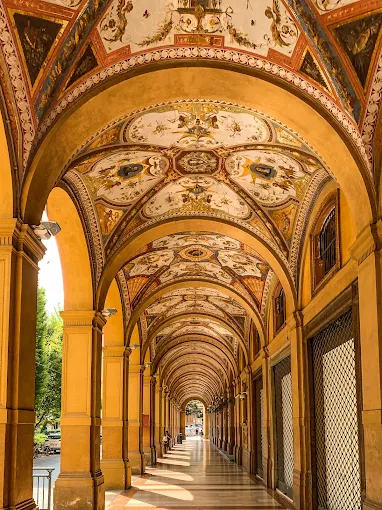
The late sun filters through Bologna’s terracotta rooftops—casting long, rhythmic shadows across the city’s iconic porticoes, those graceful arcades that stretch for over 40 kilometers through the historic center. You hear the clatter of bicycle wheels on cobblestones, the murmur of students from Europe’s oldest university, and the distant sizzle of ragù simmering in a trattoria kitchen. These covered walkways, built from brick, stone, and wood, are not mere architectural quirks—they are the city’s circulatory system, offering shelter from rain and sun while connecting piazzas, churches, and homes in an elegant urban embrace. In 2026, as UNESCO recognition (awarded in 2021) draws new attention, Bologna’s porticoes stand as a model of human-centered design—where public space is both functional and beautiful, and every archway tells a story of civic pride, medieval law, and communal care.
Why Bologna Porticoes Embodies Civic Ingenuity
Bologna’s porticoes aren’t just charming—they’re a revolutionary urban solution born of necessity and enshrined in law. In the 11th century, as the city’s population boomed with scholars and merchants, residents began extending upper floors over public streets to gain living space. Rather than collapse into chaos, the city codified this practice: a 1288 statute mandated that all new buildings include a portico at least 2.66 meters high (the height of a man on horseback), ensuring public passage remained protected and dignified. Over centuries, this evolved into a network of over 40 kilometers of arcades—more than any other city in the world. The most famous, the Portico di San Luca, stretches 3.8 kilometers uphill with 666 arches, leading to a hilltop sanctuary. Others, like the wooden-vaulted Portico del Pavaglione or the soaring brick arches of Santo Stefano, showcase diverse materials and eras. Built primarily from local brick and sandstone, these structures solved practical problems—sheltering pedestrians, creating shaded market stalls, and unifying disparate buildings into harmonious streetscapes. Today, they remain fully functional, used daily by locals for everything from commuting to café culture—a living testament to how thoughtful urban planning can endure for nearly a millennium.
The Best Time to Experience Bologna Porticoes
To wander the porticoes in comfortable weather and soft light, target the precise window of May 15–29, 2026. During these weeks, daytime temperatures range from a pleasant 18–24°C (64–75°F)—ideal for walking the full length of the San Luca portico or exploring hidden alleys [[24], [27]]. Mornings between 8:00–9:30 AM offer crisp light that highlights the texture of brick arches and empty streets perfect for photography. Alternatively, September 12–26, 2026 provides similar conditions with golden autumn light and fewer students (university resumes in October). Avoid visiting during peak periods: all of July and August, when heat exceeds 32°C (90°F) and humidity makes long walks uncomfortable, and major holidays like Ferragosto (August 15) [[29]]. For the most magical experience, walk the Portico di San Luca at sunset—the arches frame the Apennine hills in ever-changing light, and the path is quieter after 6:00 PM. Always verify opening times for specific sites via the official tourism portal (bolognawelcome.com).
Approximate Budget for a 7-Day Trip (2026)
This budget reflects mid-range 2025 pricing adjusted for Italy’s projected 2026 inflation rate of 1.5% [[37]], offering a realistic estimate for a solo traveler based in Bologna’s historic center.
- Accommodation: €770–€1,050 total (€110–€150 per night) for a boutique guesthouse or private apartment near Piazza Maggiore—central and steps from the main porticoes.
- Food: €490 total (€70 per day). Breakfast at a café (€4 for cappuccino and cornetto); lunch of crescentine with cured meats (€12); dinner at a family-run osteria (€45 for tagliatelle al ragù, grilled pork chops, and house Pignoletto wine).
- Transportation: €55 total. Includes train from Florence or Milan (€20 round-trip); local bus pass (€15 for 7 days); and occasional taxi for luggage (€20).
- Attractions: €65 total. Asinelli Tower climb (€5); San Luca Sanctuary visit (€3); guided porticoes walking tour (€25); food market tour (€20); and gelato from Gianni (€4).
- Miscellaneous: €90 total. A bottle of traditional balsamic vinegar (€25); locally made ceramic pasta bowl (€30); leather journal from Libreria Palmaverde (€20); and espresso at historic Caffè Terzi (€4).
Total Estimated Budget: €1,470–€1,760
6 Essential Bologna Porticoes Experiences
- Walk the Portico di San Luca at Dawn: Start at 7:00 AM to ascend the 3.8-kilometer path with 666 arches before crowds arrive. The early light bathes the Apennine foothills in gold, and the sanctuary offers panoramic views of the red rooftops below.
- Climb the Asinelli Tower: Scale 498 wooden steps for a bird’s-eye view of the portico network fanning out like veins across the city—a perspective that reveals Bologna’s unique urban logic.
- Dine Under the Archways of Via Clavature: At Osteria dell’Orsa, enjoy a plate of tortellini in brodo seated beneath 13th-century brick vaults—the same spot where medieval merchants once haggled.
- Explore the Wooden Portico del Pavaglione: Near Piazza Maggiore, this rare timber-vaulted arcade once housed silk merchants. Its warm, honey-colored beams contrast beautifully with surrounding brick.
- Stroll the Quadrilatero Market Porticoes: Wander the narrow lanes of Bologna’s ancient food district, where porticoes shelter stalls selling Parmigiano, prosciutto, and fresh pasta—a sensory immersion in Emilian abundance.
- Attend an Evening Aperitivo on Piazza Santo Stefano: Sip Pignoletto wine under the porticoes surrounding the Seven Churches complex as the stones glow rose-gold in the fading light.
3 Hidden Gems Most Travelers Miss
- Portico di Santa Maria dei Servi: Behind the church of the same name, this quiet arcade features elegant 14th-century arches and is often empty even in high season—perfect for contemplative photography.
- Libreria Palmaverde: Tucked under a portico near Piazza Verdi, this independent bookstore hosts readings and art exhibits. Its reading nook overlooks a hidden courtyard—a favorite among university students.
- Portico di Casa Isolani: On Strada Maggiore, this 13th-century wooden-beamed portico is one of the oldest in the city. Look up to see the original chestnut beams, blackened by centuries of smoke and time.
Cultural & Practical Tips
- Wear comfortable walking shoes: Bologna’s porticoes invite exploration, but streets are uneven and often sloped. Sturdy soles are essential for long walks.
- Respect residential spaces: Many porticoes lead directly into private courtyards. Never enter without permission, and keep noise down in residential zones after 10:00 PM.
- Carry cash for small vendors: Many food stalls and artisan shops in the Quadrilatero don’t accept cards. Tipping isn’t expected, but rounding up is appreciated.
- Learn key phrases: “Dov’è il Portico di San Luca?” (doh-VEH eel por-TEE-koh dee San LOO-kah?) for directions; “Grazie mille” (GRAHT-see-eh MEE-leh) for sincere thanks.
- Photograph responsibly: Tripods require permits in busy areas. Early morning offers the best natural light without harsh midday glare or crowds.
Conclusion: Travel with Intention, Not Just Itineraries
In 2026, Bologna’s porticoes invite more than admiration—they call for participation. Your presence supports local artisans who maintain centuries-old brickwork, food producers who uphold Emilian traditions, and students who keep the city’s intellectual flame alive. Choosing a family osteria over a tourist trap keeps euros in the community; walking the San Luca path connects you to pilgrims who’ve done the same since the 12th century; sitting quietly under an archway honors the civic vision that prioritized shared shelter over private gain. Slow down: taste wine pressed from local grapes, listen to the echo of footsteps in a medieval arcade, let the rhythm of the arches guide your pace. By traveling with intention—prioritizing connection over consumption—you help ensure Bologna remains not just a postcard, but a living model of urban harmony. Let your journey be a quiet promise—and these porticoes will remember your respect long after you’ve left their shade.