
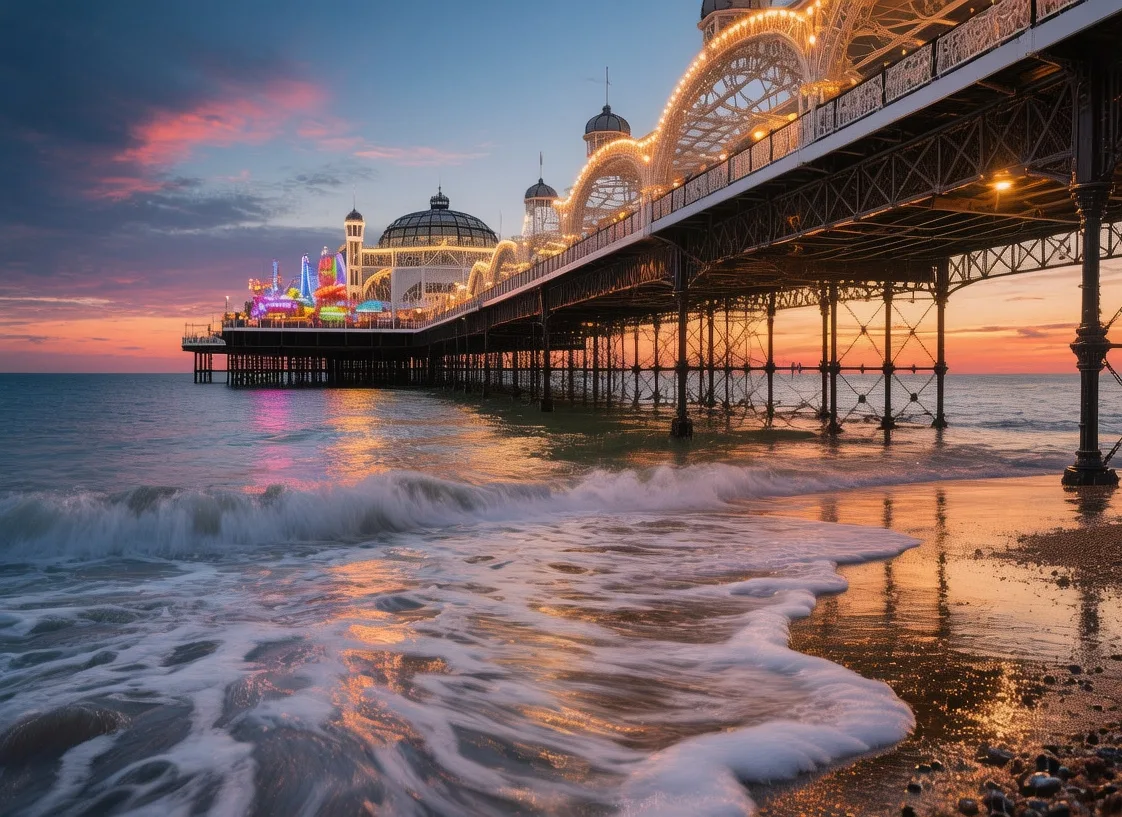
Brighton Pier Victorian Ironwork Meets Seaside Nostalgia
The seagulls cry—a sharp, piercing call that cuts through the salt-laden air—as you step onto the wooden decking at 5:45 PM, watching the sun dip below the horizon while the Victorian lights flicker to life. The air smells of candy floss and diesel fumes from the chugging rides; the silence hums with the weight of 125 years of seaside tradition contained within this 524-meter structure. Opened in 1899 as the Palace Pier, Brighton Pier extends into the English Channel, standing as the last surviving pleasure pier of the three that once graced the Sussex coast. You stand beneath the ornate ironwork arches, where the sound of the slot machines blends with the crash of waves against the pilings, while the Brighton skyline glows amber in the distance. Every rivet tells a story: Edwardian couples strolling in finery, wartime soldiers seeking distraction, and modern families chasing the thrill of the rollercoaster. In 2026, as digital entertainment dominates leisure time, visiting Brighton Pier means engaging with a physical sanctuary of analogue joy. This place matters now because it remains the definitive symbol of the British seaside, challenging visitors to confront the enduring power of simple pleasures while navigating the chaos of the funfair.
Why Brighton Pier Embodies Seaside Architectural Heritage
Brighton Pier solves the engineering challenge of creating a stable entertainment platform over a volatile tidal zone—a feat achieved through robust Victorian ironwork and continuous maintenance. When the structure opened on May 20, 1899, it replaced the failed Chain Pier, utilizing 3,000 tons of steel and iron to withstand the corrosive salt spray and winter storms of the English Channel. The pier spans 524 meters in length, supported by 96 cast-iron piles driven 10 meters into the seabed, designed to flex with the tide rather than resist it. Engineering-wise, the Pavilion at the pier head covers 1,200 square meters, housing arcades and rides within a glass-and-steel enclosure that maximizes natural light while protecting visitors from the wind. The decking, originally wooden, has been replaced with non-slip composite materials in recent renovations to ensure safety without compromising the aesthetic. Today, the pier attracts over 4 million visitors annually, generating revenue that funds the constant battle against rust and rot. This unique status ensures Brighton Pier remains not merely a tourist attraction but a working piece of maritime infrastructure, blending 19th-century engineering with 21st-century entertainment in a manner few coastal structures sustain.
The Best Time to Experience Brighton Pier
For optimal atmosphere and manageable crowds, plan your visit between May 18–June 12 or September 10–October 15, when temperatures range from 15–22°C (59–72°F) and daylight extends until 9:00 PM. Arrive precisely at 10:00 AM when the rides open to beat the day-trippers that typically converge by 12:00 PM; the morning light illuminates the ironwork beautifully without the glare of midday sun. Evening visits during summer offer a romantic atmosphere as the 30,000 light bulbs activate, though the arcade noise peaks after 6:00 PM. Avoid August 25–September 2 when the Bank Holiday weekend brings peak congestion, pushing queue times for the rollercoaster beyond 60 minutes. Winter months (December–February) offer shorter lines but temperatures drop to 2–8°C (36–46°F), and the wind chill makes the exposed decking uncomfortably cold. For ride maintenance schedules, verify the calendar at brightonpier.co.uk before booking, as high winds can close attractions unexpectedly. Tuesday and Wednesday mornings typically see the lowest visitor volume, allowing for quieter contemplation of the sea views.
Approximate Budget for a 7-Day Trip (2026)
Brighton remains a premium coastal destination, but staying in the city center provides immediate access to the pier without excessive transport costs. These 2026 estimates assume a moderate travel style, accounting for approximately 3-4% annual inflation in UK hospitality and attraction pricing.
- Accommodation: £120–£280 per night for a double room in Brighton City Centre, The Lanes, or Kemptown; budget hostels from £50/night in nearby Hove
- Food: £50–85 per day—breakfast £10–15 (café pastry or full English), lunch £15–25 (pub meal or fish and chips), dinner £25–45 (mid-range restaurant with wine); traditional doughnut £5
- Transportation: £15.00 daily average for local buses; Train from London Victoria to Brighton £35 return; Taxi from station £15 minimum
- Attractions: Brighton Pier free (entry), Ride Wristband £35.00, Royal Pavilion £20.00, Sea Life Centre £28.00, British Airways i360 £18.00
- Miscellaneous: Souvenir guidebook £15, pier postcards £5, rain jacket (essential) £35, travel insurance £50 for week
Total for 7 days: £1,400–1,950 per person (excluding international flights)
7 Essential Brighton Pier Experiences
- Pier Head Walk: Traverse the full 524-meter length to the end. Open 10:00 AM–late; the view of the coastline is panoramic. The wooden decking creaks underfoot; listen for the waves crashing against the iron pilings below.
- Rollercoaster Ride: Experience the vintage wooden coaster near the entrance. Open 10:00 AM–6:00 PM; the ride dates to 1920s designs. The wind whips your face during the drop; the mechanical clatter of the chain lift is nostalgic.
- Arcade Gaming: Play the classic slot machines and coin pushers. Open 24 hours in summer; the neon lights are dazzling. The sound of bells and buzzers is constant; budget £10 for tokens to avoid overspending.
- Doughnut Tasting: Sample the fresh fried dough from the stall. Located near the pier head; open 11:00 AM–8:00 PM. The sugar coating is thick; the smell of frying batter draws you in from the entrance.
- Sunset Photography: Capture the pier lights reflecting on the water. Best light occurs at 8:00 PM in summer; the ironwork glows gold. Use the beach below to frame the shot without obstructing the pedestrian flow on the pier.
- Fishing from the Deck: Cast a line from the designated areas. Open dawn–dusk; a permit is required (£5 daily). The mackerel run in summer; the rhythm of casting offers a quiet contrast to the funfair noise.
- Live Music Venue: Attend a gig in the pier pavilion. Check schedule for weekend acts; the acoustics are lively. The venue overlooks the sea; the vibration of the bass mixes with the sound of the ocean.
3 Hidden Gems Most Travelers Miss
- The Pier Museum: A small display area detailing the history of Brighton's piers. Access via the entrance building; open 10:00 AM–4:00 PM. Most tourists rush to the rides, missing the photographs of the 1975 fire that destroyed the West Pier and the original blueprints.
- Under-Pier Beach: The shingle beach directly beneath the structure offers a unique perspective. Access via the stairs near the entrance; open during daylight hours. The view looking up at the iron lattice work is architectural; it provides a quiet spot away from the crowds above.
- East Side Viewing Platform: A lesser-known spot on the starboard side near the middle. Access via the main walkway; open 24 hours. The view encompasses the marina and the modern i360 tower; it offers a contrast between Victorian and modern engineering often overlooked by visitors.
Cultural & Practical Tips
- Safety first: The gaps between decking boards can be wide; watch your step, especially with small children. Do not climb the railings; the drop to the sea is 10 meters and dangerous.
- Photography rules: Photography is permitted in all public areas for personal use without flash. Tripods require permission due to crowd density; respect signs indicating no photography inside specific arcade machines.
- Weather preparedness: The pier is exposed to high winds and sea spray; carry a windproof jacket (£40 from outdoor stores) and secure your hat. Rain makes the decking slippery—wear shoes with good grip.
- Local phrases: Learn "Mind the gap" (watch the step), "Cheers" (thanks), and "Queue here" (wait in line); locals appreciate visitors who respect pedestrian flow on the narrow walkways.
- Budgeting: Arcade games can be expensive; set a limit before entering. Ride wristbands offer better value than individual tickets if you plan to go on multiple attractions.
- Accessibility: The pier offers step-free access via ramps; wheelchair users can access most areas. Contact info@brightonpier.co.uk 48 hours ahead to arrange assistance for specific rides.
- Respectful behavior: Keep voices lowered near the fishing areas; this is a quiet zone. Do not litter on the decking or throw objects into the sea; the marine environment is protected.
Conclusion: Travel with Nostalgia, Not Just Checklists
Brighton Pier demands more than a snapshot beside the lights—it invites you to contemplate the weight of tradition resting on that Victorian iron. When you walk the decking in 2026, tracing the same planks worn by generations of seaside visitors, you're not just ticking a sightseeing box; you're witnessing the delicate balance between commercial entertainment and heritage preservation. As overtourism pressures historic landmarks, visiting mindfully means respecting the working nature of this institution, understanding that behind the funfair noise, engineers work tirelessly to keep the structure standing against the sea. Walk slowly across the boards, noticing how the light changes on the water; listen to the seagulls not as background noise but as the soundtrack of the coast. Leave only footprints on the wood, take only memories of seaside joy, and carry forward the understanding that places like this endure because each generation chooses to enjoy them—not as theme parks, but as living testaments to leisure, history, and the enduring human connection to the edge of the sea.