Burgos Cathedral Gothic Spires Meet Castilian Heritage
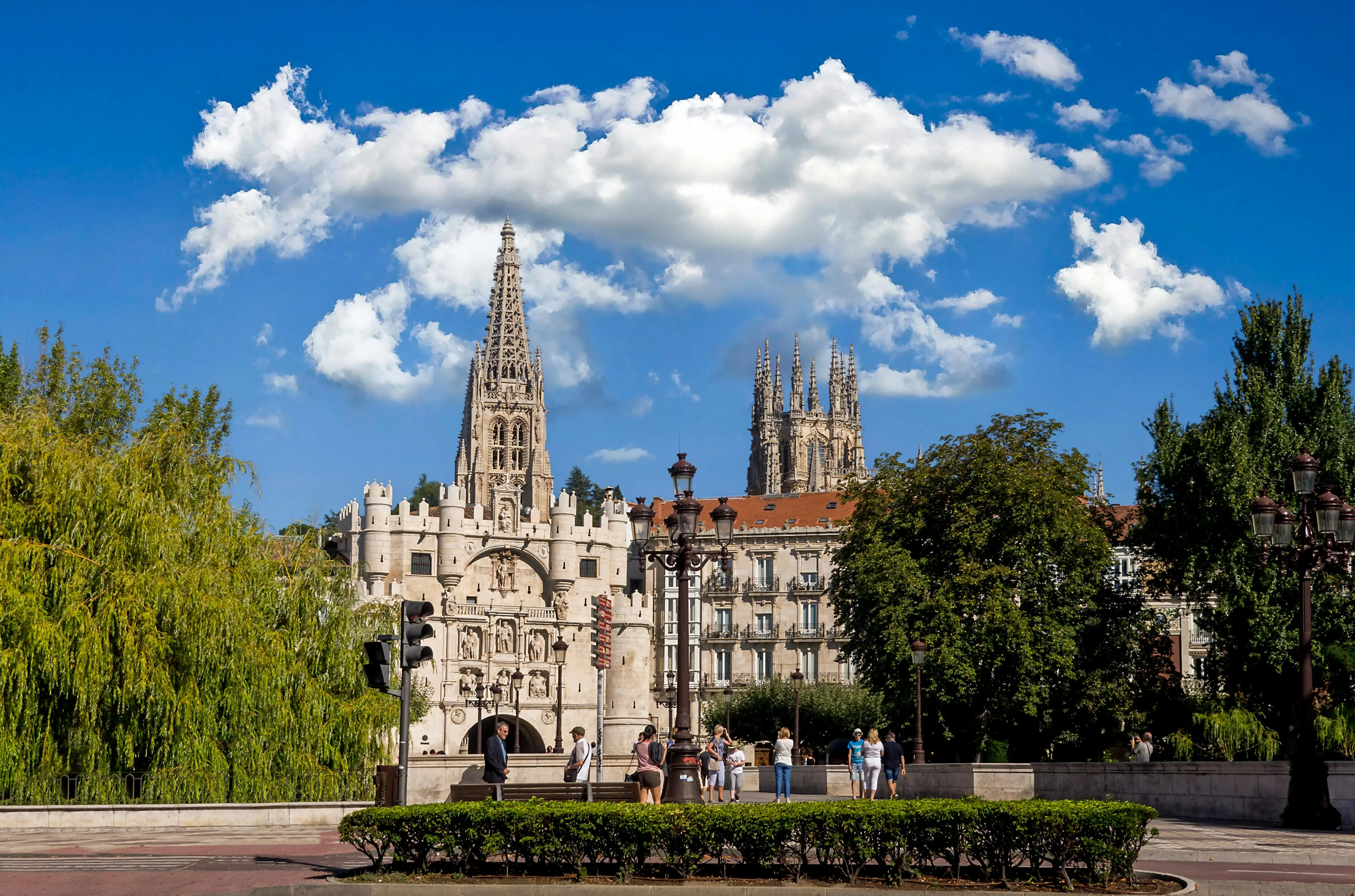
Burgos Cathedral: Where Gothic Spire Meets Castilian Stone
I step through the great west door at ten in the morning. Light filters through tall stained glass, falling in soft bands across the stone floor. Entry costs seven euros. I pause just inside — columns rise slender and white, carrying the eye upward to a vaulted ceiling high above. Every surface holds detail: carved capitals, delicate tracery, statues standing in quiet rows. Not everything feels perfect. Restoration work covers sections year-round. Narrow aisles crowd fast. Some corners stay dimly lit. Yet this cathedral stands as one of Spain’s purest and most powerful Gothic monuments — built to lift the spirit as well as mark the skyline.
Why Burgos Cathedral Matters
Construction began in 1221, funded by Castilian kings and supported by wealthy merchants who grew rich on wool trade along the Camino de Santiago. French masters designed the plan, but local masons added their own flourishes — openwork spires, rich chapel facades, a lantern tower that glows like a jewel at the crossing. The cathedral took centuries to complete, evolving from austere early Gothic to ornate late Gothic and Renaissance. UNESCO inscribed it as a World Heritage site in 1984. That status brings pressure. Constant footfall wears floors thin. Humidity and temperature shifts threaten delicate stone and glass. Balancing access with preservation grows harder every year. Still the bells ring. Light pours through the windows. And the cathedral remains the beating heart of the city.
The Best Time to Experience Burgos
May through June offers soft morning light and thinner crowds — 11°C to 20°C (52°F–68°F). The west facade glows warmest around midday. September and early October bring golden afternoons and crisp air — 12°C to 21°C (54°F–70°F). Summer from July to August feels warmest — 14°C to 26°C (57°F–79°F) — but queues stretch longest. Winter from November to March stays cool and quiet — 5°C to 12°C (41°F–54°F). Low sun sends vivid coloured beams deep across the nave. Weekdays beat weekends. Arrive before 10:00 to stand in the central space without crowds.
Approximate Budget for a 7-Day Trip
- Accommodation: Guesthouse near old town — 45–75 euros per night. Boutique hotel in historic building — 70–130 euros per night. Apartment in centre — 55–95 euros per night. Camino albergue — 15–25 euros per bed.
- Food: Castilian roast lunch — 14–24 euros. Tapas dinner — 12–20 euros. Market meal — 7–12 euros. Pastry and coffee — 3–5 euros.
- Transport: High-speed train from Madrid — 35–60 euros one way. From León — 12 euros. Local bus — 1.50 euros. Parking — 4–7 euros daily.
- Attractions: Cathedral — 7 euros. Mirador viewpoint — free. Cartuja de Miraflores — 4 euros. Monastery of Las Huelgas — 5 euros.
- Miscellaneous: Warm layer, snacks — 8–14 euros daily.
Total estimated for one person, 7 days: 330–610 euros
Cafes directly beside the cathedral charge nearly double what you find two lanes away. Walk toward the main square. You will find family-run places serving better food at kinder prices.
Essential Burgos Cathedral Experiences
- Stand beneath the lantern tower at mid-morning. Light streams from all directions. The structure soars open and bright. It feels like standing inside a stone crown. Skip this on overcast days — the interior stays dim and the magic fades.
- Walk the cloister at golden hour. Arched passages frame quiet courtyards. Sun filters through stone tracery. It feels peaceful and sheltered — a world away from the busy nave.
- Study the west front spires close up. Delicate openwork stone rises high against the sky. Every pinnacle, every carving visible. They look as fine as lace — yet built to stand for centuries.
- Visit the Chapel of the Constable. Ornate, rich, entirely complete — a masterpiece of late Gothic design. Marble, gold, sculpture gathered in one small space. It stops you in your tracks.
- Climb the viewpoint hill at sunset. The cathedral dominates the skyline — spires, towers, golden stone glowing warm above red rooftops. It is the view everyone carries away.
- Walk the old town afterwards. Narrow lanes, grand stone palaces, quiet plazas. The cathedral appears at every turn — different angle, different light, always magnificent.
Hidden Gems Most Travelers Miss
- The small chapel off the north aisle. Most people hurry past. Quiet, dim, almost empty. It feels like a private sanctuary within the vast building.
- The outer wall walk. A narrow path circles the cathedral base. You see flying buttresses, gargoyles, and stone detail invisible from inside. The scale feels enormous from down here.
- The so-called "perfect shot" at the main gate. It fills instantly. Walk fifty metres along the same street. The west front appears framed by older buildings — empty and majestic.
Cultural & Practical Tips
- Do not visit on a Monday. The cathedral closes. The streets stay open but the experience feels incomplete. Plan accordingly.
- Keep voices low. Sound carries sharply in these vast spaces. Many people come to pray or reflect. Respect the quiet.
- Wear comfortable shoes. Stone floors are uneven and worn smooth by eight centuries of feet. Heels are impractical and damaging.
- Arrive early or late. Midday groups block the best views and dim the light. The most beautiful moments come when you can stand and watch alone.
- Carry a light layer. Stone interiors stay cool year-round. Even warm days feel chill inside high walls.
- Book accommodation months ahead in August. Camino traffic fills rooms fast. May or September offer better value and thinner crowds.
Essential Visitor Information
Location & Access: Burgos, Castile and León, Spain. 240 km north of Madrid — 2.5 hours by high-speed train. 110 km east of León — 1 hour 15 minutes. On the Camino de Santiago — easily reached by foot, bus, or car.
Tickets & Booking: Adults 7 euros. Combined ticket with nearby monuments available. No reservation needed for individuals. Reserve accommodation June–September well ahead.
Operating Hours: April–October: 09:30–19:30. November–March: 09:30–18:30. Closed Mondays. Also closed 1 Jan, 25 Dec.
Visit Duration: Minimum 2 hours. Half a day lets you explore cathedral, cloister, viewpoint, and old town without rushing.
Family Suitability: Good for children. Wide aisles suit most ages. Tower climb is steep and continuous. Strollers work on ground floor but not upstairs. Restrooms at entrance and nearby square.
Timing: Best season — May–June and September. Best time — 10:00–11:30 for south light; 16:00–17:30 for cloister.
Highlights: Lantern tower light, cloister at sunset, west spires, Constable Chapel, hill viewpoint, old town skyline.
Nearby & Day Trip: León Cathedral — 1 hour 15 mins. Covadonga Lakes — 2 hours. Altamira — 2 hours 30 mins. Madrid — 2.5 hours by train.
Conclusion: Travel with Endurance, Not Just Awe
This cathedral was not built in a lifetime. It took generations — stone by stone, year by year. Before you leave, look at the highest spire. What will you build that stands half this long?
Post a Comment