
Carrara Marble Quarries Ancient Stone Meets Modern Ambition
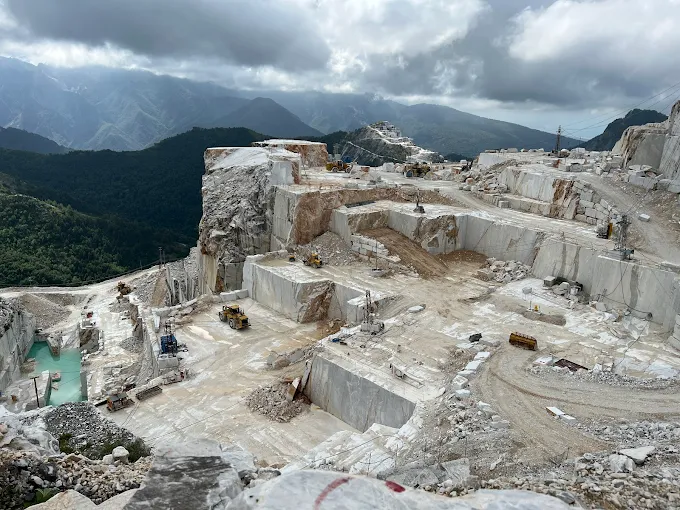
The air in the Apuan Alps is sharp and thin, scented with dust and the faint, clean smell of stone. From your vantage point high above the city of Carrara, the landscape unfolds in a surreal, almost lunar panorama—canyons of blinding white marble, carved over millennia, plunge hundreds of meters into the earth. You hear the distant, rhythmic thud of diamond-tipped saws, the low growl of heavy machinery, and the crunch of gravel under tires. This is the source of a material that has shaped Western civilization: the very same luminous stone that Michelangelo chose for his David in 1501, and that the Romans used to build the Pantheon nearly 2,000 years ago [[1]]. The quarries, some reaching depths of 300 meters (984 feet), are a testament to human ambition and geological fortune. In our era of synthetic materials and fleeting trends, the Carrara quarries matter now more than ever—they are a powerful reminder of our enduring connection to the earth and the timeless beauty of what it can yield.
Why Carrara Marble Quarries Embodies Geological Grandeur
The Carrara marble basin is not merely a collection of mines; it is a geological marvel and a cultural epicenter that has defined an entire region for over two millennia. Large-scale exploitation began in the 1st century BCE under Roman rule, when the prized white stone, known then as marmor lunense, was shipped from the port of Luni to build imperial monuments across the empire [[1]]. The quarries’ significance was reignited during the Renaissance, most famously by Michelangelo, who personally traveled to Carrara to select the perfect blocks for his masterpieces, ensuring the stone’s place in art history [[4]]. The “problem” these quarries solved was profound: they provided a material of unparalleled purity, workability, and luminous quality that could give physical form to the highest human aspirations—from divine statues to grand civic architecture. The marble itself is a metamorphic rock, formed from limestone subjected to immense heat and pressure, resulting in its characteristic fine grain and brilliant white color, often veined with subtle grey. Modern extraction is a feat of engineering, using massive wire saws embedded with diamond beads that can cut through a 10-meter (33-foot) block in a matter of days—a stark contrast to the ancient methods of wooden wedges and water. This unbroken chain of extraction, from Roman legionaries to modern engineers, fulfills a deep-seated human need to create lasting beauty from the raw earth.
The Best Time to Experience Carrara Marble Quarries
To experience the quarries in their full, dramatic glory while avoiding the worst of the weather and crowds, plan your visit for the specific windows of May 15–June 20 or September 10–October 5, 2026. During these periods, the Apuan Alps are at their most accessible, with comfortable daytime temperatures ranging from 20–25°C (68–77°F) and clear skies that showcase the marble’s brilliant white against the green mountains [[11]]. The absolute best time of day for a tour is in the morning, between 9:00 AM and 11:00 AM, when the light is crisp and the air is cool, making the off-road journey into the high quarries more comfortable. It is strongly advised to avoid the peak summer months of July and August, when temperatures can climb above 30°C (86°F) and the narrow mountain roads become congested with tour buses and private vehicles, diminishing the sense of awe and isolation that defines the quarry experience [[11]]. For the most current information on tour availability, weather closures, and booking, always verify details on the official tourism site: visittuscany.com.
Approximate Budget for a 7-Day Trip (2026)
This budget is calculated for a solo traveler seeking a comfortable, culturally immersive experience focused on the Carrara marble region in 2026, based on current inflation trends and average regional costs.
- Accommodation: €75–€120 per night. Staying in the historic center of Carrara offers charm and proximity to museums, while options in the nearby town of Marina di Carrara are more affordable.
- Food: €40 per day. Breakfast (€4): a cappuccino and cornetto at a local bar. Lunch (€15): a plate of trofie al pesto at a trattoria. Dinner (€21): a main course like grilled fish with a glass of local Vermentino.
- Transportation: €180 total. A regional train ticket from Florence to Carrara (€12 one-way). A rental car for a day is recommended to explore the area fully (€50/day). The essential guided 4x4 quarry tour costs approximately €90 [[21]].
- Attractions: Marble Museum (Museo del Marmo) (€5), Cathedral of Carrara (free). The primary attraction is the quarry tour itself.
- Miscellaneous: €100. This covers a small piece of local marble sculpture or kitchenware (€40–€60), and a tasting of local Lardo di Colonnata, a famous cured pork fat aged in marble basins (€15).
Total Estimated Cost: €955–€1,050
5 Essential Carrara Marble Experiences
- Take a 4x4 Jeep Tour into the High Quarries: This is the quintessential experience. Book a tour with a reputable operator like Carrara Marble Tour, which will take you deep into the Apuan Alps in a rugged Land Rover. You’ll drive along vertiginous paths, stop at panoramic viewpoints, and even walk inside an active quarry to feel the scale and power of the operation. Tours last about 2.5 hours and cost around €90 [[21]].
- Visit the Museo del Marmo (Marble Museum): Located in the heart of Carrara, this museum provides essential context. See ancient Roman tools, stunning sculptures by modern masters, and learn about the geology and history of the stone. Don’t miss the section on Michelangelo’s connection to the quarries.
- Taste Lardo di Colonnata: This unique local delicacy is cured pork fatback, aged for months in basins made of Carrara marble. The stone’s properties are said to be essential to its delicate, buttery flavor. Visit a larderia in the village of Colonnata for a tasting paired with fresh bread and local wine.
- See the Marble in the City: Walk through Carrara’s streets and notice how the stone is integrated into everyday life—from the steps of the Duomo to the facades of ordinary buildings. This grounds the monumental scale of the quarries in the intimate reality of the town.
- Watch a Sculptor at Work in a Studio: Several artists have studios in Carrara where they transform raw marble into art. Visiting a studio like those in the Zona Industriale allows you to witness the final, creative stage of the stone’s journey, from cold rock to expressive form.
3 Hidden Gems Most Travelers Miss
- The View from Colle di Gioia: This lesser-known viewpoint offers a breathtaking, panoramic vista of the entire marble basin without the crowds of the main tourist spots. It’s a short drive from the city center, and the view at sunset, when the white stone turns golden, is unforgettable.
- The Abandoned Railway of the Marbles (Ferrovia dei Marmi): Near the village of Miseglia, you can find remnants of the old railway system that once transported marble down from the quarries. A short, easy hike along the old tracks offers a hauntingly beautiful glimpse into the industry’s past. Access is free and unmarked, so ask a local for directions.
- The Small Workshop of Studio Sem: Tucked away in the industrial zone, this studio is run by a collective of international sculptors. They often host open studios and small exhibitions. It’s a chance to see contemporary artists engaging with the ancient material in innovative ways. Check their website for open hours, as they are not always open to the public.
Cultural & Practical Tips
- Dress for the mountains: Even in summer, temperatures in the high quarries can be 5–10°C (9–18°F) cooler than in the city. Wear layers, sturdy closed-toe shoes (no sandals), and bring a hat and sunscreen.
- Book your quarry tour in advance: The most popular 4x4 tours, especially in the shoulder seasons, can sell out weeks ahead. Booking online guarantees your spot and often includes a discount [[27]].
- Respect the working environment: The quarries are active industrial sites. Always follow your guide’s instructions, stay behind safety barriers, and never wander off on your own.
- Learn a few key phrases: “Dove si trova la cava?” (DOH-veh see TROH-vah lah KAH-vah?) for “Where is the quarry?”, and “È marmo di Carrara?” (eh MAR-moh dee kar-RAH-rah?) for “Is it Carrara marble?”
- Photography is usually allowed, but ask first: While you can take photos of the landscape, always ask permission before photographing workers or specific machinery.
- Beware of imitations: True Carrara marble has a specific, cool luminosity. If you’re buying a souvenir, buy from a reputable source like a certified artisan’s studio or a museum shop.
Conclusion: Travel with Reverence, Not Just Wonder
To stand in the Carrara quarries is to stand at the intersection of deep time and human endeavor. This is not a place for passive sightseeing, but for active reverence. Your journey here connects you to a lineage of creators—from Roman architects to Renaissance geniuses—who saw in this stone the potential for immortality. In 2026, as we grapple with the legacy of our own consumption, a visit to these quarries offers a profound lesson in responsibility. By choosing to engage mindfully—to learn the story of the stone, to support local artisans, and to appreciate the immense effort behind every polished surface—you honor the mountain and its gift. Slow down. Feel the cool weight of a marble fragment in your hand. Listen to the echoes of history in the silent canyons of white rock. In that moment of quiet respect, you ensure that the story of Carrara marble continues, not just as a resource, but as a living heritage.