
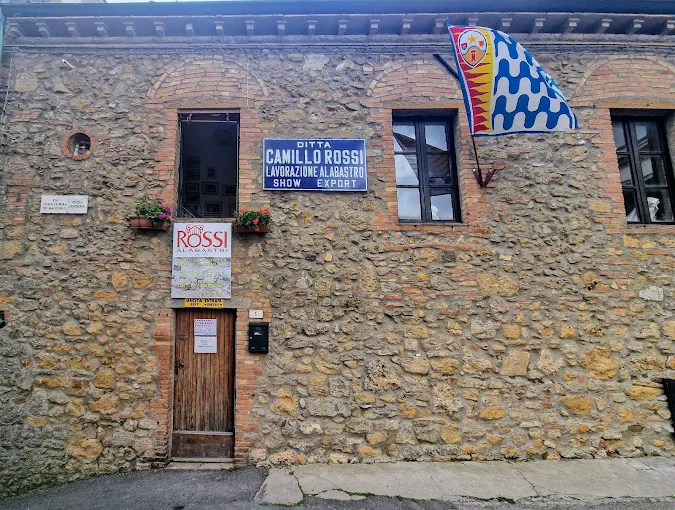
Volterra Alabaster Workshops Etruscan Stone Meets Modern Hands
The morning light in Volterra is a master sculptor itself—streaming through tall, arched windows to illuminate a cloud of fine, white dust that hangs suspended in the air. You hear the rhythmic, high-pitched whir of a lathe, the soft scrape of a chisel on stone, and the low murmur of an artisan explaining his craft in Italian. This is the heart of a city that has been working its local treasure, alabaster, for over 3,000 years since the Etruscans first discovered its luminous potential. In these workshops, nestled within the ancient stone walls of the historic center, raw blocks of this calcium sulfate mineral—mined from the hills just outside town—are transformed into vases, lamps, and intricate sculptures that seem to glow from within. The stone’s unique property, its ability to transmit a soft, warm light, has made it a coveted material across millennia. In our age of mass production and fleeting trends, these workshops matter now more than ever—they are sanctuaries of slow, deliberate creation, where human skill and geological time converge to produce objects of enduring beauty.
Why Volterra Alabaster Workshops Embodies Timeless Craftsmanship
Volterra’s relationship with alabaster is not a recent trend but a deep, geological and cultural symbiosis that defines the city’s identity. The story begins in the 3rd century BCE when the Etruscans, who ruled this hilltop stronghold, began carving funerary urns and vessels from the local stone, prized for its workability and ethereal translucence [[2]]. The craft saw a major revival in the late 18th century during a second Renaissance, and by 1895, the artisans had organized themselves into the Cooperativa Artieri, a cooperative that still operates today as a central hub for the trade [[8]]. These workshops solve a fundamental human need: the desire to create lasting beauty from the earth. The alabaster itself is a sedimentary rock formed over millions of years, characterized by its fine grain and a Mohs hardness of just 2, making it soft enough to carve with simple tools yet durable enough to last centuries. A typical workshop might be a small, family-run bottega like Alab'Arte, established in 1920, where the process remains largely unchanged—starting with the selection of the raw stone, moving through rough shaping on a lathe, and culminating in days of meticulous hand-polishing to achieve that signature, luminous finish [[2]]. This unbroken chain of knowledge, passed from master to apprentice, fulfills the essential need for authenticity and connection in a world increasingly dominated by the artificial.
The Best Time to Experience Volterra Alabaster Workshops
To enjoy the workshops and the town of Volterra at their most serene and pleasant, target the specific windows of May 10–June 5 or September 20–October 15, 2026. During these periods, the weather is ideal for exploring the hilltop town, with comfortable daytime highs of 22–25°C (72–77°F) and cool nights around 12–14°C (54–57°F) [[12]]. The best time of day to visit a workshop is in the late morning, between 10:00 AM and 12:00 PM, when the natural light is at its brightest, perfectly illuminating the alabaster’s inner glow and allowing you to see the artisans at work without the harsh glare of midday sun. It is crucial to avoid the peak summer months of July and August, when temperatures can soar to 29–30°C (84–86°F) [[13]] and the narrow streets of Volterra become clogged with tour buses and day-trippers, making the intimate experience of a workshop visit far less personal. For the most up-to-date information on opening hours and any special events, always check the official tourism portal: visittuscany.com.
Approximate Budget for a 7-Day Trip (2026)
This budget is calculated for a solo traveler seeking a comfortable, culturally rich experience focused on Volterra’s artisan heritage in 2026, based on current inflation trends and average regional costs.
- Accommodation: €70–€130 per night. Staying within the historic walls near the main square (Piazza dei Priori) offers the most charm but commands a higher price. Options in the San Giusto neighborhood are more affordable.
- Food: €40 per day. Breakfast (€4): a pastry and coffee at a local bar. Lunch (€12): a plate of pappardelle al cinghiale at a trattoria. Dinner (€24): a main course like grilled bistecca with a glass of local Sangiovese.
- Transportation: €150 total. A regional train ticket from Florence to Cecina (€10), then a bus (Line 1) to Volterra (€3). Taxis from the bus station to your hotel are about €10. A rental car for a day trip to the alabaster quarries would cost around €60.
- Attractions: Guarnacci Etruscan Museum (€6), Roman Theatre (€4). Most alabaster workshops are free to enter, though guided tours at the Cooperativa Artieri cost €10.
- Miscellaneous: €150. This covers a small, hand-carved alabaster souvenir (€40–€80), a bottle of local olive oil (€15), and a hands-on workshop experience where you carve your own piece (€70).
Total Estimated Cost: €910–€1,080
5 Essential Volterra Alabaster Experiences
- Take a Guided Tour at Cooperativa Artieri: Located in the heart of the historic center, this is the epicenter of the craft. Their guided tours walk you through the entire process, from raw stone to finished masterpiece. You’ll see the massive lathes in action and learn about the different grades of alabaster. Book ahead on their website for the English-language tour at 11:00 AM.
- Visit the Alab’Arte Workshop: This family-run bottega near the Etruscan Museum feels like stepping into a living museum [[4]]. Watch the artisans, often from the same family for generations, work with quiet concentration. Don’t just look—ask questions. They are proud of their craft and happy to share its secrets.
- Shop for a Piece at Laboratorio Giorgini: This renowned workshop is known for its high-quality, contemporary designs. Take your time to feel the weight and smoothness of the stone. A small, polished sphere or a simple lamp makes for a perfect, meaningful souvenir that connects you to Volterra’s soul.
- See Ancient Alabaster at the Guarnacci Museum: Before you appreciate the modern craft, understand its roots. The Etruscan Museum houses an incredible collection of ancient alabaster urns, including the famous “Ombra della Sera” (Shadow of the Evening), a slender, hauntingly beautiful figure that showcases the Etruscans’ mastery of the material.
- Attend a Hands-On Carving Workshop: Several studios, including the Cooperativa, offer short courses where you can try your hand at carving. Under expert guidance, you’ll use traditional tools to shape a small piece of alabaster. It’s a humbling and deeply satisfying experience that gives you a profound respect for the artisan’s skill.
3 Hidden Gems Most Travelers Miss
- The View from Via Lungo le Mura di Ponente: After visiting the workshops, walk along this quiet street on the western edge of the old town. From here, you get a stunning, unobstructed view of the surrounding countryside—the very hills where the alabaster is quarried. The perspective connects the finished product in the shop to its raw, geological origin.
- The Small Workshop of Maestro Paolo Banchi: Tucked away on Via Ricciarelli, this tiny, unassuming studio is run by a single master craftsman who rarely markets his work online. Look for the open door and the sound of a single lathe. His pieces are exquisite, often inspired by Etruscan motifs, and he works entirely by hand. An appointment is not needed, but a respectful knock on the door is appreciated.
- The Alabaster Demonstration at Palazzo Incontri: This cultural center occasionally hosts live demonstrations by local artisans that are not widely advertised. Check the notice board in Piazza dei Priori or ask at the tourist office. These intimate sessions offer a chance to see rare, specialized techniques like inlaying different colored alabasters.
Cultural & Practical Tips
- Respect the silence of the workshop: These are places of intense concentration. Speak in hushed tones and avoid loud conversations or flash photography that could distract the artisans.
- Learn a few key phrases: “Che bello!” (keh BEL-loh!) for “How beautiful!”, “Quanto costa?” (KWAHN-toh KOS-tah?) for “How much does it cost?”, and “È fatto a mano?” (eh FAH-toh ah MAH-no?) for “Is it handmade?”
- Handle with care: If invited to touch a piece, do so gently with clean, dry hands. Alabaster is soft and can be scratched or damaged by oils from your skin.
- Beware of imitations: Not all “alabaster” sold in tourist shops is genuine Volterran stone. True alabaster is cool to the touch and has a unique, waxy translucence. If a price seems too good to be true, it probably is.
- Dress for the hills: Volterra is built on a steep hill with many cobblestone streets. Wear comfortable, sturdy walking shoes with good grip.
- Plan for closures: Many smaller workshops close for a long lunch break between 1:00 PM and 4:00 PM, and some may be closed on Mondays.
Conclusion: Travel with Intention, Not Just Curiosity
In a world saturated with fleeting experiences, a visit to Volterra’s alabaster workshops offers something profoundly different: a connection to deep time and human ingenuity. This is not about passive observation, but about engaging with a tradition that has flowed uninterrupted for millennia. Your presence in these workshops, your genuine interest in the craft, and your choice to support authentic artisans are acts of preservation. By traveling with intention—to understand the story behind the object, to appreciate the hours of labor in a single curve of stone—you become part of Volterra’s living legacy. In 2026, let your journey be defined not by how many workshops you see, but by the depth of the one you truly experience. Slow down. Listen to the whisper of the chisel. Feel the cool, luminous stone. In that moment of mindful connection, you honor the past and help secure its future.