
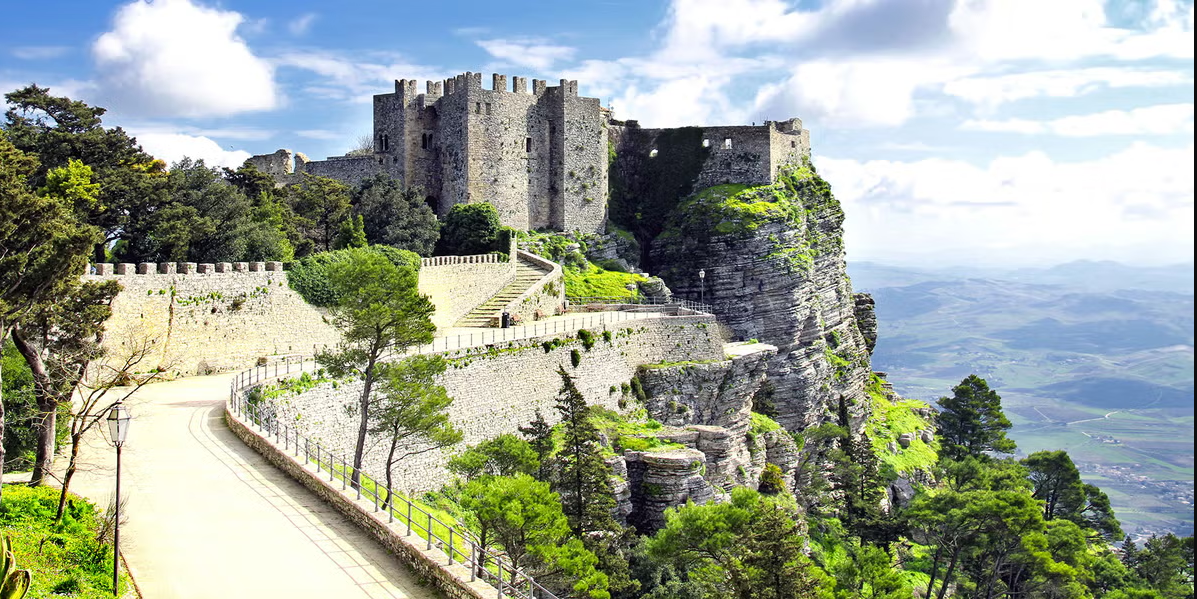
Erice Hilltop Town Medieval Silence Meets Sicilian Majesty
The morning sun warms the ancient stone walls of Erice, casting long shadows across cobbled streets so narrow you can touch both sides with outstretched arms. You hear the soft echo of your footsteps on worn basalt stones, the distant chime of a church bell from the 14th-century Duomo, and the whisper of a breeze carrying the scent of wild thyme from the surrounding hills. Perched at 751 meters (2,464 feet) above sea level on Mount San Giuliano, this fortified town has stood as a sentinel over western Sicily since the Phoenicians first built a temple to Astarte here in the 9th century BC [[38]]. Its concentric ring of walls, built by successive civilizations—Carthaginians, Romans, Normans—enclose a labyrinth of 150 alleyways and 12 churches, all within an area of just 0.5 square kilometers. In an age of digital noise and hurried itineraries, Erice matters now more than ever—it is a sanctuary of slow time, where the only soundtrack is the wind and the only agenda is to wander.
Why Erice Hilltop Town Embodies Timeless Seclusion
Erice’s enduring magic lies in its strategic seclusion and layered history, which together create a powerful antidote to the modern world’s frenetic pace. Its location was chosen for defense: the steep, 751-meter (2,464-foot) ascent made it nearly impregnable to invaders, from the Carthaginians who fortified it in the 4th century BC to the Normans who added their castles in the 12th century AD. The town’s compact, concentric layout—centered around the Castello di Venere (Venus Castle)—was a masterpiece of medieval urban planning, designed to confuse attackers while fostering a tight-knit community. This geography “solved” a fundamental problem of its time: how to create a safe haven in a region plagued by raids and invasions. Today, that same isolation fulfills a modern need—for a place that feels untouched by mass tourism, where beauty is found in quiet corners and centuries-old traditions. The town’s famous pasticcerias, like Maria Grammatico’s, keep alive the art of Arab-influenced sweets such as genovesi and mustazzoli, a culinary legacy from the Saracen era. Erice isn’t just a view; it’s a living museum of resilience, where every stone whispers a story of survival and serenity.
The Best Time to Experience Erice Hilltop Town
To experience Erice in its most peaceful and comfortable state, plan your visit for the specific windows of April 20–May 30 or September 10–October 15, 2026. During these periods, the weather in western Sicily is ideal, with daytime temperatures ranging from a pleasant 18–24°C (64–75°F) at the summit—significantly cooler than the coast below [[11]]. The best time of day to explore is in the early morning, between 8:00 AM and 10:30 AM, when the light is soft, the streets are quiet, and you can have the alleyways almost to yourself before day-trippers arrive. It is essential to avoid the peak summer months of July and August, when the combination of tourist buses and the occasional dense fog (nébbia) can obscure the famous views and diminish the town’s serene atmosphere [[56]]. For the most current information on weather conditions, opening hours, and local events,
Approximate Budget for a 7-Day Trip (2026)
This budget is calculated for a solo traveler seeking a comfortable, culturally immersive experience in western Sicily in 2026, based on current inflation trends and average regional costs.
- Accommodation: €85–€140 per night. Staying in a historic guesthouse within the walls of Erice offers an unforgettable experience. Options in nearby Trapani or Valderice are more affordable but require a short drive.
- Food: €40 per day. Breakfast (€5): a cappuccino and brioche at Pasticceria San Carlo. Lunch (€15): a plate of pasta with fresh ricotta at a trattoria near Porta Trapani. Dinner (€20): a main course like grilled sardines with a glass of local Grillo wine.
- Transportation: €130 total. A rental car for the week is essential for exploring the region (€40/day). The cable car from Trapani to Erice costs €5 round-trip.
- Attractions: Entry to the Castello di Venere (€3). Guided walking tour of the town’s history and legends (€18). Visit to the Cordici Museum (€4).
- Miscellaneous: €90. This covers a box of pastries from Maria Grammatico (€15), several gelato stops (€3 each), a cooking class featuring Sicilian recipes (€40), and souvenirs like handmade ceramics.
Total Estimated Cost: €875–€995
6 Essential Erice Hilltop Town Experiences
- Wander the Silent Alleyways at Dawn: Arrive by 8:00 AM to explore the town before the crowds. Get lost in the maze of cobbled streets like Via Vittorio Emanuele, where laundry hangs between stone buildings and every turn reveals a new vista.
- Visit the Castello di Venere: At the highest point of the town, the ruins of this ancient fortress offer 360-degree panoramic views of Sicily, from the Egadi Islands to Mount Etna on a clear day. The site includes remnants of the original Phoenician temple to Venus.
- Taste Pastries at Maria Grammatico: This legendary pastry shop, founded by a former convent apprentice, is famed for its Arab-inspired sweets. Try the genovesi (pastry filled with lemony custard) and watch the artisans at work through the window.
- Explore the Duomo and Bell Tower: The 14th-century cathedral, with its Catalan-Gothic portal, houses a beautiful Madonna statue. Climb the adjacent bell tower for a bird’s-eye view over the red rooftops and the Tyrrhenian Sea beyond.
- Ride the Cable Car from Trapani: For a dramatic approach, take the cable car from Trapani. The 10-minute ride offers stunning views of the salt pans and coastline, culminating in a grand entrance to the hilltop town.
- Watch the Sunset from Balio Gardens: These public gardens on the eastern edge of town provide a peaceful setting to watch the sun dip below the horizon, painting the sky in fiery hues while the town lights begin to twinkle below.
3 Hidden Gems Most Travelers Miss
- The Church of San Giovanni: Tucked away near Porta Carmine, this small 14th-century church has a stunning rose window and a peaceful cloister garden. It’s often locked, but ask at the nearby tourist office for access.
- The Secret Viewpoint at Porta Spada: This lesser-known city gate on the northern side offers a panoramic vista that rivals the Castello, but without the crowds. It’s a favorite spot for local photographers at dawn.
- The Convent of San Carlo: Behind the famous pastry shop, the old convent where Maria Grammatico learned her craft is sometimes open for private tours. Email in advance to inquire about visiting this quiet, spiritual space.
Cultural & Practical Tips
- Wear sturdy walking shoes: The streets are steep, cobbled, and uneven. Good footwear is essential for navigating the town safely.
- Dress in layers: The temperature in Erice can be 8–10°C (14–18°F) cooler than the coast below. A light jacket is recommended even in summer.
- Learn a few key phrases: “Dov’è il castello?” (DOH-veh eel kah-STEHL-loh?) for “Where is the castle?”, and “Un caffè, per favore” (oon kah-FEH).
- Respect the siesta: Many small shops and cafes close between 1:00 PM and 4:00 PM. Plan your hikes or visits to viewpoints during these hours.
- Beware of the fog: In summer, the town can be enveloped in a thick fog (nébbia) that obscures the views. Check the webcam at ericepanorama.it before your visit.
- Tipping is appreciated but not expected: Rounding up the bill or leaving €1–€2 for exceptional service is a kind gesture.
Conclusion: Travel with Presence, Not Just a Lens
Erice is not a backdrop for your vacation photos; it is a place to be absorbed. In 2026, as we seek travel experiences that are both authentic and restorative, this hilltop town offers a rare gift: the chance to step outside of time. Your journey here should be one of mindful presence—not just capturing its beauty, but feeling the coolness of the ancient stone, listening to the silence between the bells, and understanding the centuries of resilience embedded in every wall. By traveling with this deep attention, you honor the spirit of Erice and help preserve its fragile, timeless character. Slow down. Sit on a step and watch the light change on the terracotta roofs. In that quiet moment of communion with history and landscape, you don’t just visit Erice—you become part of its enduring, silent story.