
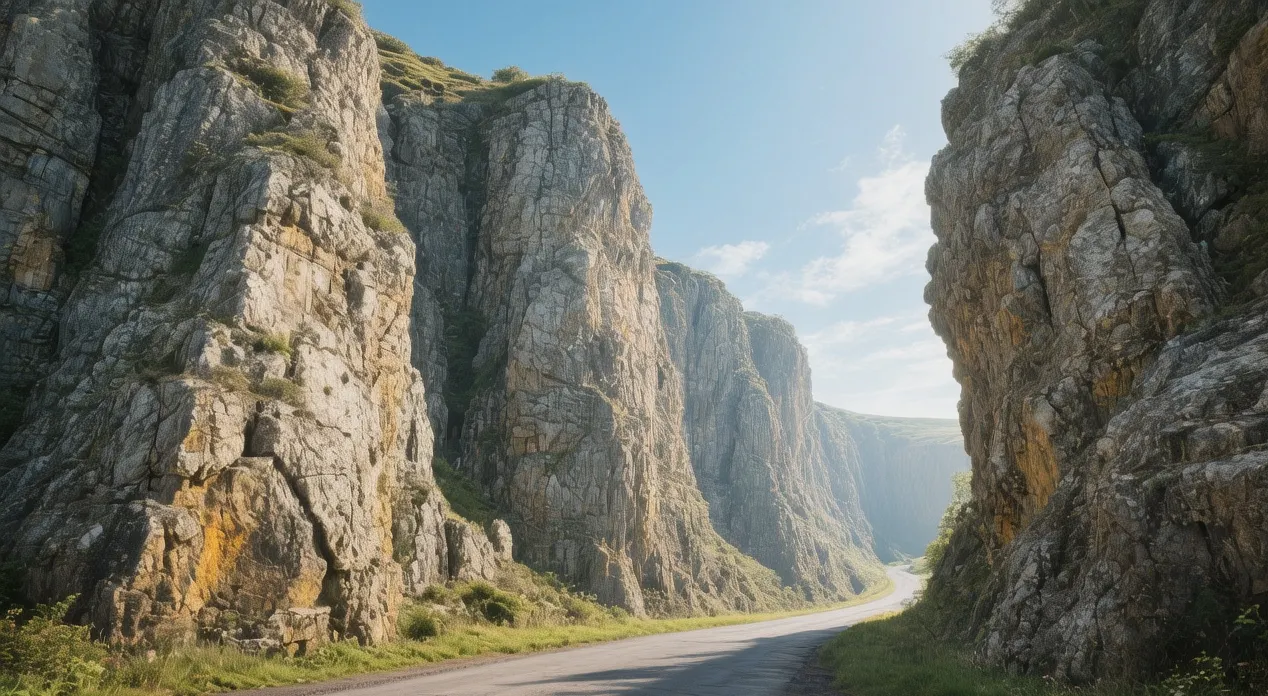
Cheddar Gorge Limestone Cliffs Meet Ancient History
Mist clings to the vertical rock faces as dawn breaks over the Mendip Hills—cold air drifting from cave mouths where temperatures remain a constant 10°C (50°F) year-round. You stand at the base of Britain's largest gorge, 137 meters (449 feet) of Carboniferous limestone towering above, while the scent of damp earth and wild thyme fills the narrow valley. Carved by meltwater torrents at the end of the last Ice Age approximately 10,000 years ago, this dramatic fissure sheltered Britain's oldest complete human skeleton, discovered in 1903 and dated to 9,000 years ago. As you trace the striations in the stone—layers of sediment deposited when Britain lay submerged under a tropical sea—you realize the Cheddar Gorge matters now more than ever: in an era of digital ephemera, it offers a tangible connection to deep time, geology, and the enduring presence of humanity within a landscape shaped by ice and water.
Why Cheddar Gorge Embodies Geological Time
The Cheddar Gorge is not merely a scenic attraction; it is a textbook of geomorphology and archaeology carved into living stone. Formed during the Younger Dryas period when glacial meltwater surged through fractures in the limestone bedrock, the gorge exhibits classic karst features: stalactites, stalagmites, and underground rivers that continue to shape the terrain today. The rock itself dates to the Carboniferous period, 340 million years ago, composed primarily of calcium carbonate deposited in warm shallow seas. This geological structure solved a scientific need for understanding Quaternary climate change, providing evidence of temperature fluctuations through stalagmite growth rings.
Culturally, the site fulfills a critical role in preserving human heritage. The discovery of Cheddar Man in Gough's Cave revolutionized understanding of Mesolithic migration, proving humans recolonized Britain after the Ice Age much earlier than previously thought. Managed by the Longleat Estate since 1924, the site balances commercial access with conservation, hosting over 500,000 visitors annually. When you walk the gorge floor, you traverse a space where Paleolithic hunters butchered mammoths and Victorian tourists marveled at candlelit caverns. The Cheddar Gorge represents a continuous narrative of human interaction with the environment, from survival to tourism, preserved within the cold silence of the caves that still breathe moisture into the Somerset air.
The Best Time to Experience Cheddar Gorge
To witness the Cheddar Gorge in optimal conditions, plan your visit between May 15 and June 25. During this window, temperatures average 15-20°C (59-68°F), and daylight extends until 9:15 PM, allowing ample time for hiking and cave exploration. The best light for photography occurs between 7:30-9:30 AM when morning sun illuminates the east-facing cliffs, and 6:00-8:00 PM for golden hour shadows in the valley. Visiting early also allows you to walk Jacob's Ladder before tour buses arrive from Bristol and Bath, typically between 11:00 AM and 3:00 PM.
Autumn offers a secondary window—specifically September 10 to October 15—when summer crowds dissipate and the heathland turns russet and gold. Temperatures remain mild at 12-17°C (54-63°F), though daylight hours shorten rapidly. Avoid July 25 to August 25 when school holidays push visitor numbers above 3,000 daily, creating congestion on the narrow gorge road and limited parking at the visitor center. Winter months (November-February) offer solitude but challenging conditions; some cave sections close due to flooding risk, and sunset occurs as early as 4:05 PM in December. For current opening hours and cave conditions, verify information at www.cheddargorge.co.uk or contact the visitor center at +44 (0)1934 742343.
Approximate Budget for a 7-Day Trip (2026)
Exploring the Cheddar Gorge and the wider Somerset countryside requires moderate budgeting, as rural southern England commands premium prices during peak season. The following budget reflects mid-range travel for one person in 2026, accounting for approximately 4.2% UK inflation (ONS data, January 2026). Prices assume a base in Cheddar village or Wells for optimal access to the gorge and surrounding attractions.
- Accommodation: £90-£150 per night for a boutique inn or B&B in Cheddar village (6 nights = £540-£900). Budget options: £50-£70 for hostels in Wells or camping at Cheddar Reservoir.
- Food: £50-70 per day total • Breakfast: £10-15 (Full English at The Caveman Restaurant) • Lunch: £15-20 (Ploughman's lunch at The George Inn) • Dinner: £25-35 (Three-course meal at The King of Prussia or Riverside)
- Transportation: • Train London Paddington to Castle Cary + Bus 376: £70-120 return • Local bus (Route 376): £4.50 day pass • Car rental (recommended): £65/day plus fuel £1.58/liter • Parking at Cheddar Gorge: £7/day (March-October)
- Attractions: • Gorge & Caves Ticket: £29.50 • Cheddar Man Museum: Included with ticket • Wells Cathedral entry: £10 • Free: Gorge walk, reservoir path, village exploration
- Miscellaneous: • Ordnance Survey Explorer Map 141: £10.99 • Local cheese souvenirs: £25 • Travel insurance: £40-60 for week • Waterproof gear rental: £20
Total estimated cost: £1,350-£1,650 for 7 days (excluding international flights)
5 Essential Cheddar Gorge Experiences
- Climb Jacob's Ladder: Arrive at the base by 8:00 AM to avoid crowds. Ascend the 274 stone steps carved into the cliff face in 1890. The climb takes 20 minutes and gains 137 meters (449 feet) in elevation. The view from the top encompasses the entire gorge length and the Somerset Levels. Bring a windbreaker; exposure at the summit creates wind chill 5°C below valley temperatures. Descend via the same route or continue onto the Mendip Way.
- Explore Gough's Cave: Join the hourly guided tour (departing 10:00 AM daily). You will walk 1.5 kilometers through illuminated caverns where Cheddar Man was found. The temperature remains constant at 10°C (50°F); bring a light jacket. Your guide explains the formation of stalactites growing at 0.13 millimeters per year. This experience provides context for the archaeological finds displayed in the museum above. Photography without flash is permitted in designated zones.
- Visit the Cheddar Man Museum: Located at the visitor center, this exhibit houses a replica of the skeleton and DNA analysis results. Spend 60 minutes examining the facial reconstruction showing dark skin and blue eyes. Open 9:00 AM-5:00 PM daily. The staff provide free talks on Mesolithic life at 11:00 AM and 2:00 PM. This context enriches your gorge walk, helping you understand the humans who sheltered here 9,000 years ago.
- Walk the Gorge Floor: Access the public footpath running the 2.4-kilometer length of the gorge. Start at the visitor center and walk toward Cheddar village. The path follows the road but includes segregated walking sections. Listen for peregrine falcons nesting on the cliffs; they are visible year-round. Total walking time: 45 minutes one-way. The sound of traffic is minimal early morning, allowing natural acoustics to dominate the limestone canyon.
- Taste Local Cheddar Cheese: Reserve a tasting session at the Cheddar Gorge Cheese Company (£15, book 2 weeks ahead). You will sample four varieties aged from six months to three years. Learn the technical process of "cheddaring" where curds are stacked to expel whey. The shop opens at 9:00 AM; visit early for the freshest selection. This experience connects you to the agricultural tradition that shares the gorge's name, dating back to the 12th century.
3 Hidden Gems Most Travelers Miss
- Cheddar Reservoir Perimeter Walk: While crowds cluster at the visitor center, this 5-kilometer loop around the Victorian reservoir remains surprisingly quiet. Access via the path behind the Golf Club (parking at ST465515). The water supplies Bristol and is surrounded by limestone grassland supporting rare orchids. Visit between 7:00-9:00 AM for birdwatching; kingfishers are frequently spotted. No facilities exist—bring water and a headlamp for winter evenings. The Jurassic Coast Trust notes this area has high biodiversity due to limited public access.
- Cox's Cave Crystal Chamber: Contact the visitor center (+44 (0)1934 742343) to request access to the smaller sister cave often skipped by large tours. The "Crystal Chamber" features delicate helictites—twisted stalactites defying gravity. Access is restricted to small groups (max 10) on weekdays at 3:00 PM. The path is narrower than Gough's Cave; wear sturdy shoes. This site offers a more intimate geological experience, showing formations less disturbed by Victorian tourism infrastructure.
- Devil's Punchbowl Viewpoint: Located at the western end of the gorge, grid reference ST460520, lies a secluded bench overlooking the narrowest section. Access requires a 1-kilometer walk from the village center along the B3135. The cliffs converge here to within 20 meters, creating dramatic acoustics. Visit during mid-week afternoons when tour buses have departed. No facilities exist—bring snacks. This spot demonstrates the geological fault line that initiated the gorge formation, offering a raw view of the tectonic history visible in the rock strata.
Cultural & Practical Tips
- Respect cliff edges: Limestone edges are unstable—rockfalls occur regularly. Stay on marked paths; red warning flags indicate dangerous conditions. Keep children supervised at all times. The Longleat Estate reports 5-10 incidents annually due to visitors straying too close.
- Understand cave conditions: Cave temperatures are constant 10°C (50°F) regardless of surface weather. Check www.cheddargorge.co.uk for flood warnings. Never touch stalactites; skin oils stop growth. If paths are wet, wear shoes with grippy soles.
- Leave no trace: Remove all litter, including biodegradable items. The Estate collects 10 tonnes of waste annually from the gorge. Do not remove rocks or fossils—this violates the Wildlife and Countryside Act 1981. Photograph specimens in situ instead.
- Learn local terminology: "Karst" (limestone landscape); "Stalactite" (hangs from ceiling); "Cheddaring" (cheese process). Using these terms shows respect for geological heritage and helps guides assist you better during tours.
- Photography guidelines: Tripods are permitted outside but restricted inside caves during busy periods. Drone use requires written permission from the Estate and Civil Aviation Authority—apply 6 weeks in advance. Respect other visitors; do not block pathways for extended shoots during peak hours (11:00 AM-3:00 PM).
- Weather preparedness: The gorge is exposed; wind chill is common even in summer. Pack waterproof layers; Somerset showers are sudden. Wear sturdy shoes with ankle support—limestone becomes slippery when wet. Sun protection is essential; reflection from white stone increases UV exposure by 20%.
- Accessibility considerations: The visitor center and museum are wheelchair accessible. The caves involve steps and uneven floors; only Gough's Cave has partial access. The gorge road has sidewalks but is narrow. Request an accessibility map at the ticket office upon arrival.
Conclusion: Travel with Curiosity, Not Just Sightseeing
The Cheddar Gorge does not exist merely to be photographed—it exists to be understood as a chapter in Earth's and humanity's story. When you walk this valley in 2026, you are not observing a static monument; you are entering a space where ice carved stone and humans sought shelter millennia ago. The Victorian engineers who built the steps are gone, but their work remains embedded in the cliff face. The caves still breathe cold air, unchanged since the Mesolithic. This is not heritage frozen in amber—it is heritage living, breathing, enduring.
So slow down. Sit on the grassy banks for ten minutes without your phone. Listen to the wind that once carried the sounds of Paleolithic life and now carries the cries of falcons. Buy your cheese from a shop whose owners pay rates that support the local community. Donate to the conservation fund rather than purchasing plastic souvenirs. Leave only footprints on ancient stone, take only memories of light on limestone, carry home only the profound understanding that some things—geological time, human history, natural beauty—cannot be rushed, cannot be owned, can only be honored. The gorge will still stand in 2126 if we choose stewardship over exploitation today.