
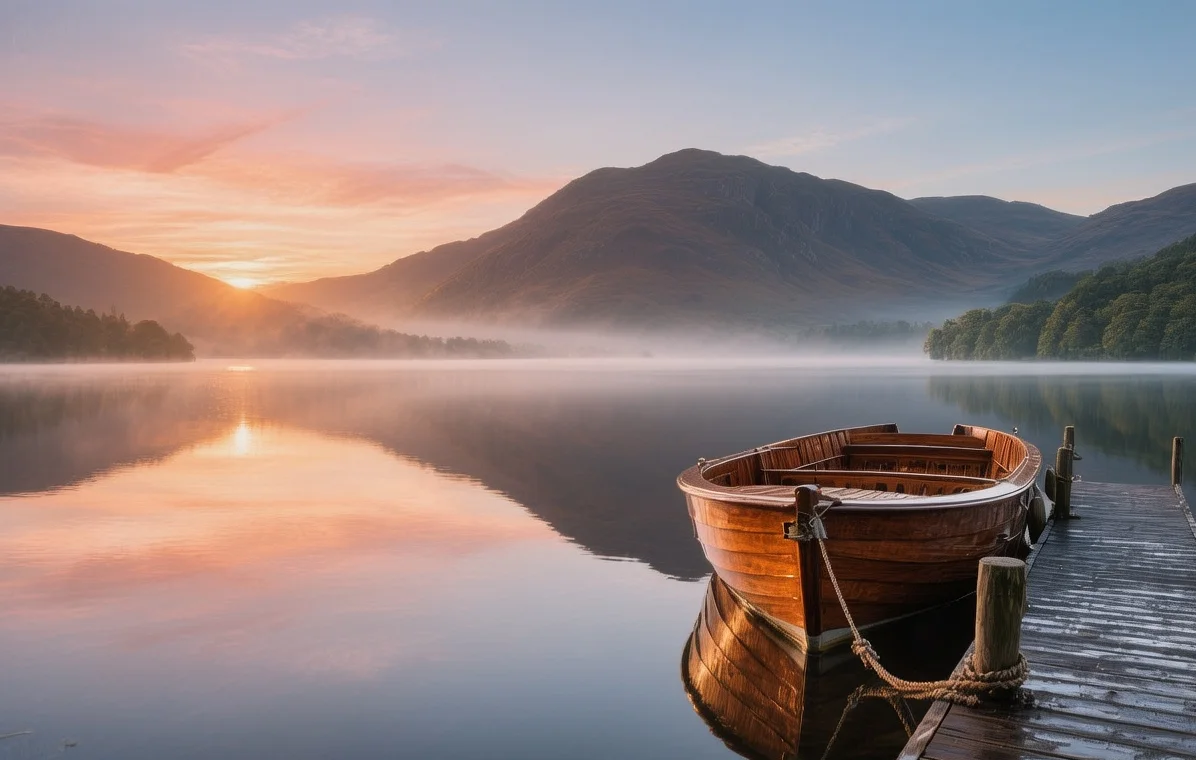
Derwentwater Cumbrian Peaks Meet Reflective Waters
Dawn breaks over Derwentwater—a mirror of polished obsidian stretching 5 kilometers through the northern Lake District, England. The water, often called the "Queen of the Lakes," lies still as glass at 6:15 AM, reflecting the jagged silhouette of Catbells rising 451 meters to the west. Mist clings to the surface like wool; a grebe slides silently across the bay, its wake the only disturbance in the 22-meter depth. This is a landscape carved by glaciers 13,000 years ago and protected as a UNESCO World Heritage Site since 2017. The air carries the scent of damp bracken, pine resin, and woodsmoke from Keswick chimneys—a sensory signature unchanged since the Romantic poets walked these shores. In 2026, as global travel accelerates, Derwentwater stands as a sanctuary of scale: intimate enough to circumnavigate in a day, yet wild enough to lose yourself in its woodlands. This is why Derwentwater matters now more than ever—a place where the rhythm of life follows the tides of light rather than the notifications on your phone.
Why Derwentwater Embodies the Heart of Cumbria
Derwentwater isn't merely a body of water—it's the cultural anchor of the northern Lake District. Formed by glacial erosion during the last Ice Age, this ribbon lake reaches depths of 22 meters (72 feet) and holds enough water to supply a small city for months. The lake's significance extends far beyond its 5-kilometer length and 1.6-kilometer maximum width. In the 1790s, the "Picturesque Movement" transformed Derwentwater from a working landscape into a destination for artists and poets; William Wordsworth lived nearby at Dove Cottage, drawing inspiration from these specific vistas. The lake solves a fundamental human need: the craving for accessible grandeur that doesn't demand expedition-level logistics. Unlike Windermere's sprawling industrial history, Derwentwater retained its agrarian soul, becoming a cornerstone of the Lake District National Park when it was established in 1951—England's first national park, protecting 2,362 square kilometers of fells and freshwater.
The eastern shore, dominated by the market town of Keswick, provides infrastructure without sacrificing authenticity. Electric launches from 1912 still ply the waters alongside traditional rowing boats, creating a living museum of maritime heritage. This is engineering in harmony with nature: the lake's natural drainage basin of 107 square kilometers feeds into the River Derwent, maintaining water quality that supports 14 fish species including the Arctic char, a glacial relict found in only a handful of British lakes. The presence of St Herbert's Island—owned by the National Trust since 1934—adds a layer of spiritual history, marking the site of a 7th-century hermitage. Here, geology and culture converge: the Borrowdale Volcanic Group rocks that form the western fells provide the slate that roofs the villages, creating a visual unity between land and settlement that defines the Cumbrian identity.
The Best Time to Experience Derwentwater
Derwentwater reveals different personalities throughout the year, but the sweet spot for 2026 travelers falls between May 20 and June 15. During this window, you'll experience average temperatures of 13–18°C (55–64°F), with daylight stretching until 9:50 PM—ample time for dawn photography and evening walks. The bluebells carpet the woodlands along the western shore, while the tourist hordes of July and August haven't yet descended. For photographers, the golden hour between 7:30–9:00 AM offers mist-shrouded fells reflected in glass-calm water; evening light from 8:00–9:45 PM bathes the limestone villages in honey tones.
Autumn—specifically October 10–28—provides a second peak experience, with temperatures cooling to 8–12°C (46–54°F) and the ancient oak woodlands transforming into a tapestry of amber and russet. This is when you'll witness the red deer rutting season in the surrounding fells. However, avoid August 24–31 unless you enjoy navigating crowds: this UK Bank Holiday period sees visitor numbers swell to 25,000 daily, with parking lots filling by 9:30 AM and accommodation prices inflating by 35%. Winter (December–February) brings its own magic but limited services—many boat operators reduce schedules, and daylight shrinks to 8:15 AM–3:50 PM. For real-time conditions and ferry schedules, verify current information at www.visitcumbria.com or the Keswick Launch Company website before your visit.
Approximate Budget for a 7-Day Trip (2026)
Derwentwater accommodates various budgets, though 2026 prices reflect post-pandemic tourism recovery and 3.5% UK inflation. The following breakdown assumes mid-range travel with comfortable accommodations, local dining, and comprehensive exploration. Prices are listed in British pounds (£), the local currency.
- Accommodation: £110–£180 per night for a double room in a traditional Lakeland guesthouse or boutique B&B in Keswick or Portinscale. Lakeside properties command premium rates (£200–£280), while villages like Braithwaite offer better value (£90–£120).
- Food: £50–£70 per day. Breakfast (£10–£15) typically includes Cumbrian sausage, local black pudding, and Lakeland Herdwick lamb bacon. Lunch (£15–£20) at a village pub: Cumberland sausage sandwich with chips, or a ploughman's with local cheese. Dinner (£30–£40) featuring regional specialties: sticky toffee pudding, Grasmere gingerbread, or fresh Derwentwater char fish.
- Transportation: Manchester Airport to Keswick bus: £35–£50 return via National Express (3 hours 30 minutes). Local bus day pass: £9.50 (Stagecoach 77/78 routes). Keswick Launch Company full lake cruise: £20.50 adults. Car rental: £40–£60 per day plus £10–£14 daily parking in Keswick.
- Attractions: Theatre by the Lake ticket: £25. Derwentwater Independent Hostel tour: £8. Guided walking tour: £18–£30. Boat hire (rowing boat): £20 per hour. Pencil Museum entry: £9.50.
- Miscellaneous: Ordnance Survey Explorer Map OL4: £11.95. Local wool sweater: £70–£130. Lakeland gin (distillery tour): £40. Travel insurance: £30–£45 for the week.
Total estimated cost for 7 days: £1,350–£1,850 per person (based on double occupancy)
7 Essential Derwentwater Experiences
- Dawn paddle on the Queen of the Lakes: Rent a traditional wooden rowing boat from Keswick Launch Company at 7:30 AM—before the motorized cruises begin. Paddle toward St Herbert's Island, listening to the dawn chorus of cuckoos and lapwings. The water is coldest now (7–10°C even in summer), but the stillness allows you to hear every ripple. Allow 90 minutes for a leisurely row to the island and back; bring waterproof layers as morning mist can soak through cotton.
- Walk the western shore from Keswick to Grange: This 7-kilometer path takes 3 hours and offers uninterrupted lake views without the crowds of the eastern promenade. Start at Keswick Theatre by the Lake at 9:00 AM, passing through ancient oak woodland where bluebells carpet the forest floor in May. Stop at the Folly Inn in Grange for a lunch of Herdwick lamb burger (£17) with views across the estuary. The path ends at Grange, where you can catch the 77 bus back to Keswick.
- Steam launch cruise at sunset: Book the 6:45 PM "Golden Hour Cruise" on the MV Derwentwater, one of the historic electric launches still operating on the lake. Built in 1912, she carries just 60 passengers, creating an intimate atmosphere as the captain narrates the lake's history. As the sun dips behind the Skiddaw fells, the water turns molten gold—this is when you'll understand why Turner painted here. The 90-minute cruise costs £26 and includes a complimentary Lakeland ale or wine.
- Explore the Theatre by the Lake interiors: This 1999 building, designed by Jeremy Lewison, sits on the lakeshore overlooking the water. The 1-hour guided tour (£12) reveals the unique revolving stage and the collection of theatrical memorabilia. The building itself—glass walls, slate roof, open plan—epitomizes modern architecture's respect for the landscape. Photography is permitted in the foyer but not inside the auditorium during performances.
- Wild swim (responsibly) at Friars Crag: The Lake District National Park Authority designates specific swimming areas to protect the fragile ecosystem. Friars Crag, on the eastern shore 1 kilometer south of Keswick, offers a rocky ledge with water depths reaching 3 meters within 5 meters of shore. Water temperature ranges from 10°C in June to 15°C in August—cold enough to require acclimatization. Enter slowly, swim for no more than 10 minutes if you're inexperienced, and always have dry clothes ready. The National Park's "Take Pride" campaign emphasizes leaving no trace.
- Hike to Catbells for the classic panorama: Alfred Wainwright, the Lake District's most famous chronicler, featured this 451-meter fell in his Pictorial Guide. The 3.5-kilometer ascent from the Hawse End jetty takes 1 hour 15 minutes and rewards you with the definitive view: Derwentwater stretching north toward Keswick, the Skiddaw range to the east, and on clear days, the Solway Firth visible on the horizon. Go at 3:00 PM in summer to avoid school groups and catch the afternoon light. Wainwright's guides remain the definitive resource for route finding.
- Visit the Pencil Museum: Located in Keswick (10 minutes by walk), this museum occupies a former graphite factory and tells the story of how local mining shaped the global writing industry. The collection includes the world's largest colored pencil (8 meters long) and WWII spy pencils containing hidden maps. Most importantly, it contextualizes Derwentwater not just as a playground for tourists but as a working landscape where mining and industry continue. Admission £9.50; allow 1.5 hours. The café serves Keswick mint cake, the energy-dense confection that accompanied climbers to Everest.
3 Hidden Gems Most Travelers Miss
- St Herbert's Island Hermitage Ruins: While thousands cruise past the island, few realize you can land during specific guided tours. The 7th-century hermitage ruins sit beneath mature oak trees, offering a silence rarely found in 2026. The island itself—4 hectares—features a chapel dedicated to St Herbert, a contemporary of St Cuthbert. Access: Book the "Island Explorer" tour with Keswick Launch Company (departs 11:00 AM Tuesdays and Thursdays, £22). The guide shares stories of the island's previous owners, including the Radcliffe family who donated it to the National Trust in 1934. Best light for photography: 11:30 AM–1:00 PM when the sun clears the western fells.
- Limefitt Park's Secret Beach: Tucked on the western shore south of Grange, this pebble beach receives a fraction of the visitors at Friars Crag. The real treasure is the view across the water to Walla Crag, framed by overhanging branches of ancient oak. The park itself belongs to the National Trust but is often overlooked by coach tours. Access: From Grange village, walk 15 minutes south following signs for "Limefitt" (uneven terrain). Open year-round, dawn to dusk. No facilities; bring water and pack out all litter.
- Derwentwater Independent Hostel (Historic Building): Originally a 17th-century farmhouse, this building sits on the lakeshore near Keswick but operates as a hostel most travelers walk past. The real treasure is the original inglenook fireplace in the common room, where guests gather in the evenings. The hostel offers day passes for non-guests to use the lakeside garden (£5). Access: From Keswick town center, walk 10 minutes north along the A591 then turn left at the hostel sign. Open daily 8:00 AM–10:00 PM for garden access. The warden can arrange private boat hire at discounted rates for guests.
Cultural & Practical Tips
- Respect the "Right to Roam" responsibly: England's Countryside and Rights of Way Act (2000) grants public access to open land, but the Lake District National Park Authority emphasizes the Countryside Code: close all gates, keep dogs under control (maximum 2-meter lead near livestock), and take all litter home. Herdwick sheep—those distinctive gray-faced, white-wooled animals—have right of way on all paths.
- Weather is a verb, not a noun: Cumbrian weather changes hourly. Even on days forecast at 16°C with "sunny intervals," carry waterproof layers (not just water-resistant). The lake creates its own microclimate: rain can fall on the western shore while the eastern side remains dry. Check the Met Office's "Lake District Mountain Forecast" for fell conditions, which differ dramatically from lakeside weather.
- Learn these Cumbrian phrases: "Nowt" (nothing, pronounced "nowt" rhyming with "out"), "reet" (right/correct), and "gan" (go). Locals appreciate the effort, though most speak standard English. When ordering in pubs, say "half" for a half-pint (284ml) or "pint" (568ml)—metric measures confuse everyone.
- Parking strategy: Keswick's car parks fill by 10:00 AM in summer. Arrive before 9:00 AM or after 3:00 PM, or use the Park & Ride at Borrowdale and take the bus into town. Parking costs £9–£14 per day; payment is cashless via RingGo app or phone.
- Photography etiquette: Drones require permission from the Lake District National Park Authority and must not exceed 120 meters altitude or fly within 150 meters of people/property. Tripods are permitted but cannot obstruct paths. Respect private property—many lakeside "public" paths actually cross private land via easements.
- Swimming safety: Derwentwater's water quality is generally good (rated "Excellent" by the Environment Agency in 2025), but avoid swimming within 30 meters of boat jetties or after heavy rainfall when agricultural runoff increases bacteria levels. Blue-green algae blooms occur occasionally in late summer—check the National Park's website for warnings.
- Support local economy: Purchase from independent shops rather than chains: Keswick's Bookshop, the Pencil Museum shop, and Portinscale's village store. Choose accommodations with the "Lake District Foundation" accreditation, indicating commitment to sustainability.
Conclusion: Travel with Reverence, Not Just Recreation
Derwentwater in 2026 asks something different of you than mere consumption of scenery. This lake—glacial, ancient, resilient—has witnessed centuries of visitors seeking escape, inspiration, or simply a day away from urban clamor. But it also sustains working farms where Herdwick sheep graze the fells, supports rare Arctic char in its cold depths, and provides drinking water for thousands of Cumbrians. To travel here responsibly means understanding that you're not just observing a landscape but entering a living system that predates tourism and must outlast it. Walk softly on these paths; they've carried miners, poets, and pilgrims for millennia. Choose the midweek visit over the crowded weekend. Hire a local guide who can explain why those stone walls snake across the hillsides (each one represents 200 hours of labor, built without mortar). Swim, but respect the water's power and temperature. Buy from the village shop rather than the supermarket. Let Derwentwater change you, not just entertain you. In an age of overtourism and climate uncertainty, this is how we ensure that 2026's visitors don't become the generation that loved this place to death. The lake will still be here in 2126—if we treat it not as a resource to consume but as a relationship to nurture.