
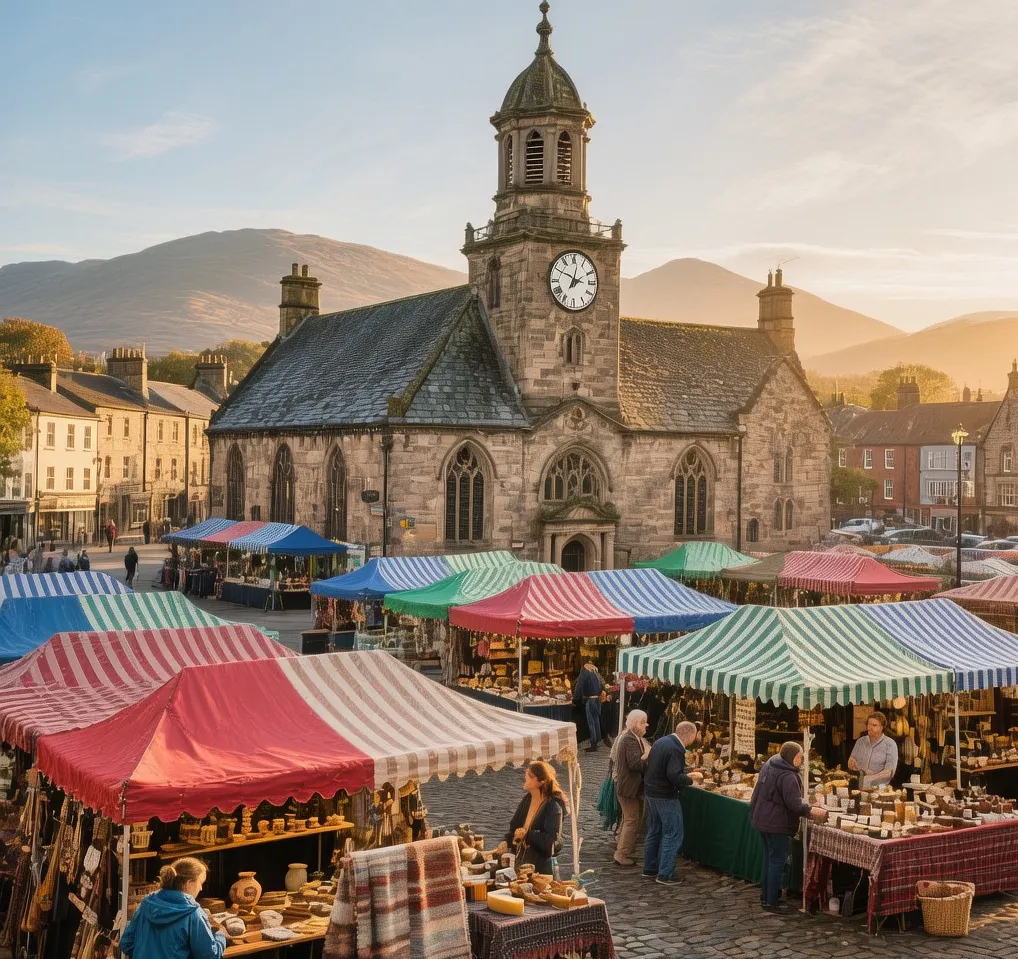
Keswick Market Historic Charter Stalls Meet Cumbrian Craft
8:00 AM breaks over the Market Square—a cobblestone expanse measuring 1,200 square meters in the heart of Keswick, England. The air carries the sharp scent of freshly ground coffee, the earthy perfume of Cumberland sausage sizzling on griddles, and the damp wool aroma of Cumbrian jackets drying after morning rain. Vendors unfold canvas awnings with practiced snaps; metal frames clatter against stone setts laid in 1890. This is Keswick Market, a living institution operating under a charter granted by King Edward I in 1276—750 years of continuous commerce on this exact plot. Tourists mingle with farmers selling Herdwick lamb; the sound of bartering mixes with the distant bell of St Kentigern's Church tolling the hour. In 2026, as digital commerce dominates global trade, this physical marketplace matters now more than ever. It remains a tactile anchor—a place where you shake hands with the person who grew your vegetables, where history isn't behind glass but stacked in crates beside you, waiting to be taken home.
Why Keswick Market Embodies Cumbrian Heritage
Keswick Market isn't merely a collection of stalls—it's the economic and cultural heartbeat of the northern Lake District. The market operates under the original Royal Charter of 1276, making it one of the oldest continuous markets in England. The focal point, the Moot Hall, was rebuilt in 1813 using local sandstone and slate, featuring a distinctive clock tower that stands 15 meters high. This structure solved a fundamental civic need: providing a covered space for town meetings and grain storage while anchoring the open-air trade below. The market fulfills a modern craving for authenticity in an age of mass production. Unlike supermarket supply chains stretching thousands of kilometers, goods here travel an average of 40 kilometers from source to stall. You buy cheese from a dairy in Penrith, honey from bees foraging on Skiddaw's heather, and wool spun from sheep grazing within sight of the square.
The engineering of the market itself reflects centuries of adaptation. The cobblestones—granite setts imported from Scotland in the Victorian era—drain rainwater efficiently toward the River Derwent, 400 meters away. Stall structures adhere to strict National Park Authority guidelines: canvas must be neutral tones (green, cream, brown) to preserve the visual integrity of the historic square. In 2026, the market hosts over 70 regular traders during peak season, generating approximately £1.2 million annually for the local economy. This isn't just tourism; it's infrastructure. The market supports 150 direct jobs and sustains ancillary businesses—from cafés to parking facilities—that keep Keswick viable year-round. When you walk these stones, you traverse a layered history: medieval charter lines invisible to the eye, Victorian drainage beneath your feet, and a contemporary commitment to sustainable localism that defines the future of rural commerce.
The Best Time to Experience Keswick Market
Keswick Market reveals its true character during specific windows, though it operates daily during peak season. The definitive experience occurs on Saturdays between 8:30 AM and 1:00 PM. During this window, you'll experience average temperatures of 12–16°C (54–61°F) in late spring, with the full complement of 70+ stalls open. The light is crisp; shadows from the Moot Hall stretch across the square, creating dramatic photography conditions between 9:00–10:30 AM. For those seeking quieter browsing, Tuesday and Thursday mornings (9:00 AM–12:00 PM) offer a more local atmosphere with 40–50 stalls, primarily focused on fresh produce rather than crafts.
Autumn—specifically October 5–20—provides a second peak experience, with temperatures cooling to 7–11°C (45–52°F) and the surrounding fells transforming into russet and gold. This is when you'll find seasonal specialties like game meats and preserved fruits. However, avoid August 24–31 unless you enjoy navigating crowds: this UK Bank Holiday period sees visitor numbers swell to 15,000 daily, with stall queues extending 20 minutes and parking costs inflating by 25%. Winter (December–February) sees reduced operations—many traders close,.
Approximate Budget for a 7-Day Trip (2026)
Keswick accommodates various budgets, though 2026 prices reflect post-pandemic tourism recovery and 3.5% UK inflation. The following breakdown assumes mid-range travel with comfortable accommodations, local dining, and comprehensive exploration including multiple market visits. Prices are listed in British pounds (£), the local currency.
- Accommodation: £100–£160 per night for a double room in a traditional Lakeland guesthouse or boutique B&B in Keswick town center. Lakeside properties command premium rates (£180–£250), while villages like Braithwaite offer better value (£85–£110).
- Food: £45–£65 per day. Breakfast (£10–£14) typically includes Cumbrian sausage, local black pudding, and Lakeland Herdwick lamb bacon. Lunch (£12–£18) at market stalls: Cumberland sausage sandwich with chips, or artisan pizza slice. Dinner (£25–£35) featuring regional specialties: sticky toffee pudding, Grasmere gingerbread, or fresh Derwentwater char fish.
- Transportation: Manchester Airport to Keswick bus: £35–£50 return via National Express (3 hours 30 minutes). Local bus day pass: £9.50 (Stagecoach 77/78 routes). Car rental: £40–£60 per day plus £10–£14 daily parking in Keswick (Park & Ride recommended).
- Attractions: Theatre by the Lake ticket: £25. Pencil Museum entry: £9.50. Guided walking tour: £18–£30. Boat hire (Derwentwater): £20 per hour. Market shopping budget: £50–£100 for crafts and produce.
- Miscellaneous: Ordnance Survey Explorer Map OL4: £11.95. Local wool sweater: £70–£130. Lakeland gin (distillery tour): £40. Travel insurance: £30–£45 for the week.
Total estimated cost for 7 days: £1,250–£1,750 per person (based on double occupancy)
7 Essential Keswick Market Experiences
- Taste the Cumberland Sausage at dawn: Arrive at the Market Square at 8:30 AM on Saturday. Head directly to the butchers' stall near the Moot Hall entrance. Order a fresh Cumberland sausage roll (£4.50)—the meat must be coarsely minced, seasoned with pepper and herbs, and formed into a continuous coil without links. Eat it standing up, wrapped in paper, feeling the heat through the napkin. The fat should render slightly, mixing with the flaky pastry. This is the definitive taste of Cumbria, protected by EU Geographic Indication status since 1996.
- Speak with the cheese mongers: Visit the specialist cheese stall (usually positioned on the western edge) around 10:00 AM. Ask for a sample of Lakeland Herdwick hard cheese (£12 per 200g). The vendor will explain the grazing patterns of the sheep that produced the milk. Purchase a wedge wrapped in wax paper—not plastic—to allow the cheese to breathe during your journey home. The texture should be crumbly yet dense, with notes of wild garlic and thistle.
- Browse the artisan crafts under the Moot Hall: The covered area beneath the Moot Hall clock tower hosts jewelry and pottery makers. Look for silverwork featuring Celtic knot designs or pottery glazed with local clay. Prices range from £25 for earrings to £150 for bowls. Ask the maker about their process; many use traditional kilns fired with wood from the surrounding forests. This is where you find souvenirs with provenance, not mass-produced imports.
- Drink coffee at the square's edge: Purchase a flat white (£3.80) from the mobile coffee van parked near the pedestrian crossing. Stand by the stone sundial (installed 1820) and watch the crowd flow. The coffee beans are typically roasted in Penrith or Kendal. The aroma mixes with the scent of damp stone and flowers from the adjacent plant stalls. It's a moment of stillness in the bustle—a chance to observe the rhythm of the town.
- Buy honey directly from the beekeeper: Locate the honey stall (often near the northern entrance). Purchase a jar of Heather Honey (£8.50 per 340g). This variety is dark, strong, and granulates quickly—a sign of purity. The beekeeper will tell you which fells the hives were stationed on during July. Use this honey in tea or on oatcakes; it carries the terroir of the Lake District hillsides.
- Explore the Moot Hall Museum: Enter the Moot Hall itself (open 10:00 AM–4:00 PM, £4 entry). The ground floor houses the Tourist Information Centre, but the upper floor contains historical exhibits about Keswick's mining and market history. Look for the original charter documents and Victorian market toll records. The building's timber beams date to 1813; touch the wood to feel the grain smoothed by centuries of hands. It contextualizes the stalls below within a deeper timeline.
- Walk the perimeter for hidden stalls: Don't just stay in the center. Walk the perimeter along Main Street and Lake Street. Smaller vendors often set up here to avoid premium pitch fees. You'll find plant sellers, book traders, and vintage clothing dealers. The light is softer here, shaded by building overhangs. Spend 30 minutes browsing these edges; you'll find unique items like Ordnance Survey maps from the 1950s or hand-knitted wool hats.
3 Hidden Gems Most Travelers Miss
- The Old Penrith Road Entrance: While most visitors enter from the Main Street side, the northern entrance off Penrith Road offers a quieter approach. This gate leads directly to the produce section, bypassing the craft crowd. Access: Walk past the Theatre by the Lake, turn left at the traffic lights, and enter through the metal gate marked "Market Entrance." Best visited: 8:00–9:00 AM when traders are setting up. You can watch the logistics of the market—forklifts moving crates, awnings rising—before the public arrives. It offers a behind-the-scenes perspective rarely seen.
- The Moot Hall Sundial Garden: Tucked behind the Moot Hall is a small paved area with a historic sundial and seating. Most shoppers rush past it to the stalls. Access: Walk around the right side of the Moot Hall building. Open daily during market hours. This spot offers shade on hot days and a direct view of the clock tower mechanism. It's where local elders sit to watch the world go by. Sit here for 15 minutes; you'll overhear conversations in Cumbrian dialect that reveal the town's social fabric.
- The Trader's Café (Back Lane):** Behind the market stalls, accessible via the lane between the Moot Hall and the library, lies a café used primarily by traders. Access: Ask a vendor for directions to the "Back Lane Café." Open 7:00 AM–2:00 PM on market days. This is where the sausage makers and cheese sellers eat their breakfast. If you're polite and the café isn't full, you can order a full English (£9.50) alongside the people whose goods you just bought. It's an authentic exchange—no tourist menu, just hearty food and local conversation. Tip: Arrive before 9:00 AM to avoid the trader rush.
Cultural & Practical Tips
- Cash is still king for small purchases: While most stalls now accept contactless cards, some smaller producers prefer cash for transactions under £5. Carry £20 in small denominations (£5 and £10 notes). ATMs are located on Main Street but charge £2.50 fees for non-customers.
- Weather is a verb, not a noun: Cumbrian weather changes hourly. Even on days forecast at 15°C with "sunny intervals," carry waterproof layers. The Market Square is exposed; rain comes in sideways during storms. Check the Met Office's "Lake District Mountain Forecast" for conditions, which differ dramatically from valley weather.
- Learn these Cumbrian phrases: "Nowt" (nothing, pronounced "nowt" rhyming with "out"), "reet" (right/correct), and "gan" (go). Locals appreciate the effort. When buying, say "I'll take this one" rather than "I'll have this"—the latter sounds too demanding.
- Parking strategy: Keswick's car parks fill by 9:30 AM on Saturdays. Use the Portinscale Park & Ride (£4 per day) and take the shuttle bus (every 15 minutes). Parking in town costs £12–£16 per day; payment is cashless via RingGo app or phone.
- Photography etiquette: Ask permission before photographing stallholders or their goods. Some artisans protect their designs fiercely. Tripods are permitted but cannot obstruct pedestrian flow. The Moot Hall interior prohibits flash photography to preserve historical documents.
- Bag policy: Bring your own reusable bags. Many traders charge £0.10–£0.20 for plastic bags, and some refuse them entirely on environmental grounds. A canvas tote fits better than a backpack in crowded aisles.
- Support local economy: Purchase from independent stalls rather than resellers. Look for signs saying "Made in Cumbria" or "Grown in Keswick." Choose accommodations with the "Lake District Foundation" accreditation, indicating commitment to sustainability.
Conclusion: Travel with Reverence, Not Just Recreation
Keswick Market in 2026 asks something different of you than mere consumption of goods. This square—historic, bustling, resilient—has witnessed centuries of traders seeking livelihood, locals seeking sustenance, and visitors seeking connection. But it also sustains working farms where Herdwick sheep graze the fells, supports artisan workshops in narrow alleys, and provides a communal heartbeat for the town. To travel here responsibly means understanding that you're not just browsing a tourist attraction but entering a living economy that predates tourism and must outlast it. Walk softly on these stones; they've carried miners, poets, and pilgrims for millennia. Choose the early morning visit over the crowded afternoon. Speak to the vendor about their craft, not just the price. Buy the local honey, not the imported jam. Let Keswick Market change you, not just entertain you. In an age of online shopping and homogenized high streets, this is how we ensure that 2026's visitors don't become the generation that loved this place to death. The market will still be here in 2126—if we treat it not as a resource to consume but as a relationship to nurture.