
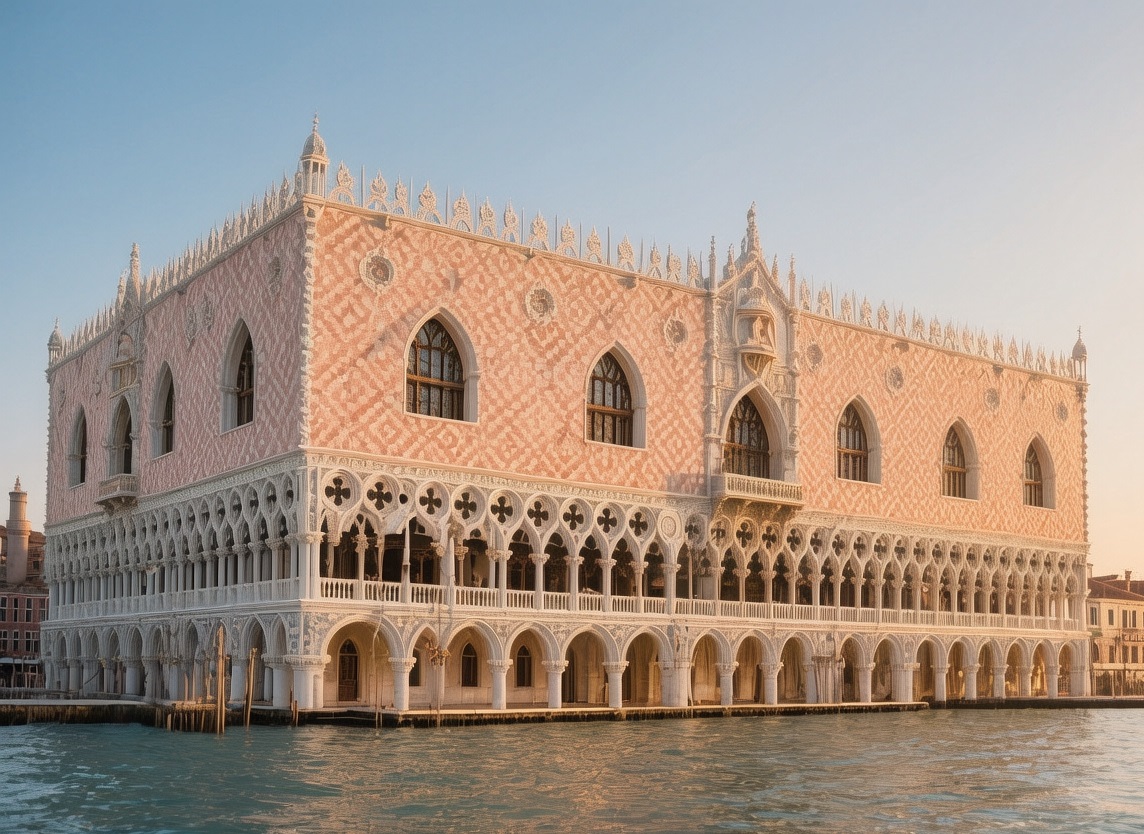
Doge's Palace Venetian Power Meets Gothic Splendor
The late afternoon sun gilds the pink-and-white marble façade of the Doge’s Palace, casting long shadows across the arched loggias that overlook the lagoon. The air hums with the gentle lap of water against stone steps and the distant chime of vaporetto bells. Before you rises a masterpiece of Venetian Gothic architecture—its delicate tracery, quatrefoil windows, and colonnaded arcades belying the iron-fisted rule once wielded within. For over 700 years, this was the seat of the Most Serene Republic, where doges governed, councils debated, and prisoners vanished into the infamous Piombi cells. In 2026, as Venice implements new visitor protocols to protect its fragile heritage, the Doge’s Palace offers not just a tour of opulence, but a profound encounter with the machinery of power, art, and justice in one of history’s most enduring maritime empires.
Why Doge's Palace Embodies Republican Grandeur
Built in stages between the 14th and 15th centuries, the Doge’s Palace is a paradox: a palace for a republic that forbade hereditary monarchy. Its design reflects Venice’s unique political balance—ornate enough to impress foreign dignitaries, yet structured to limit any single ruler’s authority. The Great Council Chamber, the largest room in Europe when completed in 1423, could seat 1,200 patricians, embodying the Republic’s (limited) democratic ideals. Inside, masterpieces by Tintoretto, Veronese, and Tiepolo glorify Venetian triumphs, while the Bridge of Sighs connects the palace to the prison—a silent reminder of the state’s reach. The building itself is an engineering marvel: its lightweight brick core faced with Istrian stone floats on over a million wooden pilings driven into the lagoon mud. This fusion of beauty, function, and political symbolism makes it one of the most significant civic buildings in Western history.
The Best Time to Visit Doge's Palace
To experience the palace with fewer crowds and optimal light for viewing its vast interior paintings, visit between April 10 and May 20, 2026. During this window, daytime temperatures average 16–20°C (61–68°F), and humidity is low. The ideal time is 8:30–10:00 AM, right when the site opens, allowing you to explore the grand chambers before tour groups arrive. Avoid weekends and holidays, when queues can exceed 45 minutes. Note that timed-entry tickets are mandatory; book at least two weeks in advance via the official website (museiciviciveneziani.it).
Approximate 7-Day Budget for Venice
Based on mid-range travel standards and a projected 4% annual inflation from 2025 Italian tourism
- Accommodation: €150–€200 per night in a 3-star hotel or guesthouse in Castello or San Marco—within a 10-minute walk of the palace but slightly removed from peak tourist zones.
- Food: €60 per day. Breakfast (€8): cappuccino and brioche at a local bar. Lunch (€22): cicchetti and a spritz near Campo Santa Maria Formosa. Dinner (€30): seafood risotto or bigoli in salsa at a family-run trattoria.
- Local Transport: €22 for a 7-day ACTV pass (includes unlimited vaporetto rides). The nearest stop is San Marco, a 2-minute walk from the palace entrance.
- Attractions: Doge’s Palace: €25 (includes access to the Bridge of Sighs and prison). St. Mark’s Basilica: free (€3 for treasury). Skip-the-line guided tours start at €35.
- Miscellaneous: €70 for souvenirs (e.g., Murano glass, Burano lace), gelato, and coffee at historic cafés like Caffè Florian (€12 for a seated espresso).
Total Estimated Cost: €1,200–€1,500 for one person for 7 days.
5 Essential Doge's Palace Experiences
- Explore the Secret Itineraries Tour: This 75-minute guided route takes you through hidden council chambers, torture rooms, and the Piombi prison cells where Casanova was held—offering unparalleled insight into Venetian justice.
- Marvel at the Great Council Chamber: Stand beneath Tintoretto’s colossal “Paradise,” the world’s largest oil painting, and imagine 1,200 nobles debating the fate of an empire.
- Cross the Bridge of Sighs: Walk the enclosed limestone bridge connecting the palace to the New Prison—named for the sighs of prisoners seeing their last glimpse of Venice.
- Admire the Courtyard Loggias: The palace’s inner courtyard, with its elegant staircases and sculpted columns, showcases the transition from Gothic to Renaissance design.
- View the Armory Collection: Housed in the former weapons depot, this exhibit displays medieval armor, swords, and ceremonial arms used by the Doge’s guard.
3 Hidden Gems Most Travelers Miss
- Scala dei Giganti (Giants’ Staircase): Located in the courtyard, this ceremonial staircase is flanked by colossal statues of Mars and Neptune. Few pause to appreciate its symbolic message: Venice’s power over land and sea.
- Church of San Zaccaria: Just a 5-minute walk away, this serene church houses a Bellini altarpiece and was a favored burial site for doges. Locals attend Mass here, offering a peaceful counterpoint to the palace’s grandeur.
- Caffè del Doge: At Calle Larga XXII Marzo 2250, this unassuming café serves excellent coffee without the Piazza San Marco markup. A favorite among museum staff and historians.
Cultural & Practical Tips
- Book tickets online in advance: Timed entry is strictly enforced. Reserve directly via museiciviciveneziani.it to avoid third-party fees and secure your preferred slot.
- Dress respectfully: As a historic civic and religious site, shoulders and knees should be covered. Carry a scarf or light jacket for adjustments.
- Allow 2.5–3 hours for a full visit: The palace is vast. Rushing means missing key details in the council chambers and prison corridors.
- Photography is restricted: No flash or tripods inside. Some rooms prohibit photography entirely to protect fragile artworks.
- Combine with St. Mark’s Square: Your ticket includes access to the Correr Museum and Archaeological Museum nearby—plan a full morning in the area.
Travel with Historical Awareness, Not Just Wonder
In 2026, visiting the Doge’s Palace is an act of historical reckoning. This is not merely a monument to beauty, but a testament to how power, art, and surveillance intertwined in one of the world’s most sophisticated pre-modern states. By arriving prepared, respecting quiet spaces, and engaging with the narratives of both rulers and prisoners, you honor the complexity of Venice’s legacy. Support conservation efforts by booking official tours, choose local eateries over tourist traps, and remember that every mindful step through these halls helps preserve them for future generations. Let your visit be a dialogue with history—not just a passage through it.