
Forte dei Marmi Beaches Tuscan Elegance Meets the Tyrrhenian Sea
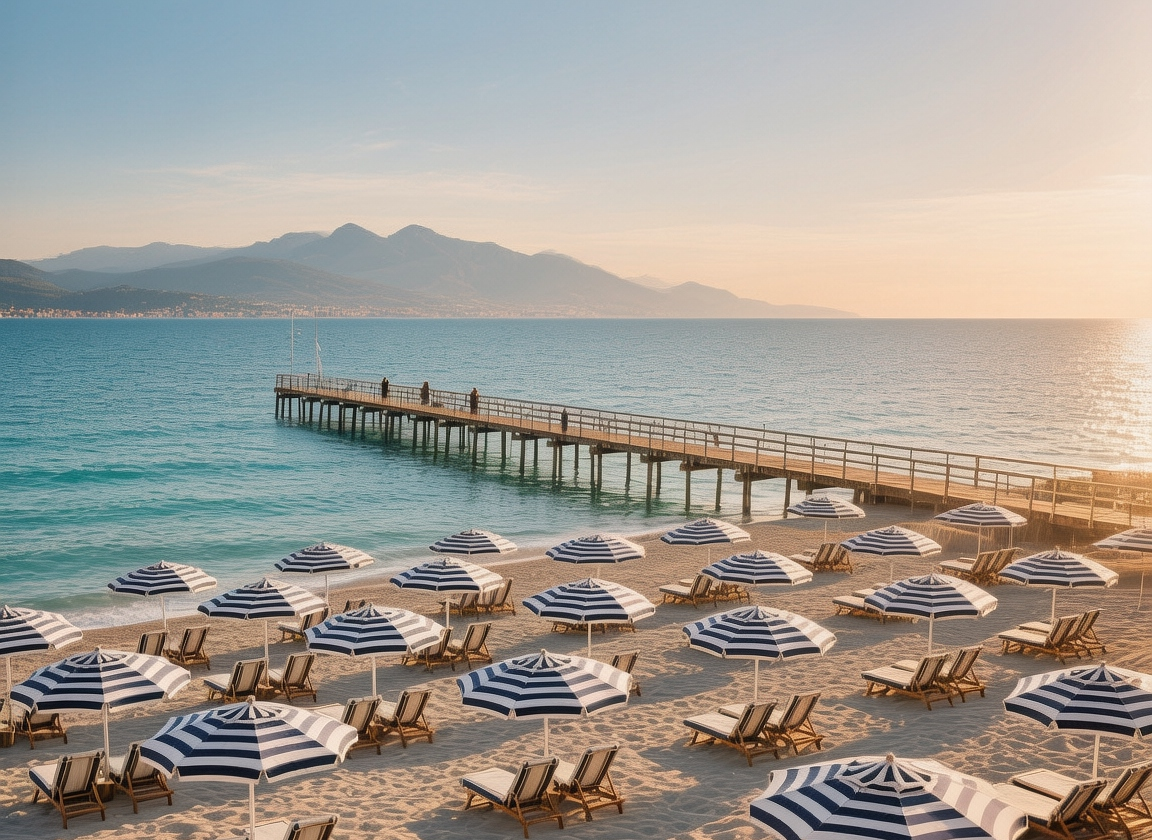
The morning sun glints off the turquoise water of the Tyrrhenian Sea as a gentle breeze rustles through the tall, fragrant pines that line the shore. You hear the soft crunch of fine, golden sand underfoot, the distant chime of bicycle bells on the viale a mare, and the low murmur of conversation from a nearby beach club. Before you stretches a meticulously ordered landscape of blue-and-white striped umbrellas, each marking a private parcel of paradise on one of Italy’s most refined coastlines. This is Forte dei Marmi, a seaside town born in the late 18th century when the Grand Duke of Tuscany, Pietro Leopoldo, built a fortress (forte) to protect precious Carrara marble shipments—a legacy that still echoes in its name [[3]]. Its beaches, stretching for 4.5 kilometers (2.8 miles) along the Versilia coast, are not just a place to swim but a social institution, a stage for la dolce vita played out with understated luxury. In an era of overcrowded resorts and fleeting trends, Forte dei Marmi matters now more than ever—it offers a masterclass in mindful leisure, where beauty, order, and nature coexist in perfect harmony.
Why Forte dei Marmi Beaches Embodies Refined Coastal Living
Forte dei Marmi’s beaches are the epitome of the Italian stabilimento balneare—a private beach establishment system that transforms the coastline into a curated, comfortable, and deeply social space. This model, perfected here over a century, solves a fundamental problem of Mediterranean tourism: how to provide privacy, service, and safety without sacrificing natural beauty. The town’s development as a resort began in earnest in the 1880s, when aristocratic families from Florence and beyond built grand villas amidst the pine forest, seeking a refined escape from city life [[3]]. Today, the beach is divided into around 70 individual stabilimenti, each a self-contained world with its own character, from the historic Bagno Bruno (established in 1920) to the ultra-modern La Capannina. These establishments are feats of logistical elegance, featuring uniform rows of wooden cabins (cabine), sun loungers, and umbrellas arranged with military precision on sand that is raked daily. The “need” they fulfill is profound: they offer a seamless blend of relaxation and service—where your towel is provided, your lunch is delivered to your lounger, and your children are safe in supervised play areas—all within steps of the pristine sea. This system has preserved the coastline from chaotic development, ensuring that the natural backdrop of pine woods and clear water remains the star of the show.
The Best Time to Experience Forte dei Marmi Beaches
To enjoy Forte dei Marmi’s beaches at their most serene and pleasant, target the specific windows of May 25–June 20 or September 1–25, 2026. During these shoulder seasons, the weather is ideal for both sunbathing and exploring, with comfortable daytime highs of 24–28°C (75–82°F) and refreshing sea breezes that keep the humidity at bay [[11]]. The best time of day to secure a prime spot and enjoy the water is in the morning, between 9:00 AM and 11:30 AM, when the light is soft, the sea is calm, and the beach clubs are just coming to life. It is strongly advised to avoid the peak summer period of July 15–August 25, when the town’s population swells from 8,000 to over 70,000 residents and visitors, leading to crowded beaches, fully booked restaurants, and traffic congestion on the narrow coastal roads [[3]]. For the most current information on beach club availability, opening dates, and local events, always check the official tourism portal: visittuscany.com.
Approximate Budget for a 7-Day Trip (2026)
This budget is calculated for a solo traveler seeking a comfortable, stylish experience focused on the beach and local culture in 2026, based on current inflation trends and average regional costs for the Versilia coast.
- Accommodation: €120–€220 per night. Staying in the historic center near Piazza Garibaldi offers charm and walkability. Luxury villa rentals can cost significantly more.
- Food: €65 per day. Breakfast (€8): a cappuccino and pastry at a cafe like Pasticceria Bellini. Lunch (€25): a seafood salad or pasta at a beach club. Dinner (€32): a main course like grilled fish at a trattoria such as Ristorante La Barca.
- Transportation: €100 total. A regional train ticket from Florence to Forte dei Marmi costs €12 one-way (Trenitalia Regionale line). The town is best explored by bicycle (rental €15/day) or on foot.
- Attractions: Daily beach club access (€25–€35 for two sunbeds and an umbrella). Entry to the weekly designer market (free). Visiting the historic Forte (free).
- Miscellaneous: €120. This covers a high-quality linen shirt from the Tuesday market (€60), several gelato stops (€3 each), and aperitivo at a chic bar like Dior Club (€15).
Total Estimated Cost: €1,255–€1,455
5 Essential Forte dei Marmi Beach Experiences
- Book a Day at a Historic Stabilimento: Reserve a spot at Bagno Bruno or Bagno Giorgio. Arrive by 9:00 AM to claim your two sunbeds and umbrella. Order a mid-morning cappuccino and a late lunch of spaghetti alle vongole, all served directly to your lounger on the sand.
- Stroll the Viale a Mare at Sunset: Walk or cycle along this iconic palm-lined promenade as the sun dips below the horizon. The golden light filtering through the pines creates a magical atmosphere, and the air fills with the scent of salt and pine resin.
- Explore the Tuesday Designer Market: Every Tuesday morning, the streets around Piazza Garibaldi transform into an open-air luxury boutique. Browse stalls selling discounted Prada, Gucci, and Ferragamo. Go early (by 8:00 AM) for the best selection before the crowds arrive.
- Visit the Original Forte (Fortino): The small 18th-century fortress that gave the town its name sits right on the beach. It’s a free, quick visit that offers historical context and a great photo opportunity with the sea as a backdrop.
- Indulge in a Seaside Aperitivo: As the day winds down, join the local ritual at a beachfront bar like Dior Club or La Capannina. Order a spritz or a glass of Prosecco with a plate of olives and focaccia, and watch the elegant social scene unfold.
3 Hidden Gems Most Travelers Miss
- The Pine Forest Path to Marina di Pietrasanta: Just north of the main beach, a quiet, shaded path through the pine forest leads to the neighboring town. It’s a peaceful 30-minute walk or bike ride away from the bustle, perfect for a morning meditation or a solitary run.
- Bagno Carlo, the Artist’s Beach Club: This unassuming stabilimento near the Forte is a favorite among local artists and writers. It has a more bohemian, relaxed vibe than its glamorous neighbors. Look for the small sign and the collection of sculptures in the sand.
- The Early-Morning Fish Market at Darsena: At the small harbor (darsena), local fishermen sell their morning catch directly from their boats between 7:00 AM and 9:00 AM. It’s a glimpse into the town’s working soul, far from the luxury facade. Ask for “il pesce del giorno” (the fish of the day).
Cultural & Practical Tips
- Book your beach club in advance: Especially during the shoulder seasons, popular stabilimenti fill up. Many allow online reservations for the season or by the week.
- Dress the part: Forte dei Marmi is known for its understated elegance. Even at the beach, a well-cut cover-up and quality sandals are the norm. Inside town, smart casual attire is expected at most restaurants.
- Learn key phrases: “Un ombrellone e due lettini, per favore” (oon om-brel-LOH-neh eh DOO-eh let-TEE-nee) for “An umbrella and two sunbeds, please.” “Dov’è il bagno?” (DOH-veh eel BAHN-yoh?) for “Where is the bathroom?”
- Respect the quiet hours: Many beach clubs enforce a quiet period in the early afternoon (roughly 1:00–4:00 PM) for napping. Keep noise to a minimum during this time.
- Beware of the scirocco wind: In late spring and early autumn, the hot, humid scirocco wind from Africa can make the coast feel muggy. Check the forecast if you’re sensitive to humidity.
- Tipping is not expected but appreciated: A small tip (€1–€2) for exceptional beach service is a kind gesture, but not obligatory.
Conclusion: Travel with Intention, Not Just Indulgence
Forte dei Marmi’s beaches offer more than just sun and sea—they present a philosophy of leisure. In a world that often confuses relaxation with idleness, this Tuscan coast teaches us that true rest is intentional, beautiful, and deeply connected to place. Your presence here is an invitation to slow down, to savor the quality of a perfectly made espresso, to appreciate the order of a raked sand path, and to listen to the rhythm of the waves through a canopy of ancient pines. By choosing to engage mindfully—with the local culture, the natural environment, and the history embedded in every grain of sand—you become part of a tradition that values grace over haste. In 2026, let your journey be defined not by how many hours you spend on the beach, but by the depth of your attention to its subtle, elegant details. In that quiet observation, you honor the spirit of Forte dei Marmi and ensure its timeless charm endures.