Gijón Beaches Urban Sand Meets Asturian Maritime Heritage
Gijón: Where Working Port Meets Golden Shore
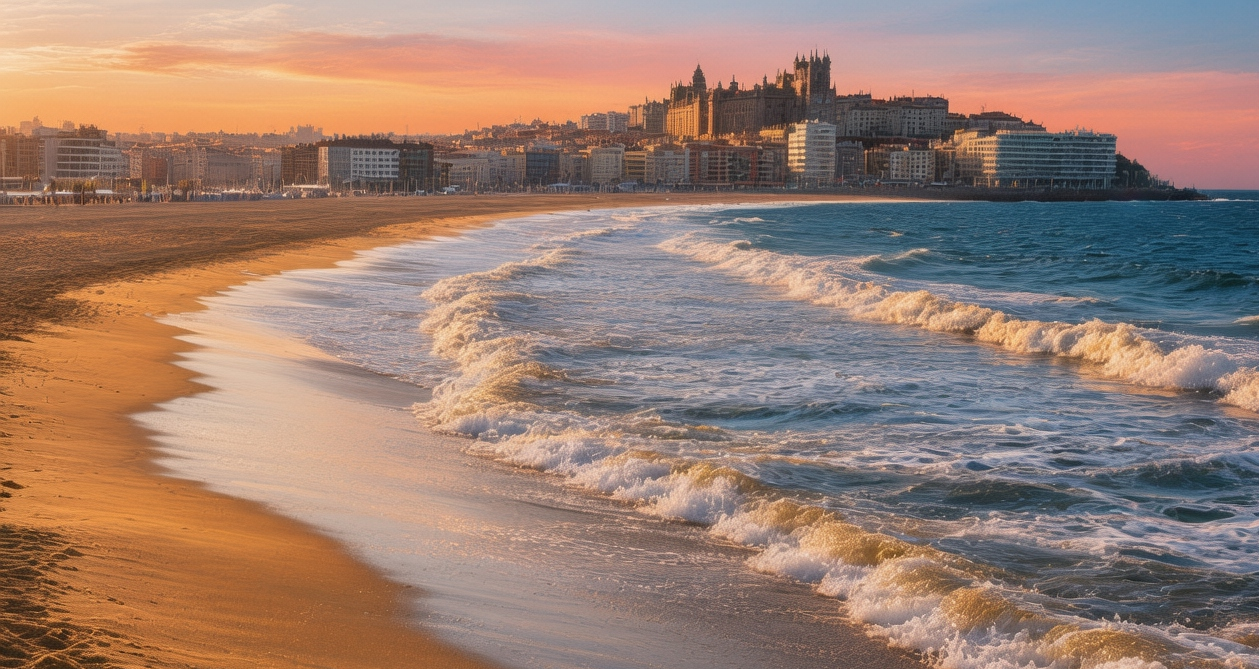
I walk down to San Lorenzo beach at ten in the morning. Waves roll steady and strong onto wide golden sand. The waterfront promenade is free. I look back at the city climbing the hill — old stone houses, red rooftops, church spires catching sun. The air smells of salt, grilled fish, and fresh bread. Not everything feels polished. The industrial zone sits visible along the bay. Some central streets look worn. Wind blows hard and often. Yet Gijón feels real. It is not a resort built for visitors — it is a living coastal city that welcomes you.
Why Gijón Matters
Gijón sits on Spain’s northern coast, the largest city in Asturias. Romans settled here two thousand years ago, drawn by the sheltered bay and fertile land. For centuries it thrived as fishing port, trading hub, and later industrial powerhouse — steel and coal built modern prosperity. Industry has faded, leaving scars and space to reimagine. Today the city balances grit and grace — working docks beside sweeping beaches, medieval lanes beside bold modern architecture. That transition feels unfinished. Some neighbourhoods wait for renewal. Visitor numbers grow faster than infrastructure. Still the tide turns. Boats sail out each dawn. And the city stays true to itself — authentic, unpretentious, entirely alive.
The Best Time to Experience Gijón
May through June brings mild days and blooming green — 13°C to 21°C (55°F–70°F). The coast stays fresh and lively. September and early October offer warm sea and golden light — 14°C to 22°C (57°F–72°F). Summer from July to August feels warmest — 16°C to 25°C (61°F–77°F) — but the beach fills fast. Winter from November to March stays blustery — 8°C to 14°C (46°F–57°F). Storms sweep in and the ocean rages magnificent. Weekdays beat weekends. Arrive before 09:30 to walk the shore without crowds.
Approximate Budget for a 7-Day Trip
- Accommodation: Guesthouse near old town — 45–75 euros per night. Beachfront apartment — 60–110 euros per night. City centre hotel — 70–140 euros per night. Campsite nearby — 14–20 euros per person.
- Food: Fresh seafood lunch — 14–24 euros. Fabada Asturiana dinner — 12–20 euros. Cider and tapas — 10–16 euros. Bakery or market — 5–9 euros.
- Transport: Local bus — 1.40 euros. Train from Oviedo — 5 euros. From Santander — 12 euros. Car rental — 32–50 euros per day. Parking — 3–6 euros daily.
- Attractions: Beach and waterfront — free. Roman ruins — 3 euros. Museum — 4 euros. Guided cider tour — 12 euros.
- Miscellaneous: Windproof layer, water, snacks — 8–14 euros daily.
Total estimated for one person, 7 days: 320–600 euros
Restaurants right on the main promenade charge noticeably more than those tucked in the old town lanes. Walk five minutes uphill. You will find family-run places serving better food at kinder prices.
Essential Gijón Experiences
- Walk San Lorenzo beach at low tide. Sand stretches wide and flat. Waves roll in steady and strong. The city rises behind you — warm stone, bright light. It feels like the whole shore belongs to you. Skip this if gale warnings blow — the promenade closes and waves crash over the railings.
- Explore the Cimavilla old quarter. Narrow cobbled lanes climb the hill. Colourful houses, small squares, quiet taverns. This is where the fishing community lived for centuries. It feels layered, lived-in, deeply charming.
- Visit the Roman ruins at the hilltop. Foundations, walls, and stone columns mark where the ancient settlement stood. The view stretches wide across bay and city. It connects you straight to the city’s beginnings.
- Eat fabada and pour cider like a local. Rich bean stew slow-cooked with pork and sausage — hearty, warming, perfect after a coastal walk. Cider pours from height to aerate it. It takes practice — ask someone to show you.
- Walk the headland at sunset. Light spills across the water. The bay turns gold then deep rose. The city glows warm. People gather quiet and watch. It feels like a shared gift.
- Watch fishing boats unload at dawn. Crates of fish and shellfish move fast from deck to market. The waterfront wakes up loud and busy. This is where every meal begins. It feels raw and real.
Hidden Gems Most Travelers Miss
- The small cove west of the main beach. Tucked between headlands. Shingle and fine sand mix in a quiet curve. The water stays clear. Almost no tourists find their way here.
- The lanes behind the main square. Most visitors stay on the shore. Walk uphill ten minutes. You find quiet residential streets, old balconies, neighbourhood bars. It feels like the real Gijón.
- The so-called "perfect photo spot" on the central promenade. It fills instantly. Walk two hundred metres east. The same curve of beach and city appears — empty and just as beautiful.
Cultural & Practical Tips
- Wear windproof everything. The coast is fully exposed. Temperatures feel 4 degrees lower than inland. Wind can blow you off balance — hold onto hats and bags.
- Pour cider low and slow. Hold the bottle high and the glass low. Let the stream hit the side. It fizzes and releases flavour. Do not be embarrassed if you spill — everyone does at first.
- Respect fishing areas. Boats still work these waters. Do not block access or walk on active quays. Livelihoods depend on these spaces.
- Do not swim alone. The ocean stays powerful. Rip currents occur. Swim where lifeguards watch — they are there for a reason.
- Book accommodation months ahead in August. Rooms vanish fast. May or September offer better value and thinner crowds.
- Walk everywhere. The city climbs and curves but distances stay manageable. You discover far more on foot than you ever will from a bus.
Essential Visitor Information
Location & Access: Gijón, Asturias, Spain. 45 km north of Oviedo — 35 minutes by train or car. 110 km west of Santander — 1 hour 15 minutes. 460 km north of Madrid — 5 hours by car or 4.5 hours by train. Flights via Asturias or Santander airports.
Tickets & Booking: Beach, promenade, old town — free. Roman ruins — 3 euros. No reservation needed for individuals. Reserve accommodation June–September well ahead.
Operating Hours: Always open. Ruins and museums generally 10:00 to 18:00, closed Mondays. Restaurants — 13:00 to 15:30 and 20:00 to 23:30.
Visit Duration: Minimum 2 days. 3–4 days lets you explore beaches, old town, cider country, and nearby coast without rushing.
Family Suitability: Excellent. Wide shallow beach suits children. Strollers work on promenade but struggle in old town lanes. Restrooms along shore and in centre.
Timing: Best season — May–June and September. Best time — before 09:30 or 1 hour before sunset.
Highlights: Low-tide beach walk, Cimavilla lanes, Roman ruins, fabada and cider, sunset headland, dawn harbour.
Nearby & Day Trip: Oviedo — 35 mins. Ribadesella — 45 mins. Santander — 1 hour 15 mins. Covadonga Lakes — 1 hour 30 mins.
Conclusion: Travel with Authenticity, Not Just Show
Gijón does not perform for visitors. It lives — works, changes, stays true to itself. Before you leave, taste the cider poured from high. What does it mean to stay real, wherever you are?
Post a Comment