
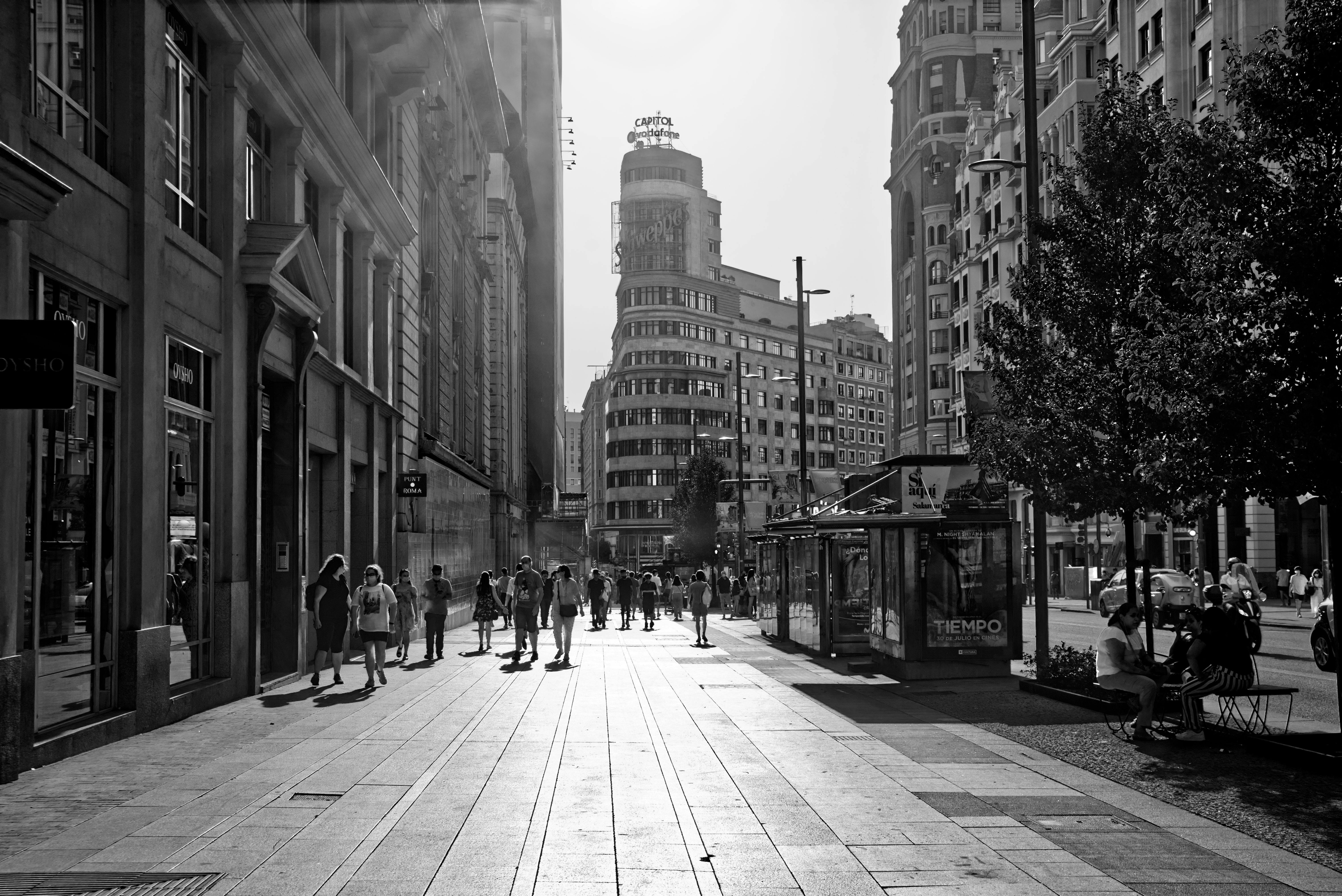
Gran Vía, Madrid Beaux-Arts Stone Meets Electric Neon
The air vibrates with the low hum of traffic and the distant crescendo of a musical theater overture—sounds that have defined this artery since the first tram rolled down the cobblestones in 1910. You stand beneath the shadow of the Metropolis Building, its dark slate dome piercing the sky at 68 meters high, while neon signs flicker to life against the deepening twilight. The street stretches 1.3 kilometers before you, a concrete canyon 35 meters wide carved through the dense medieval fabric of the city. This is the Gran Vía, Madrid, a monumental avenue constructed between 1910 and 1931 to solve the critical congestion plaguing the capital. You hear the shutter clicks of tourists capturing the architecture; the chatter of shoppers exiting Primark; the whistle of traffic police directing the flow at Callao. In 2026, as historic streets face pedestrianization pressures, the Gran Vía, Madrid remains a dynamic hybrid—a place where early 20th-century ambition collides with modern consumerism, demanding you look up at the facades even as you navigate the crowds below.
Why Gran Vía, Madrid Embodies Urban Transformation
The Gran Vía, Madrid represents the most ambitious urban engineering project of early 20th-century Spain, designed to solve the critical need for east-west connectivity in a city choked by narrow medieval alleys. Before its construction, traveling from the Alcalá Gate to the Plaza de España required a convoluted detour through winding streets ill-suited for modern traffic. The solution, proposed by architects José López Salaberry and Francisco Andrés Octavio, involved the demolition of over 500 existing buildings to create a straight, wide thoroughfare. The engineering utilized reinforced concrete and steel frameworks, allowing for the towering structures that define the skyline today.
Architecturally, the avenue is a chronological catalog of styles: Beaux-Arts dominates the eastern section near Alcalá, transitioning to Art Deco and Rationalism as you move west toward Plaza de España. The Telefónica Building, completed in 1929, stands as Spain's first skyscraper at 90 meters, featuring a steel structure imported from the United States. This integration of commerce, culture, and infrastructure makes the Gran Vía, Madrid not merely a street but a statement of modernity. The avenue was designed to accommodate trams, cars, and pedestrians simultaneously, a multi-modal approach that remains relevant today. Every corner stone and wrought-iron balcony speaks to a era when Madrid sought to reinvent itself as a European metropolis, preserving the grandeur of the past within the function of the present.
The Best Time to Experience Gran Vía
For the optimal Gran Vía, Madrid visit, target April 15–June 10 or September 15–October 25, when temperatures range between 15–25°C (59–77°F) and the daylight lasts until 9:00 PM. The street is accessible 24 hours, but the ideal viewing window is 7:00–8:30 PM when the neon signs illuminate against the darkening sky without the intensity of midday sun. Morning visits between 9:00–10:30 AM offer clearer views of the architectural facades before crowds obstruct the sidewalks. Spring coincides with theater premieres, causing hotel rates to increase 40–60%; book accommodation four months in advance if visiting during this period.
Avoid July 15–August 25 unless you tolerate extreme heat; temperatures regularly exceed 35°C (95°F), making the stone surfaces radiate intense thermal energy. The "canyon effect" of the tall buildings traps heat, creating an oven-like atmosphere despite the shade. Winter months (December–February) bring cold weather (5–12°C / 41–54°F) but festive lights enhance the evening ambiance. Many shops close on Sundays; verify current hours at www.esmadrid.com or contact the tourist office at info@esmadrid.com (+34 915 881 636). Weekday evenings typically see the highest energy levels, allowing for the full experience of the street's nightlife and theater culture.
Approximate Budget for a 7-Day Trip (2026)
Madrid offers excellent value for cultural travelers, though costs fluctuate during major events like Pride or San Isidro. The following budget assumes mid-range comfort with a focus on local experiences, based on 2026 pricing with approximately 3.5% inflation from 2025 figures. Estimates include stays near the historic center for easy access to the Gran Vía, Madrid.
- Accommodation: €90–€160 per night for a double room in a boutique hotel or renovated apartment in Centro, Gran Vía, or Malasaña neighborhoods; luxury options overlooking the avenue command €250–€500 per night
- Food: €45–€65 per day—breakfast €5–€9 (café con leche and churros con chocolate), lunch €15–€25 (menú del día including cocido madrileño, salad, and wine), dinner €25–€35 (tapas selection including calamari and jamón ibérico)
- Transportation: Train from Barcelona Sants to Madrid Atocha: €50–€80 high-speed AVE (2.5 hours); Metro single ticket: €1.50 or €18.50 10-trip pass; taxi from airport: €35 fixed rate; bike rental: €15 per day
- Attractions: Gran Vía, Madrid entry: free; Theater show: €30–€60; Royal Palace: €13; Prado Museum: €16; Reina Sofía: €10; Mercado de San Miguel: free entry (food costs extra)
- Miscellaneous: Ceramic souvenirs from €12; local wine €8–€20 per bottle; horchata drink €3; artisan leather goods €30–€70; guided architecture tour €20
Total estimated cost for 7 days: €1,100–€1,500 per person (based on double occupancy; solo travelers should add 35–45% for single supplements)
7 Essential Gran Vía, Madrid Experiences
- Photograph the Metropolis Building: Stand at the corner of Alcalá and Gran Vía to capture the iconic dome topped with a winged victory statue. The building was completed in 1911 and features black slate and gold leaf details. Visit at 7:00 PM when the lighting accentuates the sculpture against the sky. The traffic light intersection provides a foreground element. Allow 15 minutes to wait for a gap in traffic. This is the most recognizable landmark of the avenue; do not miss it.
- Visit the Telefónica Building: Enter the lobby of Spain's first skyscraper, completed in 1929. The Art Deco interior features marble columns and a restored elevator cage. Visit between 2:00–4:00 PM when lighting accentuates the lobby details. The building now houses a cultural center with free exhibitions. It demonstrates the engineering ambition of the 1920s. Look up at the ceiling frescoes. This connects the space to the history of communication.
- Attend a Musical Theater Show: Book tickets for a performance at the Lope de Vega or Coliseum Theater. The productions rival Broadway in scale and quality. Visit at 8:00 PM for the evening show. Tickets range €30–€60 depending on seating. The interiors feature velvet seats and gold leaf balconies. It is the cultural heart of the Gran Vía, Madrid. This reveals the avenue's nickname as the "Spanish Broadway."
- Walk the Neon Route: Stroll the western section near Plaza del Callao to see the historic neon signs. The Schweppes sign dates to 1952 and is a protected heritage element. Visit at 9:00 PM when all signs are illuminated. The colors reflect off the stone facades. It creates a cinematic atmosphere unique to Madrid. Look for the Tio Pepe sign visible from the square. This preserves the commercial history of the street.
- Shop at El Corte Inglés: Enter the department store on the corner of Callao. The building features a rooftop terrace with views over the Gran Vía, Madrid. Visit in late afternoon when the sun sets. The terrace is free to access. It offers a panoramic perspective of the avenue's layout. The store itself is a Madrid institution. This provides a restful pause with a view.
- Explore the Side Streets: Turn off the main avenue into Calle de la Salud or Calle del Pez. The architecture shifts to smaller residential buildings with hidden courtyards. Visit at 11:30 AM when the light filters into the narrow lanes. The shops are independent boutiques rather than chains. It demonstrates the residential life behind the commercial facade. This reveals the neighborhood context often missing from the main street.
- Dine at a Historic Café: Eat at Café de Oriente or similar establishments near the endpoint. The interiors feature marble tables and wooden paneling from the 1920s. Visit at 1:00 PM for lunch or 9:00 PM for dinner. Order the tortilla española and local wine. The atmosphere is bustling but refined. Reservations recommended: +34 915 410 180. This is a living piece of culinary history.
3 Hidden Gems Most Travelers Miss
- Palace of Longoria: Located 200 meters north at Calle de Fernando VI, 2, this Modernist palace features intricate ironwork and stained glass. Entry: €6; open Tuesday–Saturday 10:00 AM–6:00 PM. It is often overlooked as visitors focus on the main avenue. The facade is a masterpiece of Art Nouveau. Contact: +34 914 450 055. Visit early morning for photography without crowds. The interior courtyard is stunning. It provides architectural context often missing from the street walk.
- Iglesia de San José: A 5-minute walk south down Calle de San Bernardo, this 18th-century church features a neoclassical facade. Entry is free; open 10:00 AM–6:00 PM. It is often overlooked by tourists rushing to the Almudena. The interior houses religious art from the colonial period. Contact: +34 915 310 369. Visit mid-morning when light illuminates the altarpieces. The silence contrasts sharply with the avenue noise. It provides spiritual context often missing from the commercial zone.
- Rooftop at The One Hotel: Located on Gran Vía itself at number 31, this rooftop bar offers direct views down the avenue. Entry is free with drink purchase; open 12:00 PM–12:00 AM. It is often overlooked by tourists who don't know it's accessible. The cocktails are premium priced but the view is unmatched. Contact: +34 915 229 900. Visit at sunset when the city lights turn on. The perspective allows you to see the canyon effect clearly. It provides a luxurious pause without leaving the street.
Cultural & Practical Tips
- Security awareness: While the avenue is safe, pickpockets operate near crowded areas like theater entrances. Keep bags zipped and valuables secure. Do not leave phones on café tables. Allow an extra 15 minutes for security processing during peak festival seasons. Report suspicious activity to local police.
- Master these phrases: "Buenos días" (BWEH-nos DEE-as) for good morning; "Por favor" (por fah-BOR) for please; "¿Cuánto cuesta?" (KWAN-toh KWES-tah) to ask price; "La cuenta, por favor" (lah KWEN-tah) to request the bill.
- Photography guidelines: Tripods are allowed on sidewalks but not inside shops without permission. Drone usage is strictly prohibited over the monument. Flash photography is discouraged inside theaters. Respect privacy when photographing locals. Early morning offers the best light without crowds.
- Hydration strategy: Madrid's inland location means dry heat; carry a refillable bottle. Public fountains (fuentes) are available nearby in Plaza de Callao. The water is potable. Avoid alcohol during midday heat. You'll save €2–€3 daily and reduce plastic waste. Purchase water from kiosks if fountains are unavailable.
- Footwear selection: The ground consists of stone and asphalt. Wear sturdy walking shoes with cushioned soles. The surfaces can be slippery when wet. Avoid high heels. Comfortable walking shoes essential for extensive exploration. The sidewalks can be uneven.
- Weather considerations: The avenue provides little shade due to building height; wear a hat and sunscreen during summer months. Winter evenings can be chilly; bring a light jacket even if the day is warm. Rain is rare but possible in November; the stone surfaces become slick when wet.
- Siesta timing: Many smaller shops close between 2:00–5:00 PM. Use this time to visit the museums or rest at your accommodation. Evening activity resumes after 8:00 PM when locals return to the streets for dinner.
Conclusion: Travel with Reverence, Not Just Reverie
The Gran Vía, Madrid demands more than casual observation—it asks for contemplation of the layers of history embedded in every stone, every neon tube, every theater marquee lit by hands long turned to dust. When you walk this avenue in 2026, you're not merely touring a monument; you're walking through a fragile ecosystem of memory where architectural ambition, commercial life, and modern tourism intersect in delicate balance.
Choose to engage deeply: hire a local guide from the Centro neighborhood rather than a large tour company; purchase tickets directly to support preservation efforts; respect the residential nature of the surrounding streets. The Gran Vía, Madrid survives not as a museum exhibit but as a living public space—and its preservation depends on visitors who recognize the difference between appreciation and consumption.
Slow down. Sit on a bench after the tour buses depart. Listen to the traffic flowing through centuries-old channels. Taste the sweetness of a churro from a nearby café. The avenue rewards those who approach it not as a checklist item but as a conversation across time—a dialogue between past and present that continues, like the city itself, in perpetual evolution.