
Lake Maggiore – Borromean Islands Baroque Grandeur Meets Alpine Serenity
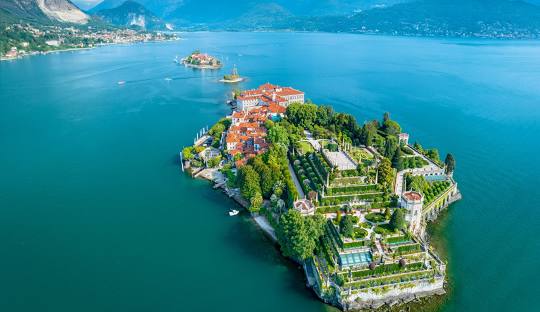
The late sun gilds the waters of Lake Maggiore—turning its surface into liquid topaz as it laps gently against the terraced shores of Isola Bella. You hear the distant chime of boat bells, the rustle of cypress leaves in the breeze, and the murmur of Italian families strolling through gardens that cascade like green staircases to the lake’s edge. Nestled in the southern arm of this 64-kilometer-long alpine lake, the Borromean Islands—Isola Bella, Isola Madre, and Isola dei Pescatori—have been shaped by human vision for over four centuries. Commissioned by the powerful Borromeo family in the 17th century, these islands are not natural wonders but masterpieces of landscape architecture: Isola Bella crowned with a Baroque palace and ten-tiered gardens, Isola Madre draped in subtropical flora, and Isola dei Pescatori preserving its fishing village soul. In 2026, as climate change threatens alpine ecosystems and overtourism strains fragile shores, the Borromean Islands stand as a model of curated beauty—where art, nature, and stewardship coexist in luminous harmony.
Why Lake Maggiore – Borromean Islands Embodies Theatrical Nature
The Borromean Islands aren’t just scenic—they’re a revolutionary fusion of theater, botany, and power. In 1632, Count Vitaliano Borromeo VI began transforming rocky Isola Bella into a “floating palace,” a project that would span 40 years and employ hundreds of laborers who hauled soil by boat to create terraces on bare rock. The result is the Palazzo Borromeo, a Baroque marvel with frescoed halls, gilded stucco, and a grand staircase leading to the famous Grotto—a chamber lined with shells, coral, and river stones where cool air flows year-round. Its ten-tiered gardens descend toward the lake in geometric perfection, featuring lemon trees in winter, blooming azaleas in spring, and peacocks that roam freely. Nearby, Isola Madre (the largest at 22 hectares) became Europe’s first botanical garden in the 1800s, housing rare species like the 200-year-old Kashmir cypress and giant water lilies. Isola dei Pescatori, just 300 meters long, remains a working fishing village with narrow alleys and family-run trattorias. Together, these islands solved a dynastic need: to showcase Borromeo wealth and cultural sophistication during the Counter-Reformation. Today, they are meticulously maintained by the Borromeo Foundation, proving that human intervention can enhance—not exploit—natural beauty.
The Best Time to Experience Lake Maggiore – Borromean Islands
To enjoy the islands in bloom and manageable crowds, target the precise window of May 18–June 12, 2026. During these weeks, daytime temperatures range from a comfortable 18–24°C (64–75°F)—ideal for exploring gardens and boat excursions [[24], [27]]. Mornings between 8:30–10:00 AM offer soft light that enhances the palace’s frescoes and empty pathways for photography. Alternatively, September 10–24, 2026 provides similar conditions with golden autumn light and fewer tourists. Avoid visiting during peak periods: all of July and August, when heat exceeds 30°C (86°F), ferry queues stretch for hours, and hotel rates double, and major holidays like Ferragosto (August 15) [[29]]. For the most magical experience, book the “Sunset Cruise” (€25) departing Stresa at 6:00 PM—watch the islands glow rose-gold as the lake turns to glass. Always verify ferry schedules via the official Navigazione Lago Maggiore website (navigazionelaghi.it).
Approximate Budget for a 7-Day Trip (2026)
This budget reflects mid-range 2025 pricing adjusted for Italy’s projected 2026 inflation rate of 1.5% [[37]], offering a realistic estimate for a solo traveler based in Stresa or Baveno.
- Accommodation: €840–€1,120 total (€120–€160 per night) for a lakeside guesthouse or boutique hotel in Stresa—central and steps from ferry docks.
- Food: €490 total (€70 per day). Breakfast at a café (€4 for cappuccino and cornetto); lunch of risotto al pesce persico (perch risotto, €16); dinner at a family-run osteria (€45 for ossobuco, grilled lake fish, and house Nebbiolo wine).
- Transportation: €75 total. Includes train from Milan (€20 round-trip); ferry pass for 7 days (€45); and occasional taxi for luggage (€10).
- Attractions: €65 total. Borromean Islands combo ticket (€22); Villa Taranto Gardens (€12); guided lake history walk (€20); and gelato from Gelateria Sottovento (€4).
- Miscellaneous: €90 total. A high-quality print of Isola Bella (€25); locally made citrus marmalade (€20); leather journal from Libreria La Bottega del Libro (€30); and aperitivo at Bar Verbano (€4).
Total Estimated Budget: €1,560–€1,850
6 Essential Lake Maggiore – Borromean Islands Experiences
- Explore Isola Bella’s Palace at Opening: Arrive by 8:30 AM to experience the Throne Room and Hall of Hercules in near solitude. The morning light through tall windows illuminates gilded stucco and frescoes in their original splendor.
- Wander the Ten-Tiered Gardens: Descend through terraces of camellias, rhododendrons, and lemon trees. Don’t miss the Grotto—a cool, shell-lined chamber where Borromeo hosted summer banquets.
- Stroll Isola Madre’s Botanical Oasis: Visit Europe’s oldest botanical garden to see the 200-year-old Kashmir cypress, white peacocks, and tropical greenhouses filled with orchids and palms.
- Dine on Isola dei Pescatori: At Ristorante La Pescheria, enjoy fresh perch fillets on a terrace overlooking the lake—the same spot fishermen have used for centuries.
- Take the Sunset Ferry Cruise: Board the 6:00 PM public ferry from Stresa for a one-hour loop around the islands. The low-angle light sets the palace façades ablaze—a photographer’s dream.
- Attend a Classical Concert: In summer, the Borromeo Palace hosts evening recitals in the Sala della Musica. Reserve early—these intimate performances sell out weeks ahead.
3 Hidden Gems Most Travelers Miss
- Villa Pallavicino Park: Just a 10-minute walk from Stresa’s center, this 18-hectare park features deer, parrots, and manicured lawns sloping to the lake—often empty even in high season.
- Santa Caterina del Sasso Monastery: Perched on cliffs south of the islands, this 12th-century hermitage is accessible only by boat or steep stairs. Its frescoed chapel offers panoramic lake views few tourists seek.
- Libreria La Bottega del Libro: Tucked near Stresa’s pier, this independent bookstore specializes in lake history and art. Its reading nook overlooks the water—a perfect retreat after island-hopping.
Cultural & Practical Tips
- Buy the ferry + islands combo ticket: The “Isole Borromee” pass (€22) covers entry to all three islands and unlimited ferries for one day—essential for efficient exploration.
- Wear comfortable walking shoes: Gardens feature gravel paths and stone steps. Sandals or flip-flops are impractical for daily exploration.
- Respect private property: Many villas along the shore are private residences. Never enter gardens without permission, and keep noise down in residential zones.
- Learn key phrases: “Dov’è il traghetto per le Isole Borromee?” (doh-VEH eel trah-GHEHT-toh PEHR leh ee-SOH-leh Bor-roh-MEH-eh?) for ferry directions; “Grazie mille” (GRAHT-see-eh MEE-leh) for sincere thanks.
- Carry cash for small vendors: Many island cafés and souvenir stalls don’t accept cards. Tipping isn’t expected, but rounding up is appreciated.
Conclusion: Travel with Stewardship, Not Just Selfies
In 2026, the Borromean Islands invite more than admiration—they call for mindful presence. Your €22 ticket funds the preservation of shell grottos and century-old cypresses; choosing a family trattoria on Isola dei Pescatori supports generational livelihoods; carrying out your trash protects the same waters that sustain perch and pike. Slow down: taste wine pressed from local grapes, listen to the lap of waves against ancient stone, watch the light shift on Baroque façades as it has for 400 years. By traveling with stewardship—prioritizing connection over content—you help ensure these islands remain not just postcards, but living testaments to harmony between human vision and alpine grace. Let your visit be a quiet promise: that beauty, carefully tended, can endure along this luminous lake.