Las Médulas Roman Mines Ancient Engineering
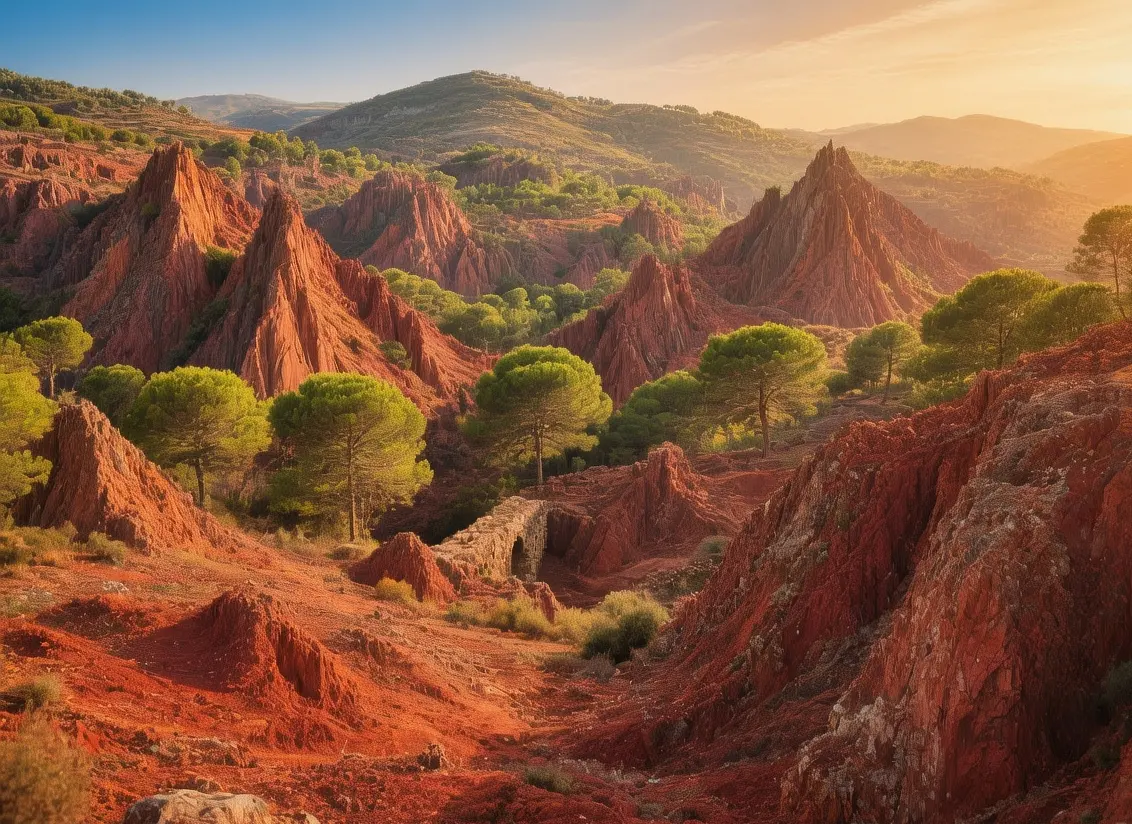
Las Médulas: Where Roman Gold Meets Red Earth Hills
I stand at the main viewpoint at ten in the morning. Sun lights up cliffs of burnt orange and deep gold. Access to the landscape is free. I look out over rounded peaks, forested valleys, and slopes stripped bare by hand two thousand years ago. The air smells of pine and dry earth. Not everything stays quiet. Tour buses arrive by mid-morning. The most popular overlook fills fast. Some paths feel uneven and unmarked. Yet this is the largest open-pit gold mine the Roman Empire ever built. Nature has reclaimed it — but the land still bears the mark of human ambition.
Why Las Médulas Matters
Las Médulas sits in northwestern Spain, in the province of León. In the 1st century CE, Roman engineers discovered vast deposits of gold beneath these hills. They devised an extraordinary method — diverting rivers to flood the tunnels and wash the ore loose. Over two centuries, they removed millions of tonnes of rock and earth, reshaping the landscape completely. When mining ended, nature slowly returned. Today the area forms a unique protected landscape — jagged red peaks, deep green woods, and hidden lakes. UNESCO recognised it in 1997. That fame brings pressure. Erosion worsens on popular trails. Water sources show strain. Local families balance preservation with livelihood. Still the colours glow at sunrise and sunset — gold, copper, and deep red, just as they did when miners first saw them.
The Best Time to Experience Las Médulas
April through June brings fresh green and wildflowers — 11°C to 20°C (52°F–68°F). Light falls soft and golden. September and October offer the richest colour — 12°C to 21°C (54°F–70°F). Dry air makes the red rock glow deepest. Summer from July to August feels warmest — 15°C to 28°C (59°F–82°F) — but crowds swell and shade stays scarce. Winter from November to March stays quiet and crisp — 5°C to 12°C (41°F–54°F). Mist clings to the peaks, lending quiet atmosphere. Weekdays beat weekends. Arrive before 09:30 to watch sunrise paint the cliffs alone.
Approximate Budget for a 7-Day Trip
- Accommodation: Village guesthouse — 40–65 euros per night. Rural cottage — 50–90 euros per night. Ponferrada base — 45–80 euros per night. León base — 55–95 euros per night.
- Food: Local stew lunch — 12–18 euros. Mountain dinner — 15–26 euros. Bakery or market — 5–9 euros. Coffee and pastry — 2.50–4 euros.
- Transport: Bus from Ponferrada — 4 euros one way. Car rental — 30–50 euros per day. Parking at site — 3–5 euros daily. Taxi from nearby town — 10–15 euros one way.
- Attractions: Landscape — free. Roman tunnels — 3 euros. Interpretation centre — 2 euros. Guided hiking tour — 12–18 euros.
- Miscellaneous: Water, hat, sturdy shoes — 7–14 euros daily.
Total estimated for one person, 7 days: 290–550 euros
Snacks and drinks at the main viewpoint kiosk cost double what you buy in the village below. Pack your own water and lunch. It saves money and you can pause wherever feels best.
Essential Las Médulas Experiences
- Watch sunrise from the main viewpoint. The cliffs turn deep gold then vivid red. Shadows stretch long across the valley. The world feels quiet and entirely yours. Skip this if heavy cloud covers the peaks — the colours vanish completely.
- Walk into the ancient tunnels. Dark, cool, hand-hewn passages wind deep into the hill. You see where Roman miners worked by torchlight. It brings history startlingly close. Wear sturdy shoes and a jumper — the air stays cold year-round.
- Hike the valley loop at golden hour. Paths wind through chestnut and oak forest. You see the red peaks rise framed by green. Light filters through leaves. The landscape shifts constantly as you walk.
- Visit the hidden lake below the peaks. Dark water reflects the orange cliffs. Few people walk this far. It feels peaceful and perfectly still. The return climb is steep — allow extra time.
- Explore the traditional village. Stone houses, narrow lanes, quiet squares. People have lived here alongside the mines for centuries. Eat slow-cooked lamb and local wine. It tastes simple and honest.
- Stand at the western overlook at sunset. The sun dips behind the peaks. The whole landscape glows amber. It feels like watching the earth itself change colour.
Hidden Gems Most Travelers Miss
- The eastern ridge trail. Most people stay on the western side. Walk ten minutes further along the crest. The view opens across the whole valley — red peaks, green forest, distant hills. No crowds gather here.
- The old miners’ path below the main cliffs. It winds through trees and past rock faces. You see the land from the same level the Romans did. The scale feels different — more human, more intimate.
- The so-called "best photo spot" right at the car park. It fills instantly. Walk five minutes along the main trail. The same formation appears framed by trees — empty and just as beautiful.
Cultural & Practical Tips
- Wear sturdy, non-slip shoes. Paths are uneven, rocky, and slippery when damp. Flip-flops are unsafe and impractical. Ankle support matters on steep sections.
- Stay on marked trails. Erosion is real here. Shortcuts destroy fragile soil and plant life. The landscape is healing — help it.
- Carry enough water. Shade is scarce and climbs are steep. Dehydration strikes fast in dry air. Bring more than you think you need.
- Do not touch or remove anything. Rock fragments and ancient artefacts belong here. Leave them for others to see. The site belongs to everyone.
- Arrive early or late. Midday heat and crowds combine to spoil the experience. The best light happens at the start and end of the day.
- Book accommodation months ahead in August. Prices rise and rooms vanish. May or September offer better value, thinner crowds, and richer colour.
Essential Visitor Information
Location & Access: Las Médulas, El Bierzo region, León province, Spain. 25 km southwest of Ponferrada — 30 minutes by car or bus. 150 km northwest of León — 1 hour 45 minutes. 380 km northwest of Madrid — 4 hours by car or train to Ponferrada then onward.
Tickets & Booking: Landscape and trails — free. Tunnel entry — 3 euros. No reservation needed for individuals. Guided hikes — book ahead in summer.
Operating Hours: Always open. Interpretation centre — 10:00 to 18:00 generally, closed Mondays. Tunnels — same hours.
Visit Duration: Minimum half a day. 1–2 full days lets you explore different trails, visit tunnels, and enjoy sunrise or sunset without rushing.
Family Suitability: Good for older children. Main viewpoints are accessible. Longer hikes are steep and exposed. Strollers work on paved paths but not on trails. Restrooms at main car park and village.
Timing: Best season — late May–June and September–October. Best time — 30 mins before sunrise; 30 mins before sunset.
Highlights: Sunrise viewpoint, ancient tunnels, golden hour loop, hidden lake, village meal, sunset ridge.
Nearby & Day Trip: Ponferrada Templar Castle — 30 mins. Astorga Gaudí Palace — 1 hour. Santiago de Compostela — 2 hours 30 mins. León — 1 hour 45 mins.
Conclusion: Travel with Care, Not Just Sight
These peaks were not shaped by wind and rain alone — they were carved by human hands. Two thousand years later, the earth heals itself. Before you leave, look closely at the red rock. What will you leave behind — and what will you help restore?
Post a Comment