Astorga Gaudí Palace Modernist Whimsy Meets Medieval Stone
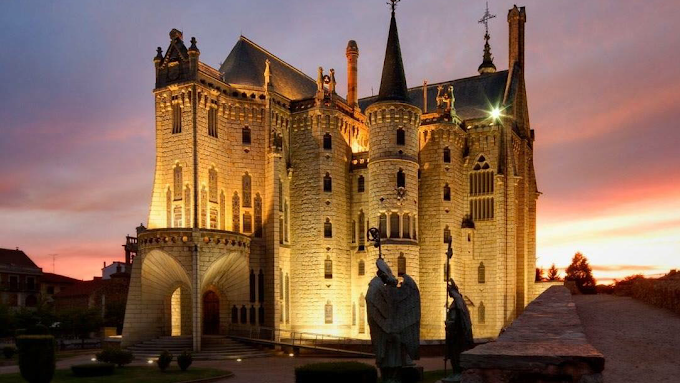
Astorga Gaudí Palace: Where Medieval Stone Meets Modern Vision
I stand before the main gate at ten in the morning. Sun glows warm on honey-coloured granite. Entry ticket costs six euros. I run a hand over rough-hewn blocks and rounded arches. Towers rise thick and solid, capped with ceramic tiles and iron crosses. The building looks like a fairytale fortress — yet it sits right beside a Gothic cathedral. Not everything feels perfect. Interior rooms feel smaller than they appear from outside. Some sections lack clear explanation. The town itself has seen better days. Yet this is one of only three buildings Gaudí completed outside Barcelona. It stands bold, unusual, and entirely unforgettable.
Why Astorga Palace Matters
The palace was commissioned in 1887 as residence for the Bishop of Astorga. The original medieval building had burned down. The bishop chose a young architect from Barcelona — Antoni Gaudí — to design the replacement. Gaudí was still establishing his style. He drew on medieval castle forms — towers, thick walls, arched gateways — but filled them with fresh, inventive details. Constructed between 1889 and 1893, it became a landmark of Catalan Modernisme in Castile. After the bishop died, it served various roles — seminary, school, then museum. Today it faces pressure. Visitor numbers strain narrow staircases. Restoration moves slowly. But the building remains as Gaudí intended — monumental, dreamlike, and completely unlike anything else on the Camino de Santiago route.
The Best Time to Experience Astorga
April through June brings mild days and blooming gardens — 12°C to 21°C (54°F–70°F). Camino crowds stay thinner. September and October offer golden light and crisp air — 11°C to 20°C (52°F–68°F). Summer from July to August feels warmest — 16°C to 28°C (61°F–82°F) — but pilgrims and tourists fill the streets. Winter from November to March stays quiet and cold — 4°C to 12°C (39°F–54°F). Frost often outlines the stonework. Weekdays beat weekends. Arrive before 10:00 to climb the towers without queueing.
Approximate Budget for a 7-Day Trip
- Accommodation: Guesthouse in town — 40–65 euros per night. Boutique hotel — 65–110 euros per night. Camino albergue — 12–25 euros per bed. León base — 50–90 euros per night.
- Food: Traditional lunch — 12–18 euros. Cocido maragato dinner — 16–28 euros. Tapas crawl — 10–15 euros. Bakery or market — 5–9 euros.
- Transport: Bus from León — 6 euros one way. Train from León — 8 euros. Car rental — 30–50 euros per day. Parking — 3–5 euros daily.
- Attractions: Gaudí Palace — 6 euros. Cathedral — 5 euros. Roman museum — 3 euros. Guided walking tour — 10 euros.
- Miscellaneous: Water, snacks, warm layer — 7–13 euros daily.
Total estimated for one person, 7 days: 310–580 euros
Restaurants directly beside the palace charge a clear premium. Walk two lanes toward the main square. You will find family-run places serving the region’s famous stew at fairer prices.
Essential Palace Experiences
- Walk the exterior circuit at golden hour. Light turns the stone deep amber. Towers cast long shadows across the plaza. The building shifts — fortress, palace, dream — as you circle it. Skip this in midday summer heat — stone reflects warmth and there is little shade.
- Climb the main tower. Narrow stone steps wind upward. The view opens wide — red rooftops, cathedral spire, distant mountains. The climb is tight — let slower walkers pass. It feels like ascending into a storybook.
- Step inside the entrance hall. Vaulted ceiling, ironwork details, stained glass — Gaudí’s signature curves appear everywhere. Light filters soft and coloured. It feels calm and sacred.
- Visit the chapel. Simple, intimate, beautifully proportioned. Wood and stone work together perfectly. It shows Gaudí’s reverent side — quiet, thoughtful, deeply sincere.
- Compare palace and cathedral side by side. The Gothic cathedral rises tall and pointed. Gaudí’s palace sits broad and rounded. Two centuries of architecture stand fifty metres apart. The contrast is striking.
- Eat cocido maragato afterwards. The region’s famous meat and vegetable stew — hearty, slow-cooked, rich. It tastes exactly right after walking cold stone halls.
Hidden Gems Most Travelers Miss
- The rear courtyard. Most visitors stay at the front. Walk around to the garden. The palace looks softer here — warm stone, tiled roofs, quiet green. It feels like a private home.
- The upper floor hallway. Few people pause to look closely. The ceiling details and window ironwork show Gaudí’s playful, inventive hand. It feels overlooked and special.
- The so-called "perfect photo spot" right at the gate. It fills instantly. Walk fifty metres toward the cathedral. The palace appears framed by ancient stone — empty and majestic.
Cultural & Practical Tips
- Do not visit on a Monday. Both palace and cathedral close. The streets stay open but the experience feels incomplete. Plan accordingly.
- Wear comfortable shoes. Stone floors are uneven and worn smooth. Tower steps are steep and narrow. Heels are impractical and damaging.
- Respect silence inside. This was built as a spiritual residence. Voices echo sharply. Keep yours low and slow.
- Arrive early or late. Midday groups crowd the rooms. The best moments happen when you can stand and look without being hurried.
- Carry a light jacket. Stone interiors stay cool year-round. Even warm days feel chill inside thick walls.
- Book accommodation months ahead in summer. Camino traffic fills rooms fast. May or September offer better value and thinner crowds.
Essential Visitor Information
Location & Access: Astorga, León province, Spain. 45 km southwest of León — 45 minutes by car or train. 190 km northwest of Madrid — 2 hours 15 minutes by car or train. On the Camino de Santiago French Way — easily reached by foot, bus, or car.
Tickets & Booking: Gaudí Palace — 6 euros adults. Under 12s free. No reservation needed for individuals. Combined palace + cathedral ticket — discounted rate available.
Operating Hours: Apr–Sep: 10:00–18:30. Oct–Mar: 10:00–17:30. Closed Mondays. Also closed 1 Jan, 25 Dec.
Visit Duration: Minimum 1–2 hours. Half a day lets you explore palace, cathedral, and old town without rushing.
Family Suitability: Good for older children. Tower climb is steep and continuous. Strollers work on ground floor and town lanes but not upstairs. Restrooms at palace entrance.
Timing: Best season — May–June and September. Best time of day — before 10:00 or 1 hour before closing.
Highlights: Exterior circuit at sunset, tower view, chapel, palace-cathedral contrast, cocido meal, rear courtyard.
Nearby & Day Trip: León — 45 mins. Ponferrada Templar Castle — 1 hour. Rabanal del Camino — 20 mins. Santiago de Compostela — 3 hours by car.
Conclusion: Travel with Vision, Not Just Sight
Gaudí built this palace as a home — not a monument. He saw beauty in strength, grace in solid stone. Before you leave, touch the wall. What will you build that stands half as true?
Post a Comment