
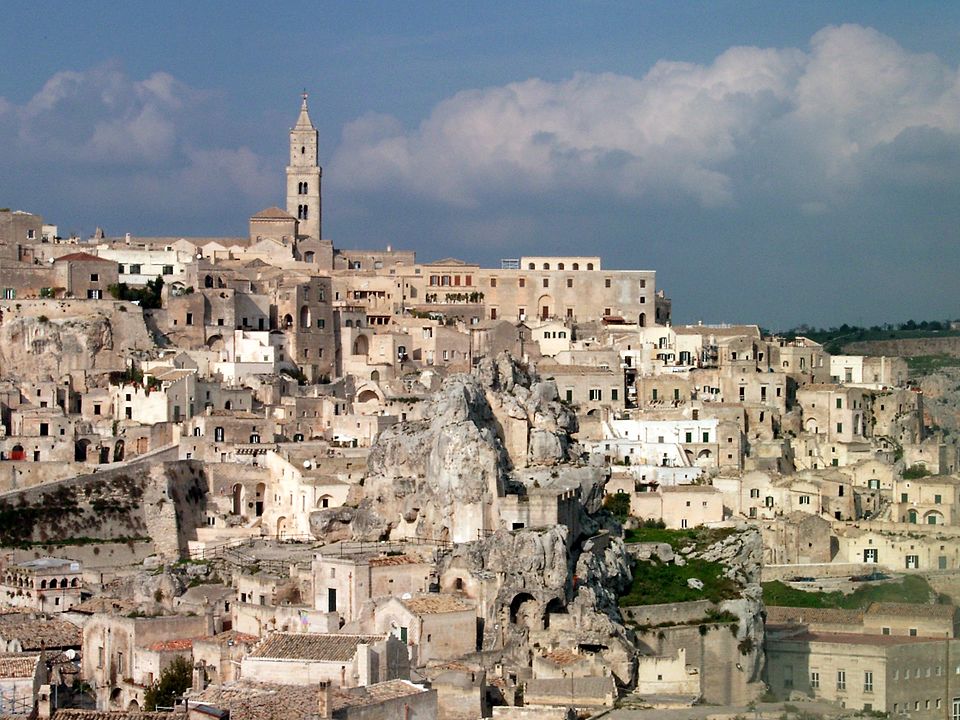
Matera Cave Dwellings (Sassi) Ancient Stone Meets Modern Soul
The late afternoon sun bathes the Sassi di Matera in a warm, honey-gold light, casting long shadows across a labyrinth of stone that seems to grow organically from the earth itself. You hear the soft echo of footsteps on ancient cobbled paths, the distant chime of a church bell from a rock-hewn sanctuary, and the gentle murmur of conversation drifting from a terrace overlooking the deep, silent gorge of the Gravina River. This is no ordinary city—it is a living palimpsest, where human habitation has been continuously etched into the soft limestone for over 9,000 years, making it one of the world’s oldest continuously inhabited settlements [[7]]. Carved directly into the calcareous rock of the Murgia plateau, the Sassi’s dwellings, churches, and cisterns form a breathtaking urban cascade that plunges 100 meters (328 feet) into the ravine. Once infamously labeled “the shame of Italy” in the 1950s for its poverty, Matera has undergone a remarkable renaissance, crowned European Capital of Culture in 2019. In our age of fleeting trends and digital disconnection, the Sassi matter now more than ever—they are a profound testament to human resilience, sustainable architecture, and the enduring power of place.
Why Matera Cave Dwellings (Sassi) Embodies Sustainable Ingenuity
The Sassi di Matera are not merely a historical curiosity; they represent a masterclass in sustainable, climate-responsive architecture perfected over millennia. The settlement’s genius lies in its direct integration with the natural landscape—the soft, porous limestone known as tufo was both the building material and the foundation. By carving homes directly into the rock, inhabitants created structures that were naturally insulated: cool in the scorching Basilicata summers and warm during its harsh winters, with internal temperatures remaining a steady 15–18°C (59–64°F) year-round [[7]]. This system solved critical problems of survival in a resource-scarce environment. Rainwater was collected in an intricate network of cisterns—some large enough to hold 50,000 liters—that were carved beneath homes, ensuring a water supply during dry periods. The dwellings were arranged in a vertical, communal structure called a vicinato, where families shared walls, staircases, and courtyards, fostering a powerful social cohesion. Though the Sassi were evacuated in the 1950s due to unsanitary conditions, their rehabilitation since the 1980s has transformed them into a model of thoughtful restoration. Today, these ancient caves fulfill a modern need: they offer a blueprint for low-impact living and a powerful reminder that the most advanced architecture is often the most ancient.
The Best Time to Experience Matera Cave Dwellings (Sassi)
To experience the Sassi in their full atmospheric glory while enjoying comfortable weather, target the specific windows of April 20–May 25 or September 10–October 15, 2026. During these periods, daytime temperatures are a pleasant 20–25°C (68–77°F), perfect for exploring the steep, winding streets without the summer heat or winter chill [[11]]. The absolute best time of day to visit is in the early morning, between 7:30 AM and 9:30 AM, when the soft light illuminates the stone facades and the streets are quiet, allowing you to absorb the Sassi’s profound silence before the tour groups arrive. It is strongly advised to avoid the peak summer months of July and August, when temperatures can soar above 32°C (90°F) and the narrow alleys become crowded and uncomfortably hot [[31]]. For the most current information on opening hours for museums, guided tours, and local events, always consult the official tourism portal: matera.travel.
Approximate Budget for a 7-Day Trip (2026)
This budget is calculated for a solo traveler seeking a comfortable, culturally rich experience in Matera in 2026, based on current inflation trends and average regional costs for southern Italy.
- Accommodation: €90–€160 per night. Staying in a restored cave hotel (casa grotta) within the Sassi offers an authentic and unforgettable experience. Options in the newer Civita district are slightly more affordable.
- Food: €40 per day. Breakfast (€5): a cappuccino and cornetto at a local bar. Lunch (€15): a plate of orecchiette pasta with turnip greens at a traditional trattoria. Dinner (€20): a main course like lamb stew (agnello al forno) with a glass of local Aglianico wine.
- Transportation: €150 total. A regional train ticket from Bari to Matera (€5). A rental car for day trips to nearby Alberobello or the Murgia National Park (€40/day). Local transport within Matera is primarily on foot.
- Attractions: Guided walking tour of the Sassi (€20). Entry to the Rock Churches Park (€6). Casa Grotta di Vico Solitario museum (€3).
- Miscellaneous: €80. This covers a bottle of local olive oil (€15), several gelato stops (€3 each), a cooking class featuring local recipes (€40), and souvenirs like handmade ceramics.
Total Estimated Cost: €920–€1,030
6 Essential Matera Cave Dwellings (Sassi) Experiences
- Stay Overnight in a Cave Hotel: Book a room in a restored casa grotta like Sextantio Le Grotte della Civita. Feel the cool, silent embrace of the ancient stone walls and wake up to a view that hasn’t changed in centuries.
- Take a Sunrise Walk through Sasso Barisano: Be out by 7:00 AM to watch the first light fill the ravine. The play of shadow and light on the honey-colored stone is magical, and you’ll have the alleys almost to yourself.
- Visit the Rupestrian Churches: Explore the Park of the Rupestrian Churches, home to over 150 rock-hewn sanctuaries adorned with faded Byzantine frescoes. The Church of Santa Maria de Idris, carved directly into a massive boulder, is a must-see.
- Dine on a Sassi Terrace: Reserve a table at a restaurant like Ristorante Francesca, which offers panoramic views over the Gravina gorge. Savor local specialties as the sun sets and the Sassi begin to glow with warm evening lights.
- Explore the Palombaro Lungo Cistern: Descend into this vast, cathedral-like underground water reservoir beneath Piazza Vittorio Veneto. Its vaulted ceilings and serene atmosphere are a powerful reminder of the Sassi’s ingenious water management system.
- Attend a Performance at the Cave Theatre: During the summer, cultural events are held in natural cave amphitheaters. Check the schedule for concerts or plays that use the Sassi’s unique acoustics and setting as part of the performance.
3 Hidden Gems Most Travelers Miss
- The View from Murgia Timone: Across the Gravina gorge, this viewpoint in the Murgia National Park offers the most iconic, postcard-perfect panorama of the entire Sassi. It’s a short drive or a scenic 45-minute hike from the city center. Go at sunset for the most dramatic light.
- Casa Noha, the Story of Matera: This immersive multimedia museum in a restored nobleman’s house tells the complex social history of Matera through film and art. It’s often overlooked for the more famous cave sites but provides essential context. Located on Via Lucana.
- The Artisan Workshops of Via San Biagio: Away from the main tourist drags, small studios here keep traditional crafts alive. Visit the workshop of a local ceramist or a weaver using ancient looms. Knock politely—their doors are often open, but they appreciate a respectful greeting.
Cultural & Practical Tips
- Wear sturdy, non-slip shoes: The Sassi’s streets are steep, uneven, and often slick with dew or rain. Sandals or smooth-soled shoes are a hazard.
- Book your cave hotel well in advance: The most authentic and atmospheric accommodations fill up months ahead, especially for the shoulder seasons. Booking by January 2026 is recommended.
- Learn a few key phrases: “Dov’è il belvedere?” (DOH-veh eel bel-veh-DEH-reh?) for “Where is the viewpoint?”, and “Un bicchiere di Aglianico, per favore” (oon bee-KYEH-reh dee ah-LYAH-nee-koh).
- Respect the silence of the Sassi: Especially in the early morning and evening, keep your voice low. These are living neighborhoods, not open-air museums.
- Beware of the midday sun in summer: The stone radiates heat. Plan indoor visits (museums, churches) during the hottest part of the day (12:00–4:00 PM).
- Tipping is appreciated but not expected: A small tip of €1–€2 for exceptional service at a restaurant is a kind gesture.
Conclusion: Travel with Reverence, Not Just Curiosity
To walk through the Sassi di Matera is to walk through the layers of human history itself. This is not a place for passive sightseeing, but for active reverence—a dialogue between past and present that unfolds in every carved doorway and silent courtyard. In 2026, as we search for more meaningful ways to connect with the places we visit, Matera offers a powerful lesson in humility and sustainability. Your presence here should be one of mindful respect: to listen to the stories whispered by the stone, to appreciate the ingenuity of those who built a life from the rock, and to tread lightly so that this ancient soul may continue to thrive. Slow down. Sit on a step and watch the light change. In that quiet moment of connection, you don’t just see Matera—you feel its enduring spirit, and in doing so, help ensure its legacy for generations to come.