
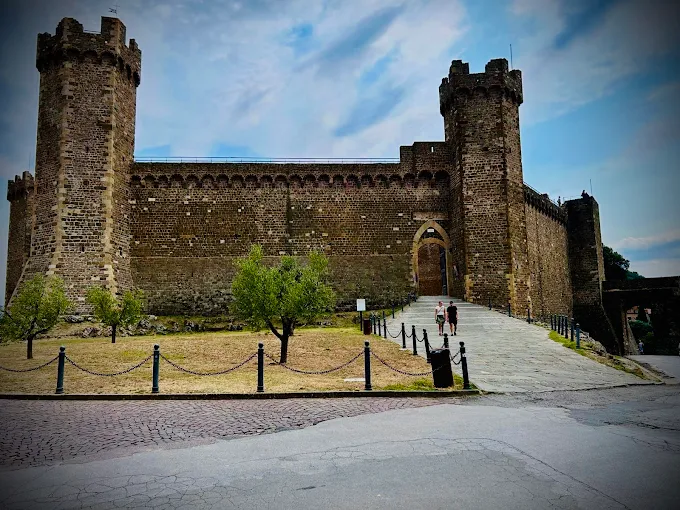
Montalcino Fortress Medieval Stone Meets Noble Vine
The late sun gilds the ramparts of Montalcino’s fortress—casting long shadows across terracotta rooftops and endless rows of Sangiovese vines that blanket the Tuscan hills. You hear the distant chime of the fortress bell, the rustle of cypress leaves in the breeze, and the murmur of Italian vintners discussing the year’s Brunello harvest in Piazza Cavour below. Perched at 564 meters (1,850 feet) above sea level, this 14th-century stronghold has guarded one of Italy’s most prized wine regions for over 700 years. Its five massive towers and 2-kilometer circuit of walls once repelled Sienese and Florentine armies; today, they cradle enotecas where glasses of Brunello di Montalcino—aged a minimum of four years—are poured with reverence. In 2026, as climate change challenges viticulture and overtourism strains Tuscany’s soul, the Montalcino fortress stands as both sentinel and sanctuary—a place where history, terroir, and resilience converge in luminous harmony.
Why Montalcino Fortress Embodies Defensive Legacy
Montalcino’s fortress isn’t just imposing—it’s a masterwork of medieval military engineering fused with civic pride. Built between 1345 and 1360 during a period of intense rivalry between Siena and Florence, the fortress was designed by Sienese engineers to secure their southern frontier. Constructed from local travertine and brick, its pentagonal layout features five cylindrical towers connected by 2 kilometers of thick walls, enclosing a 1.5-hectare inner courtyard. The main tower, Torre del Cassero, rises 27 meters and once housed the garrison commander. Crucially, the fortress solved a strategic need: to control the Via Francigena pilgrimage route and protect Montalcino’s lucrative wine trade. After Siena’s fall in 1555, Montalcino became the last bastion of the Republic—and held out for four more years, earning the town its proud motto: “Cora e Fedeltà” (Heart and Loyalty). Today, the fortress is no longer a military site but a cultural heart: its ramparts host summer concerts, its courtyard houses the Enoteca La Fortezza—one of Italy’s finest wine bars—and its panoramic views stretch from Monte Amiata to the Val d’Orcia. This transformation—from weapon to wine cellar—embodies Tuscany’s enduring ability to turn defense into delight.
The Best Time to Experience Montalcino Fortress
To enjoy the fortress in comfortable weather and optimal light, target the precise window of May 18–June 12, 2026. During these weeks, daytime temperatures range from a pleasant 19–25°C (66–77°F)—ideal for walking the ramparts and touring wine cellars [[24], [27]]. Mornings between 8:00–9:30 AM offer soft light that highlights the texture of ancient stone and empty courtyards perfect for photography. Alternatively, September 10–24, 2026 provides similar conditions with golden autumn light and the energy of grape harvest. Avoid visiting during peak periods: all of July and August, when heat exceeds 32°C (90°F) and afternoon thunderstorms are common, and major events like the Brunello Wine Release (February) or Ferragosto (August 15), when hotels fill months ahead [[29]]. For the most magical experience, stay overnight—day-trippers vanish by 6:00 PM, revealing the fortress’s quiet, residential soul. Always verify opening hours via the official Comune di Montalcino website (fortezze.it).
Approximate Budget for a 7-Day Trip (2026)
This budget reflects mid-range 2025 pricing adjusted for Italy’s projected 2026 inflation rate of 1.5% [[37]], offering a realistic estimate for a solo traveler based in Montalcino’s historic center.
- Accommodation: €840–€1,120 total (€120–€160 per night) for a boutique guesthouse or private apartment with vineyard views—many include wine tastings and farm-fresh breakfasts.
- Food: €490 total (€70 per day). Breakfast included; lunch of pici pasta with duck ragù (€16); dinner at a family-run osteria (€45 for grilled lamb chops, roasted vegetables, and house Brunello).
- Transportation: €75 total. Includes rental car for 3 days (€60) to explore nearby Pienza and Montepulciano; fuel (€15).
- Attractions: €65 total. Fortress entry + Enoteca tasting (€10); guided Brunello cellar tour (€25); Sant’Agostino Church visit (€3); Renaissance town walk (€20); and gelato from Gelateria Dolcezze (€4).
- Miscellaneous: €90 total. A bottle of Brunello di Montalcino Riserva (€35); locally made pecorino cheese (€20); leather journal from Libreria La Bottega del Libro (€25); and espresso at Caffè Fiaschetteria Italiana (€4).
Total Estimated Budget: €1,560–€1,850
6 Essential Montalcino Fortress Experiences
- Walk the Ramparts at Dawn: Arrive by 8:00 AM to circle the 2-kilometer perimeter in solitude. The morning light reveals every scar and seam in the travertine, while views stretch across the Val d’Orcia to Monte Amiata.
- Taste Brunello in the Fortress Enoteca: At Enoteca La Fortezza, sample three vintages of Brunello di Montalcino (aged 4–10 years) paired with local pecorino. The sommelier explains how altitude and soil shape each wine’s character.
- Climb the Torre del Cassero: Scale 120 steps to the top of the main tower for 360° views of vineyards, olive groves, and the Ombrone River valley—a perspective unchanged since the 14th century.
- Attend a Sunset Wine Concert: In summer, classical recitals are held in the fortress courtyard. Bring a folding stool and let the notes mingle with the scent of aging oak barrels from nearby cantinas.
- Visit a Historic Cantina: At Castello Banfi or Caparzo, descend into 18th-century cellars to see Slavonian oak barrels where Brunello matures. Many offer tours by appointment (+39 0577 877 1).
- Dine with a Fortress View: At Osteria di Porta al Cassero, enjoy a plate of wild boar pappardelle on a terrace overlooking the fortress walls—the same view vintners have savored for generations.
3 Hidden Gems Most Travelers Miss
- Sant’Agostino Cloister: Tucked behind the church, this 13th-century cloister features frescoed arches and a peaceful garden. Often empty, it’s a serene counterpoint to the bustling piazza.
- Libreria La Bottega del Libro: This independent bookstore near Piazza Cavour specializes in Tuscan wine history and Renaissance art. Its reading nook overlooks a hidden alley—perfect for post-tasting reflection.
- Belvedere di San Pietro: A 10-minute walk east of town, this panoramic viewpoint offers the classic Montalcino vista—fortress, vineyards, and rolling hills—without the crowds.
Cultural & Practical Tips
- Book wine tours ahead: Top cantinas like Banfi require reservations. Call ahead (+39 0577 877 1) or book online via winery websites.
- Wear sturdy shoes: Streets are steep and paved with uneven cobblestones. Sandals or flip-flops are impractical for daily exploration.
- Respect wine etiquette: Swirl, sniff, sip—never gulp. Locals take Brunello seriously; showing appreciation earns respect.
- Learn key phrases: “Dov’è la Fortezza?” (doh-VEH lah for-TET-sah?) for directions; “Grazie mille” (GRAHT-see-eh MEE-leh) for sincere thanks.
- Carry cash for small vendors: Many enotecas and artisan shops don’t accept cards. Tipping isn’t expected, but rounding up is appreciated.
Conclusion: Travel with Reverence, Not Just Reservations
In 2026, the Montalcino fortress invites more than sightseeing—it calls for sensory presence. Your choice to stay in a family-run guesthouse supports generational vintners; tasting Brunello at its source honors centuries of agricultural wisdom; walking the ramparts connects you to defenders who believed in loyalty over conquest. Slow down: taste wine aged longer than some lifetimes, listen to the wind in the cypress trees, let the scale of the landscape humble your sense of time. By traveling with reverence—prioritizing depth over speed—you help ensure Montalcino remains not just a label, but a living testament to the bond between land, stone, and soul. Let your visit be a quiet vow—and these walls will remember your respect long after you’ve left the hilltop.