
Montepulciano Hilltop Town Tuscan Stone Meets Noble Wine
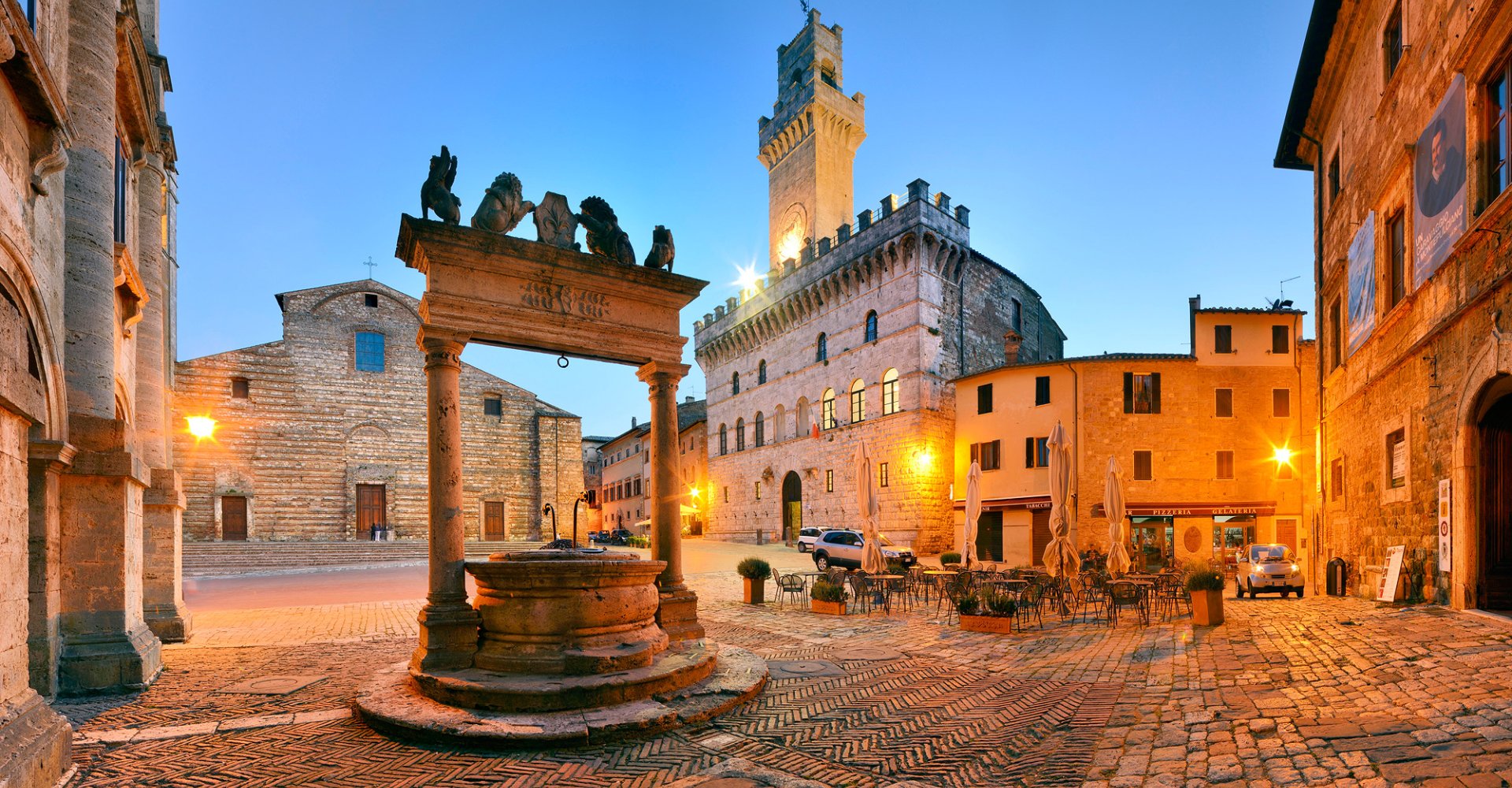
The late sun gilds the honey-colored travertine of Montepulciano—casting long shadows down Corso Vittorio Emanuele, where the scent of oak-aged Vino Nobile and wood-fired bread drifts from hidden enotecas. You hear the distant chime of San Biagio’s bell, the rustle of cypress leaves in the breeze, and the murmur of Italian families gathering on stone benches that have warmed in the same sunlight since the Renaissance. Perched at 605 meters (1,985 feet) above sea level on a limestone ridge between the Val d’Orcia and Val di Chiana, this fortified town has been a crossroads of wine, power, and art since Etruscan times. Its steep streets are lined with 15th- and 16th-century palazzi built by noble families vying for prestige, culminating in the grand Piazza Grande—a harmonious square crowned by the unfinished Duomo and the civic Palazzo Comunale. In 2026, as overtourism strains Tuscany’s soul, Montepulciano offers something rare: monumental beauty without the queues, where every cellar door opens to centuries of winemaking tradition.
Why Montepulciano Hilltop Town Embodies Noble Harmony
Montepulciano isn’t just scenic—it’s a living archive of Renaissance rivalry and vinous excellence. Founded by the Etruscans and later a Roman colony, the town rose to prominence in the 14th century as a strategic stronghold between Siena and Florence. Its golden age came during the 15th and 16th centuries, when rival noble families—the Cervini, Piccolomini, and Nobili—commissioned architects like Antonio da Sangallo the Elder to build palaces that doubled as declarations of power. The result is a steep, 1.5-kilometer spine of a main street (Corso Vittorio Emanuele) flanked by imposing stone façades, loggias, and towers, all leading to the Piazza Grande. This trapezoidal square, framed by the Palazzo Comunale (with its 70-meter civic tower), the Duomo, and the Contucci and Cocconi palaces, embodies the era’s belief that urban design could reflect divine order. But Montepulciano’s true legacy is liquid: in 1980, it became one of Italy’s first DOCG zones for Vino Nobile di Montepulciano, a Sangiovese-based red aged in Slavonian oak. Today, over 80 wineries operate within the commune, many housed in historic cellars beneath Renaissance palazzi—proof that here, architecture and agriculture have always walked hand in hand.
The Best Time to Experience Montepulciano Hilltop Town
To enjoy Montepulciano in luminous light and manageable crowds, target the precise window of May 18–June 12, 2026. During these weeks, daytime temperatures range from a comfortable 19–25°C (66–77°F)—ideal for walking the steep streets and touring wine cellars [[24], [27]]. Mornings between 8:00–9:30 AM offer soft light that enhances travertine textures and empty piazzas perfect for photography. Alternatively, September 10–24, 2026 provides similar conditions with golden autumn hues and harvest energy in the air. Avoid visiting during peak periods: all of July and August, when heat exceeds 32°C (90°F) and narrow streets become congested, and major holidays like Ferragosto (August 15) or the Bravìo delle Botti barrel race (last Sunday of August), when hotels fill months ahead [[29]]. For the most authentic experience, stay overnight—day-trippers vanish by 6:00 PM, revealing the town’s quiet, residential soul. Always verify opening hours via the official tourism portal (montepulcianoturismo.it).
Approximate Budget for a 7-Day Trip (2026)
This budget reflects mid-range 2025 pricing adjusted for Italy’s projected 2026 inflation rate of 1.5% [[37]], offering a realistic estimate for a solo traveler based in Montepulciano’s historic center.
- Accommodation: €840–€1,120 total (€120–€160 per night) for a boutique guesthouse or private apartment with vineyard views—many include wine tastings and farm-fresh breakfasts.
- Food: €490 total (€70 per day). Breakfast included; lunch of pici pasta with wild boar ragù (€16); dinner at a family-run osteria (€45 for grilled lamb chops, roasted vegetables, and house Vino Nobile).
- Transportation: €75 total. Includes rental car for 3 days (€60) to explore nearby Pienza and Montalcino; fuel (€15).
- Attractions: €65 total. Civic Tower climb (€5); San Biagio Basilica visit (€3); guided wine cellar tour (€25); Renaissance town walk (€20); and gelato from Gelateria Dolcezze (€4).
- Miscellaneous: €90 total. A bottle of Vino Nobile Riserva (€25); locally made pecorino cheese (€20); leather journal from Libreria La Bottega del Libro (€30); and espresso at Caffè Poliziano (€4).
Total Estimated Budget: €1,560–€1,850
6 Essential Montepulciano Hilltop Town Experiences
- Climb the Civic Tower at Sunrise: Ascend 120 steps to the top of the 70-meter tower by 8:00 AM for panoramic views of the Val d’Orcia, Monte Amiata, and Lake Trasimeno—a vista unchanged since the Medici era.
- Taste Vino Nobile in a Noble Cellar: At Contucci Cantina, descend into 14th-century vaults beneath the family palace to sample aged Sangiovese from Slavonian oak barrels—a ritual unchanged for 600 years.
- Stroll the Piazza Grande at Dawn: Arrive by 7:30 AM to experience the square in solitude. The morning light on travertine reveals the subtle rivalry in each palazzo’s façade—logge, cornices, and coats of arms competing in stone.
- Visit San Biagio Basilica: Walk the 20-minute path downhill to this 16th-century Renaissance masterpiece by Antonio da Sangallo. Its travertine glows amber in afternoon light, and the interior’s harmony echoes Bramante’s ideals.
- Attend a Wine Harvest Festival: In late September, join locals for grape stomping, folk music, and open-cellars in the Contrada districts—a celebration of community and terroir.
- Shop for Handmade Ceramics: At Bottega del Vasaro, watch artisans paint traditional designs on terracotta using local clay—a craft passed down through generations.
3 Hidden Gems Most Travelers Miss
- Palazzo Neri Orselli Courtyard: Tucked off Corso Vittorio Emanuele, this 15th-century palace hides a serene internal courtyard with lemon trees and frescoed arches—often empty even in high season.
- Libreria La Bottega del Libro: Established in 1985, this independent bookstore specializes in Tuscan history and wine literature. Its reading nook overlooks a hidden alley—a favorite among scholars.
- Belvedere di Porta al Prato: Just outside the northern gate, this panoramic viewpoint offers the classic Montepulciano vista—terraced vineyards, cypress alleys, and the town’s skyline—without the crowds.
Cultural & Practical Tips
- Wear sturdy shoes: Streets are steep and paved with uneven cobblestones. Sandals or flip-flops are impractical for daily exploration.
- Book wine tours ahead: Many cantinas require reservations. Call ahead (+39 0578 757 341 for Contucci) or book online via winery websites.
- Respect residential spaces: These are working homes, not photo backdrops. Keep noise down after 10:00 PM, and never block doorways for selfies.
- Learn key phrases: “Dov’è la Cantina Contucci?” (doh-VEH lah KAHN-tee-nah Kon-TOO-chee?) for directions; “Grazie mille” (GRAHT-see-eh MEE-leh) for sincere thanks.
- Carry cash for small vendors: Many artisan shops and enotecas don’t accept cards. Tipping isn’t expected, but rounding up is appreciated.
Conclusion: Travel with Intention, Not Just Itineraries
In 2026, Montepulciano invites more than admiration—it calls for mindful presence. Your choice to stay in a family-run guesthouse supports generational winemakers; tasting Vino Nobile at its source honors centuries of agricultural wisdom; sitting quietly in the Piazza Grande connects you to nobles who believed beauty could shape society. Slow down: taste wine pressed from local grapes, listen to the wind in the cypress trees, let the geometry of Renaissance palazzi settle your mind. By traveling with intention—prioritizing depth over speed—you help ensure Montepulciano remains not just a postcard, but a living testament to the enduring bond between land, stone, and soul. Let your visit be a quiet promise—and these hills will remember your respect long after you’ve left the ridge.