
Pienza Renaissance Town Humanist Vision Meets Tuscan Light
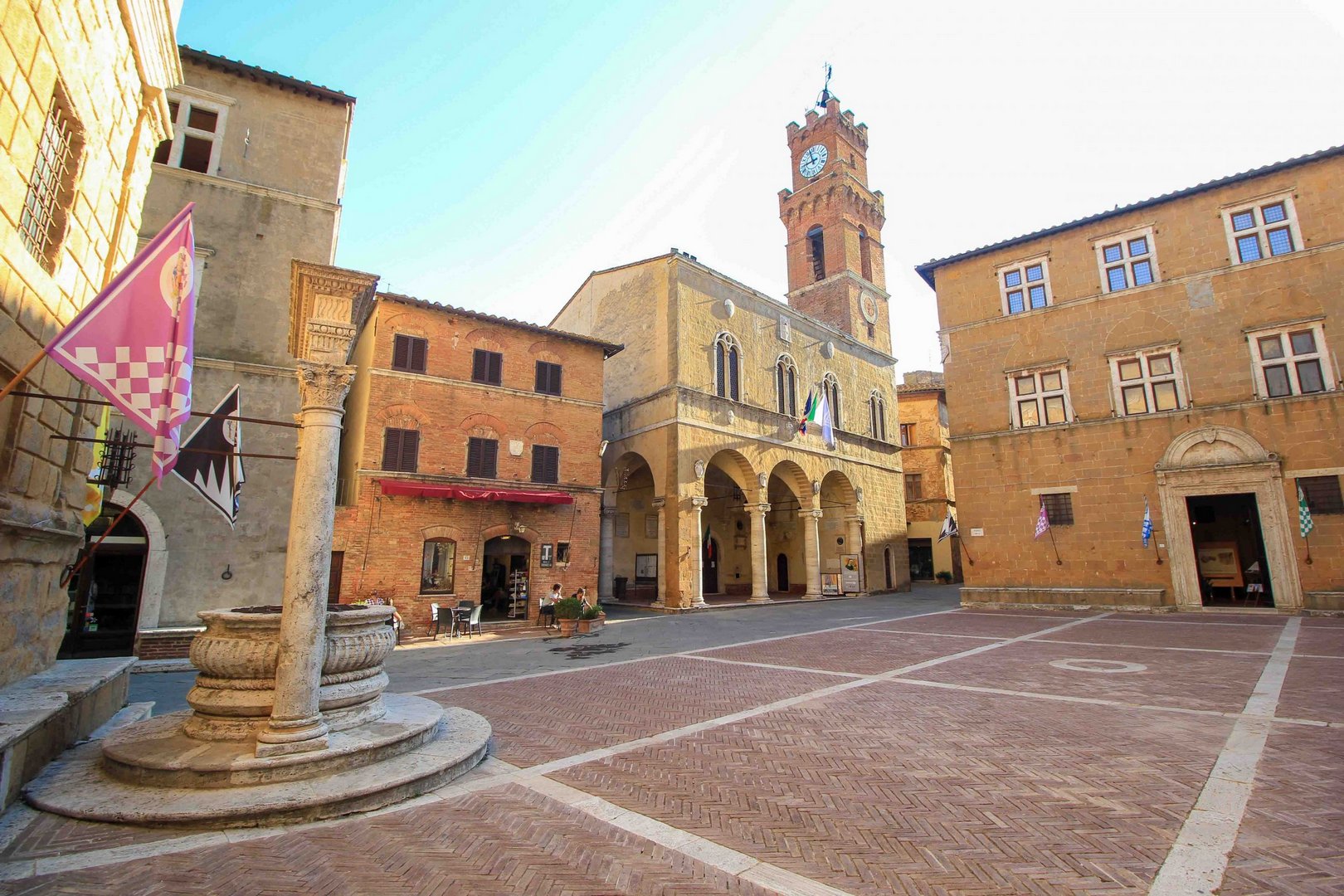
The late sun gilds the travertine façades of Pienza—casting long shadows across Piazza Pio II, where the scent of pecorino cheese and wild rosemary drifts from hidden courtyards. You hear the distant chime of the Duomo’s bell, the rustle of cypress leaves in the breeze, and the murmur of Italian families gathering on stone benches that have warmed in the same sunlight since the 15th century. Perched on a ridge in the Val d’Orcia, this UNESCO World Heritage site was reborn in just five years (1459–1464) as the first “ideal city” of the Renaissance—a physical manifesto of humanist ideals commissioned by Pope Pius II for his birthplace, then called Corsignano. Its harmonious piazza, geometrically precise streets, and panoramic views over rolling wheat fields embody the era’s belief that beauty, order, and civic life could coexist. In 2026, as mass tourism strains Tuscany’s fragile landscapes, Pienza offers something rare: monumental history without the queues, where every cobblestone whispers of philosophy, power, and the enduring grace of intentional design.
Why Pienza Renaissance Town Embodies Urban Harmony
Pienza isn’t just picturesque—it’s the world’s first planned Renaissance town, a revolutionary experiment in human-centered urbanism. In 1459, Enea Silvio Piccolomini—elevated to Pope Pius II—commissioned architect Bernardo Rossellino to transform his humble hilltop village into a model city reflecting classical ideals revived by Leon Battista Alberti. The result was a compact masterpiece: the trapezoidal Piazza Pio II framed by four key buildings—the Palazzo Piccolomini, Duomo, Palazzo Borgia, and Palazzo Vescovile—arranged to create perfect visual harmony and social function. The Palazzo Piccolomini, inspired by Alberti’s Palazzo Rucellai in Florence, features elegant biforate windows and a rear loggia overlooking the Val d’Orcia, designed so the Pope could contemplate nature while governing. Streets were laid out in a grid aligned with cardinal points, ensuring optimal light and ventilation. Crucially, Pienza solved a profound need: to demonstrate that urban design could elevate civic life through beauty, proportion, and communal space. Built from local travertine and brick, it remains the purest expression of Renaissance humanism in stone—a vision so influential it shaped cities from Ferrara to Savannah.
The Best Time to Experience Pienza Renaissance Town
To enjoy Pienza in luminous light and manageable crowds, target the precise window of May 18–June 12, 2026. During these weeks, daytime temperatures range from a comfortable 19–25°C (66–77°F)—ideal for exploring the piazza and walking the Val d’Orcia trails [[24], [27]]. Mornings between 8:00–9:30 AM offer soft light that enhances travertine textures and empty streets perfect for photography. Alternatively, September 10–24, 2026 provides similar conditions with golden autumn hues and fewer tourists. Avoid visiting during peak periods: all of July and August, when heat exceeds 32°C (90°F) and narrow streets become congested, and major holidays like Ferragosto (August 15) [[29]]. For the most magical experience, stay overnight—day-trippers vanish by 6:00 PM, revealing the town’s quiet, residential soul. Always verify opening hours via the official Comune di Pienza website (comunepienza.it).
Approximate Budget for a 7-Day Trip (2026)
This budget reflects mid-range 2025 pricing adjusted for Italy’s projected 2026 inflation rate of 1.5% [[37]], offering a realistic estimate for a solo traveler based in Pienza or nearby Montalcino.
- Accommodation: €840–€1,120 total (€120–€160 per night) for a boutique agriturismo or private apartment with Val d’Orcia views—many include farm-fresh breakfasts.
- Food: €490 total (€70 per day). Breakfast included; lunch of pecorino with pear and honey (€15); dinner at a family-run osteria (€45 for pici pasta with duck ragù, grilled lamb chops, and house Brunello wine).
- Transportation: €75 total. Includes rental car for 3 days (€60) to explore the Val d’Orcia; fuel (€15).
- Attractions: €65 total. Palazzo Piccolomini gardens (€7); Pienza Cathedral visit (€3); guided Renaissance town walk (€20); wine tasting in Montalcino (€25); and gelato from Gelateria Dolcezze (€4).
- Miscellaneous: €90 total. A high-quality print of the piazza (€25); locally made pecorino cheese (€20); leather journal from Libreria La Bottega del Libro (€30); and espresso at Caffè Centrale (€4).
Total Estimated Budget: €1,560–€1,850
6 Essential Pienza Renaissance Town Experiences
- Contemplate the Piazza at Dawn: Arrive by 7:30 AM to experience Piazza Pio II in solitude. The morning light on travertine reveals the mathematical precision of Rossellino’s design—every arch, cornice, and step in perfect proportion.
- Stroll the Palazzo Piccolomini Gardens: Walk the rear loggia where Pope Pius II once meditated. The geometric boxwood hedges frame panoramic views of the Val d’Orcia—a living painting unchanged for 560 years.
- Taste Pecorino di Pienza with Local Honey: At Caseificio Fattoria Pianporcino, sample aged sheep’s milk cheese paired with chestnut honey—a tradition dating back to Etruscan times.
- Walk the Via dell’Amore Countryside Path: Follow the 3-kilometer trail from Pienza to Monticchiello. The path winds through wheat fields and cypress alleys, offering postcard views at every turn.
- Attend an Evening Concert in the Duomo: In summer, sacred music recitals are held in the cathedral’s intimate nave. The acoustics amplify every note—a spiritual echo of Renaissance devotion.
- Shop for Handmade Ceramics: At Bottega del Vasaro, watch artisans paint traditional designs on terracotta. Each piece is signed and fired in wood-burning kilns—a craft passed down for generations.
3 Hidden Gems Most Travelers Miss
- Oratorio di Sant’Antonio Abate: Tucked behind the Duomo, this 14th-century chapel features rare frescoes and a peaceful cloister. Often empty, it’s a serene counterpoint to the bustling piazza.
- Libreria La Bottega del Libro: Established in 1985, this independent bookstore specializes in Renaissance art and Tuscan poetry. Its reading nook overlooks a hidden courtyard—a favorite among scholars.
- Belvedere di San Biagio: A 10-minute walk east of town, this panoramic viewpoint offers the classic Val d’Orcia vista—rolling hills, cypress trees, and Pienza’s terracotta rooftops—without the crowds.
Cultural & Practical Tips
- Stay in an agriturismo: Many working farms offer rooms with breakfast included. It supports local agriculture and provides authentic context for Pienza’s food culture.
- Respect residential spaces: These are working homes, not photo backdrops. Keep noise down after 10:00 PM, and never block doorways for selfies.
- Carry cash for small vendors: Many artisan shops and cheese stalls don’t accept cards. Tipping isn’t expected, but rounding up is appreciated.
- Learn key phrases: “Dov’è la Piazza Pio Secondo?” (doh-VEH lah PYAH-tsaht-sah PYOH SEH-kon-doh?) for directions; “Grazie mille” (GRAHT-see-eh MEE-leh) for sincere thanks.
- Photograph responsibly: Drones require permits in protected zones. Early morning offers the best natural light without harsh midday glare.
Conclusion: Travel with Intention, Not Just Itineraries
In 2026, Pienza invites more than admiration—it calls for mindful presence. Your choice to stay in an agriturismo supports generational farmers; tasting pecorino at its source honors centuries of pastoral tradition; sitting quietly in the piazza connects you to humanists who believed beauty could shape society. Slow down: taste wine pressed from local grapes, listen to the wind in the cypress trees, let the geometry of the piazza settle your mind. By traveling with intention—prioritizing depth over speed—you help ensure Pienza remains not just a postcard, but a living testament to the Renaissance ideal that cities can be both functional and sublime. Let your visit be a quiet promise—and these stones will remember your respect long after you’ve left the ridge.